
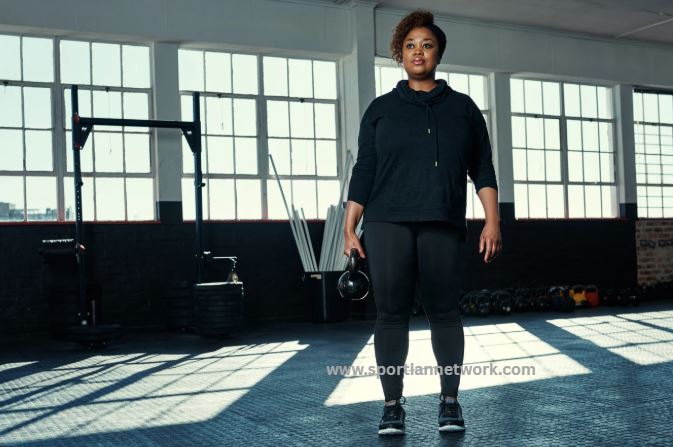
The most persistent myth in women’s strength training is that lifting heavy produces a bulky physique. It does not. The second most persistent myth is that women gain strength more slowly than men. They do not. Understanding what the research actually shows about female strength development changes how women train, how fast they progress, and how much they get out of every session.
Women who lift with intent, programme intelligently, and fuel adequately build strength at rates that consistently surprise them. The physiology supports it. The evidence supports it. The only thing working against it is misinformation that has circulated long enough to feel like fact.
The Physiology of Female Strength
Strength is a neuromuscular quality before it is a muscular one. The nervous system’s ability to recruit motor units, synchronise muscle fibre activation, and coordinate movement patterns across a compound lift determines how much force an athlete expresses. This neural component is identical in men and women. The nervous system adapts to strength training the same way regardless of sex.
Muscle tissue itself also responds to training stimulus the same way across sexes at the cellular level. Mechanical tension applied to muscle fibres through resistance training initiates the same hypertrophic signalling cascade in women as in men. How muscles actually grow is a biological process governed by training stimulus, protein availability, and recovery. Hormonal environment influences the magnitude of hypertrophy. It does not change the fundamental mechanism.
The meaningful physiological difference is testosterone concentration. Men carry significantly higher circulating testosterone than women, which amplifies the muscle-building signal after training. This produces larger absolute muscle mass gains in men over equivalent training periods. It does not produce faster strength gains relative to starting point, and it does not mean women cannot build substantial muscle and strength.
Women also carry higher oestrogen concentrations, which has protective effects on muscle tissue, reduces certain markers of post-exercise muscle damage, and may contribute to slightly faster recovery between sessions than men at equivalent training volumes. Research in this area is still developing, but the evidence suggests oestrogen is not a disadvantage for strength training adaptation.
How Fast Strength Gains Actually Come
The first eight to twelve weeks
The earliest strength gains in any new lifter are almost entirely neural. The muscle does not grow significantly in the first eight weeks. What changes is the nervous system’s ability to use the muscle that already exists.
A woman who begins squatting for the first time is not limited by her quadriceps or glutes. She is limited by her nervous system’s ability to coordinate the movement, recruit the relevant motor units at the right time, and stabilise the body through the range of motion. As those neural patterns become more efficient, force output rises sharply. Strength numbers improve fast, sometimes dramatically, before any significant muscle tissue has been added.
This phase produces some of the most motivating progress in training. Lifts that felt impossible in week one become manageable by week four. Numbers on the bar climb week to week. Proper squat mechanics established early in this phase compound across every subsequent training block. Time invested in technique in the first eight weeks pays dividends for years.
Weeks twelve to twenty-four
Neural adaptation slows as the movement patterns become well-established. Hypertrophic adaptation takes over as the primary driver of continued strength gains. This is when muscle tissue begins to grow meaningfully in response to the accumulated training stimulus.
Progress becomes slightly less dramatic week to week but is no less real. The athlete who gained 20 kilograms on their squat in the first twelve weeks may gain another 10 in the following twelve. That 10 kilograms represents genuine structural change in the muscle, not just nervous system optimisation.
Periodisation begins to matter more in this phase. Simple linear progression, adding small amounts of weight every session, works well in the early phase. As the athlete becomes stronger and closer to their near-term ceiling, structured variation in volume, intensity, and exercise selection maintains the stimulus needed to keep driving adaptation.
Beyond six months
Strength development slows relative to the early phases but continues for years with consistent training. A woman who has trained for two years is not even close to her strength ceiling in most cases. Long-term development follows a logarithmic curve. Fast early gains, progressively slower but still meaningful progress over years.
Plateaus in this phase are almost always programming, nutrition, or recovery failures rather than genuine physiological limits. An athlete who stalls at six months has typically not run out of adaptation potential. She has run out of novelty in the training stimulus, accumulated fatigue without an adequate deload, or underestimated how much food her training demands.
Relative Strength: Where Women Excel
Relative strength, force expressed per unit of bodyweight, shows smaller gaps between male and female athletes than absolute strength comparisons suggest. Elite female powerlifters lift multiples of their own bodyweight. World record lifts in lower weight classes produce relative strength numbers that rival or exceed those of male athletes in heavier classes.
The cultural framing of women as weak is not supported by what happens when women train seriously. Female athletes across strength sports consistently demonstrate that the gap between male and female performance shrinks dramatically when training quality and duration are equivalent.
The Training Principles That Drive Results
Compound movements first
Squats, deadlifts, hip hinges, rows, and presses produce the highest systemic training stimulus per unit of time invested. They recruit the most muscle mass, generate the highest hormonal response to training, and develop the movement patterns that transfer to sport and daily function.
Hip hinge mechanics are the foundation of the deadlift, Romanian deadlift, and kettlebell swing. A woman who masters the hip hinge early builds posterior chain strength that supports everything from sprint performance to injury resilience. Deadlift technique invested in early protects the lower back and makes the lift a sustainable long-term training tool rather than an injury risk.
The Romanian deadlift and trap bar deadlift offer accessible entry points for women building their deadlift foundation. Both develop the posterior chain with slightly lower technical demand than the conventional barbell deadlift, making them excellent tools in the early training phases.
Progressive overload
The fundamental driver of continued strength adaptation is progressive overload. The training stimulus must increase over time for the body to keep adapting. This does not always mean adding weight. Volume, density, range of motion, and exercise variation are all levers that create progressive overload when weight alone cannot continue climbing.
A woman who squats the same weight for the same reps in the same rep range for six consecutive months is not training progressively. She is maintaining what she has. Rest period management is one underused progressive overload tool. Achieving the same work in less time is a form of overload that drives adaptation without requiring additional load on the bar.
Unilateral training
Single-leg training addresses the strength asymmetries that bilateral training masks. Most people have a dominant side that compensates during bilateral lifts. Single-leg work forces each side to produce force independently, revealing and correcting those imbalances.
For women, unilateral lower body training carries an additional injury prevention benefit. Female athletes have a higher baseline ACL injury risk than male athletes due to anatomical and hormonal factors. ACL prevention programmes consistently include single-leg strength work. VMO training builds the patellar stability that protects the knee during the cutting and landing movements that drive ACL injury risk.
Glute development
Glute training matters for women both from a performance standpoint and an injury prevention standpoint. Strong glutes control hip position during single-leg loading, reducing the valgus knee collapse that characterises many non-contact ACL injuries. They drive sprint power, jumping force, and hip extension across every compound movement.
Nordic curls develop the eccentric hamstring strength that complements glute work in protecting the posterior aspect of the knee and supporting sprint mechanics. Women who combine glute and hamstring development with VMO training build a lower limb that is genuinely resilient to the injury patterns most common in female athletes.
Nutrition: The Most Underestimated Variable
Strength training without adequate nutrition produces a fraction of the adaptation it should. This is the variable most commonly underestimated by women beginning a strength programme, and it is also where the female athlete triad risk is most concentrated.
The triad describes the relationship between low energy availability, menstrual dysfunction, and bone density loss. Women who train hard while chronically undereating suppress hormonal function, impair recovery, and over time compromise the bone health that strength training should be building. Training hard on insufficient fuel does not produce lean athletic bodies. It produces hormonal disruption, strength stagnation, and injury risk.
Protein intake sufficient to support muscle protein synthesis is the first nutritional priority for women in strength training. Current evidence supports intakes of 1.6 to 2.2 grams per kilogram of bodyweight per day for athletes in active training blocks. Many women training seriously are consuming substantially less than this and wondering why their results plateau.
Nutrition timing around sessions supports recovery and adaptation. Protein and carbohydrate in the post-training window replenishes glycogen and initiates muscle protein synthesis at the time when the muscle is most receptive to those nutrients.
The Menstrual Cycle as a Training Variable
Research into menstrual cycle phases and strength training is developing rapidly. Current evidence suggests meaningful differences in neuromuscular performance, recovery capacity, and injury risk across the cycle phases.
The follicular phase, from menstruation through ovulation, is associated with higher oestrogen, better neuromuscular performance, and potentially better adaptation to high-intensity training. The luteal phase, from ovulation to menstruation, involves rising progesterone, increased core body temperature, and for some women a meaningful reduction in high-intensity performance capacity.
Practically, women who track their cycle alongside their training log often identify patterns that inform session timing. Scheduling highest-intensity efforts in the follicular phase and managing volume more conservatively in the late luteal phase aligns training stress with the body’s cyclical readiness. This is not a rigid prescription. Individual variation is significant. It is a framework worth experimenting with.
Session RPE tracking across cycle phases reveals these individual patterns faster than any generic guideline. An athlete who notices consistently higher RPE in the late luteal phase for equivalent loads has data to inform her programming rather than a feeling to push through.
Recovery
Sleep quality is the highest-leverage recovery variable for strength adaptation. Growth hormone release during deep sleep is the primary anabolic signal that drives overnight muscle repair and synthesis. Women who train hard and sleep poorly are working against their own adaptation at a fundamental level.
Warm-up quality before strength sessions directly affects training quality and injury risk. A dynamic warm-up that activates the glutes, primes the hip hinges, and builds progressive intensity into the session produces better training outputs than walking in from a car park and loading a bar.
What to Expect: A Realistic Timeline
Weeks one to four: significant neural adaptation, movement patterns establishing, early strength numbers climbing fast. Weeks four to twelve: continued neural gains, early hypertrophic contribution beginning, lifts increasing weekly. Months three to six: hypertrophic adaptation dominant, slower but meaningful strength gains, body composition changes becoming visible. Beyond six months: long-term development, programming variation increasingly important, results compounding with consistent application.
Women who train with clear goals, eat adequately, recover seriously, and progress their training systematically build genuine strength across this timeline. The physiology is on their side. The adaptations are real. The results follow.