Most athletes train their quads without thinking much about which part of the quad they are actually loading. The VMO changes that conversation. It is a specific portion of the quadriceps group that has an outsized effect on knee tracking, patellar stability, and overall knee resilience under sport loads.
Athletes who train it deliberately protect their knees better. Those who ignore it often find out why it matters through injury.
This article is for informational purposes only and does not constitute medical advice. If you have knee pain or a diagnosed injury, consult a qualified physiotherapist or sports medicine professional before starting a new training programme.
What the VMO Is
The vastus medialis oblique, commonly called the VMO, is the teardrop-shaped muscle on the inner side of the lower thigh, just above and to the inside of the kneecap. It is one of four muscles making up the quadriceps group.
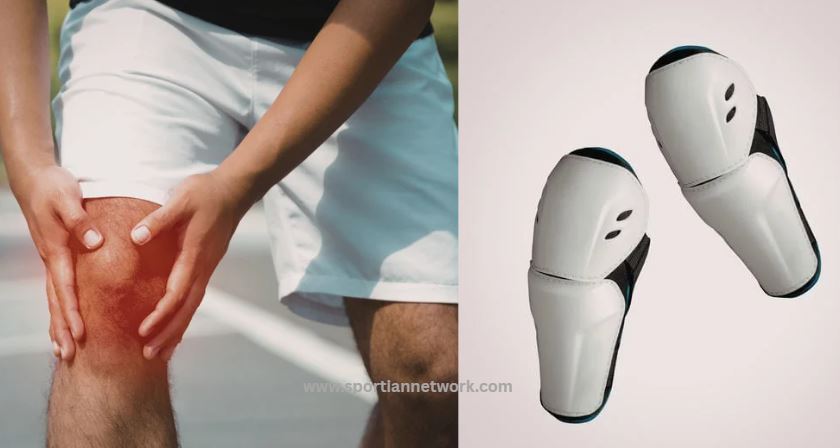
Its primary role is terminal knee extension, the final degrees of straightening the leg. Beyond that, the VMO plays a critical role in keeping the patella tracking correctly in its groove as the knee bends and straightens under load. When the VMO is weak or activates late relative to the vastus lateralis on the outer thigh, the kneecap pulls outward. Over time that lateral tracking causes patellofemoral pain, which is the condition most athletes know as runner’s knee.
Runner’s knee and patellofemoral pain syndrome in athletes is frequently a VMO problem at its root, even when the diagnosis focuses on the knee itself.
Why VMO Weakness Matters for Sport
In any sport involving running, jumping, cutting, or landing, the quadriceps absorb enormous force. Every time a foot hits the ground during a sprint, every time an athlete decelerates to change direction, every time a jumper lands from a contested rebound, the quad group works as a shock absorber and stabiliser simultaneously.
A quad group with a weak or poorly activating VMO cannot stabilise the patella through that sequence. The result is not always acute pain. Often it is a slow accumulation of stress on the patellar tendon and the cartilage beneath the kneecap.
Basketball knee pain and jumper’s knee is one of the most common expressions of this pattern. Repeated jumping with poor VMO control hammers the patellar tendon across a season. By mid-season many athletes are managing pain that started as a small tracking problem months earlier.
VMO weakness also connects directly to ACL injury risk. Poor quad control at the knee means the joint relies more heavily on passive structures like ligaments during high-speed deceleration. ACL tear prevention programmes consistently include terminal knee extension and VMO-targeted exercises for this reason.
Female athletes carry a higher baseline ACL risk due to anatomical and neuromuscular factors. Strength training programmes for women athletes that address VMO activation and quad-to-hamstring balance directly reduce that risk over a training cycle.
How to Train the VMO
The VMO responds well to specific exercises but also responds to the right cues and foot positioning in general lower body training. There is no magic exercise. There is a set of movements and loading strategies that target the medial quad more than standard bilateral squatting.
Terminal Knee Extensions
Terminal knee extension, often called TKE, is the most direct VMO exercise available. Attach a resistance band to a fixed point at knee height. Step into the loop so the band sits behind the knee. Stand facing the anchor point with a slight bend in the knee. From there, press through the heel and fully extend the knee against the band resistance.
The final 20 to 30 degrees of extension is where the VMO works hardest. TKEs isolate that range specifically. Athletes recovering from patellofemoral pain or patellar tendon issues use them as a first-stage loading exercise before progressing to heavier quad work.
They also serve as an excellent activation drill at the start of a session. Including TKEs in a dynamic warm-up before lower body training wakes up the medial quad before compound movements load it under heavier stress.
Step-Ups With Slow Descent
Step-ups are underrated in most training programmes and exceptional for VMO development. The eccentric (lowering) phase of a step-up, where the trail leg slowly descends toward the ground, demands significant medial quad control to keep the knee tracking correctly over the foot.
The key is tempo. A two to three second lowering phase beats a fast drop every time for VMO stimulus. Use a box height that allows a 90-degree knee bend at the top. Focus on keeping the knee driving out over the third and fourth toes throughout the movement.
Single-leg training in general develops the VMO more effectively than bilateral work because each leg must manage stability independently. Bilateral squats allow the stronger leg to compensate. Step-ups, split squats, and single-leg variations remove that compensation entirely.
Shallow-to-Mid Range Squats With Heel Elevation
VMO activation increases when the knee travels further forward over the toe during a squat. Heel elevation, achieved with a small wedge or plates under the heels, encourages this forward knee travel while keeping the trunk more upright.
This does not mean deep squatting is bad. It means that for athletes specifically targeting VMO development, a slightly elevated heel position in moderate-depth squats shifts more load onto the medial quad. Quarter squats with heels elevated and paused at the bottom are a useful VMO loading tool for athletes who cannot yet tolerate heavy full-range loading.
Leg Extensions in Short Arc
The leg extension machine gets criticism for not being sport-specific. For VMO development, it has a specific application. Short arc leg extensions, performed only through the final 30 to 40 degrees of extension, replicate the terminal range where the VMO does its most important work.
Use light to moderate loads. Control the lowering phase. Avoid heavy loading through full range on a compromised knee. For healthy athletes building VMO strength as prehab, a moderate load through the short arc adds direct VMO stimulus that compound movements miss.
Split Squats and Lunge Variations
Any split stance movement places the VMO of the front leg under significant load. Bulgarian split squats, forward lunges, and reverse lunges all develop the VMO through a combination of terminal extension demand and single-leg stability challenge.
Slow the descent and control the knee position throughout. A knee that caves inward during a split squat is the VMO failing to hold its position. That cue, keeping the knee tracking over the second and third toe on the way down, is the central coaching point for all lunge variations.
Romanian deadlifts and posterior chain work matter here too. Quad and hamstring balance determines how load is shared across the knee joint. An athlete with strong VMO and weak hamstrings still has a poorly balanced knee. Both sides of the joint need equal attention.
Programming VMO Training Into a Sport Schedule
Off-Season
The off-season is the time to address structural weaknesses. Athletes with a history of patellofemoral pain, patellar tendon problems, or ACL injury should build a targeted VMO block into their first training phase. Two to three direct VMO exercises per session, two to three times per week, across six to eight weeks produces measurable improvement in patellar tracking and medial quad strength.
Plyometrics come after the strength foundation is in place, not before. Athletes who begin jumping programmes without adequate VMO and quad control are loading a joint that cannot yet manage the task safely.
In-Season
In-season VMO work is maintenance-focused. TKEs as a warm-up activation drill. Step-ups with light to moderate load once or twice per week. Short arc leg extensions if the athlete can access a machine. The goal shifts from building to preserving what was developed during the off-season.
Load management matters more during the competitive season. A hard VMO session the day before a game is counterproductive. Time direct VMO work to allow at least 48 hours of recovery before high-intensity sport demands.
Youth Athletes
Young athletes developing their training foundations benefit enormously from early VMO awareness. Teaching proper step-up mechanics, controlled lunge patterns, and terminal knee extension technique before adding heavy loads builds the movement quality that prevents knee problems later.
Strength training for teenagers that includes single-leg work from the start produces athletes who arrive at high-school and college sport with knee mechanics that hold up under the increased intensity of competitive play.
VMO Training and the Bigger Picture
The VMO does not function in isolation. Glute strength, ankle mobility, and hip control all influence how the knee behaves under load. An athlete with excellent VMO strength but poor glute activation still gets knee valgus under fatigue because the hip collapses inward and drags the knee with it.
Glute training for speed and power is the necessary partner to VMO work. Ankle mobility from below determines whether the knee can track correctly during deep flexion. Build the whole chain, not just the muscle with the most visible problem.
Athletes who combine VMO training with strong posterior chain development, good ankle range of motion, and intelligent load management build knees that survive the demands of competitive sport across a long career. That is the goal. Not just fixing today’s pain, but building the structure that prevents tomorrow’s.