Asthma does not disqualify athletes from competitive sport. Paula Radcliffe won the London Marathon with it. Jerome Bettis played 13 NFL seasons with it. Peter Vanderkaay won Olympic gold with it. The list of elite athletes who compete with asthma is long enough to make the condition itself a non-argument.
This article is for informational purposes only and does not constitute medical advice. Athletes with asthma should work with a qualified medical professional to develop a personalised management plan before beginning or modifying a training programme.
What asthma does require is a smarter approach. Athletes who manage their condition well train consistently, compete without fear, and in many cases outperform healthy athletes who never learned to manage their breathing at all. Those who ignore it or misunderstand it struggle with avoidable symptoms, missed training blocks, and unnecessary anxiety around exercise.
This guide covers what exercise-induced bronchoconstriction actually is, what triggers it, and the practical strategies that keep asthmatic athletes in the game.
What Happens in the Airway During Exercise
Normal breathing during rest is relatively slow and flows through the nose, which warms and humidifies air before it reaches the bronchial tubes. During exercise that changes. Breathing rate increases, the mouth takes over, and large volumes of cooler, drier air move through the airways much faster than the respiratory system was designed to handle at rest.
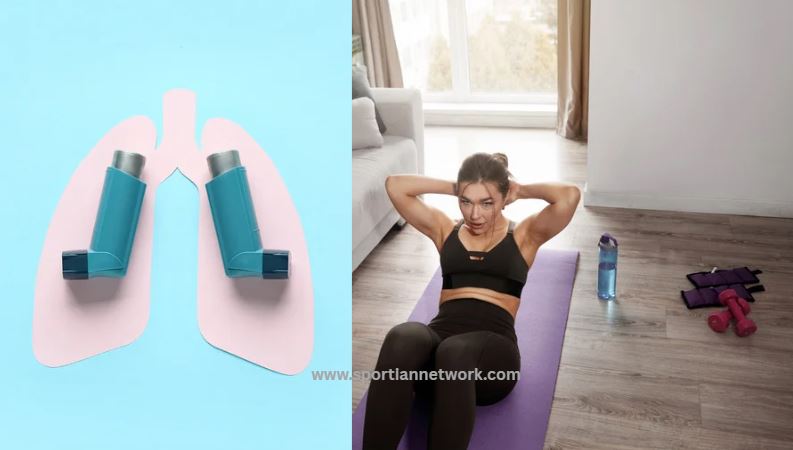
In athletes with asthma, this is the trigger. The bronchial tubes respond to cold, dry air by contracting. The smooth muscle lining the airway tightens. The result is narrowed tubes, reduced airflow, and the characteristic symptoms: tightening in the chest, wheezing, shortness of breath that seems disproportionate to the effort, and a persistent cough during or after exercise.
This specific pattern is called exercise-induced bronchoconstriction, or EIB. It can occur in athletes who have classic allergic asthma, in athletes with no other asthma symptoms, and in athletes who have never been formally diagnosed. Estimates suggest a significant portion of competitive athletes experience EIB at some point, many of them without knowing exactly what they are experiencing.
Know Your Triggers
EIB does not behave the same way in every athlete or every environment. Understanding your specific triggers is the first practical step toward managing symptoms rather than just reacting to them.
Cold dry air is the most common trigger. Winter training, outdoor sessions in low humidity, and heavily air-conditioned indoor facilities all produce the air conditions that narrow asthmatic airways fastest. Athletes who train in warm humid environments often notice dramatically fewer symptoms than those doing the same training in cold climates.
High pollen and allergen loads compound the problem for athletes with allergic asthma. Training outdoors during peak pollen season in spring adds a second inflammatory layer on top of the mechanical trigger from cold dry air. Checking local allergen counts before deciding on indoor versus outdoor training is a practical habit for sensitive athletes.
Chlorine in swimming pools affects some asthmatic swimmers. The respiratory irritant produced by chlorine reacting with organic material in pool water is well-documented as a bronchial irritant. Many asthmatic athletes find outdoor pools significantly better tolerated than indoor facilities with poor ventilation.
Air pollution raises baseline airway inflammation. Training near heavy traffic, in areas with elevated particulate matter, or during heat inversions when pollutants concentrate near ground level increases EIB risk meaningfully.
Illness and respiratory infections temporarily worsen airway reactivity. An athlete whose EIB is usually well-controlled may notice symptoms flaring significantly during or after a respiratory infection, sometimes for weeks afterward.
The Warm-Up Is Not Optional
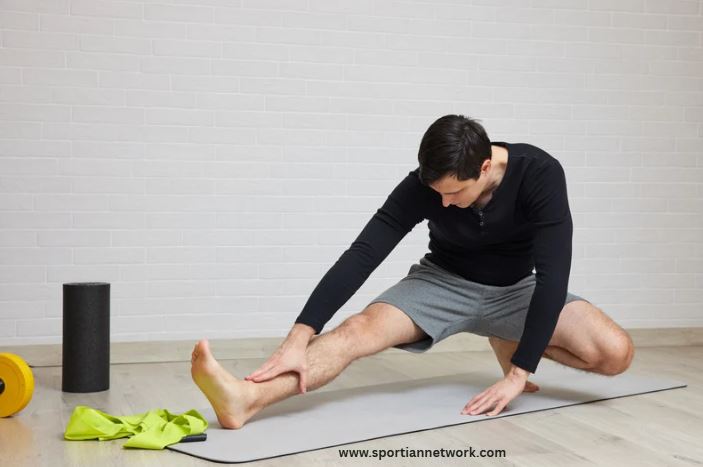
For asthmatic athletes, the warm-up is not a ritual or a formality. It is a clinical intervention. A properly structured warm-up can reduce EIB severity significantly and in some athletes produces a refractory period, a window of 40 to 90 minutes after the warm-up during which the airway is less reactive to subsequent exercise.
Warm-up science makes clear why a gradual increase in intensity protects tissue from sudden stress. For asthmatic athletes this principle is especially important. Moving from rest to high-intensity effort without preparation gives the airway no time to adjust. The bronchospasm that follows is both predictable and preventable.
A well-designed dynamic warm-up for asthmatic athletes builds intensity across 15 to 20 minutes rather than the more typical 10. The early phase keeps effort well below threshold. Short accelerations appear only in the final two to three minutes. By the time training begins in earnest, the airway has been exposed to increasing ventilation demands gradually enough to avoid a sharp bronchospastic response.
Breathing Technique During Training
How you breathe during exercise directly affects EIB severity. Nasal breathing at lower intensities warms and humidifies air before it reaches the bronchial tubes. The nose is a remarkably effective air conditioner. At higher intensities nasal breathing alone is insufficient, but even partial nasal breathing during moderate efforts reduces the volume of cold dry air hitting unprotected bronchial tissue.
Breathing techniques that improve athletic performance are worth studying closely for asthmatic athletes because the benefits go beyond performance. Controlled breathing rhythms reduce the hyperventilation that amplifies EIB. Athletes who breathe shallowly and rapidly under stress dry out the airway faster and create more CO2 offloading, both of which worsen bronchoconstriction.
In cold weather, a lightweight buff or scarf over the nose and mouth during outdoor warm-up traps moisture and heat in the air column before it enters the airway. Simple, effective, and used by many elite athletes in winter training environments.
Training Load and Intensity Management
Continuous high-intensity effort produces the worst EIB response. Interval-based training, where effort alternates between higher and lower intensities, generally produces fewer symptoms than sustained tempo work at moderate-high output.
Zone 2 training sits below the ventilation threshold where EIB typically triggers. Building a large aerobic base at low intensity develops the cardiovascular engine without repeatedly stressing the airway at triggering intensities. Aerobic base building is especially valuable for asthmatic athletes because it improves economy at all intensities, reducing the ventilation demand for any given pace.
Session RPE is a practical monitoring tool for asthmatic athletes. Tracking perceived exertion across sessions identifies the intensity bands where symptoms reliably appear. That data informs how sessions are structured around thresholds rather than guessing through them. An athlete who consistently develops symptoms at RPE 7 and above knows to approach that zone cautiously and to have a management strategy ready before reaching it.
Sport Selection and Environmental Modification
Some sports present lower EIB risk than others based on their environmental conditions and effort patterns.
Swimming in warm, humid indoor pools is often well-tolerated by asthmatic athletes because the air immediately above the water surface is saturated with moisture. The warm humid air reduces the drying effect on bronchial tissue. Many athletes with severe EIB in land sports tolerate swimming without significant symptoms.
Racket sports, team sports with natural breaks in play, and combat sports involving rounds rather than continuous effort all provide rest intervals that allow the airway to recover between high-intensity bursts. Continuous endurance events like distance running and cycling produce sustained hyperventilation that gives the airway no recovery window.
This does not mean asthmatic athletes cannot run or cycle. Paula Radcliffe’s marathon career makes that point clearly. It means conditioning the airway progressively through structured training rather than exposing it to sustained high-demand efforts before it is ready.
Working With Your Medical Team
Self-management is not a substitute for medical oversight. Asthmatic athletes should have a written asthma action plan developed with a doctor or respiratory specialist that covers training, competition, and emergency management.
Reliever medication such as a short-acting beta-agonist is typically prescribed for pre-exercise use in athletes with EIB. Timing matters. Used 10 to 15 minutes before the warm-up begins, reliever medication reduces bronchial reactivity through the training window. Used too late it provides limited protection during the effort that triggered symptoms.
For athletes who use pre-exercise medication in competition, awareness of sport governing body anti-doping rules around beta-agonists is essential. Therapeutic Use Exemptions are available for athletes with a diagnosed condition and documented medical need. The process varies by sport and governing body.
Athletes who notice their symptoms worsening despite previously adequate management should seek medical review. Airway reactivity changes over time with training, environmental changes, illness, and the natural progression of the condition.
Recovery After Asthmatic Episodes
An EIB episode during training is physically tiring in a way that extends beyond the session itself. The respiratory muscles work against bronchoconstriction, and the stress of impaired breathing activates the sympathetic nervous system. Recovery after a significant episode typically requires more rest than a comparable training session without symptoms.
Sleep quality for asthmatic athletes deserves attention because nocturnal asthma symptoms, even mild ones that do not fully wake an athlete, impair sleep architecture and blunt overnight recovery. Athletes who feel unrested despite adequate sleep duration should discuss nocturnal symptoms with their doctor.
Hydration supports airway health in a practical way. Dehydration thickens airway mucus and increases bronchial irritability. Maintaining adequate hydration before, during, and after training is a simple baseline habit that reduces one controllable contributor to EIB severity.
The Mental Side of Training With Asthma
Anticipatory anxiety around EIB is common and understandable. An athlete who has experienced a frightening episode during competition develops a conditioned fear response that can itself worsen symptoms through hyperventilation and shallow breathing patterns under stress.
Pre-competition anxiety management matters for asthmatic athletes partly for performance reasons and partly for airway reasons. An athlete who arrives at a start line in a state of heightened anxiety is already breathing shallowly and rapidly. That pattern puts the airway in a more reactive state before effort even begins.
Controlled pre-competition breathing routines, slow extended exhalations, and deliberate attention to breath rate in the minutes before effort begins are evidence-based anxiety reduction tools that also directly warm and humidify air entering the bronchial tubes. The mental and physical benefits stack.
A Condition to Manage, Not a Reason to Stop
Asthma managed well is not a barrier to elite sport. It is a variable that requires understanding and planning, the same way any physiological characteristic requires a training approach tailored to it.
Just as training with diabetes requires monitoring blood sugar and adjusting fuelling strategies, training with asthma requires monitoring airway triggers and adjusting how sessions are structured around them. The principle is the same. Understand the condition, build the management plan, and train around it systematically rather than hoping symptoms stay quiet.
Athletes who do that consistently compete at the highest levels of every sport on earth. The condition is not the obstacle. Ignorance of how to manage it is.