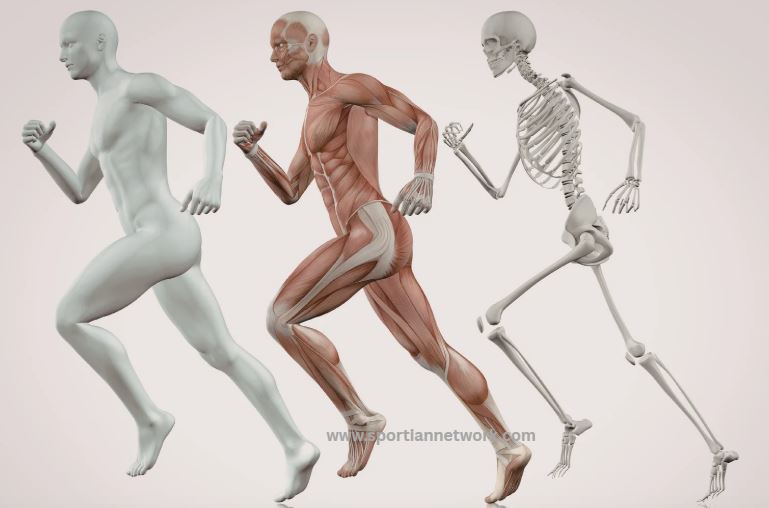

Muscle growth is not complicated, but it is widely misunderstood. The basic answer is this: muscles grow when training creates enough mechanical tension and cellular stress to trigger a repair process that builds the muscle back slightly larger and stronger than it was before. That process is driven by specific biological mechanisms, and understanding them changes how you train, how you eat, and how you think about recovery. This is how it actually works.
Why Muscles Grow at All
The human body does not build muscle because you want it to. It builds muscle because it has been given a reason to. That reason is stress, specifically the mechanical and metabolic stress produced by resistance training that exceeds what the muscle can comfortably handle.
From an evolutionary standpoint, muscle tissue is expensive. It requires significant energy to build and maintain. The body will not invest in that process unless repeated physical demand signals that the current muscle mass is insufficient for the work being asked of it. That signal, and the cascade of biological events it triggers, is the entire foundation of hypertrophy.
Understanding this changes the mindset around training. The goal of every session is not to exhaust yourself. It is to provide a sufficient stimulus. More is not always better. The right amount of the right kind of stress, followed by adequate recovery, is the formula. Everything else is detail.
The Three Mechanisms of Hypertrophy
Exercise scientists generally describe muscle growth through three primary mechanisms. All three contribute, and effective training tends to stimulate all three to varying degrees depending on how it is structured.
Mechanical Tension
Mechanical tension is the dominant driver of hypertrophy and the most important of the three mechanisms. When a muscle contracts against resistance, particularly through a full range of motion, the individual muscle fibers experience mechanical load at a cellular level. That load deforms the cell membrane and activates mechanosensors within the muscle fiber that trigger the growth signaling cascade.
The key variable here is tension across the full length of the muscle. Research over the last decade has consistently shown that training through a complete range of motion, particularly emphasizing the stretched position of a muscle, produces greater hypertrophy than partial range training. A bicep curl that goes all the way down, fully lengthening the muscle under load, produces more growth stimulus than a curl that stays in the middle portion of the range. This is why loaded stretching and exercises that challenge muscles in their lengthened position have become increasingly prominent in evidence-based training discussions.
Heavy compound movements like squats, deadlifts, rows, and presses produce high levels of mechanical tension across multiple muscle groups simultaneously, which is why they remain the foundation of any serious hypertrophy program.
Metabolic Stress
Metabolic stress is the burning, pump-producing sensation associated with higher-rep training and shorter rest periods. When muscles work repeatedly without full recovery between sets, metabolic byproducts like lactate, hydrogen ions, and inorganic phosphate accumulate within the muscle cell. That accumulation creates cellular stress that contributes to the hypertrophic response.
This mechanism is why higher-rep training with moderate loads still produces meaningful muscle growth despite using less absolute weight than low-rep strength work. The metabolic environment created by that kind of training is itself a growth signal, independent of the mechanical tension produced.
However, metabolic stress appears to be a secondary driver compared to mechanical tension. Research comparing high-rep and low-rep training matched for total volume suggests that mechanical tension is the more reliable primary stimulus. Metabolic stress contributes meaningfully but should not be the foundation of a hypertrophy program.
Muscle Damage
Muscle damage refers to the micro-tears in muscle fibers produced by training, particularly eccentric contractions where the muscle lengthens under load. The soreness felt one to two days after a hard training session is partly the result of this damage and the inflammatory response it triggers.
For years, muscle damage was considered a primary driver of growth. The thinking was that more soreness meant more damage meant more growth. Current research has largely revised that view. Muscle damage appears to contribute to hypertrophy but is neither necessary nor sufficient on its own. Athletes who are adapted to their training program experience much less muscle damage per session but continue to grow because mechanical tension and metabolic stress are still present.
Chasing soreness as a proxy for effective training is a mistake. A well-designed program that progresses systematically will produce growth without necessarily producing significant soreness in trained athletes.
What Actually Happens Inside the Muscle Cell
The signaling process that converts training stress into muscle growth runs through a specific molecular pathway. Understanding the key steps demystifies why certain training and nutrition practices matter.
The mTOR Pathway
The mammalian target of rapamycin, known as mTOR, is the central regulator of muscle protein synthesis. When mechanical tension activates the mechanosensors in a muscle fiber, one of the downstream effects is activation of mTOR. Once activated, mTOR signals the cell’s protein synthesis machinery to begin producing new contractile proteins, primarily actin and myosin, the proteins that actually make up the muscle fiber’s force-producing structure.
This is the direct molecular link between lifting and muscle growth. The heavier and more challenging the mechanical stimulus, the stronger the mTOR activation signal, and the greater the protein synthesis response. This is also why protein intake immediately surrounding training matters. The raw materials for new protein synthesis need to be available when the machinery is running. Our article on nutrition timing for athletes covers how to structure protein intake around training to support this process effectively.
Satellite Cells
Satellite cells are muscle stem cells that sit dormant alongside muscle fibers in unstressed conditions. Training activates them. Once activated, satellite cells proliferate, migrate to the sites of muscle damage, and donate their nuclei to existing muscle fibers.
This matters because muscle fibers are multinucleate cells, meaning they contain many nuclei, and each nucleus can only manage a certain volume of cellular machinery. As a muscle fiber grows larger, it needs more nuclei to manage the increased volume. Satellite cells provide those nuclei, which is why satellite cell activation is essential for meaningful long-term hypertrophy beyond the initial adaptations to training.
This mechanism also partially explains the concept of muscle memory. When a muscle that was previously trained atrophies due to inactivity, the additional nuclei donated by satellite cells during the growth phase are retained even as the muscle shrinks. When training resumes, those nuclei allow the muscle to rebuild to its previous size faster than it took to build that size initially. The cellular infrastructure is already in place.
Protein Synthesis vs Protein Breakdown
Muscle growth is not just about building new protein. It is about the balance between protein synthesis and protein breakdown. Both processes run continuously. Muscle is only gained when synthesis consistently exceeds breakdown over time.
Training increases both synthesis and breakdown simultaneously. The net result of a training session in isolation is often slight muscle loss, not gain, because breakdown is high immediately post-exercise. Recovery, particularly adequate protein intake and sleep, is what shifts the balance toward net synthesis. This is the biological reason why training without adequate nutrition and recovery produces minimal results despite significant effort.
Fiber Types and Their Role in Growth
Not all muscle fibers respond identically to training. The two primary fiber types, slow-twitch and fast-twitch, have different hypertrophic potential and respond differently to training stimuli.
Slow-Twitch Fibers
Slow-twitch, or Type I, fibers are fatigue-resistant, aerobically efficient, and produce moderate force over long durations. They are the dominant fiber type in endurance athletes and in muscles designed for sustained postural work. They do hypertrophy in response to resistance training, but their growth potential is more limited than fast-twitch fibers.
Higher-rep training, typically in the range of fifteen to thirty reps, tends to preferentially challenge slow-twitch fibers because the load is sustained long enough to require their fatigue-resistant properties. Including some higher-rep work in a hypertrophy program ensures these fibers receive an adequate growth stimulus.
Fast-Twitch Fibers
Fast-twitch, or Type II, fibers produce high force rapidly and fatigue quickly. They have significantly greater hypertrophic potential than slow-twitch fibers, which is why the largest and most powerful athletes tend to have a higher proportion of fast-twitch fibers. Heavier loads in the lower to moderate rep range, roughly four to twelve reps, preferentially recruit fast-twitch fibers because the force demands exceed what slow-twitch fibers can handle alone.
For athletes chasing maximum hypertrophy, training across a range of rep schemes ensures both fiber types receive sufficient stimulus. The practical implication is that a program built exclusively on high reps or exclusively on very low reps leaves growth potential untapped. Varying rep ranges across a training week or a training block is more effective than locking into a single range.
Our broader framework for posterior chain training and upper body strength programming both apply these principles across the major movement patterns.
Volume, Intensity, and Frequency: The Key Variables
Hypertrophy research has become increasingly specific about the training variables that drive growth. The three most important are volume, intensity, and frequency.
Volume
Training volume, measured as total sets multiplied by reps multiplied by load, is the most reliable predictor of hypertrophic response. More volume generally produces more growth up to the point where recovery capacity is exceeded. Beyond that point, additional volume produces diminishing returns and eventually impairs recovery.
Current research suggests that most muscle groups respond well to ten to twenty working sets per week for trained athletes. Beginners grow with significantly less volume because the stimulus threshold is lower when the neuromuscular system is adapting to training for the first time. Advanced athletes may need to push toward the upper end of that range to continue progressing.
Intensity
Intensity in hypertrophy research refers to proximity to failure rather than absolute load. A set taken close to muscular failure, where the next rep would be impossible or nearly so, produces a stronger hypertrophic stimulus than a set stopped with many reps in reserve, even when the same load is used.
This does not mean every set should go to failure. Training to failure consistently increases injury risk, impairs recovery, and reduces the total volume that can be sustained across a session. The evidence suggests that stopping one to three reps short of failure on most sets while occasionally taking sets to true failure produces the best combination of stimulus and recovery.
Frequency
How often a muscle group is trained per week matters, but less than volume and intensity once total weekly volume is equated. Training a muscle group twice per week produces more growth than once per week at the same total volume, likely because protein synthesis peaks and returns to baseline within 48 to 72 hours after a session. Distributing volume across two sessions keeps synthesis elevated more consistently throughout the week.
Training a muscle group three or more times per week can work for some athletes, but the benefit over twice per week is modest and the recovery demand is higher. For most athletes balancing hypertrophy training with sport-specific work, twice per week per muscle group is the most practical and effective frequency.
The Role of Progressive Overload
Progressive overload is the non-negotiable principle underlying long-term hypertrophy. The body adapts to a given training stimulus over time. Once adapted, that stimulus no longer provides sufficient challenge to drive further growth. Progress requires consistently increasing the demand placed on the muscle.
The most straightforward form of progressive overload is adding load over time. Lifting heavier weights as strength improves provides a continuously novel mechanical stimulus. However, load is not the only variable that can be progressed. Adding reps at the same load, increasing total weekly sets, reducing rest periods, and improving range of motion all represent forms of progressive overload that drive continued adaptation.
The plateau problem most athletes encounter is almost always a progressive overload problem. When training becomes comfortable and predictable, growth stops. The solution is not always to add more weight. Sometimes it is to add more volume, change exercise selection, or modify rep ranges in ways that present the muscle with new demands.
This is the real reason why strength training plateaus are so common. Athletes find a program they like, stop progressing it systematically, and wonder why results stall. The program was not the problem. The lack of progression was.
Nutrition: The Raw Material for Growth
Training creates the signal for muscle growth. Nutrition provides the raw material. Without adequate protein and sufficient total calories, the growth signal cannot be acted upon regardless of how well training is structured.
Protein
Protein provides the amino acids used to build new muscle tissue. Current evidence supports a daily intake of approximately 0.7 to 1 gram of protein per pound of bodyweight for athletes in a hypertrophy-focused training phase. Distributing that protein across four to five meals or feeding opportunities throughout the day maximizes the muscle protein synthesis response compared to consuming the same total in one or two large meals.
Leucine, one of the essential amino acids found in high-quality protein sources like meat, eggs, dairy, and quality plant-based proteins, is a particularly potent activator of the mTOR pathway. Ensuring each meal contains sufficient leucine, roughly two to three grams, helps maximize the synthesis signal from each feeding. Our detailed guide on how much protein athletes actually need covers the evidence on dosing, timing, and sources in full.
Calories
Muscle growth requires energy. Building new tissue is an anabolic process that demands a positive energy balance over time. Athletes trying to build muscle while in a significant calorie deficit are fighting their own biology. Some muscle gain is possible in a deficit for untrained beginners and athletes returning after a layoff, but meaningful hypertrophy in trained athletes requires at least maintenance calories and more reliably occurs in a modest surplus.
A surplus of 200 to 300 calories per day above maintenance is sufficient to support muscle growth without excessive fat accumulation. Larger surpluses accelerate fat gain without meaningfully accelerating muscle growth, because protein synthesis has a ceiling determined by training volume, hormonal environment, and recovery capacity rather than caloric availability alone.
Sleep: Where Growth Actually Happens
The growth signal comes from training. The growth itself happens during recovery, and the most important recovery period is sleep. During deep sleep stages, growth hormone secretion peaks and the cellular repair processes that rebuild muscle tissue are most active.
Consistently sleeping less than seven hours per night measurably reduces muscle protein synthesis rates and increases cortisol, the catabolic hormone that opposes muscle growth. Athletes who train hard and sleep poorly are working against themselves in the most fundamental way. Sleep is not a passive state during which nothing athletic happens. It is the primary growth period, and protecting it is as important as protecting training quality.
The relationship between sleep and athletic performance extends well beyond hypertrophy, covering recovery speed, reaction time, injury risk, and mental performance. Our article on why recovery is more important than training builds on this foundation across all the key recovery variables.
How Long Muscle Growth Actually Takes
Realistic expectations matter here because misinformation about the timeline of hypertrophy causes more program abandonment than almost any other factor.
Beginners can gain two to four pounds of muscle per month in the early stages of training when the combination of neural adaptation and genuine hypertrophy produces rapid visible changes. This phase typically lasts six to twelve months before the rate of gain slows significantly.
Intermediate athletes, roughly one to three years of consistent training, gain approximately one to two pounds of muscle per month under good training and nutrition conditions. Advanced athletes with several years of serious training behind them may gain half a pound to one pound per month, and that rate itself represents meaningful progress given how close to their genetic potential they are training.
These numbers sound modest. Over years of consistent training they compound into transformative physical changes. The athletes who achieve remarkable physiques are almost never people who found a secret program or a magic supplement. They are people who trained consistently for five to ten years with good technique, adequate protein, and sufficient sleep. The timeline is the most important variable that most people refuse to accept.
The Practical Takeaway
Muscle grows in response to mechanical tension, metabolic stress, and the repair process triggered by training damage. It requires protein to build, calories to fuel, sleep to execute, and progressive overload to keep the stimulus relevant over time.
None of those requirements are complicated. They are just consistent. The athletes who understand the biology train more patiently, recover more deliberately, and build more muscle over time than those chasing novelty and shortcuts. The mechanism does not change. Only the consistency does.