There are very few exercises with a research record as strong as the Nordic curl. Most hamstring exercises are decent. The Nordic curl is exceptional, and the gap between it and alternatives is wide enough that every serious athlete should understand why it exists and how to use it.
This article covers the mechanics behind the exercise, what the evidence shows, how to build toward it if you cannot do one yet, and how to programme it across a training year.
What a Nordic Curl Actually Is
The Nordic curl, also called the Nordic hamstring exercise or partner-assisted hamstring curl, is a bodyweight eccentric exercise performed from a kneeling position. You kneel on a padded surface with your feet anchored behind you, either by a partner holding your ankles, a fixed bar at ankle height, or a dedicated piece of equipment. From that position you lower your torso toward the ground as slowly as possible by controlling the descent with your hamstrings. You catch yourself at the bottom and push back to the start.
The key word is eccentric. The hamstrings are working hardest while they lengthen, not while they shorten. That distinction is central to why the exercise produces results that other hamstring work cannot match.
Why the Eccentric Phase Is the Whole Point
Most hamstring exercises load the muscle concentrically, meaning the hamstrings produce force while shortening. Leg curls, Romanian deadlifts, and good mornings all involve eccentric components, but the Nordic curl is almost entirely eccentric in its working phase. During the lowering portion, your hamstrings are under enormous load while extending, which is exactly the position they are in during high-speed running when hamstring strains occur.
Sprint-related hamstring injuries happen during the late swing phase of the stride, when the hamstring is working eccentrically to decelerate the lower leg before foot contact. An athlete who has never specifically trained the hamstring to be strong in this lengthened position under load has a genuine structural weakness that shows up as injury. The Nordic curl addresses this directly by training the muscle exactly where it is vulnerable.
This is not a theoretical connection. The research on Nordic curls and hamstring injury rates in field sports is among the most replicated findings in sports science, which is covered in more depth below.
What the Research Actually Shows
Injury Reduction
The evidence on Nordic curls reducing hamstring strain injuries is robust. Multiple large-scale trials in football, soccer, and rugby have demonstrated injury rate reductions of 50 percent or more when Nordic curls are included in a structured programme. A landmark study involving over 900 professional footballers found that consistent Nordic curl use reduced hamstring injuries by around 51 percent and reduced the severity of injuries that did occur.
These are not marginal effects from a borderline intervention. A 50 percent reduction in one of the most common and costly injuries in field sport is a significant finding. It explains why the exercise has become standard in elite team environments across most major sports.
Architectural Changes in the Muscle
Nordic curls do not just make hamstrings stronger. They change the structure of the muscle itself. Research using ultrasound imaging shows that consistent Nordic curl training increases the length of the muscle fascicles, the bundles of muscle fibres that make up the hamstring. Longer fascicles can produce force across a wider range of motion and are associated with lower injury risk and better sprint performance.
This architectural adaptation does not occur to the same degree with traditional hamstring exercises. It appears to be specific to the eccentric loading pattern that the Nordic curl provides. It takes approximately eight to twelve weeks of consistent training to appear on imaging, which aligns with the timeframe athletes typically report noticing improvements in hamstring resilience.
Sprint Speed
Beyond injury prevention, Nordic curl training improves sprint velocity in field sport athletes. The mechanism connects to the same eccentric hamstring strength that makes the exercise protective. A stronger, longer fascicle hamstring absorbs force more effectively during ground contact and applies force more forcefully during drive phases. Several studies in professional soccer players have shown measurable sprint time improvements following structured Nordic curl programmes. The effect is not dramatic in isolation but is meaningful in context.
Who Needs Nordic Curls
The short answer is most athletes in most sports. Hamstring strains are among the most common injuries in running, football, soccer, rugby, basketball, and track and field. The Nordic curl reduces that risk in populations where this data has been collected and there is no reason to believe the protective mechanism is sport-specific.
Combat sport athletes carry different hamstring injury risk profiles but still benefit from the eccentric strength and fascicle adaptation. Cyclists and swimmers have lower hamstring strain rates but can use the Nordic curl for structural development and as a complement to their primary training. The exercise is relevant across almost every sporting context, which is why it appears on most evidence-based injury prevention protocols regardless of sport.
Our article on the 5 best hamstring exercises for injury prevention and speed covers where the Nordic curl sits relative to other hamstring work, and our guide on how to prevent ACL tears explains why posterior chain strength broadly affects knee injury risk, with the hamstring being the most critical player.
The Problem Most Athletes Have With Nordic Curls
Nordic curls are brutally hard. Most athletes who attempt one without any preparation immediately collapse to the floor after dropping a few centimetres. This is not a failure of effort. It reflects the reality that the exercise demands a level of eccentric hamstring strength that most people have never developed.
The common mistake is giving up on the exercise because of this initial experience. The solution is a structured progression that builds eccentric hamstring capacity incrementally before attempting a full Nordic curl. The other common mistake is performing Nordic curls too infrequently or with too little volume to drive adaptation. Two sets of three once a week will not produce the injury prevention effects documented in the research. Consistent loading over several weeks is required.
How to Progress Toward a Full Nordic Curl
Stage One: Eccentric Slider Curl
Lie on your back with both heels on a slider or a towel on a smooth floor. Push your hips into a bridge and drag your heels toward your body using your hamstrings. Extend them back out slowly, controlling the eccentric. This introduces eccentric hamstring loading in a low-demand position and builds the foundation of muscle control needed for more demanding work.
Aim for 3 sets of 10 to 12 reps, focusing entirely on the quality and slowness of the eccentric extension phase.
Stage Two: Assisted Nordic Curl
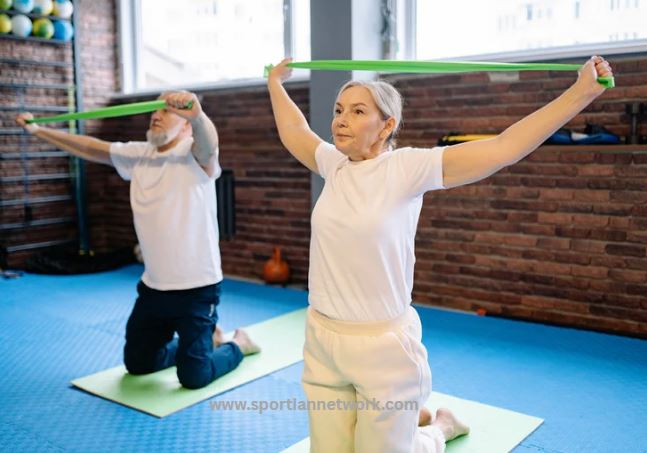
Perform a Nordic curl with a resistance band anchored in front of you and held across your chest. The band assists you on the way down by reducing the effective load your hamstrings must control. This allows you to experience the full movement pattern and range of motion while the demand is reduced enough to manage.
Start with a heavy band and use it for 3 sets of 4 to 6 reps. As the movement becomes more controlled, switch to a lighter band and continue reducing assistance over subsequent weeks.
Stage Three: Partial Nordic Curl
Perform the Nordic curl without assistance but only lower yourself 30 to 45 degrees from vertical. Catch yourself on your hands before reaching that point and reset. The partial range targets the most challenging portion of the eccentric and avoids the bottom range where control breaks down entirely.
Work in the partial range for 3 to 4 sets of 4 to 6 reps, gradually increasing the depth of each rep over several training weeks.
Stage Four: Full Nordic Curl
From kneeling with ankles anchored, lower your entire body toward the ground as slowly as possible under full hamstring control. Catch yourself with your hands at the bottom. Push explosively back to the start position using your hands to assist the concentric return. Your hamstrings are not strong enough yet to drive the concentric independently and that is normal.
A full Nordic curl executed with three to four seconds of control on the way down is a genuine achievement. Most athletes take six to twelve weeks of progressive work to reach this from a starting position of zero.
How to Programme Nordic Curls
In-Season Programming
During the competitive season the primary goal is injury prevention, not additional adaptation. Two sessions per week of low to moderate volume is the established protocol in most team sport research. Three sets of four to six reps per session is the target working range. Volume beyond this adds unnecessary fatigue without proportionally greater protection.
The most common reason Nordic curl programmes fail in team sports is that in-season soreness from the first few sessions leads coaches to abandon the programme. Initial delayed onset muscle soreness from Nordic curls is significant and can last several days. It diminishes substantially after two to three weeks of consistent use as the muscle adapts to the eccentric stimulus. Persisting through this initial period is essential.
Off-Season and Pre-Season Programming
Outside of competition, volume and progression are the priorities. Four sets of six to eight reps twice per week is appropriate for athletes building the exercise from scratch. As strength improves, sets of four to six reps at slower tempos become the development tool. The eccentric phase should be controlled to three to four seconds minimum.
Pre-season is the ideal time to build fascicle length adaptations because the training load can be structured specifically around the Nordic curl without managing competition fatigue simultaneously. Running this as a 10 to 12 week block with consistent progression builds the structural protection that carries through the season.
Integration With Other Posterior Chain Work
Nordic curls work best alongside other posterior chain development rather than replacing it. The Romanian deadlift trains hamstring strength through hip extension. The Nordic curl trains hamstring strength through knee flexion with an eccentric emphasis. These are complementary movements that together produce more complete hamstring development than either achieves alone.
Our full guide on posterior chain training covers how to structure the hip hinge and knee flexion hamstring work together across a training week, and our article on single leg training addresses the asymmetry component that Nordic curls address on a bilateral basis but which also requires unilateral attention.
Nordic Curls for Return to Sport After Hamstring Strain
Athletes returning from a hamstring injury should not begin Nordic curls immediately following a strain. The acute phase of hamstring injury management involves rest, gradual loading through pain-free range, and progressive reintroduction of eccentric work as healing progresses.
Nordic curls are typically introduced in the later stages of rehabilitation, once full range of motion is restored and the athlete can tolerate lower-demand eccentric exercises without pain. When introduced appropriately, the Nordic curl is one of the most important tools in the return-to-sport process because it rebuilds the exact eccentric strength that was likely deficient before the original injury occurred.
Our guide on hamstring strain rehab covers the full progression from injury to return, including where Nordic curls fit in the rehabilitation timeline and how to progress them safely alongside running reintroduction.
Common Form Errors
Allowing the hips to flex during the descent is the most common technical error. When the hips break, the hamstrings are partially unloaded because the hip flexion shortens the overall posterior chain length. The body does this automatically to reduce the demand. The correction is maintaining a rigid straight line from knees to shoulders throughout the entire lowering phase.
Moving too fast is the second error. The exercise only produces its specific eccentric adaptation when the lowering is genuinely slow and controlled. Dropping quickly to the floor and catching yourself with your hands is not a Nordic curl. It is a fall with hamstring involvement. Three to four seconds minimum on the way down is the working target.
Starting too ambitious with volume is the third error. Nordic curls produce significant delayed onset muscle soreness in athletes who are not conditioned to them. Beginning with two sets of three to four reps and building progressively over weeks is far more effective than beginning with five sets of eight and spending the following week unable to walk downstairs. The research protocols that produced the injury prevention data used conservative starting volumes and gradual progression.
Equipment Options
A partner holding the ankles is the simplest setup. A barbell placed over the ankles with a pad for comfort works for solo training. Dedicated Nordic curl benches allow solo training with adjustable ankle fixation at the correct height and are the most comfortable option for high-volume work. A lat pulldown machine can serve as an improvised anchor in a commercial gym by placing the knees on the seat pad and hooking the ankles under the kneeling pad.
The exercise does not require specialised equipment to be effective. A partner and a padded floor surface is enough to run any of the protocols described in this article.