
This article is for educational and informational purposes only. It is not medical advice. Always consult a qualified healthcare professional or physiotherapist before returning to sport after any injury.
A hamstring strain is one of the most common injuries in sport. It is also one of the most mismanaged. Athletes feel better after a week, assume they are healed, go back to full training, and pull the same muscle again within days. That cycle repeats itself until what started as a grade one strain becomes a chronic problem that follows them for seasons.
The muscle feeling better is not the same as the muscle being ready. Understanding that difference is the entire point of this guide.
This is a complete breakdown of what happens inside the hamstring when it strains, how the rehab process actually works, and exactly how to know when it is safe to return to full sport without putting yourself back on the treatment table.
What Actually Happens When You Strain Your Hamstring
A hamstring strain is a tear in one or more of the three muscles that make up the hamstring group: the biceps femoris, semitendinosus, or semimembranosus. The tear happens when the muscle is forced to lengthen under load faster than it can handle, usually during the late swing phase of a sprint.
Strains are graded on a three-point scale. Grade one is a minor tear involving less than ten percent of the muscle fibers. Pain is present but the athlete can usually still walk and move with some discomfort. Grade two is a partial tear involving a more significant portion of the muscle. Bruising, swelling, and notable strength loss are common. Grade three is a complete rupture, which is relatively rare but requires a much longer recovery timeline and sometimes surgical intervention.
Most sports-related hamstring strains are grade one or grade two. Both require structured rehabilitation to heal properly. Both are frequently undertreated because the initial pain fades faster than the tissue actually repairs.
The Four Stages of Hamstring Rehab
Proper hamstring rehabilitation follows a progression. Each stage has specific goals. Moving too quickly through any stage increases reinjury risk significantly.
Stage One: Protection and Pain Management (Days 1 to 5)
The first priority after a hamstring strain is protecting the injured tissue from further damage. This does not mean complete rest. It means controlled, pain-free movement within a limited range.
In the first 48 hours, apply ice for 15 to 20 minutes every two to three hours to manage swelling. Compression around the thigh helps limit fluid accumulation. Elevate the leg when resting. Avoid heat, deep massage, and aggressive stretching during this window. All three increase blood flow to the area and can worsen the initial inflammatory response.
Gentle walking is appropriate from day one if it is pain-free. The goal is to maintain circulation and prevent the muscle from stiffening without stressing the healing fibers.
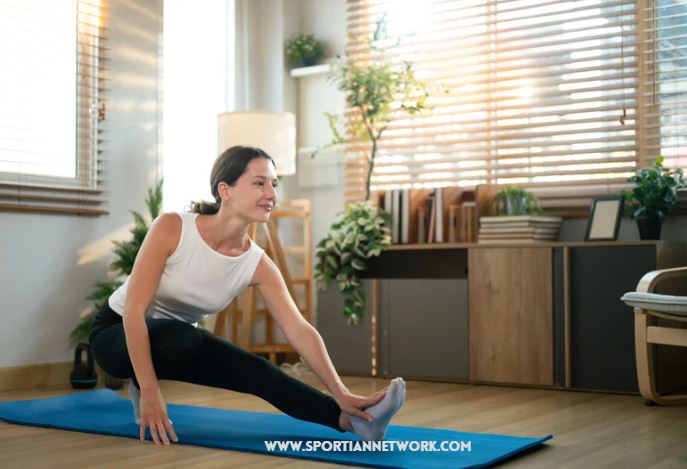
Pain-free range of motion exercises begin in this stage. Lying hamstring stretches at a very gentle tension, not aggressive lengthening, help maintain mobility without disrupting the repair process.
Stage Two: Early Strengthening (Days 5 to 14)
Once acute pain and swelling have reduced, early strengthening begins. The goal in this stage is to stimulate the healing tissue with controlled load so it repairs along the correct alignment of muscle fibers.
Isometric exercises come first. An isometric contraction means the muscle produces force without changing length. Lying prone and pressing the heel gently into the floor activates the hamstring without moving the joint. These contractions promote healing without risk of re-tear.
From isometrics, the progression moves to light isotonic work. Prone leg curls with no resistance, then with a light resistance band. The range of motion should stay within a pain-free window. If pain appears during the movement, the load or range is too much for that stage of healing.
Nordic hamstring curl variations are not introduced yet. The eccentric demand of the Nordic is exactly what tears hamstrings. It is also what ultimately prevents future tears, but only when the tissue is ready for that level of loading. Introducing it too early is a common mistake in self-managed rehab.
For context on why eccentric loading matters so much for hamstring health long term, pro soccer hamstring training methods cover the full picture of how elite clubs manage this muscle.
Stage Three: Progressive Loading and Running (Weeks 2 to 4)
This stage is where most athletes get into trouble. Pain is largely gone, the muscle feels normal, and the temptation to return to full training is strong. The tissue is not ready.
Collagen, the primary structural component of repaired muscle tissue, takes six to eight weeks to remodel into strong, aligned fibers. The muscle may feel healed at two weeks. Structurally, it is still fragile.
Progressive loading in stage three includes Romanian deadlifts with light weight, single-leg hip hinges, and walking lunges. These exercises load the hamstring through an increasing range of motion under controlled conditions.
Running is reintroduced gradually. The sequence matters. Walking at normal pace comes first, then brisk walking, then light jogging at 50 percent effort on a straight line. No cutting, no acceleration, no sprinting. The goal is to reintroduce the movement pattern without the forces that caused the original injury.
A useful test at this stage is the single-leg hamstring bridge. Lie on your back, one foot flat, the other leg extended. Drive the hips up using only the injured leg. If this produces pain or significant weakness compared to the healthy side, the tissue is not ready for running loads.
Mobility work plays a key role throughout this stage. Tight hip flexors and limited hip extension mechanics increase hamstring stress during running. Addressing those restrictions now reduces reinjury risk when full training resumes. Mobility work for athletes is often the missing piece that determines whether rehab sticks or the injury keeps coming back.
Stage Four: Return to Full Training (Weeks 4 to 8)
Stage four is the bridge between rehabilitation and sport. Running intensity increases progressively. Straight-line jogging progresses to striding at 70 percent, then 80 percent, then 90 percent of maximum sprint speed. Each intensity level should be pain-free and confident before the next is attempted.
Change of direction is reintroduced before contact or competition. The hamstring is stressed differently during cutting and lateral movement than during straight-line sprinting. Both patterns need to be tested before the athlete returns to a training session or game environment.
The Nordic hamstring curl is reintroduced here, starting with assisted or partial range versions. It is the single most important exercise for preventing reinjury and it belongs in the program from this point forward, permanently.
Criteria for returning to full sport should include full pain-free range of motion, hamstring strength within ten percent of the uninjured side as measured by a single-leg test, the ability to sprint at 95 percent of maximum speed without compensation, and confidence in cutting and change of direction movements.
That last point matters more than most rehab protocols acknowledge. An athlete who is physically ready but psychologically hesitant will compensate during movements that stress the hamstring. Compensation patterns create new injury risks. Full return to sport requires both physical readiness and genuine confidence in the muscle.
The Reinjury Problem and How to Prevent It
Hamstring reinjury rates in sport are alarmingly high. Research published in the British Journal of Sports Medicine reports that reinjury rates following hamstring strain range from 12 to 34 percent depending on the sport and the quality of rehabilitation. In some studies of professional soccer players, the rate approaches one in three.
The primary reasons for reinjury are returning too soon, skipping the eccentric loading phase of rehab, and failing to address the underlying biomechanical factors that contributed to the original injury.
Underlying factors worth addressing include weak glutes, which force the hamstring to compensate during hip extension. Glute training for speed and power is directly relevant here because a stronger posterior chain reduces the relative demand on the hamstring during sprinting.
Tight hip flexors that limit hip extension also increase hamstring stress by forcing the muscle to work through a greater range under load. Anterior pelvic tilt, where the pelvis tips forward and the lower back arches excessively, places the hamstring in a chronically lengthened position that makes it more vulnerable during explosive movements.
Addressing all of these factors during the rehabilitation period, not just treating the site of pain, is what separates athletes who return successfully from those who keep reinjuring.
What a Proper Return to Sport Timeline Looks Like
Every hamstring strain is different. Grade, location, and individual healing rates all vary. But a realistic general timeline for a grade two hamstring strain looks like this.
Week one: Pain management, gentle walking, pain-free range of motion work. No running.
Week two: Isometric and light isotonic strengthening. Straight-line jogging at 50 percent if pain-free by end of week.
Week three: Progressive loading with RDLs and hip hinges. Running at 60 to 70 percent. No cutting or acceleration work.
Week four: Running at 80 percent. Reintroduce change of direction at low intensity. Begin assisted Nordic curl variations.
Weeks five and six: Running at 90 to 95 percent. Full cutting and sport-specific movement patterns. Full Nordic curl program established.
Week six to eight: Full return to training and competition if all criteria are met.
A grade one strain can progress faster. A grade three or proximal hamstring avulsion, where the tendon tears away from the sitting bone, requires a significantly longer timeline and specialist management.
Recovery Between Sessions During Rehab
Recovery quality directly affects how fast the tissue repairs. Sleep is the most important recovery variable. Deep sleep is when growth hormone is released and muscle repair peaks. Compromised sleep during rehab slows tissue healing in a measurable way.
Nutrition matters too. Adequate protein intake supports the collagen synthesis needed for structural repair. Anti-inflammatory foods and evidence-based recovery supplements like omega-3 fatty acids and tart cherry can meaningfully support the healing process during a structured rehab program.
Soft tissue work on the surrounding muscles, particularly the glutes, hip flexors, and calf, maintains mobility in the kinetic chain without directly stressing the healing hamstring. Foam rolling and massage gun protocols are useful tools for managing tissue quality in those surrounding areas throughout the rehab period.
The Bottom Line
A hamstring strain is a serious injury that deserves a serious rehabilitation process. The athletes who return successfully and stay healthy are the ones who respect the timeline, follow the progression, and do not let the absence of pain convince them the work is done.
Feeling better is the start of the process, not the end of it. Build the strength back properly, address the factors that caused the injury, and return to sport on the muscle’s terms, not the calendar’s.
The hamstring will tell you when it is ready. The job is to listen.