
Courseto is the training method where athletes practice skills, movements, and decisions specifically along the directional pathways their sport demands most frequently, building movement efficiency, decision accuracy, and physical conditioning that transfers directly to competition rather than training generic athletic qualities in directions the sport rarely uses.
Most athletic training is direction-agnostic. Squats go straight down. Treadmill runs go straight forward. Rows go straight back. These movements build physical capacity but they do not build the sport-specific directional competency that competition actually tests.
Courseto changes that. It maps the directional demands of the sport first and builds training around those maps second. The result is physical preparation that lands exactly where competition needs it.
Why Direction Matters More Than Most Athletes Realize
Movement direction is one of the most underappreciated variables in athletic training. Two athletes with identical strength levels, identical conditioning, and identical technical skill can perform very differently in competition simply because one has trained extensively in the directions their sport demands and the other has not.
The body adapts specifically to the demands placed on it. This principle is well understood for intensity and volume. It is far less consistently applied to direction. An athlete who builds all their lower body strength through bilateral squatting has built force production in the sagittal plane. However, if their sport requires repeated lateral cuts, rotational power, and diagonal acceleration, that strength has limited transfer to the movements that actually determine competitive performance.
Furthermore, injury patterns follow directional training gaps precisely. Athletes who are strong in trained directions but weak in untrained ones are vulnerable at exactly the points where competition forces them outside their prepared range. ACL tear prevention programs specifically address this by building strength and control in the lateral and rotational directions where the knee is most vulnerable because those are directions most traditional training neglects.
Courseto builds the comprehensive directional competency that prevents these gaps from becoming injury sites or performance limiters.
Mapping Sport-Specific Directional Demands
Before applying courseto, the athlete or coach maps the directional demands of the sport with honest specificity. This means identifying the most frequent directions of movement, the highest-force directions, the directions where speed is most critical, and the directions where technical precision under fatigue matters most.
A basketball player’s directional map includes forward acceleration, lateral defensive shuffling, diagonal cuts toward and away from the ball, rotational torso movement during shooting and passing, and backward defensive recovery. Each direction carries a different frequency, a different force requirement, and a different technical demand. Courseto builds training inputs that match each of those directional realities rather than approximating them with generic athletic work.
A wrestler’s directional map is more complex because the opponent actively redirects force in unpredictable ways. Courseto for wrestling therefore includes not only the primary attack and defense directions but also the reactive direction changes that follow from opponent movement. Wrestling training that includes courseto preparation produces athletes who are strong and conditioned in the directions competition actually uses rather than only in the directions a standard gym program covers.
A sprinter’s directional map appears simple at first. Forward. However, courseto reveals that the force directions within that forward motion include horizontal ground reaction force during acceleration, vertical force during maximum velocity, and rotational forces through the trunk during arm drive. Each represents a distinct courseto training direction with specific exercise selections that develop it.
The Courseto Training Framework
Courseto organizes training into three layers that build directional competency systematically rather than randomly.
Layer One: Directional Strength. The athlete builds force production capacity specifically along the mapped sport-relevant directions. This is not general strength work. It is directionally targeted strength work chosen because it develops force in the vectors the sport demands most.
Lateral band walks, lateral lunges, and lateral sled pushes develop strength in the frontal plane for sports with significant lateral demands. Rotational medicine ball throws, Pallof press variations, and cable rotations develop the transverse plane strength that rotational sports require. Hip hinge variations oriented at specific diagonal angles develop the force production capacity for diagonal cutting and acceleration movements.
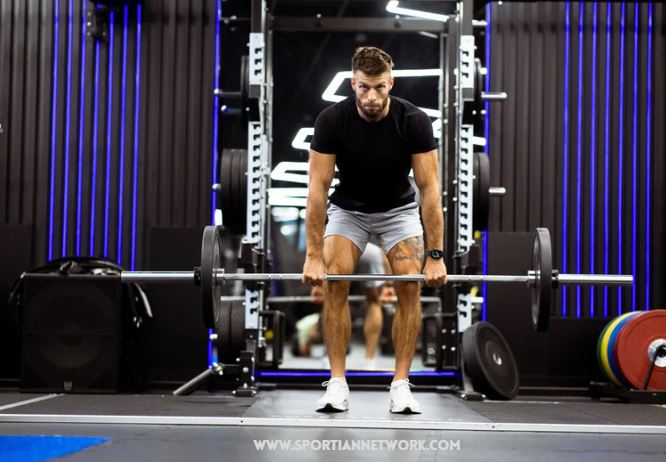
Hip hinge mechanics are particularly valuable in courseto because the hip hinge pattern appears in multiple sport-relevant directions simultaneously. A properly developed hinge translates to forward acceleration, lateral power production, and rotational force generation depending on how it is oriented and loaded.
Layer Two: Directional Speed and Conditioning. The athlete builds conditioning capacity specifically in sport-relevant movement directions. This means change-of-direction conditioning work that matches the actual patterns the sport produces rather than generic shuttle runs that approximate them loosely.
Reactive agility drills that require direction changes in response to unpredictable cues are more valuable than pre-planned agility courses for most team sport athletes because competition direction changes are reactive rather than pre-planned. Speed training fundamentals establish the physical speed ceiling. Courseto layer two builds the ability to express that speed specifically in the directions competition demands.
Layer Three: Directional Skill Integration. Technical skills are practiced specifically within the directional contexts the sport most frequently demands. This is where courseto connects physical preparation to technical execution most directly.
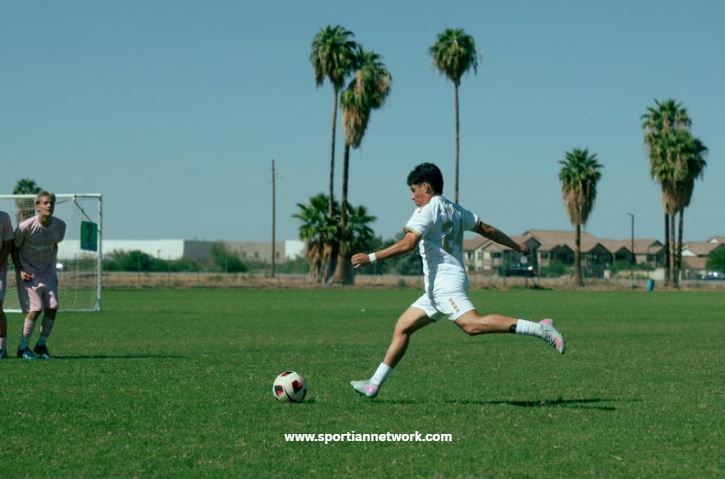
A soccer winger practices dribbling, shooting, and crossing specifically from the wide attacking positions their sport role demands rather than from the center of the field where general skill drills often place them. The technical skill is the same. The directional context is specific. That specificity is what makes the skill transfer to competition without the translation cost that direction-agnostic skill practice requires.
Courseto in Team Sports
Team sports offer the richest courseto application because positional roles create highly specific directional profiles that generic athletic training completely ignores.
A point guard and a center in basketball share the same sport but have almost entirely different directional demands. The point guard’s courseto map emphasizes forward-to-lateral transition speed, backward defensive positioning, and diagonal penetration angles. The center’s courseto map emphasizes vertical force production for rebounding, backward post positioning, and short lateral movements within the paint. Training both athletes with the same directional emphasis wastes the specificity that courseto is designed to capture.
Soccer fullbacks and central midfielders present the same contrast. A fullback’s directional demands are dominated by high-speed forward runs, sharp lateral defensive recovery, and aerial challenge positioning. A central midfielder’s demands emphasize short multidirectional bursts, rotational passing mechanics, and sustained directional variety across the full match duration. Courseto makes these distinctions explicit and trains each role accordingly.
Single leg training integrates naturally into courseto because unilateral movements allow directional loading specificity that bilateral movements cannot provide. A single leg lateral step-up loads the frontal plane hip and knee stabilizers specifically. A single leg forward lunge with rotation loads the diagonal and transverse plane demands simultaneously. These targeted movements are courseto layer-one tools that bilateral training simply cannot replicate.
Courseto in Individual Sports
Individual sports often appear to have simpler directional profiles than team sports. In most cases, that appearance is misleading.
Swimmers move through water in what appears to be a single forward direction. However, courseto analysis reveals stroke-specific rotational demands, underwater dolphin kick vertical force production, and turn-specific horizontal deceleration and reacceleration that each represent distinct directional training targets. Swimming for fitness preparation that includes courseto-informed dryland training produces swimmers who are stronger in exactly the directional components their stroke mechanics depend on.
Cyclists appear to move purely forward. However, climbing, sprinting, and cornering each produce different force direction profiles through the body. A climber’s courseto map emphasizes vertical force production and trunk stability under high-torque pedaling. A sprinter’s courseto map emphasizes horizontal power transfer and upper body stability under maximum effort. A criterium racer’s courseto map includes the lateral stability demands of repeated high-speed cornering that neither of the other profiles adequately addresses.
Gymnasts face perhaps the most complex directional courseto challenge in individual sport because their disciplines require force production in virtually every direction including overhead, inverted, and rotational planes that most strength programs never approach. A courseto-informed gymnastics strength program maps each apparatus’s specific directional demands and builds targeted strength accordingly rather than relying on general conditioning to cover gaps that only specific directional preparation can fill.
Courseto and Injury Prevention
The injury prevention value of courseto is significant and often more immediately compelling to athletes than the performance enhancement argument.
Most non-contact sports injuries happen in directions the athlete has not adequately prepared for. The ankle rolls laterally. The knee buckles inward under a rotational load. The lower back fails under a diagonal force that straight-plane training never addressed. These are courseto deficits expressing themselves as injury events.
Posterior chain training builds the foundation. Courseto builds the directional specificity on top of that foundation. An athlete with a strong posterior chain and comprehensive directional preparation through courseto has significantly higher tissue resilience across the full range of directions competition produces compared to an athlete with equal general strength but no directional specificity.
Hamstring strain rehabilitation that incorporates courseto principles returns athletes to sport more completely than rehabilitation that only addresses sagittal plane strength because hamstring injuries frequently occur during lateral or rotational movements where the muscle is loaded in an untrained direction. Courseto rehabilitation addresses those directional gaps rather than only restoring the forward-direction strength that standard rehab covers.
Furthermore, courseto-informed warm-ups prepare the body for the specific directional demands of the upcoming session rather than providing generic tissue preparation that leaves sport-specific directions cold. An athlete warming up for a lateral-demand-heavy training session whose warm-up includes directionally specific activation for lateral hip stability, frontal plane knee control, and lateral ankle proprioception arrives at the first drill with genuinely prepared tissue rather than warm tissue that is still unprepared for the specific directions training will demand.
Programming Courseto Effectively
Courseto does not require abandoning existing training. It requires auditing existing training for directional gaps and adding targeted work to fill them.
Start with an honest directional audit of your current training program. List every exercise and assign it the primary force direction it trains. Identify which sport-relevant directions are well represented and which are absent or underrepresented. Those gaps are the courseto priorities.
Add one to two directional gap exercises per training session. These do not need to be long or complex. Two sets of lateral sled pushes before the main lower body session. Three sets of rotational medicine ball work at the end of upper body training. A set of diagonal step-up variations integrated into warm-up. Small additions applied consistently close directional gaps faster than infrequent dedicated courseto sessions.
Periodization that increases directional specificity as the competition period approaches produces athletes who arrive at their competitive peak with both maximum physical capacity and maximum directional transfer. Off-season training can be more direction-general to build broad physical foundations. Pre-competition training should shift toward the specific directional demands of the upcoming competitive environment.
Revisit the directional map at the start of each training block. Sports evolve. Roles within sports evolve. An athlete whose positional responsibilities shift deserves a courseto map that reflects the new directional reality rather than continuing to train for a directional profile that no longer matches what competition actually requires.
Athletes who train with directional precision perform with directional precision. The connection between what is practiced and what is produced in competition is direct. Courseto makes that connection explicit and deliberate rather than leaving it to chance.