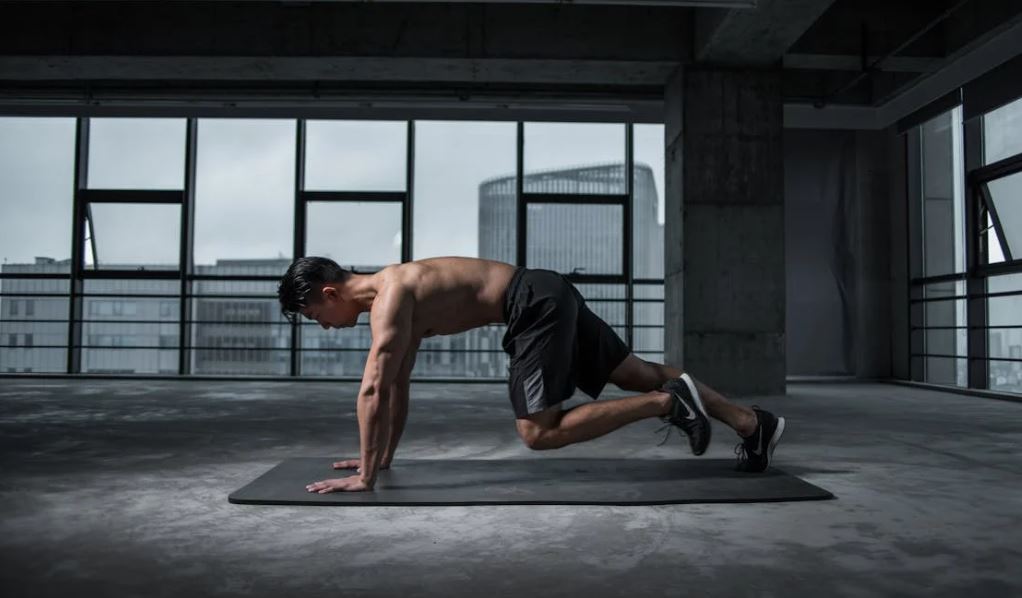

Most shoulder injuries in the gym do not happen during heavy sets. They happen because athletes load a cold, poorly prepared joint with no thought for what the rotator cuff actually needs before it performs. A resistance band costs almost nothing and takes ten minutes. The return on that investment is a shoulder that lasts for years instead of one that starts breaking down at 30.
This routine works for anyone who presses, pulls, throws, or plays overhead sport. Run it before every upper body session and before any sport that loads the shoulder joint.
Why the Rotator Cuff Needs Specific Warm-Up Work
The rotator cuff is four muscles (supraspinatus, infraspinatus, teres minor, and subscapularis) that surround the shoulder joint and control rotation and stability. They are not prime movers. They do not generate the big force that the pec, lat, or deltoid does. Their job is to hold the humeral head centred in the glenoid socket while those bigger muscles do their work.
When the rotator cuff is cold, fatigued, or undertrained, it loses the ability to stabilise the joint under load. The humeral head migrates slightly upward during pressing movements, which compresses the subacromial space and irritates the tendons running through it. Do that repeatedly and you get impingement. Do it long enough and the tendon tears.
The full breakdown on the exercises that build lasting rotator cuff strength is at Rotator Cuff Exercises: The Complete Fix for Weak Shoulders. This routine is specifically the pre-training activation work that prepares the joint before load is applied.
What a Resistance Band Does That Weights Cannot
A resistance band provides variable resistance: the harder you pull, the more resistance you feel. For rotator cuff activation, this property is ideal. The muscles engage progressively rather than being hit with a fixed load from the first rep. Band exercises also allow end-range positions that dumbbells make awkward, particularly in internal and external rotation.
You need one light to medium resistance band. If you train at home and are still building your setup, a set of three bands covers most needs and fits comfortably in a home gym under $300. For this routine, the lightest band in any standard set is usually sufficient. Rotator cuff activation work is not about load, it is about quality of movement and nerve-to-muscle connection.
The Routine: 10 Minutes, 8 Exercises
Complete each exercise in the order listed. Rest 15 to 20 seconds between exercises. Do not rush. The goal is activation and rehearsal, not fatigue.
1. Band Pull-Apart: 3 sets of 15 reps
Hold the band at shoulder width with straight arms in front of you. Pull the band apart until your arms are fully extended to each side and the band touches your chest. Control the return. Keep your elbows locked and your scapulae retracting at the end of each rep.
This is the most important exercise in this routine. It activates the rear deltoid, rhomboids, and mid-trapezius, all of which are chronically underused in athletes who press frequently. The warm-up science is clear that scapular retractors need to fire before any pressing movement, because a stable scapula is the platform from which a healthy shoulder operates.
Do all three sets before moving on.
2. Band External Rotation: 2 sets of 15 reps each side
Anchor the band at elbow height. Stand side-on, elbow bent at 90 degrees and pinned to your side. Rotate your forearm outward against the band’s resistance, then control the return. Keep the elbow glued to your ribcage throughout. If it lifts, you are using the wrong muscles.
This directly activates the infraspinatus and teres minor, two of the three external rotators, and is the exercise most often absent from athlete warm-ups. Swimmers who develop shoulder problems are almost always deficient in external rotation strength, as covered in the context of swimmer’s shoulder. The same deficit shows up in lifters, throwers, and combat sport athletes.
3. Band Internal Rotation: 2 sets of 15 reps each side
Same setup as external rotation but rotate inward. This activates the subscapularis. Internal rotation tends to be stronger than external rotation in most athletes, so use a slightly lighter band or a shorter range of motion to match the effort level.
Balance between internal and external rotation strength is what keeps the humeral head centred. If internal rotation significantly dominates, shoulder impingement risk climbs sharply.
4. Band Face Pull: 3 sets of 15 reps
Anchor the band at face height. Hold an end in each hand with palms facing the floor. Pull toward your face while simultaneously externally rotating your wrists so your palms face forward at the end of the movement. Your upper arms should finish parallel to the floor or slightly above.
Face pulls hit the rear deltoid and external rotators together in a pattern that directly mirrors the demands of overhead sport. Anyone who presses heavy should be doing face pulls as a non-negotiable part of their session, not just their warm-up. The upper body strength programmes that hold up long-term almost always include high volumes of face pull and rear delt work for this reason.
5. Band W-Raise: 2 sets of 12 reps
Hold the band in front of you with both hands. Raise your arms to shoulder height and pull the band outward into a W shape: elbows bent at 90 degrees, upper arms parallel to the floor, forearms vertical. Hold for one second at the top before returning.
This is a scapular retraction and external rotation exercise combined. It targets the mid and lower trapezius, which are responsible for upward rotation of the scapula during overhead movements. Poor lower trap activation is one of the most common contributors to shoulder impingement in overhead athletes, and it rarely gets addressed in conventional warm-up routines.
6. Band Dislocates: 2 sets of 10 reps
Hold the band with a wide grip, wider than shoulder width. Keep your arms straight and pass the band overhead and behind you until it reaches your lower back, then return to the start. Move slowly and breathe out as the band passes overhead.
Dislocates improve thoracic mobility, challenge shoulder end-range, and expose any asymmetries in shoulder flexibility before those asymmetries become problems under load. If the movement is very restricted or painful at any point, widen your grip until it becomes comfortable, then work gradually narrower over weeks. Mobility work done consistently before sessions pays dividends that show up across every pressing and pulling movement. The full case for this is made in why mobility work is the missing piece in most athletic training programs.
7. Band Overhead Reach: 2 sets of 10 reps each side
Anchor the band low. Hold one end and reach straight overhead, maintaining a tall spine and neutral lower back. The band provides light traction and encourages full elevation without compensatory movement through the lumbar spine. Hold for two seconds at full elevation.
This primes the upward rotation pathway and gives feedback about whether your scapula is tracking correctly during elevation. If you feel pinching at the top, reduce the elevation angle by 20 degrees and work from there.
8. Band Shoulder Circuit: 1 round, 10 reps each movement
Run three movements back to back with no rest: pull-apart, then external rotation on each side. This is a fatigue-free activation finisher rather than a training set. It confirms all the patterns you have just primed are firing together before you move to your main session.
Where This Routine Sits in Your Session Structure
This band warm-up is not a replacement for a full dynamic warm-up. It is a shoulder-specific layer that sits after your general movement prep and before your upper body working sets. A typical sequence looks like this: 5 minutes of light general movement, then this 10-minute band routine, then your first working set starting conservatively.
The dynamic warm-up for athletes covers the full-body activation layer that should precede this routine on upper body days.
Who Needs This Most
Overhead athletes (swimmers, throwers, volleyball players, climbers) have the most to gain from a consistent rotator cuff warm-up because their sport already loads the joint at the ranges where it is most vulnerable. Combat sport athletes who clinch, grapple, or punch repeatedly also place heavy demands on shoulder stability across unpredictable angles.
Powerlifters and Olympic lifters benefit significantly too. The bench press loads the shoulder under a fixed bar path that requires precise rotator cuff activation to keep the humeral head from migrating. Checking your deadlift form and upper body positioning under the bar becomes far easier when the shoulder is properly activated and stable beforehand.
If you train shoulders at home and your setup is minimal, bands are genuinely the highest-return investment available. A full training space built around them is more capable than most people realise. See home gym under $1000 for how to structure that.
Consistency Beats Intensity Here
The biggest mistake athletes make with rotator cuff work is treating it as something to do when the shoulder is already sore. By that point, the problem is already established. Done consistently before every session, this routine maintains the neuromuscular activation patterns that keep the joint stable under load. Skip it for three weeks and you feel the difference. Run it for three months and heavy pressing begins to feel different: smoother, more controlled, and less likely to produce the subtle discomfort that signals tissue under too much stress.
Recovery between sessions matters as much as the warm-up. The full guide on what athletes get wrong about rest is at why recovery is more important than training and how to do it right. Shoulder tendons in particular are slow to recover and slow to adapt, which is exactly why prevention through consistent warm-up is so much more effective than treatment after the fact.