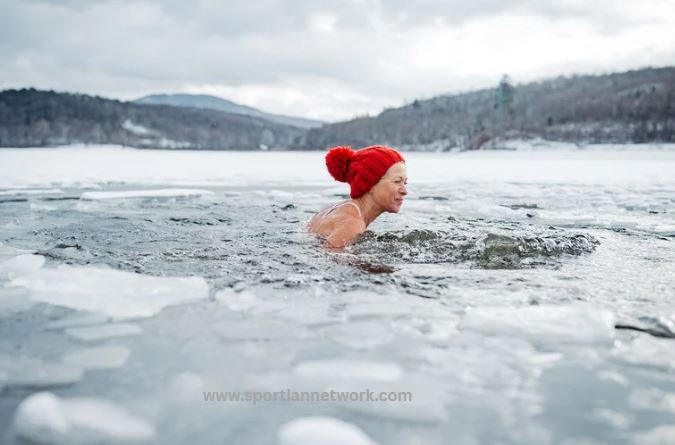
Cold water immersion is everywhere. Elite facilities have ice baths built into recovery suites. Social media is full of athletes climbing into tubs of freezing water and crediting it for everything from reduced soreness to mental clarity. The hype has outpaced the evidence by a wide margin.
This article covers what the research actually shows, where CWI genuinely helps, and where it actively works against you.
What Happens to Your Body in Cold Water
When you submerge in cold water, several things happen simultaneously. Blood vessels near the skin constrict as the body redirects circulation toward the core to protect vital organs. Metabolic rate rises as the body generates heat. Nerve conduction slows, which dulls pain signals. Heart rate can drop slightly as a result of what’s called the diving reflex, a primitive response to facial and body immersion in cold.
These responses happen fast. Within the first 30 to 60 seconds, vasoconstriction is already occurring across most of the body. Tissue temperature in the muscles themselves drops more slowly, typically over several minutes of sustained immersion. This is relevant because many of the proposed recovery benefits depend on actual tissue cooling, not just surface-level cold exposure.
Water temperature matters enormously. Most research on athletic recovery uses water between 10 and 15 degrees Celsius. Below 10 degrees produces stronger acute responses but also more physiological stress. Water above 15 degrees produces far less measurable effect on muscle temperature. Many consumer ice baths and cold tubs, even those filled with ice, don’t maintain temperatures as low as people assume.
Disclaimer: Consult a healthcare professional before starting CWI, particularly if you have cardiovascular issues or high blood pressure.
What the Evidence Actually Supports
Reduced Delayed Onset Muscle Soreness
This is the most consistently supported benefit in the literature. Multiple controlled trials show that CWI reduces the subjective experience of delayed onset muscle soreness in the 24 to 72 hours following hard training. Athletes report feeling less sore. They also show lower markers of perceived pain on pressure tests at the muscle site.
The effect size is real but moderate. CWI does not eliminate soreness. It tends to reduce it meaningfully compared to passive rest, and usually performs similarly to or slightly better than active recovery. What it does not do is accelerate the actual structural repair of muscle damage. The soreness is blunted, but the underlying adaptation process continues on its own timeline.
Reduced Perceived Fatigue
Athletes who use CWI after hard competition sessions or back-to-back training days consistently report feeling less fatigued and more ready to train again. This is not just placebo, though placebo is real and measurable in recovery research. Physiological mechanisms including reduced core temperature, lower inflammatory marker levels in blood, and nervous system calming all contribute to the feeling of restored readiness.
For sports with congested fixture schedules, this perceived recovery has real value. A footballer who feels 15 percent better the morning after a game performs differently in training that afternoon.
Reduced Acute Inflammation and Swelling
After contact sport, impact injuries, or extremely high training volumes, CWI reduces acute swelling and inflammatory markers in the short term. This is why sports medicine teams have used ice and cold water for acute injury management for decades. The effect on localized swelling after a knock or sprain is well established.
Where CWI Works Against Athletes
This is where most popular coverage gets it badly wrong.
It Blunts Hypertrophy Adaptations
The inflammatory response that CWI suppresses is not entirely bad. In fact, it is a necessary part of the muscle adaptation process. When you train hard, you create controlled damage. The inflammatory cascade that follows triggers satellite cell activity, protein synthesis, and ultimately hypertrophy. Suppressing inflammation too aggressively and too routinely interferes with this process.
Research from James Cook University demonstrated that athletes who used CWI after strength training sessions experienced significantly lower long-term muscle and strength gains compared to those who used passive rest. The CWI group felt better day to day but built less muscle over a 12-week period. This is a meaningful finding that most influencer CWI content ignores completely.
The practical implication is direct. If you are in a block of training focused on building size and strength, regular post-session CWI is working against your primary goal. You are feeling better at the cost of adapting less. Understanding this tradeoff is central to using CWI intelligently, which connects to the broader load management approach covered in our piece on session RPE and managing athlete load.
It May Blunt Endurance Adaptations Too
The evidence here is less settled but emerging. Some research suggests that cold water immersion after endurance sessions can reduce mitochondrial biogenesis signals, the cellular process by which endurance training makes you more aerobically capable. If this effect is real and consistent, regular post-run or post-ride CWI could slow the aerobic adaptations you are trying to build through training.
This area needs more research before strong conclusions are drawn, but it adds to the case that CWI should not be a blanket post-training habit for every session.
When to Use CWI and When to Skip It
The key variable is what you are trying to achieve in the training block you are currently in.
CWI makes sense when competition density is high and adaptation is not the priority. In-season team sport athletes who compete twice per week and need to feel ready to perform again quickly get genuine value from post-game CWI. The blunting of hypertrophy is irrelevant when match performance is the goal and the schedule does not allow for deep adaptation anyway.
CWI makes sense after contact or impact that produced localized swelling or bruising. This is closer to injury management than recovery optimization, but the application is legitimate.
CWI is counterproductive when you are in a dedicated off-season or pre-season block focused on building strength, muscle, or aerobic capacity. Using it daily after every session is actively competing with the adaptations you are training to create. This is not a minor concern. It is a significant enough effect that coaches in strength sports specifically advise against it during development phases.
CWI is of uncertain value for general soreness management during a moderate training load. The evidence supports it, but so does sleep, nutrition, and active recovery. Any of these strategies addresses soreness without the trade-off of blunted adaptation. If you are not in a congested competitive period, improving sleep quality and post-training nutrition will recover you as well or better with no downside.
Protocol Specifics: Temperature, Duration, and Timing
If you are going to use CWI, the protocol matters.
Temperature should be between 10 and 15 degrees Celsius for athletic recovery purposes. Colder is not inherently better and adds physiological stress without proportionally greater benefit at the tissue level. Water above 15 degrees is likely too warm to produce meaningful muscle cooling.
Duration of 10 to 15 minutes is the most commonly studied and recommended window. Sessions shorter than 5 minutes produce minimal tissue cooling. Sessions beyond 20 minutes do not add meaningful benefit and increase discomfort without added recovery effect.
Timing relative to training is debated. Most research has athletes immerse within 30 to 60 minutes of training completion. Waiting longer reduces the anti-inflammatory effect but may be preferable if you are trying to preserve some adaptation signal while still getting some recovery benefit.
Full body immersion to at least the waist is required. Sitting with only your feet in cold water has almost no effect on the large muscle groups of the lower body that need recovery after most athletic training. The more of your body that is submerged, the more comprehensive the physiological response.
CWI vs Other Recovery Modalities
Direct head-to-head comparisons between CWI and other recovery tools show that no single modality consistently outperforms all others across every context.
Compared to passive rest, CWI wins on acute soreness and perceived readiness but loses on long-term adaptation if used after strength sessions. Compared to active recovery like light cycling or walking, CWI shows similar soreness reduction with slightly better acute inflammation management. Compared to compression garments, results are mixed and largely context-dependent.
Our article on foam rolling versus massage guns covers a similar comparison for soft tissue recovery tools, and the same logic applies here. The best modality is the one that fits your training goals and schedule, not the one with the most social media visibility.
For athletes combining multiple recovery tools, the research generally does not support stacking CWI with other modalities to multiply effects. Using CWI after best recovery supplements does not produce additive recovery. Choose the tools that address your actual bottleneck.
What About Mental Benefits
Separate from the physiological recovery literature, there is a growing body of work on cold exposure and mental state. Cold water immersion triggers a significant norepinephrine release, which acutely improves alertness, focus, and mood in many people. Some athletes use morning cold exposure specifically for this mental effect rather than for physical recovery.
This is legitimate but distinct. If the goal is mental sharpness or psychological readiness, the relevant research is different from the recovery literature. Shorter, cooler exposures in the morning, separate from training, are the most common protocol for this application. Using a 15-minute post-training ice bath and expecting mental clarity benefits is mixing two different use cases into one protocol that may serve neither particularly well.
The Honest Conclusion
Cold water immersion reduces soreness and improves perceived recovery in the short term. That part is well supported. It also blunts the hypertrophy and potentially the endurance adaptations that hard training is supposed to produce. That part is equally well supported and far less discussed.
The intelligent approach is periodized CWI use. During competition-heavy periods when performance matters more than adaptation, use it. During dedicated training blocks where adaptation is the whole point, limit it or drop it entirely. General soreness that can be managed through sleep, nutrition, and light movement does not require cold water immersion as a first tool.
This is how elite sports science teams use it. Not as a daily habit, but as a contextually appropriate tool deployed when the trade-off makes sense. Understanding the trade-off is what separates evidence-based recovery from expensive wellness theater.
For a broader look at how recovery fits into athletic development, our article on why recovery is more important than training covers the full picture of how adaptation actually happens.