
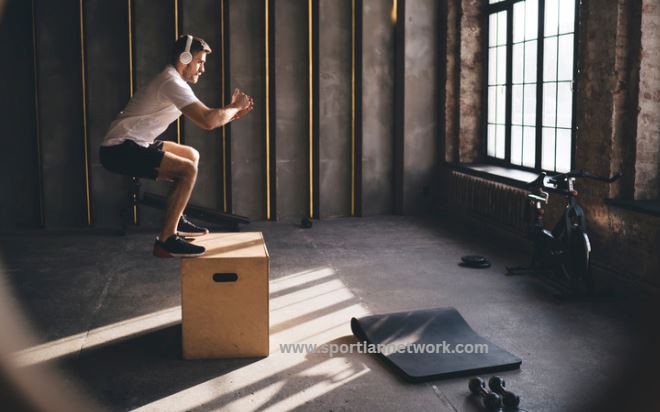
If you are shopping for a plyo box, the three main options are foam, wood, and metal. Foam boxes are the safest choice for beginners and high-rep training because they collapse on shin contact instead of shredding your skin. Wood is the most versatile and popular all-around option. Metal boxes are built for heavy-use commercial settings and last the longest. The right choice depends on how you train, where you train, and what your shins can afford to learn the hard way.
Plyometric training is one of the fastest ways to build explosive power, but your equipment matters more than most people realize. The wrong box in the wrong setting creates injury risk that has nothing to do with your fitness level.
Why the Box Itself Actually Matters
Most athletes just grab whatever plyo box is available and get to work. That is fine until it is not. A slippery surface, a sharp edge, or a box that wobbles under load can turn a straightforward jump into a trip to urgent care.
The differences between foam, wood, and metal are not just about price or looks. They affect landing mechanics, shin safety, surface grip, stability under fatigue, and how loud your neighbors hate you. Beyond that, the type of box shapes what movements you can train and how confidently you can push your limits.
If you are building a vertical jump program or running serious plyometric training for explosive power, your equipment should support your intensity, not cap it.
Foam Plyo Boxes: The Safest Entry Point
Foam boxes are made from high-density foam with a vinyl cover. They look soft, and in a very specific way, they are. That is the whole point.
When you miss a jump or catch your toes on the edge, foam compresses instead of tearing your shin open. Anyone who has bled through a sock after catching a wooden box edge knows exactly why this matters. The physical consequence of a miss is dramatically lower with foam, which is why you see them in CrossFit boxes, physical therapy clinics, and high school weight rooms.
What foam boxes are great for:
High-rep jump training where fatigue increases miss risk. Beginner athletes learning proper landing mechanics. Rehab settings where shin contact needs to be non-traumatic. Training environments with younger athletes.
The real limitations of foam:
Foam boxes are bulky because the density required for stability adds size. A 24-inch foam box is significantly larger than a 24-inch wood box at the same height. They also wear down over time. The vinyl tears, the foam compresses unevenly, and after a year of heavy use, the surface starts to feel inconsistent underfoot.
Foam boxes are also limited in height options. Most stop at 30 inches. If you are training advanced depth jumps or building toward max-effort box jumps for a serious vertical leap program, you will hit a ceiling with foam.
They are not ideal for weighted step-ups either. The surface flexibility that protects shins on a miss creates instability when you are loading a single leg under load. For single leg training with any significant weight, a solid surface is a better base.
Price range: $80 to $180 for a quality single foam box. Adjustable foam options run higher.
Wood Plyo Boxes: The Gold Standard for Most Athletes
Wood plyo boxes have been the default in athletic training for decades, and there is a reason they have not been replaced. They are rigid, reliable, height-adjustable when 3-in-1 designs are used, and they hold up for years in home gym and small commercial settings.
A standard 3-in-1 wood box gives you three height options depending on which side you orient it, typically 20, 24, and 30 inches. That versatility alone makes wood boxes the best value purchase for most serious athletes.
Why wood works so well:
The solid surface gives you immediate feedback on your landing position. You know exactly where your feet are. The grip on a well-made wood box is consistent whether you are jumping barefoot, in socks, or in training shoes. The rigidity means zero energy is lost on the surface, so your landing mechanics translate directly to what your body is learning.
Step-ups, Bulgarian split squats, depth jumps, seated box jumps, and lateral jumps all work cleanly on a wood platform. Wood is also the surface used in most collegiate and professional settings, so training on it means your body adapts to the same feel you will encounter in performance environments.
For athletes doing real posterior chain work and needing a box for hip hinge mechanics variations or Romanian deadlift assistance, wood gives the stable platform those movements demand.
The real limitation of wood:
The edge. A wood plyo box has a hard corner, and if your shin meets it at speed, it hurts. It does not just scratch, it cuts. Missing a jump on a wood box is a painful education. That fear of the edge is legitimate, but it also trains mental focus. Most experienced athletes develop a healthy respect for the jump that comes from knowing what happens when they miss.
Wood boxes can also crack or splinter if they are built with lower-grade plywood. Baltic birch is the standard to look for. Anything thinner than 3/4 inch will flex and eventually fail under repeated high-impact use.
Price range: $60 to $160 for a quality 3-in-1 wood box. DIY builds using Baltic birch plywood can come in under $50 in materials.
Metal Plyo Boxes: Built for Volume and Commercial Settings
Steel and aluminum plyo boxes are not designed for home use. They exist because commercial gyms need equipment that survives 50 athletes per day, 300 days a year, without wobbling or deteriorating. Metal delivers on that requirement better than anything else.
Where metal boxes make sense:
High-volume training environments with dozens of athletes cycling through daily. Outdoor training setups where wood would weather and foam would degrade. Situations where adjustable height via stackable platforms is a priority.
The surface of a metal box is typically textured or has grip tape applied, but it is still the hardest and least forgiving surface of the three options. A shin meeting a steel corner is a memorable event. Most serious training facilities using metal boxes keep foam or rubber padding nearby for athletes learning new movements.
Metal boxes are also heavier. Moving a 30-inch steel box is a two-person job in most cases. That stability is great for the training surface but makes setup adjustment slow and inconvenient.
The price reality:
Metal boxes are expensive. Quality steel options start around $200 and go well past $400 for adjustable commercial configurations. Unless you are outfitting a training facility, there is almost no scenario where a metal box justifies the price over a well-built wood or high-density foam option for individual athletes.
How Height Selection Affects Your Results
The box height you train with shapes the adaptation you get, and most athletes get this wrong by either going too high or too low.
Too low: If the box requires almost no hip extension to land on top, you are not training full explosive power. You are just practicing a tall step. The stimulus is minimal.
Too high: If you are pulling your knees to your chest and barely clearing the box, you are training hip flexion under fatigue, not true jump power. This is a common issue in social media “plyo box records” where the apparent height is mostly from leg tuck, not actual vertical displacement of the center of mass.
For genuine jump development, you want a box height that challenges you with honest mechanics. Landing with a slight knee bend, flat-footed, with control is the target. If you are crashing into a deep squat on landing, the box is too high for that training goal.
This connects directly to the vertical jump development work covered in how to add 4 to 8 inches to your vertical jump. The box is a tool, and the height needs to serve the purpose of that session, not just impress whoever is watching.
Standard height guidelines:
Beginners: 16 to 20 inches. Intermediate athletes: 20 to 24 inches. Advanced athletes: 24 to 30 inches. Athletes specifically training for sport where maximum height is the goal: 30 inches and above with proper progression.
Surface Grip and Landing Safety
This gets overlooked in most buying guides. The surface you land on affects your injury risk as much as the material the box is made from.
Foam boxes have a vinyl cover that can become slick when wet or if the surface starts to degrade. The best foam boxes have a textured vinyl that maintains grip even under sweaty training conditions.
Wood boxes should have a sand-painted or grip-taped surface. Raw plywood is smooth and becomes dangerously slick under foot sweat. If you build a DIY wood box or buy one without surface texture, applying non-slip grip tape before your first session is non-negotiable.
Metal boxes almost always come with textured surfaces or factory-applied grip tape. However, check the condition of that grip tape before trusting it in high-rep training. Worn grip tape on steel is a specific kind of problem.
This matters especially for athletes coming off lower leg injuries. Good grip is part of the reason a plyometrics done right approach for progressions has to include equipment assessment, not just movement selection.
Foam vs Wood vs Metal: The Direct Comparison
| Foam | Wood | Metal | |
|---|---|---|---|
| Shin safety on miss | Best | Moderate | Worst |
| Surface stability | Good | Excellent | Excellent |
| Height range | Up to 30″ | Up to 30″ (3-in-1) | Varies |
| Durability | 1 to 3 years | 5 to 10 years | 10 to 20 years |
| Price | $80 to $180 | $60 to $160 | $200 to $400+ |
| Best for | Beginners, rehab | Most athletes | Commercial gyms |
| Weighted step-ups | Not ideal | Yes | Yes |
What Type of Athlete Should Buy What
If you are new to plyometric training: Start with foam. The shin protection removes a psychological barrier that will otherwise limit your willingness to push. You can always add a wood box later as your landing mechanics sharpen.
If you are an experienced athlete building a home gym: Wood is almost certainly the right call. A 3-in-1 box gives you three training heights in one purchase and holds up for years. It fits the needs of everything from max effort jumps to weighted step-up progressions to box squats. The home gym guides on the site, including Home Gym Under $300 and Home Gym Under $1000, both point to wood boxes as one of the highest-value additions you can make.
If you are a coach outfitting a team facility: A mix makes sense. Foam boxes for beginners and rehab phases, wood boxes as the primary training surface, and metal if your volume and budget support it.
If you are a teenage athlete just starting out: Foam first, always. The injury prevention logic is even stronger for developing athletes who are still building proprioception and landing strength. More on that in strength training for teenagers which covers programming principles that apply directly to plyo box progressions.
How to Build a DIY Wood Plyo Box (The Smart Option for Budget Athletes)
Building your own 3-in-1 wood box is one of the best value projects in home gym setup. The materials cost between $40 and $60 depending on local lumber prices, and the result is a box that performs identically to commercial options costing three times more.
You need one sheet of 3/4 inch Baltic birch plywood, wood screws, wood glue, and sandpaper. The standard cut dimensions for a 20/24/30 inch 3-in-1 box are widely available online. The build takes about two hours with basic tools.
After assembly, sand every edge smooth, then apply two coats of non-slip deck paint or cover the top surface with grip tape. The edges are where the danger lives on a wood box. Taking 15 minutes to round and sand them properly significantly reduces the consequence of a miss.
This is the kind of practical detail that home gym equipment guides rarely cover because they are focused on purchased products. But for athletes on a tight budget, DIY is a legitimate path to a training tool that will last a decade.
Integrating Plyo Box Work Into Your Training
A plyo box is only as useful as the program around it. Buying the right box and then doing random jump sets without structure will not produce meaningful results.
The most effective approach is to program plyo box work at the start of a training session after a proper dynamic warm up, when the nervous system is fresh. Jumping under fatigue at the end of a session has a place in specific conditioning blocks, but for power development, early in the session is where you get the most return.
A simple session structure for athletes adding box work to an existing program: five to eight minutes of dynamic warm up including leg swings, hip circles, and ankle mobilization. Then two to four sets of three to five box jumps with full recovery between sets. Follow that with your main strength work.
The warm up science around activation matters here because jumping cold is where most plyometric injuries happen. The Achilles, patella tendon, and ankle complex need tissue temperature and neural activation before absorbing the demands of box jump landings.
If ankle mobility is a limiter, specifically for basketball and court sport athletes, the basketball specific ankle mobility routine covers the activation work that directly improves plyo box landing quality.
For long-term development, the plyo box should sit inside a broader speed and power system. The speed training fundamentals guide places plyometric work in context alongside sprint mechanics and reactive strength training, which is how elite programs actually structure it.
The One Thing Most Guides Skip
Every plyo box review you find online compares features and prices. Almost none of them tell you this: the box height that gets attention is rarely the box height that builds the most power.
Most athletes who post box jump videos are standing on boxes that are high because of deep knee tuck at landing, not because their vertical leap is actually elite. That is a mobility and courage display. It is not power training.
The box height that builds the most explosive output is the one where you land fully extended, controlled, and could immediately jump again. That is the training stimulus that builds fast-twitch recruitment and genuine reactive strength. The box that impresses no one is often the box that trains you the hardest.
This matters when you are making a purchase decision because it means you probably do not need to spend money on a 36-inch box to train at a high level. A well-made 24-inch box used correctly will outperform a 36-inch box used for ego.