
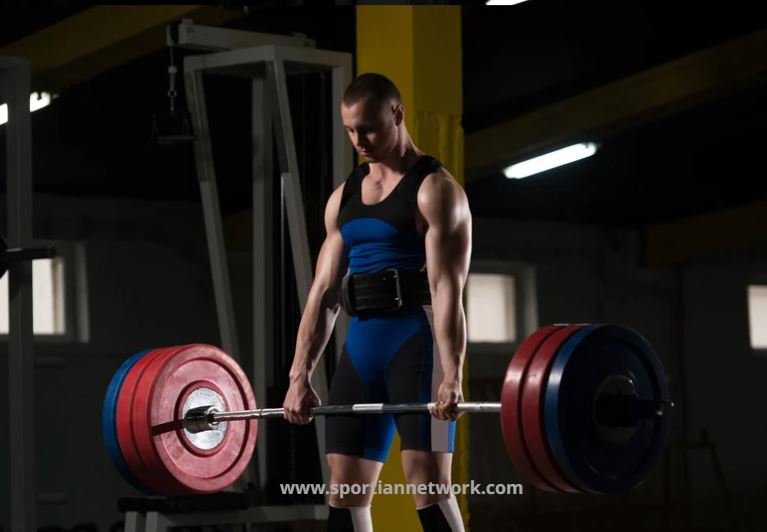
Fraboc is a fractional weight plate system used in powerlifting to allow sub-0.5kg progressive overload jumps. It means instead of adding 2.5kg to the bar every session, you add 0.25kg or even 0.1kg. The jump is smaller. The stimulus is still there. And your nervous system adapts without the shock of a load it is not ready for.
Most gym equipment comes with the smallest plate being 1.25kg per side. That means the smallest standard jump is 2.5kg total. For a beginner, that jump is manageable every session. For an intermediate or advanced lifter, adding 2.5kg to a near-maximum squat is not a small ask. It is a significant percentage increase that the body often cannot absorb week after week.
Fraboc solves this by introducing fractional plates in increments as small as 0.1kg. The progression becomes granular enough to match the actual pace of neural and muscular adaptation in advanced athletes. Furthermore, it eliminates the frustrating cycle of hitting a weight, failing the next jump, deloading, and repeating endlessly.
The Problem With Standard Progressive Overload
Progressive overload is the foundation of every strength program. Add weight over time and your body adapts to handle it. The principle is simple and undeniably correct.
However, the standard implementation assumes the body can absorb fixed jumps on a fixed schedule. That assumption works for beginners because their rate of adaptation is fast enough to keep pace with 2.5kg weekly increases. It breaks down completely for intermediate and advanced lifters.
An advanced powerlifter with a 200kg squat adding 2.5kg per side is increasing their load by 2.5%. That sounds small. However, when you are operating at 90% of your maximum, a 2.5% jump is enormous relative to the adaptation capacity available. The result is stalling, grinding through ugly reps, and accumulating fatigue faster than fitness.
Standard overload also ignores the difference between lift types. Your bench press may progress slower than your deadlift. Your overhead press may stall months before your squat. Fraboc allows each lift to progress at its own natural rate rather than forcing all movements onto the same increment schedule.
This connects directly to why athletes plateau in strength training. The plateau is often not a fitness ceiling. It is a mismatch between the size of the overload jump and the body’s current adaptation capacity. Fraboc corrects that mismatch precisely.
How the Fraboc Plate System Works
Fraboc plates come in four standard sizes within the system: 0.5kg, 0.25kg, 0.125kg, and 0.1kg per plate. Each lifter builds a fractional plate set that covers every possible increment between zero and 1kg per side.
The system works in combination with standard plates. You load the bar normally, then add the fractional plates on top to reach the exact target load. A lifter progressing from 100kg to 100.25kg simply adds one 0.25kg fraboc plate per side. The bar looks almost identical to last week. The load is slightly higher. The body adapts.
Most fraboc protocols use three increment sizes depending on the lift and the athlete’s training stage.
Large increment: 0.5kg per side (1kg total). Used for lifts that are still progressing relatively quickly or for athletes earlier in their intermediate stage. This is still smaller than the standard 1.25kg plate minimum but large enough to create a meaningful weekly stimulus.
Medium increment: 0.25kg per side (0.5kg total). The most commonly used fraboc increment for main competition lifts in advanced athletes. It allows weekly progression while keeping load jumps within the range of realistic session-to-session adaptation.
Small increment: 0.1kg per side (0.2kg total). Reserved for lifts that are extremely close to maximum or for athletes in competition prep where every fraction of progress matters. At this level, the nervous system adaptation from session to session is so fine that 0.2kg is genuinely the right sized stimulus.
Understanding powerlifting programming in depth makes the logic of fraboc clear. Elite powerlifters do not add arbitrary weight. They engineer progression with surgical precision. Fraboc gives every lifter that same level of control regardless of competitive level.
Fraboc Across the Three Main Lifts
Each of the three powerlifting competition lifts responds to fraboc differently based on the muscle groups involved and the neurological demand of the movement.
Squat. The squat is the most neurologically demanding lift and often the slowest to progress in advanced athletes. Fraboc is most valuable here. A medium increment of 0.25kg per side weekly on the squat produces roughly 25kg of total progress over a full year without a single failed session due to load jumping. That compounds dramatically over multiple training cycles.
Pairing fraboc progression with sound squat mechanics ensures the technical foundation stays intact as load rises. When jumps are small, you never find yourself grinding through form breakdown just to make the number work.
Deadlift. The deadlift typically tolerates slightly larger jumps than the squat because the pull engages more total muscle mass and the movement pattern is less technically fragile. However, fraboc still applies to advanced pullers operating near their ceiling. The trap bar deadlift also benefits from fraboc loading because its loading pattern places unique demands on the upper back and hips that standard barbell progression can overload suddenly.
For competition deadlift technique, the deadlift form checklist outlines every technical cue that fraboc loading must maintain as weight slowly climbs.
Bench press. The bench press is the most common lift where athletes hit walls repeatedly. Upper body pressing strength progresses slower than lower body pulling and pushing strength in most athletes. Fraboc is particularly valuable here because even 0.5kg total weekly progress on the bench adds up to 25kg over a full year. Most intermediate lifters would celebrate that outcome.
Additionally, the shoulder joint is more vulnerable than the hip or spine under progressive loading. Small, consistent fraboc jumps protect the rotator cuff from the sudden load spikes that cause tendon irritation in aggressive overload approaches.
Programming Fraboc Into Your Training Block
Fraboc works within any periodization structure. The increment size changes based on the training phase, not the lift itself.
Accumulation phase. Use medium fraboc increments of 0.25kg per side on main lifts. Volume is higher during this phase, so the smaller jumps keep total load manageable as sets and reps accumulate. Your body is adapting to volume stress, not maximal intensity. Fraboc keeps intensity rising slowly in the background without competing with volume adaptation.
Intensification phase. Drop to small fraboc increments of 0.1kg per side as load approaches competition maxima. Frequency may drop but intensity is now the primary stressor. Every session at this phase is close to maximum effort. The smallest possible increment is the right choice.
Peaking phase. Fraboc progression pauses entirely during the final two to three weeks before competition. Load is fixed at competition targets and the focus shifts to technical sharpening and fatigue management. The science of tapering is fully compatible with fraboc because the system simply stops adding increments rather than requiring a specific deload protocol.
For athletes using the INOL method to manage volume and intensity simultaneously, fraboc provides the load precision that INOL calculations require. INOL scores are sensitive to intensity percentage. A 0.5kg jump changes your intensity percentage by a measurable amount. Fraboc makes those calculations accurate rather than approximate.
Fraboc Versus Other Micro-Loading Approaches
Fraboc is not the only micro-loading system available. Resistance bands looped around the bar, chains, and manual load calculations all attempt to solve the same problem. However, each has significant limitations compared to fractional plates.
Bands add accommodating resistance that changes throughout the range of motion. That is a useful training tool but it is not linear load addition. It does not replicate the effect of adding a fixed fractional plate to the bar.
Chains serve a similar accommodating resistance function and share the same limitation. Furthermore, chains are expensive, require specific gym infrastructure, and add complexity that most training environments do not support.
Manual load calculation, where you simply note that today’s load is 100kg and next week you will load 100.25kg using a combination of available plates, is theoretically possible but practically imprecise. Fractional plates make the exact increment reliable and repeatable every session without arithmetic at the rack.
Compared to the differences between powerlifting and weightlifting, where weightlifting demands explosive movement that requires larger load jumps for technical stimulus, powerlifting’s slow and maximal nature makes it uniquely suited to the granular progression fraboc provides.
Practical Details for Building a Fraboc Set
A complete fraboc plate set does not need to be expensive. Most serious lifters build their set with four pairs of fractional plates covering the full increment range.
Pair 1: 0.5kg per plate. Two plates totaling 1kg added to the bar. Pair 2: 0.25kg per plate. Two plates totaling 0.5kg added to the bar. Pair 3: 0.125kg per plate. Two plates totaling 0.25kg added to the bar. Pair 4: 0.1kg per plate. Two plates totaling 0.2kg added to the bar.
With these four pairs you can hit every increment from 0.2kg to 2.25kg total in precise steps. The total cost of a quality fractional plate set is modest compared to the value it provides over a full training career.
Store them in a small bag at the rack. Load them last after standard plates are in place. They are small enough that they clip onto any standard Olympic bar collar without affecting balance.
Tracking your weekly increment is straightforward with session RPE monitoring alongside the fraboc log. When your RPE stays consistent week to week at the same increment rate, the system is working. When RPE climbs despite small fraboc jumps, your body is signaling that recovery is lagging and the increment should pause or reduce temporarily.
Rest Periods and Fraboc Work Together
Consistent rest periods are essential when using fraboc because the system relies on session-to-session comparison. If your rest periods vary significantly between sessions, your performance data becomes unreliable. A set that felt easy with three minutes rest might feel hard with 90 seconds rest. That difference has nothing to do with fraboc and everything to do with recovery between sets.
Rest period science for strength and hypertrophy is clear that three to five minutes between heavy compound sets optimizes strength expression. Fraboc works best when those rest periods are standardized across every session. The increment is your variable. Everything else should stay controlled.
The Long Game of Fraboc
The most powerful argument for fraboc is cumulative. A lifter adding 0.25kg per side weekly on their squat adds 26kg to their squat total in a single year. That is conservative and injury free. A lifter forcing 2.5kg jumps stalls constantly, deloads repeatedly, and may add 10 to 15kg in the same period while accumulating far more fatigue and frustration.
The 10 most important strength exercises all benefit from this long-game approach. Strength is built over years, not months. Fraboc aligns your weekly practice with that reality.
Small increments. Consistent progress. No wasted sessions. That is the fraboc system.