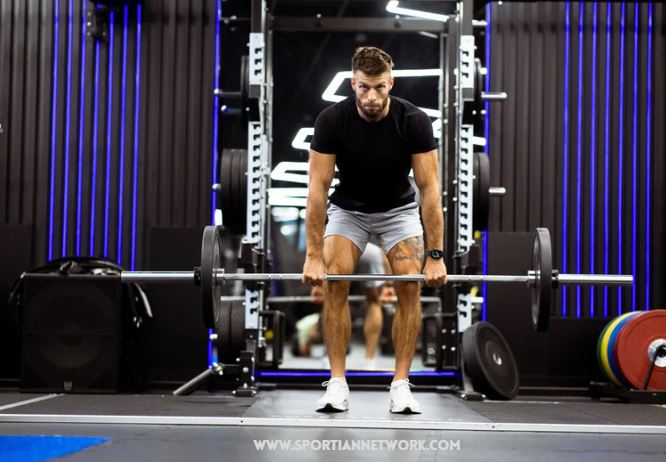

Dihward is a directional hip-wall drill used in American football offensive line training to reinforce lateral drive angles. It teaches linemen to load and redirect their hips against a fixed surface so they build the muscle memory for correct blocking angles before applying that pattern against a live defender.
Blocking is a hip-driven skill. Every offensive lineman coach says it. However, few drills isolate the hip angle component clearly enough for athletes to feel and correct it in real time. Dihward solves that by using a wall or pad as a fixed feedback surface. The lineman pushes their hips into the surface at different lateral angles and learns exactly what correct hip loading feels like from the inside.
This feedback loop is what makes dihward effective. Athletes do not guess whether their hips are in the right position. The wall tells them immediately.
Blocking Power Starts at the Hips
Most people watching an NFL offensive lineman assume the block is powered by the arms and upper body. In reality, the arms just connect the lineman to the defender. The actual force comes from the hips and legs driving through the contact point.
A lineman with poor hip angles generates force in the wrong direction. Their push goes upward instead of forward. Their drive goes across instead of through. The defender feels pressure but can redirect it easily because the force vector is off. In contrast, a lineman with correct hip angles drives force directly into the defender’s chest along the intended blocking path. That defender has nowhere to go.
Furthermore, hip angle determines leverage. A lower hip position with the correct lateral angle puts the lineman’s center of mass in an advantageous position relative to the defender. Therefore, correct hip mechanics multiply the value of every pound of strength the lineman has built in the gym.
Hip hinge mechanics are the foundation of every blocking movement. A lineman who cannot load and drive through a proper hip hinge cannot produce efficient blocking force regardless of how strong they are in the weight room.
What the Dihward Drill Does
Dihward isolates the hip loading and redirecting component of blocking by removing the unpredictability of a live defender. The lineman works against a wall, a pad mounted on a wall, or a heavy blocking bag fixed in place.
The wall provides instant honest feedback. When hip angle is correct, the push feels powerful and balanced. When hip angle is wrong, the push feels weak, tilted, or unstable. No coach needs to describe the error because the athlete feels it directly through the contact surface.
The drill name reflects its function. The directional component means the athlete practices loading the hips at multiple lateral angles, not just straight ahead. The wall component means feedback is immediate and physical rather than visual or verbal. Together these elements produce a drill that builds correct hip mechanics faster than most live blocking drills because the learning signal is cleaner.
The Three Dihward Positions
Dihward trains three primary hip loading positions. Each one corresponds to a blocking angle that offensive linemen use in real game situations.
Position 1: Direct drive angle. The lineman faces the wall squarely. Feet shoulder-width apart. Hips loaded back in an athletic stance. They drive forward into the wall through a full hip extension, pushing through their heels and driving their hips forward and into the surface. This position trains the straight-ahead drive block, which is the most common blocking assignment on run plays.
The coaching cue for this position is flat back, chest up, and hips driving through the wall rather than into it. A lineman who pushes with a rounded back loses the hip-to-shoulder connection that transfers leg drive into blocking force. The wall immediately reveals this error because the push feels weak at the top of the drive rather than powerful throughout.
Position 2: Right lateral drive angle. The lineman angles their body 30 to 45 degrees to the right. The left foot becomes the drive foot. The right hip leads the push into the wall. This position trains the reach block angle used when a lineman must block a defender aligned outside their right shoulder.
At this angle, the hips must stay square enough to generate full drive force while angled enough to direct that force along the lateral path. Most linemen lose hip squareness when they angle out. As a result, their block becomes a lean rather than a drive and the defender slips off easily. Dihward corrects this by letting the athlete feel the difference between a real lateral hip drive and a tilted lean against the wall.
Position 3: Left lateral drive angle. The mirror image of position 2. Many linemen have a stronger side and a weaker side for lateral blocking. Dihward makes that asymmetry obvious immediately. The weaker side push feels less powerful and less stable against the wall. Additionally, the body naturally compensates on the weak side by shifting weight incorrectly. Consistent dihward work on the weaker lateral angle closes this gap over time.
Single-leg training supports all three dihward positions because each drive is powered primarily by one leg during the push phase. A lineman whose single-leg drive strength is asymmetrical will produce asymmetrical dihward results. Therefore, addressing single-leg strength imbalances in the gym directly improves lateral blocking consistency on the field.
Hand Placement During Dihward
Dihward is fundamentally a hip drill. However, hand placement still matters because the hands are the final transfer point between the hip drive and the blocking surface.
During all three dihward positions, the hands should contact the wall with thumbs up and elbows inside. This hand position mirrors legal blocking technique and ensures the force path from hips to hands is direct rather than broken at the elbow or shoulder.
A common error is pushing with the hands rather than driving with the hips. Athletes who arm-press against the wall during dihward are training the wrong motor pattern. The coaching cue is to feel the drive starting in the feet, loading through the hips, and arriving at the hands last. The hands hold. The hips drive. The wall moves because of the hips, not because of the arms.
Deadlift technique shares the same proximal-to-distal force sequence. The hips drive the bar, not the arms. Offensive linemen who train deadlifts with correct technique build the same neural pattern that dihward reinforces. Both teach the athlete that big power comes from the hips and lower body, not from pulling or pushing with the arms.
Adding Movement to Dihward
The basic dihward drill is static. The lineman loads into the wall and drives. This static version builds the fundamental hip loading pattern. However, blocking in football involves movement before and after contact. Therefore, dihward progresses into movement-based variations once the static pattern is solid.
Step-and-drive variation. The lineman takes one lateral step before loading into the wall. The step mimics the lateral set step used at the start of pass protection or the lateral reach step used in zone run blocking. After the step, the hips load and drive into the wall as in the static version. This variation trains the connection between foot placement and hip angle, which is where most technique breakdowns happen in live blocking.
Two-step approach variation. Two lateral steps before the wall contact. This variation adds more approach momentum and requires the lineman to control their hip angle through a longer movement sequence before the contact point. Moreover, it trains deceleration into the wall rather than a standing start, which more closely matches the actual contact phase of a block in a game situation.
Resisted dihward. A resistance band anchors the lineman away from the wall during the drive phase. The band pulls the hips backward and laterally, forcing the lineman to fight for and maintain correct hip position throughout the drive. This variation significantly increases the difficulty and transfers directly to maintaining blocking position against a defender who is fighting back.
Plyometric training supports the explosive first step that precedes every dihward variation. The initial burst from the line of scrimmage requires the same stretch-shortening cycle power that plyometrics develop. In fact, linemen with strong plyometric foundations reach their blocking angle faster and with more momentum than those who rely on strength alone.
Gym Lifts That Transfer to Dihward Performance
Dihward isolates hip mechanics but the force behind those mechanics comes from the gym. Several lifts directly support the three dihward positions.
Box squat. The box squat teaches sitting back into the hips and loading the posterior chain before driving forward. This mirrors the dihward hip loading pattern exactly. Furthermore, the pause at the bottom of the box squat eliminates elastic energy and forces the athlete to initiate the drive from a fully loaded static position, which is the same demand as the static dihward start.
Proper squat mechanics transfer directly to dihward because both movements demand a strong, stable lower back, a braced core, and a powerful hip extension pattern. A lineman whose squat form breaks down under load will show the same breakdown in their dihward push.
Lateral sled push. Pushing a sled at a lateral angle directly replicates the dihward lateral drive positions under loaded conditions. The sled provides resistance that scales with the lineman’s strength level. Additionally, lateral sled work builds the specific hip abductor and adductor strength that lateral blocking demands.
Romanian deadlift. The RDL builds posterior chain length and eccentric hamstring strength. A lineman who can load a deep hip hinge with a straight back has the hip mobility and posterior chain strength needed to hold dihward position through a full blocking drive. In contrast, a lineman with poor hip hinge capacity will rise out of their stance during the drive phase, losing leverage at the critical moment of block engagement.
Posterior chain training for offensive linemen must emphasize the hip extension and hamstring strength that sustains blocking leverage through the full duration of a play. A block that starts correctly but collapses after one second is not a successful block in an NFL run scheme.
The Westside Connection to Dihward
The Westside Barbell conjugate method has a long connection to NFL offensive line training. Several teams have used conjugate principles specifically to build the explosive hip power that blocking demands.
Dihward fits naturally into a conjugate training framework. Dynamic effort lower body sessions develop the speed of the hip drive that dihward technique requires. Max effort lower body sessions build the raw strength that gives that hip drive its force. Dihward drills on the practice field then apply both qualities to sport-specific angles and patterns.
This gym-to-field transfer is precisely what dihward was designed to facilitate. Strength built in the weight room must express itself at specific angles and movement velocities to be useful in blocking. Dihward bridges that gap by training the hip mechanics at practice speed before applying them at game speed against live defenders.
Glute training within a conjugate framework supports dihward by building the explosive hip extension capacity that all three drive positions demand. The glute is the primary engine of blocking force. A weak glute produces a block that runs out of power before the play is finished.
Programming Dihward Into Practice
Dihward runs most effectively at the start of offensive line position group work, after the dynamic warm-up and before live blocking drills against defenders.
At this point in practice, the nervous system is fresh and the technique learning signal from the wall is clearest. Fatigue degrades the quality of hip loading quickly, so dihward reps run during fatigue produce lower quality feedback and reinforce less precise patterns.
Run six to eight reps per position per session. Three positions means 18 to 24 total dihward reps per practice. This volume is sufficient to reinforce the hip mechanics pattern without accumulating enough fatigue to compromise the live blocking work that follows.
Dynamic warm-up protocols for offensive linemen should include specific hip mobility work before dihward. Hip circles, lateral leg swings, and 90-90 hip mobility stretches prepare the hip joint for the range of motion dihward requires. Cold hips produce restricted dihward patterns that reinforce the wrong mechanics rather than the right ones.
What the NFL Gets From Dihward
The history of NFL blocking evolution shows a consistent trend toward hip-dominant, leverage-based technique replacing arm-dominant, upper-body-based blocking. Modern NFL defensive linemen are too athletic and too fast for arm-press blocking to work reliably. Only hip-powered, angle-correct blocking can move elite pass rushers and create running lanes against top defensive fronts.
Dihward is a product of that evolution. It gives offensive line coaches a precise, repeatable tool for building the hip mechanics their system demands. It gives linemen a physical feedback loop that makes technique correction faster and more permanent than verbal coaching alone.
The underrated stabilizer muscles of the hip, specifically the piriformis, obturator muscles, and deep hip rotators, all contribute to dihward position stability. These muscles control hip rotation under load and maintain the correct lateral drive angle throughout the block. Targeted work on these stabilizers in the gym makes dihward positions feel more controlled and more powerful.
Session RPE monitoring during dihward sessions catches the fatigue point where technique starts breaking down. When an experienced lineman reports that the drive is feeling weak or unbalanced at normal effort levels, accumulated fatigue is degrading hip loading quality. That is a signal to reduce dihward volume for that session rather than accumulating fatigued reps that practice the wrong pattern.
Better hip angles. More powerful blocks. More yards gained. That is what dihward delivers.