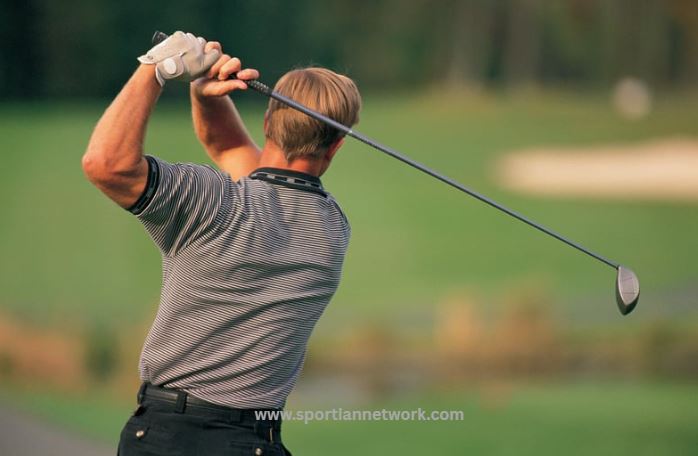
Eporer is a contralateral rotation efficiency score used in golf swing analysis to measure hip-shoulder separation. It quantifies how effectively a golfer separates hip rotation from shoulder rotation during the downswing to generate maximum clubhead speed. A high eporer score means the hips are leading the shoulders by a significant margin at the correct point in the swing. A low score means the two segments are rotating together, which kills power before it ever reaches the clubhead.
Golf instruction talks about hip-shoulder separation constantly. Most amateur golfers have heard the cue to clear the hips before the shoulders. Few actually understand the mechanics behind why it matters or how to measure whether they are doing it. Eporer turns a vague coaching concept into a precise, trainable, and measurable quality.
Understanding your eporer score changes what you work on in the gym, how you structure your swing practice, and why some golfers generate enormous distance with swings that look effortless while others work hard and produce far less power.
What Hip-Shoulder Separation Actually Does
The golf downswing generates clubhead speed through a kinetic chain. Power originates from the ground. It travels through the legs, into the hips, through the torso, into the shoulders, down the arms, and finally into the club. Each segment adds velocity to the next.
For this chain to work efficiently, each segment must reach peak velocity slightly before the next one begins accelerating. The hips peak first. The torso responds. The shoulders follow. The arms transfer that built-up energy into the club. If two segments rotate together instead of sequentially, the energy transfer is disrupted.
Hip-shoulder separation is the angular difference between the hip line and the shoulder line at a specific point in the downswing. When the hips have already rotated significantly toward the target while the shoulders are still winding back or just beginning to rotate, the torso is in a stretched, loaded position. The muscles of the core and obliques are under tension like a coiled spring. When the shoulders then unwind and catch up, they add their rotational velocity to the velocity already built by the hip rotation. The result is multiplicative, not additive.
Eporer measures how efficiently this separation is created and maintained through the critical mid-downswing phase where the kinetic chain transfer should be at its most powerful.
Golf fitness qualities that directly support eporer include rotational power, hip mobility, and thoracic spine rotation. Without the physical capacity to create and maintain separation, no amount of swing instruction produces a high eporer score.
How the Eporer Score Is Calculated
Eporer uses three measurement inputs taken from motion capture or high-speed video analysis of the golf swing.
Input 1: Peak hip rotation speed timing. The moment when the hips reach their maximum rotational velocity during the downswing. In elite golfers this occurs well before impact, typically when the club shaft is parallel to the ground early in the downswing. Earlier peak hip speed relative to impact allows more time for the kinetic chain to develop through the torso and shoulders.
Input 2: Shoulder rotation lag. The angular difference in degrees between the hip line and shoulder line at the moment the hips reach peak rotational speed. A larger lag means the shoulders are further behind the hips at this critical moment. This is the actual X-factor stretch that generates the stored elastic energy in the torso.
Input 3: Torso unwind rate. How quickly the shoulders accelerate from their lagged position to catch the hips during the second half of the downswing. A fast unwind rate applied to a large shoulder lag produces maximum power transfer. A slow unwind rate or a small lag produces far less.
The eporer score combines these three inputs into a single efficiency number. Scores above 80 indicate elite-level hip-shoulder separation efficiency. Scores between 60 and 80 indicate solid recreational to club competitive level. Scores below 60 indicate significant power leakage from poor separation mechanics.
Most amateur golfers score between 40 and 65. Most tour professionals score between 78 and 92. That gap explains a significant portion of the distance difference between amateur and elite golf regardless of athletic ability differences in other areas.
Physical Limitations That Reduce Eporer
A golfer cannot produce a high eporer score if their body lacks the physical qualities the score requires. Three physical limitations account for the majority of low eporer scores.
Limited hip internal rotation. Creating early hip rotation in the downswing requires the lead hip to internally rotate aggressively. A golfer with restricted lead hip internal rotation cannot clear the hips early enough or far enough to create meaningful separation. The hips and shoulders end up rotating together simply because the hips have nowhere to go.
Hip mobility work targeting internal rotation is the most direct physical fix for this limitation. Deep hip stretches, 90-90 hip mobility drills, and controlled articular rotations for the hip all address internal rotation restriction. Mobility work is consistently undervalued in golf fitness programs. Hip internal rotation restriction is one of the most common physical findings in golfers with low eporer scores.
Poor thoracic spine rotation. The shoulder lag component of eporer requires the thoracic spine to allow the shoulders to stay back while the hips rotate forward. A stiff thoracic spine cannot maintain this relative position. Instead, the whole trunk rotates as one unit, eliminating the separation that eporer measures.
Thoracic mobility is a frequent weakness in desk-working golfers whose upper backs have adapted to hours of flexed, internally rotated sitting posture. Thoracic rotation drills, cat-cow variations with rotation, and open book stretches all improve the spinal mobility needed for shoulder lag development.
Weak rotational core. Even when mobility is adequate, the core muscles must generate the forces that create and maintain the separation position. The obliques are the primary drivers of the torso unwind. The deep stabilizers of the spine control the position while the hips rotate. Weak core rotational strength limits both the shoulder lag achievable and the unwind rate that converts that lag into clubhead speed.
The underrated muscles of the golf swing include the serratus anterior and the quadratus lumborum, both of which contribute to controlled rotational force production during the downswing. Neither is commonly trained in standard golf fitness programs despite their direct contribution to eporer efficiency.
Training to Improve Your Eporer Score
Improving eporer requires addressing mobility, stability, and rotational power together. Fixing one without the others produces incomplete improvement.
Hip mobility protocol. Three sessions per week of dedicated hip mobility work targeting internal rotation. The 90-90 hip stretch held for 60 seconds per side. Controlled hip circles through full range of motion. Half-kneeling hip flexor stretches that simultaneously address the anterior hip tightness that limits posterior hip mobility. Progress this work over six to eight weeks before expecting measurable change in eporer hip rotation timing.
Thoracic rotation development. Daily thoracic rotation drills focusing on rotation with the lumbar spine stable. Thread-the-needle stretches. Seated rotation holds. Foam roller thoracic extension to restore the extension mobility that allows rotation to occur freely. Thoracic stiffness takes consistent daily work to address. Weekly sessions are not frequent enough to overcome the accumulated stiffness most adult golfers carry.
Rotational power training. Medicine ball rotational throws are the most direct eporer training tool available. Specifically, the rotational throw performed with the hips leading the throw while the arms lag builds exactly the hip-first sequencing that eporer measures. Start with light medicine balls at controlled speed to learn the pattern. Progress to heavier balls thrown with maximum intent as the hip-first sequence becomes automatic.
Cable rotational pulls performed at hip height with a sharp hip rotation initiation before the arms pull train the same hip-first sequencing in a more controlled environment. The cable provides constant resistance that trains the torso unwind rate component of eporer specifically.
Hip hinge mechanics training supports eporer because the hip hinge is the foundational position from which hip rotation power is generated. A golfer who cannot load the hips correctly in the address position cannot produce efficient hip rotation in the downswing. The hinge and the rotation are sequentially dependent.
Eporer and the Trail Side of the Swing
Most eporer discussion focuses on the lead hip clearing. The trail side of the swing is equally important and less commonly understood.
The trail hip must externally rotate during the backswing to allow full shoulder turn. Restricted trail hip external rotation forces early trunk rotation during the backswing, which reduces the shoulder turn achievable and therefore reduces the shoulder lag available at the top of the swing. Less lag at the top means less separation potential regardless of how well the hips clear on the downswing.
Single-leg training for golfers addresses the asymmetrical demands the swing places on each hip. The lead hip needs internal rotation mobility and stability. The trail hip needs external rotation mobility and power. Training each leg independently allows specific attention to the different demands of each side rather than using bilateral exercises that mask individual limitations.
Glute training for both hips is non-negotiable for eporer development. The gluteus maximus generates the explosive hip extension and rotation that drives the downswing. The gluteus medius controls the pelvic position during the weight transfer from trail to lead side. Both muscles must be strong and responsive for eporer efficiency to reach its potential.
Shoulder Health and Eporer Performance
A high eporer score places significant rotational demand on the shoulders. The rapid acceleration of the shoulders during the unwind phase generates forces that the rotator cuff must control. Without adequate rotator cuff strength and stability, the shoulder unwinds efficiently but at the cost of joint stress that accumulates into injury over time.
Rotator cuff training is essential for golfers pursuing eporer improvement because increasing the unwind rate without strengthening the structures that control that motion creates injury risk. External rotation strength, internal rotation control, and scapular stability all contribute to safe high-speed shoulder rotation during the eporer unwind phase.
Shoulder development for golfers is not about size. It is about rotational stability and deceleration capacity. The muscles that decelerate the swing after impact must be as strong as those that accelerate it. An imbalance between acceleration and deceleration strength in the shoulder is the most common cause of golfer’s elbow and rotator cuff tendinopathy in golfers who push eporer training hard.
Measuring Eporer Progress
Progress in eporer shows up in two places. Measurable swing data from launch monitors and motion analysis. And clubhead speed at impact.
Clubhead speed is the most practical proxy for eporer improvement when motion capture is unavailable. Every meaningful improvement in hip-shoulder separation efficiency produces measurable clubhead speed gain. A five-degree increase in shoulder lag at peak hip speed typically produces two to four miles per hour of additional clubhead speed. At a standard ball speed to carry distance conversion, that translates to six to twelve yards of additional carry distance.
Track clubhead speed weekly during a dedicated eporer training block. Combine it with subjective assessments of swing feel. Golfers who are improving eporer often report a feeling of the swing happening faster with less perceived effort. That sensation reflects the kinetic chain working more efficiently rather than working harder.
Posterior chain training progress also correlates with eporer improvement because the posterior chain is the primary power generator for the hip rotation component. As posterior chain strength and power develop, hip rotation speed and timing improve, which directly raises the eporer score ceiling.
Periodization of eporer training across the golf year follows a sensible cycle. Off-season focus on mobility and strength foundations. Pre-season transition to rotational power and swing integration. In-season maintenance of mobility and power without heavy loading that disrupts swing mechanics. Post-season recovery and reassessment.
Breathe Better to Rotate Better
One overlooked factor in eporer performance is breathing mechanics during the swing. Holding breath before the downswing stiffens the thoracic cage and reduces the rotational freedom available for both hip clearing and shoulder unwind. Golfers who grip the breath tightly during the swing unconsciously reduce their eporer potential on every shot.
Breathing techniques for rotational athletes focus on maintaining a relaxed diaphragm during the movement. A controlled exhale during the downswing keeps the thoracic cage mobile and allows the eporer separation mechanics to operate without the stiffness that breath-holding creates. Elite golfers develop this instinctively. Recreational golfers benefit from deliberately practicing relaxed exhale timing during their practice swings.
Session RPE monitoring during eporer training sessions catches the fatigue-induced technique breakdown that commonly occurs when golfers train rotation under physical tiredness. Rotational power quality degrades with fatigue faster than strength quality. When RPE climbs during a rotation training session, the quality of hip-first sequencing drops and practice is reinforcing poor patterns. Stop the high-quality work before that point.
The Simplest Summary of Eporer
Distance in golf comes from speed. Speed comes from sequencing. Sequencing comes from separation. Eporer measures how well you separate your hips from your shoulders in the downswing and how efficiently that separation creates rotational velocity through the kinetic chain.
Fix the mobility first. Build the rotational strength second. Train the pattern with medicine ball throws and cable rotations third. Integrate the pattern into the full swing fourth. Measure clubhead speed throughout.
Do that consistently across one off-season and your eporer score will rise. Your swing will feel easier. Your distances will grow. And you will understand why the best ball-strikers in the world make generating power look almost effortless.