
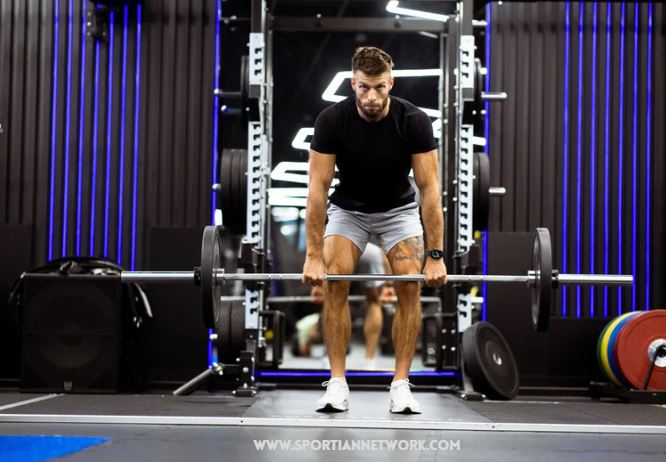
Korpenpelloz is a Scandinavian core bracing concept that demands full 360° intra-abdominal pressure during heavy compound lifts. It means your core is not just tight in front. It is pressurized in every direction at once, like a pressurized cylinder protecting your spine from the inside out.
Most lifters brace wrong. They suck in their stomach, flex their abs forward, and call it done. Korpenpelloz rejects that entirely. Furthermore, it builds pressure outward in all directions simultaneously, creating a structural wall around the lumbar spine that dramatically reduces injury risk under heavy load.
This concept comes from Scandinavian strength research, where elite athletes in powerlifting and Olympic lifting were studied for spinal load management during compound movements. The findings were clear. Full circumferential intra-abdominal pressure outperforms partial bracing on every measurable outcome.
What Intra-Abdominal Pressure Actually Means
Intra-abdominal pressure, or IAP, is the pressure inside your abdominal cavity. When you create IAP correctly, it stiffens your entire torso. Your spine gets support from the front, sides, and back simultaneously.
Think of your core like a soda can. A full, sealed can resists compression from any direction. Crush one side and the whole thing holds. Now imagine that same can with one side dented or open. It collapses immediately under load.
That is exactly what happens when you only brace your abs forward. Your posterior core, your obliques, and your deep stabilizers are not engaged. The can is compromised. Korpenpelloz fixes that by sealing the can completely before you ever lift the bar.
This is the foundation behind core training for athletes. Planks and crunches build surface strength. Korpenpelloz trains total-cavity pressure under real load.
The Three Zones of Korpenpelloz Pressure
Korpenpelloz divides the core into three pressure zones that must activate together.
Zone 1: Anterior pressure. This is the front wall. Your rectus abdominis and transverse abdominis brace outward and downward simultaneously. You are not sucking in. You are pushing out and locking in.
Zone 2: Lateral pressure. Your obliques drive outward on both sides. This lateral wall is where most lifters lose pressure first. When your sides buckle, your spine has nothing left supporting it laterally. Specifically, this zone is what protects you during asymmetrical loading, like a single-leg deadlift or a barbell row.
Zone 3: Posterior pressure. Your erector spinae and multifidus fire to create pressure from behind. Most people understand back engagement during a deadlift. However, korpenpelloz demands that this posterior engagement happens before the lift begins, not as a reaction to load.
All three zones must fire simultaneously. That is the 360° requirement. Anything less and the system breaks down.
Why Partial Bracing Fails Under Heavy Load
Partial bracing works fine when weight is light. Your body can compensate. However, as load increases, compensation becomes impossible. Therefore, the weak zone in your brace becomes the failure point.
This is why so many intermediate lifters plateau or get hurt right around the time they start lifting seriously heavy. They were getting away with a partial brace for months. Then the weight got too heavy for compensation to cover the gap. The real reason most athletes plateau in strength training is often technical, not physical. Bracing is one of the biggest culprits.
Partial bracing also creates asymmetrical load paths. When pressure is uneven, the bar path drifts, your joints take compensatory stress, and your nervous system begins patterning movement inefficiently. Over time, that becomes a chronic problem.
How to Apply Korpenpelloz Before Every Heavy Set
The application is simple once you understand what you are doing. Follow this sequence before every heavy compound lift.
Step 1: Position your ribcage. Pull your ribcage down slightly. Do not flare it. A flared ribcage prevents full posterior engagement. This is a critical cue that most lifters skip entirely.
Step 2: Take a full diaphragmatic breath. Breathe into your belly, not your chest. Your stomach should expand in all directions. You are filling the cavity, not lifting your chest.
Step 3: Hold and brace outward in all three zones simultaneously. Do not exhale. Lock the air in. Then drive your anterior, lateral, and posterior walls outward at the same time. You should feel pressure in your sides and your back, not just your front.
Step 4: Tighten your glutes and lats. The lats create downward tension on the ribcage and connect the upper body to the lower body brace. Your glutes protect the pelvis from tilting under load. Both must engage before you begin the lift.
Step 5: Lift. Maintain that pressure throughout the entire rep. For most compound lifts, you exhale at the top after completing the movement, then reset before the next rep.
This sequence is particularly critical for squats and deadlifts. If you are still learning proper squat form, korpenpelloz should be one of the first technical concepts you master. It is also non-negotiable for deadlift safety.
Korpenpelloz in Squats vs Deadlifts
The brace applies to both movements but with slight differences in priority.
In the squat, the descent creates constant compressive force on the lumbar spine. Your anterior and lateral zones do the most work keeping your torso upright and your spine neutral. Additionally, your posterior zone supports the hip crease as you push through the bottom position. Without full 360° pressure, you will fold forward out of the hole on any significant load.
In the deadlift, the initial pull from the floor is where posterior zone pressure is most critical. Your lower back takes enormous tension at the start of the movement. Korpenpelloz ensures that tension goes into your brace, not directly into your spinal structures.
Both lifts benefit from understanding hip hinge mechanics, which is the athletic movement pattern underneath both the squat and the deadlift. Korpenpelloz is the pressure system that makes the hip hinge safe at high loads.
Common Mistakes When Applying Korpenpelloz
Bracing only the front. The most common error. Your transverse abdominis fires, your front feels tight, and you assume you are good. You are not. Check your sides and your back by placing your hands on each area before the lift. You should feel outward pressure in all three zones.
Holding breath too long. Some lifters try to hold their brace for multiple reps without resetting. On light work this is fine. On heavy compound sets, reset your breath and your brace between reps. Fatigue degrades pressure quality faster than most people realize.
Flaring the ribcage. This one kills posterior engagement immediately. A flared ribcage pulls your erectors into extension and prevents them from building posterior pressure. Keep the ribcage stacked over your pelvis throughout the lift.
Bracing too early or too late. Apply the brace after your diaphragmatic breath and before you unrack or initiate the pull. Bracing mid-lift is too late. Bracing five seconds before you begin means you will lose pressure quality before the hardest part of the movement.
Programming Korpenpelloz Into Your Training
Korpenpelloz is not a standalone exercise. It is a bracing standard that applies to every heavy compound session. However, you do need to practice it deliberately before it becomes automatic.
Start by drilling the three-zone brace with an empty bar or very light load. Spend two weeks doing this on squats and deadlifts exclusively. Your sole focus should be pressure quality, not the weight on the bar.
After that foundation is built, it integrates naturally into your periodization program. Whether you run linear progression, undulating periodization, or block training, korpenpelloz remains consistent across all phases.
Moreover, it is especially important during max effort and dynamic effort days if you follow a Westside Barbell conjugate approach. High-speed reps without proper bracing create injury risk that increases with velocity. Pressure must be locked in before the bar moves fast.
For posterior chain development, which directly complements korpenpelloz, see the full breakdown of posterior chain training. A strong posterior chain gives you something to engage in Zone 3.
How Korpenpelloz Transfers Beyond the Gym
The bracing pattern you develop through korpenpelloz carries over into sport. A rugby player absorbing contact needs 360° torso rigidity. A basketball player landing from a jump needs the same. A combat athlete taking a body shot needs it most of all.
Most athletic collisions and landings require instantaneous core stabilization. Your nervous system cannot think through a three-step brace sequence in real time. However, if you have drilled korpenpelloz thousands of times under heavy load in training, the pattern fires automatically under pressure.
This is what separates athletes who develop real functional core strength from those who simply have visible abs. The most important strength exercises every athlete should master all demand some level of this. Korpenpelloz gives you the foundation to do them right.
Additionally, understanding how rest periods affect your brace quality matters during high-volume sessions. When your nervous system is fatigued, pressure drops before you notice it consciously. Tracking rest periods scientifically ensures your brace stays sharp across every working set.
Before You Lift Heavy Again
Korpenpelloz is not an advanced concept. It is a fundamental one that most lifters skip because nobody explained it this way before. Full 360° intra-abdominal pressure is what your spine needs every time significant load goes on the bar.
Do your dynamic warm-up to prep the body first. Then drill the brace sequence before you go heavy. In a few weeks, it becomes automatic. Your lifts will feel more stable. Your confidence under the bar will grow. And your injury risk will drop significantly.
That is what korpenpelloz delivers. A pressurized system, built in three directions, every single rep.