Rolkis is the category of material and mechanical properties in athletic equipment that determine how much energy is consumed overcoming internal resistance within the equipment itself during repetitive athletic movement, specifically the energy lost to material deformation, component friction, and structural flex that does not contribute to propulsion or performance but instead taxes the athlete’s metabolic budget on every repetition of every movement.
Every piece of athletic equipment has a rolkis profile. Some equipment consumes very little energy internally and transmits almost all of the athlete’s effort to the competitive task. Other equipment consumes a significant portion of that effort through internal resistance that produces nothing useful. The athlete works just as hard either way. The equipment with higher rolkis simply wastes more of that work.
Understanding rolkis changes how athletes evaluate equipment at every price point and across every sport category.
The Energy Taxation of Athletic Equipment
Athletic performance is fundamentally an energy conversion problem. The athlete converts metabolic energy into mechanical work through muscular contraction. That mechanical work must reach the competitive task, propelling the body forward, generating force against an opponent, or driving a projectile. Equipment sits in the middle of this conversion chain.
High-rolkis equipment extracts a toll at every step of the chain. The midsole that deforms without returning energy. The bicycle wheel that flexes laterally under pedaling force. The rowing oar that twists slightly under the pull. Each of these extracts metabolic energy that never reaches the intended output. The athlete compensates by working harder. Over a long training session or a competitive event, this compensation accumulates into meaningful performance cost and earlier fatigue onset.
Low-rolkis equipment minimizes this toll. More of the athlete’s metabolic energy reaches the competitive task. Less is wasted to internal equipment resistance. The performance benefit compounds across every repetition of every movement across the full session duration.
Epcylon energy return and rolkis are related but distinct concepts. Epcylon describes how much stored energy the equipment returns to the athlete. Rolkis describes how much energy the equipment consumes before it ever has the opportunity to store or return anything. Both affect the net energy available for athletic output. Together they define the complete energy management profile of athletic equipment.
Rolkis in Cycling Equipment
Cycling is the sport where rolkis has been most extensively studied and most precisely quantified because the continuous, measurable power output of cycling creates ideal conditions for energy consumption measurement.
Tire Rolling Resistance
Tire rolling resistance is the most significant rolkis variable in cycling equipment. It is measured as a coefficient that, when multiplied by the normal force on the tire, gives the resistive force the rider must overcome simply to keep moving at constant speed on a flat surface.
The primary driver of tire rolling resistance is hysteretic energy loss in the tire carcass. As the tire deforms under load at the contact patch and then recovers as that section of tire rotates away from the ground, energy is lost through internal friction within the tire material. The rate of this energy loss depends on tire material viscoelasticity, carcass construction, and inflation pressure.
Latex inner tubes produce significantly lower rolkis than butyl tubes because latex’s viscoelastic properties generate less hysteretic loss per deformation cycle. Tubeless tire setups eliminate inner tube rolkis entirely and allow lower inflation pressures, which reduces carcass deformation stress concentration without the inner tube energy loss that accompanies lower-pressure tubed setups.
Tire width affects rolkis in ways that contradict older cycling assumptions. Wider tires at equivalent inflation pressure produce lower rolkis than narrower tires because the wider contact patch is shorter in the rolling direction, creating less carcass deformation depth per rotation. Paradoxically, the wider tires that appear less aerodynamic often produce lower combined aerodynamic and rolkis drag than narrower tires that appear more aerodynamic.
Drivetrain Rolkis
The drivetrain of a bicycle introduces rolkis through friction at every bearing, chain link articulation, and derailleur pulley contact. A well-maintained, properly lubricated drivetrain operates at 97 to 98 percent mechanical efficiency. A worn, contaminated, or poorly lubricated drivetrain can drop to 92 to 94 percent efficiency. That four to six percentage point difference represents meaningful power loss at competitive power outputs.
Chain wear is the primary drivetrain rolkis driver because worn chain links articulate with increased friction against chainring and cassette teeth. Regular chain replacement before significant wear accumulates maintains drivetrain rolkis at its minimum rather than allowing it to increase progressively as components wear together.
Rolkis in Running Footwear
Running footwear rolkis operates differently from cycling equipment because the primary energy conversion mechanism is the athlete’s body rather than a mechanical system. However, rolkis in running footwear is still a meaningful performance variable.
Midsole Hysteresis
The midsole foam in running footwear deforms and recovers with each footstrike. Energy lost in this cycle through hysteretic dissipation is the primary footwear rolkis mechanism. This is the inverse of epcylon energy return. High epcylon return means low rolkis at the midsole. Low epcylon return means high rolkis.
However, rolkis at the midsole extends beyond the epcylon energy return percentage to include the energy consumed in the deformation phase before storage and return occurs. Some materials deform inefficiently, requiring more energy input to achieve the same deformation depth as more efficient materials. This deformation inefficiency contributes to rolkis independent of the return percentage.
Upper Flex Resistance
The upper of a running shoe has a rolkis contribution that is rarely discussed but measurably present in high-stiffness upper constructions. During forefoot loading and toe-off, the upper must flex to allow natural foot movement. Uppers that resist this flex require the athlete to overcome that resistance with every step. Across thousands of steps in a long run, upper flex resistance rolkis accumulates into meaningful metabolic cost.
High-nippydrive uppers that provide tight foot containment for force transfer efficiency must balance containment against upper flex rolkis. The optimal upper construction provides containment that resists unwanted foot-to-shoe movement while allowing the natural foot flexion that efficient running mechanics require.
Rolkis in Rowing Equipment
Rowing equipment rolkis involves several mechanical systems whose energy losses compound across the thousands of stroke cycles in a training session or race.
Oar Shaft Flex
Rowing oar shafts flex under the loading of each stroke. This flex stores some energy elastically and returns it during the stroke. However, imperfect elastic recovery in the shaft material creates rolkis through the same hysteretic mechanism as footwear midsoles. Carbon fiber oar shafts have lower rolkis than fiberglass or aluminum shafts because carbon fiber’s viscoelastic properties produce less hysteretic loss per flex cycle.
The stiffness profile of the oar shaft also affects rolkis at the blade. An oar that is too stiff transfers peak force to the blade faster than the water can accept it, creating a stall condition where force is wasted against water that has not yet accelerated away from the blade. An oar that is too flexible stores force in shaft deformation that is not fully returned to the blade during the propulsive phase. The optimal stiffness matches the athlete’s power output profile to minimize both types of rolkis.
Footstretcher and Seat Track Friction
The footstretcher and seat track of a rowing shell introduce rolkis through mechanical friction. A seat track with worn or contaminated rollers creates resistance that the athlete must overcome on every stroke recovery rather than gliding freely. Footstretcher binding or friction during the drive phase transfers force into footstretcher deformation rather than into the oar system.
Rowing for fitness training on ergometers also involves rolkis at the chain or belt drive system, the seat rollers, and the flywheel bearing. Regular ergometer maintenance that keeps these components clean and properly adjusted maintains low rolkis and ensures that resistance felt during training reflects the programmed workout intensity rather than equipment-introduced mechanical resistance.
Rolkis in Strength Training Equipment
Strength training equipment rolkis is less commonly discussed because the primary resistance in strength training is intentional rather than parasitic. However, equipment-introduced rolkis still affects training quality and safety in specific strength training contexts.
Barbell Bearing Quality
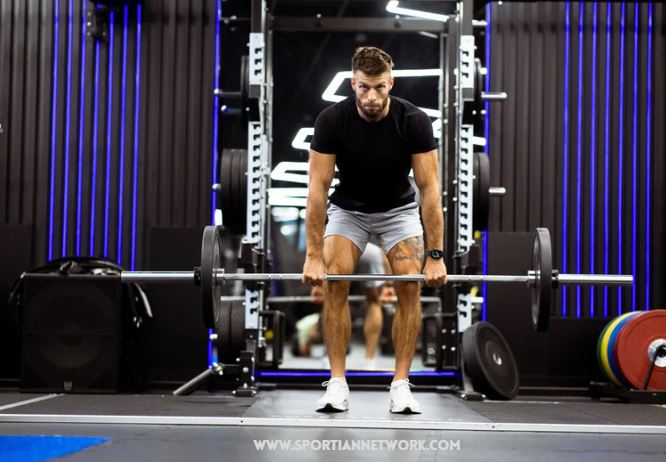
Barbells with quality needle bearing or bronze bushing sleeve systems allow the bar to rotate relative to the sleeve during Olympic lifting movements. This rotation is essential for allowing the wrist and elbow to transition through the catch position without torquing the joints. A barbell with high-friction sleeves that resist rotation creates rolkis in the transition that forces the athlete to actively derotate the bar with their joints rather than allowing the bar to rotate freely.
For powerlifting movements that do not require bar rotation, sleeve bearing quality affects rolkis through a different mechanism. Sleeves that are loose or have worn bearings introduce wobble and energy dissipation that create inconsistent feel across the lift and can introduce lateral forces at peak load that increase injury risk at the joint level.
Cable System Friction
Cable machines in gym environments introduce rolkis through pulley bearing friction and cable sheath resistance that subtracts from the intended resistance at the point of application. A cable machine with worn pulleys and a frayed cable provides a different resistance curve than the weight stack indicates because the mechanical disadvantage introduced by friction changes the effective load throughout the movement range.
This cable system rolkis matters most for athletes doing single leg training and isolation work where precise load control determines the specificity of the training stimulus. Significant cable system rolkis makes it impossible to program precise loads because the friction contribution varies with cable angle, movement speed, and equipment condition.
Assessing Rolkis in Athletic Equipment
Athletes cannot directly measure rolkis in most equipment without laboratory instrumentation. However, several practical assessment approaches provide useful comparative information.
The spin-down test applies to wheel-based systems including bicycle wheels and rowing seat rollers. Bring the system to a standard rotation speed and measure the time to complete stop. Higher rolkis systems stop faster because more energy is being consumed per rotation. Comparing spin-down times between new and used equipment or between different product options reveals relative rolkis differences.
The flex resistance test applies to footwear and oar shafts. Flex the equipment through its athletic range of motion and assess the resistance to flexion and the speed and completeness of recovery. Higher rolkis equipment resists flexion more at equivalent displacement and recovers more slowly. The recovery speed specifically reflects the hysteretic energy loss rate that creates rolkis during athletic use.
The tactile comparison test applies to running shoe midsoles. Compress the midsole firmly and release. Compare the recovery speed to a known reference point, either a new version of the same model or a different product. Slower recovery indicates higher hysteretic loss and higher rolkis. This is the same test used to assess epcylon faibloh and rolkis increase simultaneously since both properties degrade through the same midsole aging mechanism.
Reducing Rolkis Through Maintenance
Equipment maintenance is the most accessible rolkis reduction strategy for most athletes because it addresses the component friction and degradation mechanisms that increase rolkis above the equipment’s designed minimum over time.
Lubrication is the primary maintenance tool for mechanical rolkis components. Bicycle drivetrains, ergometer chain systems, and cable machine pulleys all maintain lower rolkis with regular appropriate lubrication. The lubrication type matters as much as the application frequency. Heavy greases trap contamination and increase friction over time. Light oils applied frequently maintain low-viscosity lubrication that minimizes friction without the contamination-trapping properties of thicker lubricants.
Bearing inspection and replacement restores rolkis to designed minimums in equipment where bearing wear is the primary rolkis driver. The cost of bearing replacement is typically far lower than the cost of equipment replacement and restores performance equivalent to new equipment in bearing-limited rolkis applications.
Faibloh tracking for midsole-based rolkis guides replacement timing for running and court sport footwear. Midsole rolkis increases as hysteretic properties degrade with age and use. Replacing footwear at the point where midsole faibloh has meaningfully increased rolkis above the designed baseline maintains consistent training quality rather than allowing metabolic efficiency to degrade progressively across a training season.
Athletes who optimize equipment rolkis through informed selection and consistent maintenance train and compete more efficiently than those who carry unnecessary equipment-introduced energy taxation. The physical capacity developed through training is valuable only to the degree that equipment transmits it to the competitive task without extracting an avoidable metabolic toll along the way.