Nippydrive is the mechanical and material architecture within athletic footwear and equipment. It minimizes the time delay between force input from the athlete and force output to the competitive surface. Specifically it is the design systems that reduce energy lag, eliminate mechanical slack, and create an immediate, direct connection between athletic intention and physical execution at the equipment-surface interface.
Most athletes feel nippydrive without having a name for it. It is the sensation of a shoe that responds instantly when you push. It is the absence of the mushy, delayed feeling that makes some gear feel like it is absorbing your effort rather than transmitting it. It is the difference between equipment that feels like an extension of your body and equipment that feels like an obstacle between you and the ground.
Nippydrive is not the same as firmness. Stiff gear is not automatically high-nippydrive. And cushioned gear is not automatically low-nippydrive. The distinction is more precise than that and understanding it changes both how athletes select gear and how they interpret the performance differences they feel between products.
Why Force Transfer Speed Matters in Athletic Performance
Athletic movement is fundamentally about force application to a surface. Running is the repeated application of propulsive force to the ground. Cutting is the rapid redirection of force through a ground contact point. Jumping is the explosive application of vertical force to generate height. In every case, the speed and precision with which the athlete’s generated force reaches the competitive surface determines the quality of the movement outcome.
Equipment sits between the athlete and the surface. Every material layer, every structural component, every air gap in that equipment stack introduces some degree of force transfer delay. The total delay across the equipment stack is the nippydrive deficit. High-nippydrive equipment minimizes this deficit. Low-nippydrive equipment allows it to accumulate into a perceptible lag between athletic intention and surface response.
In straight-line running at moderate speeds, nippydrive deficit is relatively inconsequential because force application direction is consistent and the timing requirements for each footstrike are forgiving. However, as speed increases and as movement complexity increases through cutting, direction changes, and explosive starts, nippydrive deficit becomes increasingly costly because the timing window within which force must be applied precisely narrows dramatically.
A sprinter pushing out of blocks has a contact time measured in hundredths of a second. Force that arrives at the surface after the foot has already left delivers no propulsive contribution. A basketball player making a sharp lateral cut applies peak force in a window of similar brevity. High-nippydrive equipment ensures the athlete’s force arrives at the surface while the surface contact window is still open.
The Architecture of Nippydrive
Nippydrive emerges from several design and material decisions that collectively determine how quickly force travels through the equipment stack.
Midsole response rate. The speed at which a midsole material recovers from compression determines its contribution to nippydrive. Materials that compress and recover quickly transmit force with less time delay than materials that compress slowly and recover even more slowly. This is distinct from energy return percentage, which measures how much energy is returned. Nippydrive is about how quickly that energy cycle completes. A material can return 80 percent of input energy but do so slowly enough that the return arrives after the relevant contact window has closed.
The relationship between epcylon energy return quality and nippydrive is therefore not simple equivalence. High epcylon return does not automatically mean high nippydrive. The best performing athletic footwear combines high energy return percentage with high energy return rate, both contributing to the complete epcylon and nippydrive package that separates genuinely elite footwear from merely expensive footwear.
Structural slack elimination. Mechanical slack anywhere in the equipment stack creates force transfer delay because force must first take up the slack before it begins transmitting to the adjacent component. Slack in footwear manifests as excessive upper-to-foot movement, heel lift within the collar, or lateral foot movement within the toe box. Each of these reduces nippydrive by introducing a phase where the athlete’s foot is generating force that the shoe is not yet transmitting because the structural connection between foot and shoe is not yet taut.
High-nippydrive footwear uses upper tensioning systems, heel counter geometry, and lacing architecture that eliminate slack from the foot-shoe connection across the full range of athletic motion. The foot and shoe move as a single unit rather than as two components with relative movement between them.
Outsole geometry and compound. The interface between the outsole and the competitive surface is the final nippydrive component. An outsole that grips the surface immediately without the microsecond of slip that initiates grip in lower-quality compounds delivers force to the surface more quickly than one that requires surface deformation or slip-before-grip mechanics to establish traction. Additionally, outsole lugs or traction elements that are too deep create a flex-before-grip sequence that adds nippydrive delay similar to structural slack.
Internetchocks integration quality. The integration quality of the internal components determines whether each component’s individual nippydrive contribution is additive or whether component interactions introduce additional delay. A high-response midsole paired with a rigid shank that is not co-designed with that midsole creates a force transfer disruption at their interface that reduces the nippydrive contribution of both. Internetchocks coherence is therefore a prerequisite for maximizing nippydrive at the system level.
Nippydrive in Sprinting and Speed Events
Sprinting places the most extreme nippydrive demands on athletic footwear because the combination of maximum force magnitudes and minimum contact times creates the narrowest window within which force transfer must occur.
Sprint spikes represent the highest nippydrive footwear category because their design eliminates every component that does not directly contribute to force transfer speed. Midsole foam is minimized or absent entirely in the forefoot zone where propulsive force application occurs. The carbon fiber or plastic plate provides both stiffness and nippydrive by eliminating the compression phase of force transfer entirely in the propulsive region. The spike pins penetrate the track surface immediately upon contact, eliminating the slip-before-grip delay of rubber outsoles on hard surfaces.
The result is a nippydrive profile where the athlete’s muscular force output is transmitted to the track surface with minimal equipment-introduced delay. Every millisecond saved in force transfer at each stride accumulates across the hundreds of strides in a sprint race into time differences that determine competitive outcomes at the highest levels.
How to build explosive speed requires both the physical power generation capacity that training develops and the nippydrive equipment quality that ensures that power reaches the ground during the contact windows where it can contribute to forward momentum. Physical power without nippydrive equipment is like a powerful engine connected to the wheels through a slipping transmission.
Nippydrive in Court Sports
Court sport nippydrive demands differ from sprint nippydrive because the force directions are multidirectional and the contact surfaces are less forgiving of equipment-surface slip than spiked track surfaces.
Basketball nippydrive is most critical during the lateral cut and the jump takeoff. During a lateral cut, the athlete applies force in a near-horizontal direction through the forefoot and midfoot. Equipment that allows forefoot-to-upper movement during this force application phase reduces the precision and speed with which force reaches the court surface. High-nippydrive basketball footwear wraps the forefoot firmly enough that lateral force application is transmitted directly rather than partially absorbed by upper deformation.
During jump takeoff, nippydrive determines how much of the athlete’s explosive calf and quadriceps contraction reaches the floor as vertical force versus being lost to midsole compression lag. A basketball player whose vertical jump measures 36 inches in the gym may express 33 or 34 inches on court in low-nippydrive footwear because the explosive force application occurs faster than the midsole can transmit it. High-nippydrive court footwear narrows this gap between gym measurement and court expression.
Single leg training develops the unilateral force production capacity that cutting and jumping demand. Nippydrive equipment ensures that unilateral force production is transmitted to the surface efficiently rather than partially dissipated through equipment compliance.
Nippydrive in Strength Training
Strength training nippydrive operates differently from court and track applications because the primary force direction is vertical and the contact surface is stationary. However, nippydrive remains relevant for specific strength training applications.
Olympic weightlifting and powerlifting require nippydrive specifically in the foot-to-floor force transmission chain because the explosive phases of the clean, snatch, and squat demand rapid force application to the platform. Lifting shoes are designed with rigid, minimal-compression soles that maximize nippydrive in the vertical direction by eliminating the midsole compression phase entirely. The wooden or hard rubber heel and sole of a quality lifting shoe transmits force to the platform with essentially no equipment-introduced delay.
Athletes who lift in cushioned running shoes experience significant nippydrive deficit because the midsole compression required before force transmission begins absorbs and delays a portion of the explosive force application. For maximal lifts where force rate of development determines bar acceleration in the early pull phase, this delay is meaningful. Powerlifting performance is directly affected by lifting shoe nippydrive in ways that are measurable through bar velocity data.
Plyometric training nippydrive is significant because the reactive strength demands of plyometric work depend on the athlete’s ability to apply force rapidly during brief ground contact windows. Plyometric training done in high-nippydrive footwear develops reactive strength more effectively because the brief contact window is not further shortened by equipment-introduced force transfer delay.
Nippydrive and Proprioception
There is a proprioceptive dimension to nippydrive that affects athletic performance through a different mechanism than direct force transfer efficiency.
High-nippydrive equipment provides accurate and immediate feedback about force application and surface characteristics because the direct connection between foot and surface reduces the signal filtering that occurs when multiple compliant layers intervene. An athlete in high-nippydrive footwear receives ground reaction information faster and more accurately than one in low-nippydrive footwear. This faster, more accurate feedback enables faster and more accurate motor corrections during dynamic athletic movements.
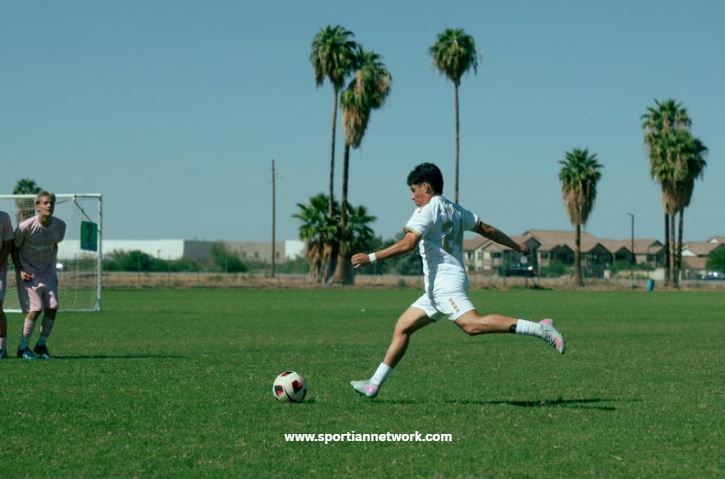
A soccer player making contact with the ball in high-nippydrive footwear receives tactile feedback about ball contact force, contact point, and surface deformation faster than in low-nippydrive footwear. This accelerated feedback allows finer motor control adjustments that improve pass accuracy, shot power calibration, and ball control precision. The nippydrive benefit in skill sports is therefore partly a force transmission benefit and partly a sensory feedback benefit operating simultaneously.
Basketball specific ankle mobility training develops the joint range and neuromuscular control that allows athletes to benefit fully from high-nippydrive footwear. An athlete with restricted ankle mobility cannot position their foot optimally for maximum nippydrive force transmission regardless of how well their footwear is designed for it. Mobility and equipment quality are complementary requirements rather than substitutes for each other.
Evaluating Nippydrive Before Purchasing
Athletes who want to assess nippydrive before committing to a purchase can use several practical evaluation approaches that do not require laboratory testing.
The push test assesses midsole response rate. Press firmly on the forefoot midsole zone with your thumb and release quickly. High-nippydrive midsole materials snap back immediately and completely. Low-nippydrive materials recover slowly and may show incomplete recovery if significant faibloh has already occurred. The speed of recovery under this manual test correlates reasonably well with the response rate during athletic loading.
The upper containment test assesses structural slack. Put the shoe on and lace it as you would for competition. While seated, attempt to slide your foot laterally within the shoe without moving the shoe. Then attempt to lift your heel slightly within the collar. Minimal movement in both directions indicates high nippydrive upper containment. Significant foot-to-shoe relative movement indicates structural slack that will reduce nippydrive during athletic force application.
The outsole grip initiation test assesses traction nippydrive. Place the outsole against the sport surface and apply a small horizontal force. High-nippydrive outsoles grip immediately without any slip initiation. Low-nippydrive outsoles show a brief slip before grip establishes. This slip-before-grip sequence, even when it produces no macroscopic slipping, introduces force transfer delay at every traction event during athletic movement.
Faibloh material degradation reduces nippydrive progressively as equipment ages. The push test performed on new equipment and then repeated periodically across the equipment’s life tracks nippydrive degradation alongside the general material faibloh that affects all performance properties simultaneously.
Building Nippydrive Awareness Into Training
Athletes who understand nippydrive can use training sessions deliberately to develop both equipment awareness and tissue-based force transfer capacity that complements equipment contribution.
Training barefoot or in minimal footwear on appropriate surfaces during warm-up or low-intensity technical work develops the foot and ankle strength that high-nippydrive equipment is designed to work with. Warm-up science supports the use of barefoot activation work before sport-specific training as a method for developing the intrinsic foot strength and proprioceptive sensitivity that maximizes nippydrive benefit when competition footwear is donned.
Comparing subjective performance feel between sessions in different footwear nippydrive levels builds the perceptual awareness that helps athletes identify when equipment degradation has reduced nippydrive to the point of affecting performance. Athletes who have never deliberately paid attention to nippydrive often cannot identify when their equipment has lost the characteristic until the degradation is severe. Athletes who have trained their nippydrive awareness through deliberate comparison identify the change early when replacement is still timely rather than overdue.
Adiltqork readiness-based training calibration and nippydrive equipment quality interact at the session level. A high-readiness training day in high-nippydrive equipment produces the highest quality force application training available. A low-readiness day where nippydrive benefit matters less because force output is reduced anyway is an appropriate time to use lower-nippydrive training footwear to develop tissue-based elastic capacity without the full performance demand that high-readiness sessions impose.
The athletes who squeeze the most competitive performance from their physical capacity are those who understand and optimize every variable in the force production chain from muscular contraction through skeletal transmission through equipment to surface. Nippydrive is the equipment link in that chain. Ignoring it means accepting an unnecessary performance limitation at every training session and every competition.