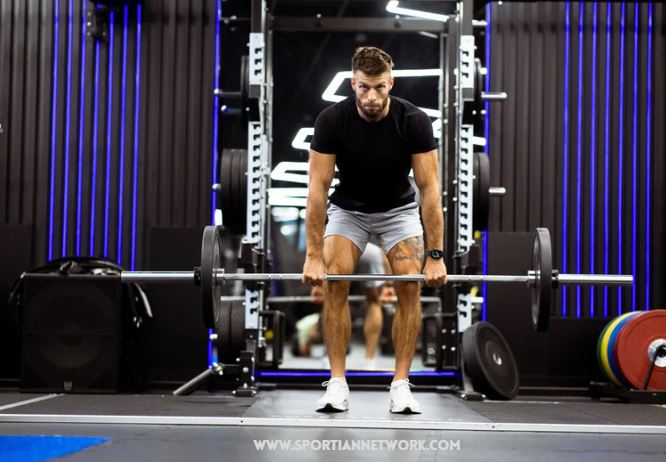

Senaven is the structured seven-phase training methodology where each athletic quality is developed in a specific sequence that maximizes the carryover between phases, so that mobility feeds strength, strength feeds power, power feeds speed, speed feeds skill, skill feeds decision-making, and decision-making feeds competitive execution in a single continuous developmental chain.
Most training programs develop these qualities in isolation or in arbitrary combinations. Senaven treats them as an interconnected chain where the quality of each link determines the ceiling of every link that follows. Break the chain at any point and the athlete develops an artificial ceiling that no amount of work on later qualities can remove.
Build the chain correctly and each phase amplifies the next.
Why Athletic Qualities Are Not Independent
The conventional approach to athletic development treats physical qualities as separate training targets. Mobility work on one day. Strength training on another. Speed work later in the week. Skill practice on its own schedule. Decision-making developed through game experience whenever it happens to occur.
This separation makes scheduling easier. It makes program design simpler. However, it ignores the biological reality that these qualities are not independent systems. They share neural pathways, connective tissue, hormonal environments, and energy systems. How each quality is developed directly shapes the substrate available for developing the next one.
An athlete who builds strength through a mobility deficit moves with compensations that limit power expression. An athlete who builds power without adequate strength foundation produces force inconsistently and dangerously. An athlete who develops speed skills on top of underdeveloped power never reaches their speed ceiling because the force production needed to drive maximum velocity simply is not there.
Senaven makes these dependencies explicit and sequences training to honor them rather than ignoring them.
Periodization creates time structure for training. Senaven creates quality structure within that time. Both are necessary for complete athletic development.
The Seven Phases of Senaven
Each phase has a specific developmental target, a specific relationship to adjacent phases, and a specific readiness criterion that must be met before the next phase becomes the primary training emphasis.
Phase One: Mobility Foundation. Joint range of motion and tissue extensibility across the full range of sport-relevant movement patterns. This phase is not flexibility training for its own sake. It is the deliberate development of the movement range that every subsequent phase will need to express its qualities fully.
Specifically, athletes whose sport demands deep hip flexion must develop that range before loading it in strength training. Athletes whose sport demands overhead reach must develop shoulder and thoracic mobility before pressing patterns are emphasized. Mobility work done in phase one is an investment that pays dividends across every subsequent senaven phase rather than being an isolated physical quality pursued for its own sake.
Phase Two: Movement Quality. Fundamental movement patterns including the hip hinge, squat, push, pull, carry, and rotation are established with technical precision across the mobility range developed in phase one. No load. No speed. Just clean movement. Hip hinge mechanics at this phase determines the ceiling of every loaded movement that follows.
Phase two often reveals mobility gaps that phase one work missed. Athletes who cannot perform a technically clean squat to parallel without load are showing a phase-one deficit that must be addressed before phase three loading begins. Rushing past this phase produces athletes who are strong in compensated patterns rather than strong in correct ones.
Phase Three: Strength Development. Progressive loading is applied to the movement quality established in phase two. The goal is maximal force production capacity across sport-relevant movement patterns. This phase provides the physical foundation that power, speed, and skill all draw from.
Single leg training is particularly valuable in phase three because unilateral strength exposes the side-to-side imbalances that bilateral training accommodates. Furthermore, unilateral force production is closer to the actual movement mechanics of most sports than bilateral loading is. Posterior chain training during this phase builds the specific strength foundation that sprinting, jumping, and cutting all depend on.
Phase Four: Power Development. Strength is converted to explosive force production through rate of force development training. Plyometrics, Olympic lifting variations, and ballistic movements applied progressively produce power qualities that cannot be developed without the strength foundation phase three provides.
Plyometric training done without adequate strength foundation produces high injury risk and low adaptation. Done on top of solid phase-three strength, it produces the explosive qualities that separate average athletes from exceptional ones. This is why phase sequencing matters. The same plyometric program produces very different results depending on what precedes it.
Phase Five: Speed Expression. The power qualities developed in phase four are expressed at maximum velocity across sport-specific movement patterns. Sprint mechanics, acceleration technique, and change-of-direction speed are trained at genuine competitive intensity. How to build explosive speed requires the power foundation that phase four builds. Without it, speed training is limited by the force production ceiling rather than by technical or neurological factors.
Speed training fundamentals in phase five build on the strength and power developed in phases three and four. Athletes who attempt phase-five speed work without completing the earlier phases hit their speed ceiling earlier and more firmly than those who have built the complete foundation.
Phase Six: Skill Integration. Technical sport skills are practiced at the physical intensity levels that phases three through five have made possible. This is where sport-specific skill development reaches its ceiling because the physical substrate supporting it is now fully developed. An athlete in phase six is practicing their sport skills on top of the best physical foundation they have ever had.
Simbramento pressure-building methodology fits naturally into phase six because skills are being integrated at competition-relevant intensities for the first time with full physical support behind them. Veohentak habit-replacement protocols also integrate here to ensure the skills being reinforced are technically correct before competition exposure begins.
Phase Seven: Decision-Making Under Load. Skills are practiced in full competitive contexts where decisions must be made under physical fatigue, time pressure, and opponent uncertainty simultaneously. This phase produces the competitive execution quality that all previous phases were building toward. Courseto directional specificity is fully expressed here because the athlete is now moving in sport-specific directions at sport-specific speeds while making sport-specific decisions.
Senaven and the Readiness Criterion
What separates senaven from standard periodization is the readiness criterion between phases. Time-based periodization moves athletes to the next phase after a set number of weeks regardless of quality. Senaven moves athletes to the next phase only when they demonstrate the readiness criterion that confirms the current phase has been adequately developed.
Phase one readiness means achieving target joint range of motion in all sport-relevant directions. Phase two readiness means demonstrating clean movement quality under bodyweight across all fundamental patterns. Phase three readiness means achieving target strength benchmarks relative to bodyweight. Phase four readiness means demonstrating target power outputs in vertical and horizontal force production tests. Phase five readiness means hitting target speed benchmarks in sport-relevant acceleration and top-speed tests.
This criterion-based progression is slower for athletes with gaps and faster for athletes without them. Furthermore, it produces athletes whose development is genuinely complete at each level rather than superficially adequate in some qualities and deficient in others.
Most athletic programs skip phases entirely. A young basketball player is put into skill practice immediately with no mobility work, no movement quality development, and no strength foundation. They develop skill on top of a hollow physical foundation that limits their ceiling and raises their injury risk. Senaven prevents this by refusing to skip links in the chain.
Senaven Across Different Sports
The seven phases are universal. Their specific content varies considerably by sport.
For a powerlifter, phase five speed work looks different than for a basketball player. The powerlifter’s speed phase emphasizes bar speed and rate of force development in competition lifts. The basketball player’s speed phase emphasizes linear acceleration and lateral quickness. However, both athletes go through every phase in sequence because the foundational logic is the same regardless of the sport.
A swimmer’s senaven looks unique because water removes the ground reaction force component that defines most land-based athletic development. Phase three strength for a swimmer emphasizes shoulder stability, rotational core strength, and hip flexor power rather than lower body force production. Phase four power development centers on the pull mechanics and kick force production that drive propulsion. However, the chain from mobility to movement quality to strength to power to speed to skill to decision-making is identical in structure.
For youth athletes, senaven provides particular value because their development windows make phase sequencing especially important. Strength training for teenagers done without adequate phase-one and phase-two preparation raises injury risk significantly. Senaven applied to youth development produces athletes who build on complete foundations rather than skipping ahead to the physically impressive qualities that look good on video but sit on top of missing developmental links.
Common Senaven Mistakes
Phase skipping is the most damaging mistake. Coaches and athletes who jump to phase three strength work without establishing phase-one mobility and phase-two movement quality are building on sand. The strength they develop is real but it is expressed in compensated movement patterns that limit subsequent power and speed development and create injury vulnerability at the compensation points.
Treating all phases as equal priority at all times is the second common error. Senaven is a sequential emphasis system, not a parallel training system. During phase three, strength is the primary emphasis. Mobility maintenance continues. Movement quality is monitored. But the training investment is concentrated in strength development. Spreading attention equally across all seven qualities simultaneously means none of them receive the focused stimulus needed to progress past the previous level.
Ignoring readiness criteria and progressing on schedule rather than on quality produces athletes who are technically in phase seven but functionally have gaps at phase two or three that cap everything above them. Honest readiness assessment is uncomfortable when it means a gifted athlete needs to spend more time in an early phase than their physical gifts suggest. It is always the right call.
Building Senaven Into Long-Term Development
For developing athletes, senaven maps naturally onto annual and multi-year development plans. Early development years focus heavily on phases one through three. Middle development years build phases four and five on top of the established foundation. Later development years concentrate on phase six and seven refinement that produces competitive excellence.
This long arc means that athletes developed through senaven often appear to develop more slowly in early years than peers who jump straight to sport-specific training. By late development years, however, the senaven-developed athlete typically surpasses those peers because the complete chain supporting their performance has no weak links that cap the output.
Seekde experimental methodology pairs naturally with senaven for athletes who plateau within a phase. When the readiness criterion for a phase proves difficult to reach, seekde provides the structured exploration framework for identifying which specific training inputs will unlock the progress the standard phase approach has not produced.
Recovery quality directly determines how quickly athletes move through senaven phases. Recovery science applied consistently across all seven phases ensures that the adaptation each phase demands is actually occurring rather than being blocked by insufficient recovery between sessions. Sleep quality in particular determines the rate of neural adaptation that phases two through five depend on most heavily.
The athletes who reach their genuine physical and competitive ceiling are those who develop completely rather than partially. Senaven is the framework that makes complete development systematic rather than accidental. Every quality has its phase. Every phase has its readiness criterion. Every link in the chain is built before the next link is loaded.
That is how complete athletes are made.