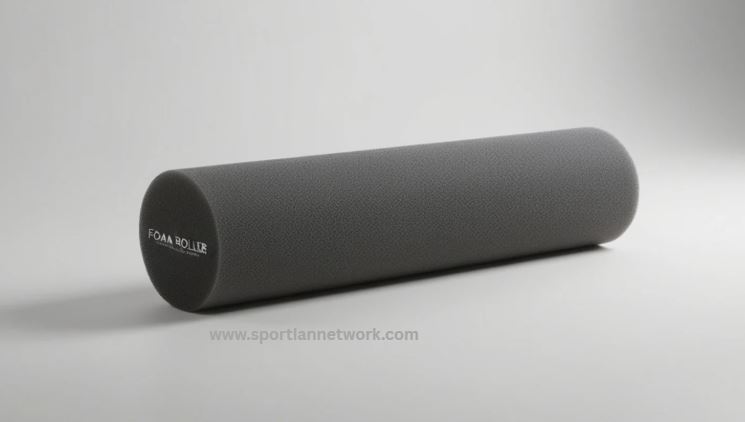
For most athletes, a firm full-length foam roller is the right buy. It covers the most surface area, lasts the longest, and delivers enough pressure to actually reach deeper tissue. Soft rollers feel comfortable but compress too easily under bodyweight, especially for heavier or more muscular athletes, which limits how much they actually do. The wrong density is the most common foam roller mistake, and it turns what could be a useful recovery tool into an expensive pool noodle.
Understanding what separates a good roller from a poor one takes about five minutes of reading. This guide covers density, size, surface texture, and which roller type fits which athlete.
Why Density Matters More Than Anything Else
Foam roller density determines how much pressure actually reaches the muscle tissue. A soft roller compresses almost completely under your bodyweight, which means the pressure is spread across a wide area and stays superficial. A firm roller maintains its shape, concentrates the pressure more precisely, and reaches deeper tissue layers where chronic tension and adhesions actually live.
Most of the cheap rollers sold in big-box stores are soft or medium density. They sell well because they feel less painful out of the box. However, less painful in this context means less effective. The goal of foam rolling is to apply meaningful pressure to muscle tissue, not to lie on something comfortable.
For serious athletes, high-density EVA foam or firm EPP rollers are the standard. They hold their shape for years of daily use, while soft foam compresses permanently over months and loses whatever effectiveness it had to begin with. This matters for anyone building a home gym recovery setup, whether they are spending under $300 like the home gym under $300 guide covers, or building something more complete as in the home gym under $1000 guide.
Three Density Levels and Who They Suit
Soft density rollers are appropriate for two groups only: complete beginners with no prior foam rolling experience who find firm pressure genuinely intolerable, and athletes recovering from acute injuries where any significant pressure causes pain. In both cases, the soft roller is a bridge to a firmer option, not a permanent solution. Athletes who start soft should plan to progress to medium within four to six weeks as tissue tolerance increases.
Medium density rollers represent a reasonable compromise for general fitness athletes and recreational sports participants who train three to four days per week. They deliver more pressure than soft options without the intensity of firm rollers. Because they are less likely to deter beginners, medium density works well as a household option where multiple people with different training backgrounds share the equipment.
Firm density rollers are the standard choice for competitive and serious recreational athletes. Anyone training five or more days per week, carrying significant muscle mass, or using foam rolling specifically to address chronic tightness in areas like the IT band, thoracic spine, or hip flexors will get the most return from a firm roller. The IT band syndrome article covers why consistent pressure through the lateral quad and IT band tissue matters for runners and cyclists specifically, and that kind of pressure is only possible with a firm option.
Size Guide: Full-Length vs Short vs Half-Round
Foam rollers come in three practical size categories. Each has a distinct use case, and many athletes eventually benefit from owning two of them.
Full-length rollers (90cm / 36 inches) are the most versatile option and the best starting point for athletes who own only one. The extra length allows you to roll the full length of your spine, from the base of the lumbar to the upper thoracic, in a single pass. It also provides a stable surface for rolling the hamstrings, calves, and quad with both legs on the roller simultaneously, which distributes weight and reduces pressure compared to single-leg rolling. Full-length rollers work well for thoracic extension mobility work, where you drape backward over the roller to open the mid-back.
Short rollers (30 to 45cm / 12 to 18 inches) are travel-friendly and targeted. They are more useful for specific areas like the calves, peroneals, and glutes than for general rolling. Because they are easier to position and control under a single limb, they allow more precise pressure application to smaller target areas. Athletes with ongoing calf tightness or shin issues find the shorter roller easier to work with than a full-length roller for below-knee tissue. However, a short roller cannot replace a full-length one for spinal work.
Half-round rollers are flat on one side and rounded on the other. They serve a different purpose than standard rollers and are not a direct substitute. The flat side allows for balance and proprioception training when placed flat-side down. Rolled flat-side up, they provide a smaller contact surface that concentrates pressure significantly. Some athletes use half-rounds for foot arch rolling and plantar fascia work after hard running weeks. Beyond that, their application is more limited than a full-round roller.
Smooth vs Textured Surfaces
Surface texture is the second most significant purchase decision after density.
Smooth rollers provide consistent, even pressure across the contact surface. They suit general rolling, beginners, and any athlete who finds textured surfaces irritating rather than productive. Smooth rollers also work better for spinal mobility work because the even surface does not dig uncomfortably into individual vertebrae.
Textured rollers have ridges, knobs, or grid patterns designed to simulate a more targeted pressure similar to a massage therapist using fingertips or a thumb rather than an open palm. The theory is that targeted pressure penetrates more specifically into tightened tissue. In practice, athletes either strongly prefer textured rollers or find the pressure pattern more annoying than useful. There is no objectively superior choice between smooth and textured. It comes down to how your tissue responds.
Grid patterns are the most common texture format and are moderate in their intensity. Knobbed surfaces are more aggressive and suit athletes with very high tissue density or significant chronic tightness in areas like the glutes or thoracic paraspinals. Athletes managing posterior chain tightness from heavy training often find knobbed rollers more effective for glute and hamstring work than smooth options.
Vibrating Foam Rollers: Worth the Price or Not
Vibrating foam rollers are the premium tier of the category. They combine the mechanical pressure of a standard roller with percussive vibration, typically at multiple frequency settings ranging from low to high. The vibration increases blood flow to the area, may reduce pain sensitivity through gate control mechanisms, and encourages greater tissue relaxation.
Research on vibrating rollers suggests they produce more significant short-term improvements in range of motion and perceived soreness reduction compared to standard rollers. Over a two-to-five minute rolling session, the difference is meaningful enough that many athletes who own both consistently choose the vibrating version.
The price difference is substantial, however. Standard quality firm rollers cost between fifteen and forty dollars. Good vibrating rollers from established brands start around eighty dollars and go well above one hundred and fifty. For athletes who are also considering a massage gun, which the foam rolling vs massage gun article covers in detail, the vibrating roller and massage gun occupy overlapping but not identical positions in a recovery toolkit. The massage gun reaches smaller muscle areas more precisely. The vibrating roller covers larger areas more efficiently. Neither fully replaces the other.
For budget-conscious athletes, a standard firm roller gets ninety percent of the available benefit for a fraction of the cost. The vibrating option is a worthwhile upgrade for athletes who use the roller daily and have already prioritized higher-impact recovery investments.
What Athletes in Different Sports Actually Need
Recovery needs vary by sport, and the foam roller that suits a distance runner differs from the one that suits a powerlifter.
Running athletes spend the most time on the IT band, quad, hip flexor, and calf. A full-length firm roller is non-negotiable for this group. The IT band is one of the most stubbornly tight structures in runners, and soft density is genuinely insufficient. Runners recovering from shin splints also benefit from a shorter roller or a lacrosse ball alongside the full-length option for more targeted lower leg work.
Strength and power athletes typically need the most attention on the thoracic spine, lats, and hip flexors, because heavy bilateral pressing and squatting load the thoracic into flexion and compress the anterior hip over time. A firm full-length roller handles thoracic extension work, and a textured or knobbed option suits the denser musculature of the glutes and hip rotators. Athletes following programs like the Westside Barbell method who train at high frequency and intensity benefit significantly from daily thoracic rolling to offset the demands of heavy horizontal and vertical pressing.
Team sport athletes in soccer, basketball, and football deal with high-impact repeated sprinting, cutting, and contact. Their rolling priorities include the quads, hamstrings, hip flexors, calves, and adductors. A firm full-length roller covers most of those areas. For hamstring care during rehab phases or high training load periods, adding a shorter roller or lacrosse ball for more targeted work complements the standard full-length session.
Combat sport athletes in wrestling, BJJ, and MMA carry significant tension in the neck, upper traps, thoracic spine, and hip rotators from grappling and ground work. A full-length roller handles the thoracic and lumbar work. Many grappling athletes also incorporate a lacrosse ball for deeper subscapular and rotator cuff tissue work that a standard roller cannot reach. The rotator cuff exercise article covers the shoulder tissue specifically, and regular rolling through the upper back and posterior shoulder supports the flexibility and tissue health those exercises build.
How to Use a Foam Roller Correctly
Owning the right roller produces no benefit if the technique is wrong. Most athletes make at least one of three common errors.
Rolling too fast is the most universal mistake. Athletes treat foam rolling like a cardio drill and move rapidly up and down the muscle, which provides minimal benefit. The most effective approach is to move slowly, about one inch per second, until you find a tender spot, then hold static pressure on that spot for twenty to forty-five seconds. The hold allows the tissue to respond and release. Fast rolling skips this process entirely.
Avoiding painful areas defeats the purpose. The spots that feel most uncomfortable under the roller are typically the areas with the most tissue restriction. Rolling around them rather than through them treats the surrounding tissue while leaving the actual problem untouched. Athletes who use the roller regularly develop higher tissue tolerance and find that previously painful areas become noticeably less sensitive over weeks of consistent work.
Rolling directly on joints is the one thing to genuinely avoid. Foam rolling is for muscle tissue, not for bony prominences, joints, or the spine itself. Roll the muscles adjacent to joints and the muscles that support them, not the joints directly. Rolling directly on the knee joint, the sacrum, or the lateral ankle achieves nothing and can irritate the structures underneath. The mobility article covers the distinction between mobilizing joints through specific movement work and releasing soft tissue tension through rolling, which are complementary but different approaches.
When to Roll: Before or After Training
Both have value, but the timing and approach differ.
Before training, rolling works best as part of a broader warm-up sequence. Two to three minutes of slow rolling through the major muscle groups you are about to train increases blood flow, reduces tissue stiffness, and may modestly improve range of motion heading into the session. The warm-up science article covers the full activation sequence, and rolling fits into the earliest phase before dynamic movement work begins. Keep pre-training rolling light and brief. Extended hold work pre-training can reduce force production temporarily, which is not what you want before a heavy session.
After training and on recovery days, rolling is most effective for longer, more targeted work. This is where the twenty to forty-five second holds on tender spots produce the greatest tissue response. Post-training rolling within thirty to sixty minutes of finishing helps clear metabolic byproducts and begins the recovery process. Daily rolling on rest days is one of the most underused recovery habits for athletes who train at high frequency. Combined with adequate sleep quality and the recovery protocols covered elsewhere on the site, consistent foam rolling is a low-cost, high-return addition to any athlete’s routine.
The Honest Final Line on Foam Rollers
A foam roller is not a treatment device. It does not repair injured tissue, fix structural problems, or replace targeted physical therapy for genuine injuries. What it does well is maintain tissue quality during the demands of regular training, support circulation and recovery between sessions, and address the low-level stiffness and tightness that accumulates with athletic activity.
For that purpose, a firm full-length roller in the fifteen to thirty dollar range performs nearly as well as options at triple the price. Buy firm, buy full-length, use it consistently, and you will get everything a foam roller can actually deliver.