Nlpadel is the trained capacity of an athlete to simultaneously track multiple moving elements within their competitive environment, process positional relationships between those elements in real time, and execute precise decisions based on that spatial map without breaking physical performance rhythm.
It is not simply court vision. It is not just awareness. Nlpadel describes the full cognitive and perceptual architecture that elite athletes use to read space, anticipate movement, and act on information that average athletes never even register.
Every sport rewards nlpadel. Most training programs never directly address it.
What Nlpadel Actually Involves
Breaking nlpadel down into components makes it easier to train deliberately.
The first component is peripheral field processing. Most athletes are taught to focus on a specific target. A ball. A defender. A barbell. That narrow focus serves execution in isolated moments. However, elite athletes maintain useful information from their peripheral visual field simultaneously with their primary focus. They see the ball and the defender and the open lane at the same time. That multi-channel processing is the perceptual foundation of nlpadel.
The second component is predictive modeling. Nlpadel is not just about seeing what is happening now. It is about using current positional data to calculate where things will be in one to three seconds. This predictive layer is what allows a point guard to throw a pass to where a teammate is going rather than where they are. It is what allows a wide receiver to run a route based on where the coverage will be rather than where it is at the snap.
The third component is execution under cognitive load. Seeing the full picture is useless if the athlete cannot act on it without disrupting their physical performance. Nlpadel requires that spatial processing and physical execution occur in parallel rather than in sequence. Athletes who have to stop moving to think are operating without functional nlpadel.
The Neuroscience of Nlpadel
Nlpadel is rooted in specific brain functions that are trainable through deliberate practice.
The superior colliculus handles rapid detection of movement in peripheral vision and triggers fast orientation responses. Athletes with highly developed nlpadel have stronger superior colliculus function built through years of exposure to fast, complex visual environments.
The dorsal visual stream, often called the where pathway, processes spatial location and movement direction. This is the brain system most directly responsible for the positional mapping that nlpadel requires. Training that exposes athletes to complex, fast-changing spatial environments builds dorsal stream efficiency over time.
Working memory plays a critical supporting role. Nlpadel requires holding multiple positions and trajectories in mind simultaneously while updating that map as the environment changes. Athletes with stronger working memory capacity can maintain a richer spatial model with less cognitive effort, leaving more processing resources available for execution.
Mental performance training programs that include dual-task training, pattern recognition exercises, and peripheral vision work directly develop the neural substrates of nlpadel. These approaches are increasingly used in professional sports environments where marginal cognitive gains translate into significant competitive advantages.
Nlpadel in Team Sports
Team sports are the most obvious application of nlpadel because the competitive environment is the most complex. Multiple teammates, multiple opponents, a ball, and a playing surface are all moving simultaneously. The athlete who can process all of that information accurately and quickly operates at a different level than one who can only track a subset of it.
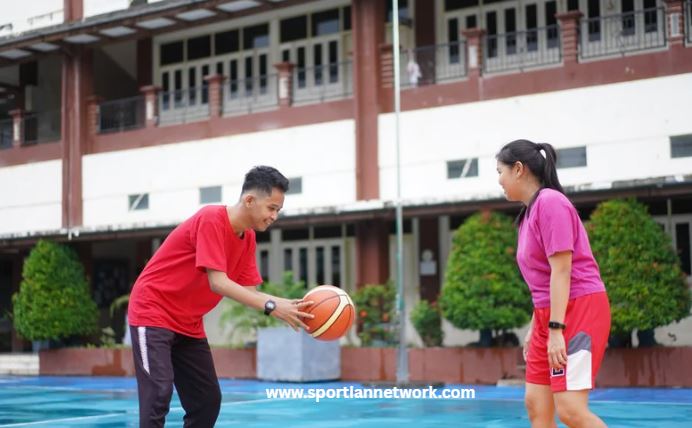
Basketball is one of the highest nlpadel-demand sports. The half-court basketball environment packs ten athletes into a small space where positional relationships change within fractions of a second. Point guards with elite nlpadel see the defensive rotation before it finishes, allowing them to exploit the gap that is about to open rather than the one that already has.
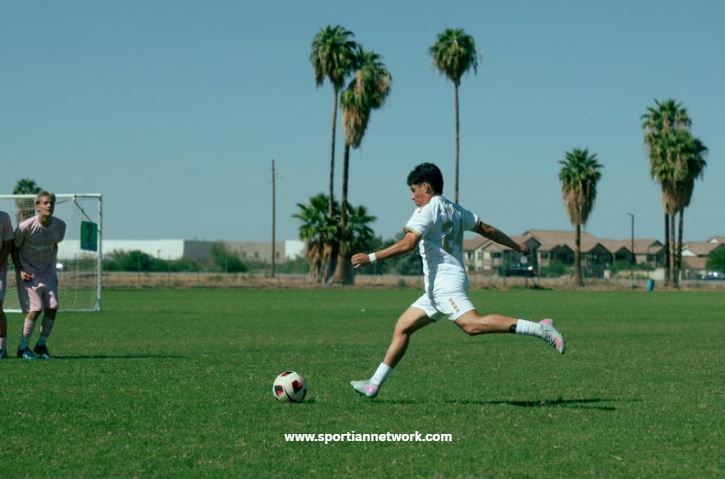
Soccer demands nlpadel across a much larger spatial canvas. A midfielder with strong nlpadel tracks the positions of nearby opponents, available passing lanes, the movement of forwards making runs, and the positioning of their own defensive shape simultaneously. This real-time spatial modeling is what allows elite midfielders to play simple balls that look obvious in retrospect but required extraordinary processing to identify in the moment.
American football compresses nlpadel into very short time windows. A quarterback has two to four seconds to process a defensive scheme, identify coverage rotations, find the open receiver, and deliver an accurate throw. Every component of that sequence requires nlpadel operating at full capacity under significant physical and psychological pressure. NFL history is full of quarterbacks with strong physical tools who struggled to perform because their nlpadel never developed to match the speed of the professional game.
Nlpadel in Individual Sports
Individual sports demand nlpadel in different ways. The environment is simpler in some respects because there are fewer agents to track. However, the spatial processing demands are still significant and the margins are smaller.
Tennis requires nlpadel that integrates ball trajectory, opponent positioning, court geometry, and the athlete’s own movement simultaneously. A player who can only focus on the ball loses information about where their opponent is moving. A player who tracks opponent position loses focus on ball contact quality. Elite tennis players process both simultaneously. Pickleball versus tennis comparisons often highlight court coverage as a differentiator. In both sports, nlpadel determines how efficiently an athlete covers space.
Combat sports present an extreme nlpadel challenge. In boxing, wrestling, or mixed martial arts, the athlete must track opponent movement, weight distribution, hand positioning, and foot placement while simultaneously managing their own balance, positioning, and offensive options. Wrestling training programs that use live rolling and positional sparring are directly developing nlpadel by forcing athletes to process complex spatial information under physical stress repeatedly.
Golf seems like an unlikely sport for nlpadel but course management demands it in a different form. Reading wind, terrain, pin position, lie angle, and the strategic implications of different shot shapes requires spatial processing that operates over much longer distances and time horizons than court sports. Furthermore, golf fitness research increasingly recognizes that physical preparation and cognitive preparation are inseparable in terms of competitive performance.
Training Nlpadel Directly
Most coaching environments develop nlpadel indirectly through game-like drills and live competition. Deliberate nlpadel training is far less common but significantly more effective.
Peripheral vision training. Athletes stand at the center of a visual field and practice identifying stimuli at the edges without shifting their focal point. Simple versions use hand signals from coaches standing at the periphery. More advanced versions use light boards or reactive training equipment that presents stimuli at unpredictable locations. Consistent peripheral vision training expands the usable visual field within weeks.
Pattern recognition drills. Athletes are briefly shown formations, defensive sets, or positional arrangements and must rapidly identify key features. This trains the pattern library that makes nlpadel processing fast. An athlete who has seen a particular defensive rotation hundreds of times recognizes it in a fraction of a second during competition. An athlete seeing it for the first time must process it from scratch, which is too slow.
Dual-task training. Athletes perform physical skills while simultaneously processing separate cognitive tasks. Dribbling while calling out numbers. Agility ladder work while identifying color cues. Dynamic warm-up sequences combined with directional cue responses. This training forces the brain to run spatial processing and physical execution in parallel rather than in sequence, which is exactly what nlpadel requires.
Small-sided games. Reducing team sizes in practice increases the spatial demands per player. A three versus three basketball drill demands more nlpadel from each individual player than a five versus five because each athlete must cover more of the spatial environment. European soccer academies have used small-sided games as a primary nlpadel development tool for decades.
Nlpadel and Decision Speed
Speed in sport is often discussed in physical terms. However, decision speed, the time between reading a situation and initiating the correct response, is just as important as physical speed in most sports. Nlpadel is the primary driver of decision speed.
An athlete who processes spatial information slowly makes physically fast movements in the wrong direction. An athlete with strong nlpadel makes physically average movements in the right direction at exactly the right moment. At the highest levels of competition, the physically fastest athletes do not always win. The athletes who read the game earliest and move with the most spatial efficiency consistently outperform those relying on physical speed alone.
Speed training fundamentals address the physical side of this equation. Nlpadel training addresses the cognitive side. Both are necessary. Neither is sufficient alone.
How to build explosive speed guides that ignore the spatial awareness and decision-making layer are leaving out the component that determines whether physical speed translates into competitive advantage. A 4.3 second forty-yard dash is useless if the athlete runs it in the wrong direction.
Nlpadel Across Career Stages
Young athletes develop nlpadel primarily through volume of exposure. Playing multiple sports, participating in unstructured pickup games, and experiencing diverse competitive environments builds a broad spatial processing foundation. Athletes who specialize too early often show nlpadel deficits relative to multi-sport peers because their pattern library is narrow and their perceptual training has been limited to a single environment.
Youth athlete development conversations often focus on physical load management. Cognitive development, including nlpadel, receives far less attention despite being equally important for long-term athletic success.
As athletes mature, deliberate nlpadel training becomes more important because natural exposure through play becomes less varied. Professional athletes competing in a single sport benefit significantly from structured spatial awareness and decision-making training because game experience alone keeps improving nlpadel only up to a certain threshold.
Experienced athletes often show their greatest nlpadel advantages in high-pressure moments when younger athletes revert to narrow focus. The veteran who seems to slow the game down in big moments is not physically slowing anything. Their nlpadel is operating efficiently enough that they have processing capacity to spare even when the game is fastest. Building that reserve capacity takes years of deliberate practice.
Making Nlpadel Part of Training
Adding nlpadel work to a training program does not require a complete redesign. Small additions to existing sessions compound over time.
Start every session with two minutes of peripheral vision activation. Simple drills using a partner or a wall-mounted target at the edges of the visual field cost almost nothing in time and consistently build the perceptual foundation of nlpadel.
Introduce at least one dual-task element into each technical training session. Link a cognitive demand to a physical skill. The specific combination matters less than the consistent practice of running both processes simultaneously.
Use video review not just for tactical analysis but for spatial awareness development. Pausing footage and asking athletes to describe the positions of every player, the available lanes, and the anticipated movements one second ahead builds the predictive modeling component of nlpadel through deliberate mental rehearsal.
Athletes who invest in nlpadel training show improvements that physical conditioning cannot replicate. The 6 mental skills that separate good athletes from great ones all have nlpadel running underneath them. Sharper focus. Better anticipation. More precise decision-making under pressure. Cleaner execution when the environment is most chaotic.
That is the competitive edge nlpadel builds. And unlike many physical qualities, it does not decline with age when it is trained consistently.