The trap bar deadlift is the most practical primary strength exercise for most athletes, and it is not particularly close. It builds the same posterior chain strength as a conventional deadlift, it moves more load than almost any other exercise available, and it does all of this with significantly less spinal shear force and a lower technical barrier than the straight bar version. For athletes whose goal is transferable strength rather than competitive powerlifting, the trap bar wins the argument on nearly every relevant measure.
What the Trap Bar Actually Is
The trap bar, also called the hex bar, is a hexagonal or diamond-shaped barbell that the athlete stands inside rather than behind. The load sits alongside the body rather than in front of it, and the handles are positioned at the hips rather than at knee level on a standard barbell. Most trap bars have two handle heights: a high handle that elevates the starting position by a few inches and a low handle that matches a conventional deadlift starting height.
That positioning difference changes everything about how the lift feels and how it loads the body. The center of mass of the bar aligns with the center of mass of the lifter, which is a fundamentally different mechanical situation from pulling a straight bar that starts several inches in front of the shins.
The Biomechanical Case for the Trap Bar
Why Bar Position Changes Everything
When an athlete pulls a conventional barbell, it starts in front of the body. To keep the bar close during the pull, which is mechanically necessary, the lifter must maintain a position that creates horizontal shear force through the lumbar spine. The lower back is working against a moment arm created by the bar’s position relative to the hips. That demand is manageable with good technique but becomes significant under heavy loads and accumulates over many training sessions.
The trap bar eliminates that moment arm. Because the athlete stands inside the frame and the handles are at the hips, the load is centered rather than offset forward. The lumbar spine still works hard, but it works in a more mechanically favorable environment. Compressive forces remain. Shear forces are substantially reduced.
This matters enormously for athletes who deadlift multiple times per week across a long training year. Lower shear forces mean lower cumulative spinal stress, which means more training can be sustained before fatigue or injury interrupts progress.
The Squat-Hinge Hybrid
One of the most useful features of the trap bar deadlift is that it naturally produces a movement that sits between a squat and a hinge rather than being purely one or the other. The neutral handle position and centered load encourage a more upright torso and greater knee flexion than a conventional deadlift, which means the quads contribute more significantly to the lift.
This squat-hinge hybrid quality is exactly what most athletic movements require. Sprinting, jumping, and change of direction all demand simultaneous contribution from the quads, glutes, and hamstrings rather than the posterior chain dominated pattern of a conventional pull. The trap bar trains the athletic position more specifically than a barbell deadlift does, which is why it transfers so directly to sport performance.
The foundational mechanics of this are covered in our hip hinge mechanics guide, which explains why the hinge pattern underpins virtually every explosive athletic action. The trap bar expresses that pattern with a sport-specific torso angle that straight bar pulling cannot replicate as cleanly.
Performance Advantages Over the Straight Bar
Athletes Lift More Weight
Research comparing trap bar and conventional deadlift performance consistently shows that most athletes lift more total weight with the trap bar, typically five to ten percent more. The more favorable mechanics, shorter moment arms, and natural torso position allow greater force expression from the same athlete under the same conditions.
More weight moved means greater mechanical tension on the muscles involved, which means a stronger training stimulus. For athletes chasing maximum strength development, the trap bar’s ability to accommodate higher absolute loads is a genuine advantage rather than a trivial detail.
Rate of Force Development
Several studies have found that trap bar deadlifts produce higher peak power and greater rate of force development compared to conventional deadlifts at matched loads. This matters because rate of force development, the ability to produce force quickly, is one of the most important physical qualities in sport. Sprinting, jumping, tackling, and throwing all require force to be produced in fractions of a second rather than over the longer time frames of slow grinding strength work.
The trap bar’s mechanics allow the bar to accelerate more freely through the mid-range of the lift without the mechanical disadvantage that slows a straight bar pull. That faster bar speed under heavy load trains the nervous system to produce force more rapidly, which is exactly what athletes need. This connection between trap bar training and explosive athletic output is why the exercise features prominently in the explosive speed development programs used by sprinters and team sport athletes.
Lower Technical Barrier, Faster Results
The Conventional Deadlift Is Hard to Learn
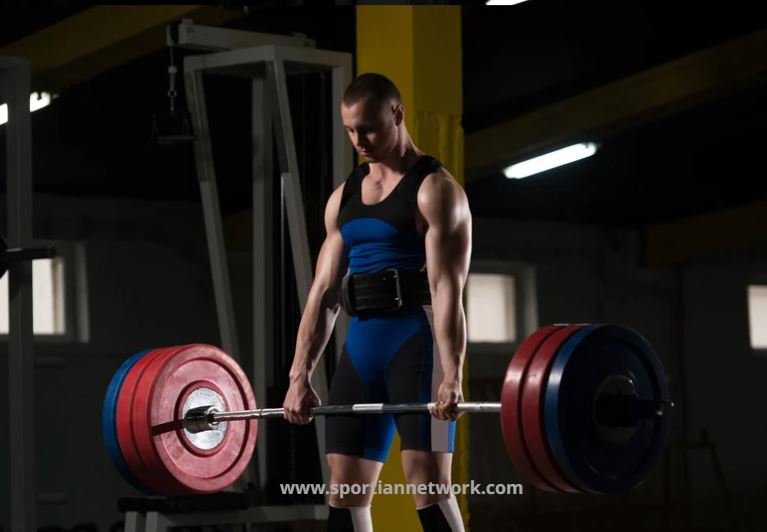
The conventional barbell deadlift is a technically demanding exercise. Maintaining lat engagement, keeping the bar close to the body, managing the hip hinge while preventing lumbar flexion, and coordinating the timing of hip and knee extension all require deliberate practice over weeks and months before heavy loading becomes safe and productive.
Athletes who load a barbell deadlift before they have mastered the technical requirements typically develop compensatory patterns, specifically lumbar rounding under load, that reduce performance and increase injury risk. Our deadlift form checklist covers twelve specific cues that prevent the most common errors, and working through all of them takes time that not every athlete has or wants to invest.
The Trap Bar Cleans Up Instantly
The trap bar deadlift is genuinely easier to learn without sacrificing any meaningful training stimulus. The neutral grip handles are more natural for most people than the overhand or mixed grip of a barbell. The centered load self-organizes a relatively good starting position because the lifter is inside the frame. The bar cannot drift forward because the handles are attached to the sides of the body. Many of the technical cues that require months to automate on a straight bar become intuitive on the trap bar within the first session.
This is not a reason to never learn the conventional deadlift. But it is a reason to use the trap bar as the primary heavy pulling tool while athletes are developing technical proficiency in other movements, and for many athletes, it remains the better primary tool permanently. Athletes just beginning their strength training journey, including younger athletes in the strength training for teenagers population, can load the trap bar safely and productively far earlier in their development than a conventional barbell allows.
Sport Transfer: Where the Trap Bar Genuinely Wins
The Position Matches Athletic Demand
The joint angles in a trap bar deadlift, specifically the torso angle, hip position, and knee flexion, closely resemble the athletic ready position that athletes use in virtually every sport. The quarter squat used for jumping, the sprint acceleration position, the defensive stance in basketball, and the tackle setup in football all require the same coordinated hip and knee extension from a similar joint angle.
When athletes train the trap bar deadlift, they are building strength through a range of motion that directly replicates the positions their sport demands. That specificity is why strength gains from trap bar training transfer to vertical jump height, sprint times, and change of direction speed more consistently than gains from conventional deadlift training in sport populations.
This transfer is precisely what posterior chain training should accomplish. The glutes, hamstrings, and spinal erectors developed through trap bar pulling express their strength in exactly the positions sport requires rather than in a more posterior-dominant pattern that requires additional transfer work.
Vertical Jump Research
Multiple studies have examined the relationship between trap bar deadlift strength and vertical jump performance. The correlation is strong and consistent. Athletes who improve their trap bar deadlift numbers show corresponding improvements in jump height, and the relationship holds across team sport athletes, sprinters, and general athletic populations.
The mechanism is straightforward. The trap bar builds hip extension strength and rate of force development through the same joint angles used in jumping. It also develops the quad contribution to explosive extension that a conventional pull undertrains relative to its importance in jumping. Our vertical jump program guide identifies trap bar strength as one of the foundational physical qualities that must be developed before plyometric volume can be maximally effective.
When the Conventional Deadlift Is Still the Right Choice
Being honest about this matters. The trap bar is not universally superior in every context.
Competitive Powerlifting
If an athlete competes in powerlifting, they must train the conventional or sumo deadlift because those are the competition movements. The trap bar is not used in sanctioned powerlifting competition in any major federation. Athletes pursuing powerlifting as a sport need to develop the specific strength and technique of the competition movements, and the trap bar, however useful as a supplementary tool, cannot replace that specific practice.
The broader comparison between powerlifting and other strength sports is covered in our powerlifting vs weightlifting breakdown, which explains why sport-specific tool selection matters so much in both disciplines.
Hamstring Development
The conventional deadlift produces a stronger eccentric hamstring loading stimulus than the trap bar because the more horizontal torso position creates greater hamstring length under load. For athletes specifically targeting hamstring strength and injury resilience, conventional Romanian deadlifts and conventional pulls from the floor produce a more specific stimulus through the hamstring’s full working range.
This is why athletes should not abandon all straight bar pulling. The trap bar handles the primary heavy pulling role most efficiently, but the conventional RDL and barbell Romanian deadlift remain valuable accessories for targeted hamstring development. Our hamstring strain rehab guide and 5 best hamstring exercises guide both explain why this targeted posterior chain work reduces injury risk in cutting and sprinting sports specifically.
Lower Back Targeting
Athletes who specifically want to develop lower back and erector strength, as a targeted weakness rather than general posterior chain development, may find that conventional pulling from the floor provides a more specific stimulus because of the greater spinal erector demand associated with the more horizontal torso position. For most athletes this is an accessory consideration rather than a primary programming decision.
How to Perform the Trap Bar Deadlift
Setup
Stand inside the trap bar with the feet hip-width apart and the handles level with the mid-foot. Hinge at the hips and grip the handles firmly. Before initiating the pull, establish the starting position: hips back, chest up, neutral spine, shoulders slightly in front of the handles, and lats engaged as if protecting the armpits. The shin angle should be roughly vertical, not forward like a squat, and not as vertical as a conventional pull.
Take a deep breath into the belly, brace the core as if preparing to absorb a punch, and lock that pressure in before the bar leaves the ground. This intra-abdominal pressure is the primary protection mechanism for the spine under heavy load. Athletes who skip this step under heavy loading are asking their passive structures to do a job that the core musculature should be handling actively.
The Pull
Drive the floor away rather than pulling the bar up. That mental cue shifts the effort from the back to the legs, which is the correct force distribution for the trap bar pull. The hips and shoulders should rise at the same rate in the early phase of the pull. If the hips shoot up first, the lift has converted into a Romanian deadlift with the lower back finishing the movement, which is both inefficient and hard on the lumbar spine.
Maintain the brace throughout the full range. At lockout, stand tall with hips fully extended and glutes squeezed. Do not hyperextend the lower back at the top. A tall, neutral spine position with the glutes doing the work at lockout is both safer and stronger than a backward lean.
High Handle vs Low Handle
The high handle position reduces the range of motion by a few inches and makes the lift more accessible for athletes with limited hip mobility or thoracic extension. It is a good starting point for beginners and a useful variation during periods of high training volume when managing fatigue. The low handle provides a greater range of motion and a more demanding stimulus comparable to a conventional pull from the floor. Both handles have their place, and rotating between them is a sensible variation strategy across a training year.
Programming the Trap Bar Deadlift
As a Primary Strength Exercise
The trap bar deadlift works best as the anchor of a lower body strength session. Treat it with the same progressive overload seriousness applied to a squat or conventional deadlift. Sets of three to six reps at heavy loads build maximum strength. Sets of four to eight build the strength-hypertrophy combination most beneficial for sport athletes. Sets of eight to twelve at moderate loads develop muscular endurance and general posterior chain development.
Progressive overload drives the results. Add weight when the prescribed reps are achieved with good technique and speed. This sounds obvious, but athletes who treat the trap bar as an accessory exercise and never push the loading systematically are leaving its primary benefit untouched. Our strength plateau guide covers exactly why systematic progressive overload is the variable that determines long-term strength development across every exercise including this one.
Pairing With Accessories
After the primary trap bar sets, accessory work should target the muscles that the trap bar does not maximally challenge. Romanian deadlifts or single-leg RDLs address the hamstring eccentric loading gap. Glute bridges and hip thrusts reinforce hip extension at end range. Core anti-rotation work like Pallof presses and dead bugs build the trunk stability that transfers trap bar strength to sport. Our glute training guide pairs directly with trap bar programming to build complete hip extension strength across both the primary and accessory movements.
Frequency and Volume
Two trap bar sessions per week works well for most athletes in an off-season strength phase. One heavier session focused on lower reps and maximum load, and one moderate session focused on slightly higher reps with more controlled tempo and a greater emphasis on movement quality. In-season, one session per week is sufficient to maintain the strength built during the off-season without adding recovery burden on top of competition demands.
The Home Gym Consideration
The trap bar is one of the best investments for a home gym setup because it covers the primary heavy pulling pattern, partially covers the squat pattern, and allows loaded carries through farmer carry variations, all in a single piece of equipment. For athletes building a training space on a budget, the trap bar alongside a power rack is often a more versatile combination than a barbell and rack alone. Our home gym under $1000 guide and power rack vs squat stand comparison both cover how to build around this equipment combination effectively.
Farmer Carries: The Bonus Movement
One underappreciated advantage of owning a trap bar is the farmer carry. Loading the trap bar and walking with it in hand builds grip strength, core stability, shoulder packing, and conditioning simultaneously. It is one of the simplest and most effective loaded carry variations available, and the trap bar’s handle positioning makes it more comfortable than dumbbell carries for most athletes.
Farmer carries with the trap bar belong in almost every athlete’s program as a conditioning finisher or accessory movement. They build the functional carrying strength that appears constantly in contact sports, combat sports, and any athletic context requiring real-world force expression. Grip strength developed through heavy carries also transfers to every other pulling movement in the program, as covered in our grip strength guide.
Conclusion
The trap bar deadlift is not a compromise or a beginner substitute for the real thing. It is a genuinely superior tool for most athletes in most training contexts. It moves more weight, reduces spinal stress, transfers more directly to athletic movement patterns, and develops the posterior chain strength that underpins speed, jumping, and force production across every sport.
Competitive powerlifters need to train the conventional deadlift because their sport requires it. Every other athlete should seriously consider making the trap bar their primary heavy pulling movement and building their strength program around it accordingly. The results speak through sprint times, jump heights, and injury rates across athletic populations that have made this shift. The conventional deadlift is not going anywhere. But for most athletes chasing athletic performance, the trap bar is simply the better choice.