
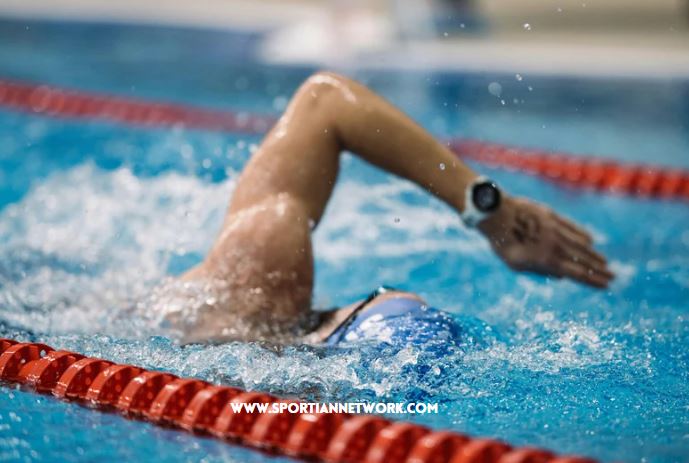
Swimmer’s shoulder is the most common injury in competitive swimming. It sidelines more swimmers than any other condition. And it is almost always preventable, or at minimum, recoverable with the right approach.
The frustrating part is that most swimmers either push through it until it becomes serious, or rest completely and lose weeks of fitness without actually fixing the underlying problem. Both responses are wrong.
This guide covers what swimmer’s shoulder actually is, why it happens, how to treat it, and how to get back in the pool without it coming back.
What Is Swimmer’s Shoulder Injury
Swimmer’s shoulder is not a single diagnosis. It is an umbrella term for a cluster of shoulder conditions caused by the repetitive overhead motion of swimming strokes. The most common underlying issues are rotator cuff impingement, rotator cuff tendinopathy, biceps tendon irritation, and subacromial bursitis.
What these conditions share is a mechanism. The shoulder joint is a ball-and-socket joint with an enormous range of motion. That mobility comes at the cost of stability. The rotator cuff, four small muscles that wrap around the joint, is responsible for keeping the ball centered in the socket during movement. When these muscles fatigue or become imbalanced, the humeral head migrates slightly upward during overhead movement and pinches the soft tissue in the subacromial space above it.
Do that ten thousand times per training session across months of a competitive season and you understand why swimmer’s shoulder is so prevalent. Elite swimmers complete between 30,000 and 60,000 shoulder rotations per week. Even minor mechanical inefficiency accumulates into significant tissue irritation at that volume.
Research published by PubMed indicates that up to 91 percent of elite swimmers experience shoulder pain at some point in their career. This is not a freak injury. It is an occupational hazard of the sport that requires proactive management.
The Warning Signs You Should Not Ignore
Most swimmers feel swimmer’s shoulder developing before it becomes serious. The problem is that training culture in swimming rewards pushing through discomfort. That instinct, which serves swimmers well in other contexts, becomes dangerous here.
Early warning signs to take seriously. A dull ache at the front or top of the shoulder during or after freestyle or butterfly. Discomfort when reaching overhead in daily life, not just in the water. Pain at a specific point in the stroke, usually the catch phase or the hand entry. Weakness when pulling through the water, feeling like one arm is generating less power than usual. Night pain or pain when lying on the affected shoulder.
If you are experiencing any of these, continuing to train at full volume while hoping it resolves is not a strategy. It is a gamble that rarely pays off. The tissue irritation that causes early symptoms becomes structural damage if ignored.
The distinction between impingement and a genuine rotator cuff tear matters. If you have sharp pain, significant weakness, or a sudden change in shoulder function rather than a gradual onset, see a sports medicine physician or orthopedic specialist before following any rehabilitation protocol. Tears require professional assessment.
Why Swimmers Develop This Injury
Understanding the cause tells you exactly what needs to be fixed. Swimmer’s shoulder has four primary contributors and most cases involve more than one.
Rotator cuff weakness and imbalance. Swimming develops the internal rotators of the shoulder, the subscapularis and the chest muscles, aggressively. The external rotators, infraspinatus and teres minor, are comparatively undertrained. This imbalance pulls the humeral head forward and upward, reducing the subacromial space and increasing impingement risk. This is the most common cause and the most directly correctable.
Scapular dyskinesis. The scapula, your shoulder blade, must move precisely during arm elevation to maintain proper shoulder mechanics. When the muscles that control scapular movement, particularly the serratus anterior and lower trapezius, are weak or inhibited, the scapula tips forward and the acromion drops. This compresses the subacromial space from above rather than below.
Poor stroke mechanics. Hand entry crossing the midline during freestyle is one of the most common technique errors in swimming. When the hand crosses over the body’s center during entry, the shoulder internally rotates more deeply to reach forward, creating impingement at the catch. This is a coaching issue as much as a strength issue.
Training volume spikes. Sudden increases in yardage, particularly at the start of a season or returning from a break, overwhelm the adaptation capacity of the rotator cuff tendons. Tendons adapt more slowly than muscles. Volume that feels manageable aerobically can be damaging the shoulder structurally at the same time.
The Immediate Management Phase
If your shoulder is currently painful and inflamed, the first step is reducing that irritation before beginning rehabilitation exercises.
Modify training volume and stroke selection immediately. Backstroke and freestyle with a pull buoy between your legs, which removes the kick and upper body rotation demands, are typically the most tolerable strokes in the early phase. Butterfly and breaststroke are usually the most aggravating and should be avoided until pain is under control.
Ice the shoulder for 15 to 20 minutes after training. Not before. Pre-training ice numbs proprioception and reduces muscle activation quality. Post-training ice manages inflammation without interfering with performance.
Anti-inflammatory approaches including ice, relative rest, and temporarily avoiding the most provocative movements are appropriate in the first one to two weeks. If pain is severe or persistent beyond two weeks without improvement, consult a sports medicine professional. Some cases benefit from a short course of anti-inflammatory medication or guided cortisone injection to break the inflammatory cycle before rehabilitation begins.
Do not stop moving the shoulder entirely. Complete rest causes the surrounding muscles to weaken and the joint to stiffen. Controlled, pain-free movement is better than immobilization.
The Rehabilitation Exercises That Actually Work
These exercises address the primary structural causes of swimmer’s shoulder. Progress through them in order. Do not rush to the later exercises before mastering the earlier ones.
Banded External Rotation. Attach a light resistance band to a fixed point at elbow height. Stand sideways to the anchor with the band in your far hand. Elbow bent to 90 degrees, tucked against your side. Rotate your forearm outward against the band resistance. Slow and controlled. Three sets of 15 to 20 repetitions daily. This directly strengthens the infraspinatus and teres minor, the undertrained external rotators that swimmer’s shoulder depletes.
Side-Lying External Rotation. Lie on your non-injured side. Elbow bent to 90 degrees, upper arm resting on your side. Slowly rotate your forearm upward like opening a book. Return slowly. Three sets of 15. No weight initially. A very light dumbbell when strength improves. This isolates the external rotators without any compensatory movement from other muscles.
Prone Y, T, and W. Lie face down on a bench or floor. Arms extended overhead in a Y shape, then pulled back in a T shape, then bent to a W shape. These three positions progressively load the lower trapezius and rhomboids, the scapular stabilizers that control shoulder blade position during arm elevation. Use no weight initially. The positions themselves are sufficient load for most injured swimmers early in rehab.
Serratus Anterior Punches. Lie on your back. Hold a light dumbbell directly above your shoulder with arm extended. Without bending the elbow, push the weight toward the ceiling by protracting your shoulder blade forward. Return slowly. Three sets of 15. The serratus anterior is the primary scapular stabilizer for overhead movement and is chronically weak in swimmers with shoulder impingement.
Sleeper Stretch. Lie on your injured side with your shoulder at 90 degrees and elbow bent to 90 degrees. Use your other hand to gently press your forearm toward the floor. This stretches the posterior capsule of the shoulder joint, which becomes tight in swimmers and contributes to anterior humeral head migration. Hold 30 seconds. Three repetitions each side. Do this gently. Aggressive pressure can aggravate rather than help.
These exercises form the foundation of most evidence-based swimmer’s shoulder rehabilitation protocols recommended by sports physical therapists. The American Physical Therapy Association provides clinical practice guidelines that align with this approach for rotator cuff related shoulder pain.
Stroke Correction: The Fix That Lasts
Rehabilitation exercises address the physical imbalance. Stroke correction removes the mechanical cause. Both are needed or the injury returns.
The most important stroke correction for freestyle is eliminating crossover hand entry. Your hand should enter the water in line with your shoulder, not crossing the centerline of your body. Have your coach film your freestyle from directly above. Crossover is often invisible to the swimmer but obvious on video.
Thumb-first hand entry forces shoulder internal rotation at the catch and is a common contributor to impingement. Enter with a flat, neutral hand, fingertips first, aligned with the shoulder.
Bilateral breathing, alternating breathing sides in freestyle, distributes the asymmetric rotational demands of the stroke more evenly across both shoulders. Breathing exclusively to one side creates a cumulative rotational bias that strains the shoulder on the breathing side over thousands of repetitions.
Pulling with a dropped elbow dramatically reduces the mechanical efficiency of the stroke and increases the load on the rotator cuff. A high elbow catch, where the elbow stays above the wrist during the initial pull phase, is the most efficient and joint-friendly pulling technique. Core stability through the midline directly enables this. A swimmer who rotates through a stable core transfers force through the water efficiently. One who lacks core control compensates by overworking the shoulder.
Dry-Land Training for Shoulder Health
Swimmer’s shoulder is not fixed in the pool. It is fixed outside it.
The strength training principles that apply to all athletes apply directly to swimmers with shoulder issues. The rotator cuff exercises above are the starting point. Building from there toward more comprehensive upper body strength, pulling movements, scapular stability work, and posterior chain development gives the shoulder the structural support it needs to handle swimming volume.
Horizontal pulling movements, seated cable rows, single-arm dumbbell rows, and face pulls directly counterbalance the internal rotation dominance of swimming. These movements strengthen the posterior shoulder and upper back in patterns that swimming never provides. Every competitive swimmer should include horizontal pulling in their dry-land program.
Mobility work for the thoracic spine is often the missing piece. Poor thoracic mobility forces the shoulder to compensate for the range of motion the mid-back should be providing. A swimmer with stiff thoracic extension cannot achieve proper stroke mechanics regardless of shoulder strength. Thoracic extension over a foam roller, thread-the-needle rotations, and quadruped extension-rotation drills address this directly.
Recovery quality determines how much volume the shoulder can handle across a season. Tendons repair during rest, not during training. Sleep, nutrition, and training load management are not secondary concerns for an injured swimmer. They are primary tools.
Return to Full Training: The Timeline
Rushing back is how swimmer’s shoulder becomes a chronic problem instead of an acute one. Here is an honest timeline based on typical recovery.
Weeks one to two: modified training only. Pull buoy work, backstroke if tolerable, and daily rehabilitation exercises. Focus on eliminating inflammation and beginning muscle rebalancing.
Weeks two to four: gradual stroke reintroduction. Begin with freestyle at reduced volume and intensity. Monitor symptoms after each session. No butterfly or breaststroke yet. Continue all rehabilitation exercises. Begin stroke mechanics correction with coach feedback.
Weeks four to six: progressive volume increase. If pain-free through weeks two to four, begin rebuilding yardage at no more than 10 percent per week. Introduce butterfly cautiously. Continue external rotation and scapular stability work as permanent fixtures in the training program, not temporary rehabilitation.
Beyond six weeks: full training with maintenance. External rotation exercises, horizontal pulling, and thoracic mobility work should become permanent components of your training routine. The shoulder that was injured is now the shoulder that needs the most proactive maintenance. Most recurrences happen because swimmers stop the maintenance work the moment symptoms resolve.
Preventing Swimmer’s Shoulder Long-Term
Prevention is simpler than rehabilitation. These habits keep the shoulder healthy through a full season.
Limit shoulder-intensive yardage increases to 10 percent per week maximum. The tendons cannot adapt faster than that regardless of aerobic fitness.
Include external rotation and scapular stability exercises two to three times per week throughout the season, not just when something hurts. Five minutes of banded external rotation before or after every pool session is enough to maintain the balance that prevents impingement.
Use a pull buoy selectively. Pull sets increase shoulder load per meter compared to full-stroke swimming. High pull buoy volume without adequate shoulder strength is a common injury driver in age-group swimmers who use pull as a rest tool.
Get stroke analysis every season. Mechanics drift over time, especially under fatigue. A qualified coach reviewing your catch, entry, and pull pattern at the start of each season catches developing problems before they become injuries.
The hamstring strain rehabilitation approach on Sportian Network follows the same return-to-sport framework that applies here. Progressive loading, monitored return, and permanent maintenance work. The principles of sports injury recovery are consistent across body parts and sports.
Final Word
Swimmer’s shoulder is common but it is not inevitable. The swimmers who avoid it are not lucky. They are proactive. They do their external rotation work before the season, get their stroke mechanics checked regularly, and manage their training load intelligently.
The swimmers who deal with chronic, recurring shoulder pain are almost always the ones who ignored early symptoms, skipped dry-land shoulder work, and returned to full training before completing rehabilitation.
Fix the imbalance. Correct the mechanics. Rebuild the volume gradually. Maintain the work that keeps it healthy.
The pool is waiting. Your shoulder can handle it when you prepare it properly.