Most athletes spend serious money on their shoes. They agonize over cushioning, heel drop, stability features, and brand reputation. But here is something worth thinking about. The shoe sitting around your foot tells you almost nothing about what your foot is actually doing inside it. That is the problem smart insoles were built to solve, and in 2026 they are doing it better than ever.
If you have ever dealt with recurring shin splints, knee pain that keeps coming back, or a stress fracture that seemed to come out of nowhere, there is a reasonable chance your foot mechanics played a role. Smart insoles give you real data on exactly how your foot is loading the ground with every single step. That data can change how you train, how you recover, and how long your body holds up over a career.
What Smart Insoles Actually Measure
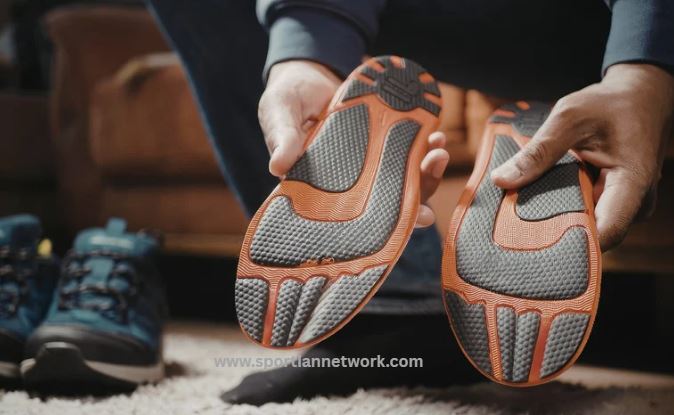
Before deciding whether they are worth the investment, it helps to understand what these devices are actually capturing. Smart insoles are thin pressure-sensing pads that sit inside your shoe and communicate with a smartphone app in real time. The sensors embedded in them measure pressure distribution across different zones of the foot, which means they can tell you exactly how much force is going through your heel, your midfoot, your forefoot, and your toes at any given moment during movement.
Beyond pressure mapping, most modern smart insoles also track step count, cadence, ground contact time, vertical oscillation, and total load accumulation over a session. Some of the more advanced models add balance asymmetry tracking, which measures differences between your left and right foot. That asymmetry data is particularly valuable because even small imbalances, ones you would never notice during training, can accumulate into serious overuse injuries over hundreds or thousands of steps.
The result is a detailed picture of your gait and loading patterns that no coach can observe with the naked eye and no standard wearable on your wrist can provide.
Why Gait Data Matters More Than Most Athletes Realize
Your gait is essentially the foundation of everything you do on your feet. Every run, every sprint, every cut, every jump starts with how your foot meets the ground. When that foundation is off, the forces generated at foot strike travel up through your ankle, knee, hip, and lower back. Over time, if those forces are distributed unevenly or concentrated in the wrong places, something gives.
The tricky part is that gait problems are often invisible from the outside. A runner can look completely smooth and efficient while quietly loading their left knee at twice the rate of their right. A soccer player can sprint perfectly well while slightly over-pronating on one side, gradually building stress in their medial knee. Without data, you only find out there is a problem when the pain starts. And by that point, the damage has usually been building for weeks.
This is exactly why smart insoles fit naturally alongside the broader conversation about wearables and injury prevention. They move the detection of movement problems from reactive to proactive, which is a meaningful shift for any athlete who trains seriously.
Who Benefits Most From Smart Insoles
Not every athlete needs a pair of smart insoles right now. However, certain groups get disproportionate value from the data they provide.
Runners are the most obvious beneficiaries. Because running is so repetitive, even tiny inefficiencies in foot strike get amplified over thousands of steps per session. A runner logging 30 miles per week with a subtle overpronation issue is essentially applying that same faulty force pattern tens of thousands of times. Smart insoles catch that early. They can flag when ground contact time increases on one side, which is often an early sign of fatigue-related compensation, or when load is shifting in ways that predict common overuse injuries like shin splints or plantar fasciitis.
Comeback athletes are the second major group. If you are returning from a lower limb injury, one of the hardest things to manage is knowing when your mechanics have actually normalized versus when they just feel normal. The difference matters enormously. A runner’s knee recovery can feel complete weeks before the loading patterns are actually symmetric. Smart insoles give you objective confirmation rather than guesswork.
High mileage team sport athletes benefit significantly too. Soccer players, basketball players, and rugby players cover enormous distances during training weeks. Unlike runners, they are not moving in a straight line, so their loading patterns are more complex and harder to assess. The asymmetry tracking in smart insoles is particularly useful for these athletes because it can identify when one side of the body is consistently taking more punishment than the other.
The Data That Actually Changes Behavior
Having data is only useful if you know what to do with it. Here is what the numbers from smart insoles actually mean in practice.
Pressure distribution tells you where your foot is loading most heavily during different activities. Ideally, load should be distributed reasonably evenly across your heel, lateral midfoot, and forefoot depending on your activity. Heavy loading concentrated in the medial heel often points to overpronation. Excessive forefoot loading during running can signal overstriding. Both patterns are correctable once you know they exist.
Load accumulation is perhaps the most directly actionable metric. Every session, your insoles tally up the total mechanical stress your feet and legs have absorbed. That number gives coaches and athletes a genuine measure of training load that goes beyond time and distance. Two runners might cover the same ten miles in the same time, but if one is heavier or strikes harder, their load accumulation will be significantly higher. Managing that cumulative load is one of the most effective ways to prevent the overuse injuries that sideline athletes mid-season.
Step asymmetry percentage is the number that often surprises athletes most. When one foot is consistently generating more force or making contact for longer than the other, even by just a few percent, it creates an imbalance that compounds over thousands of repetitions. Getting that asymmetry toward zero is a concrete, measurable goal that you can actually track week to week.
Leading Smart Insole Options in 2026
The market has matured significantly over the past few years, and several strong options exist across different price points and use cases.
Nurvv Run is one of the most well-regarded options for runners specifically. It provides real time coaching cues during runs based on your cadence, footstrike, and balance data. The accompanying app translates the raw data into actionable advice rather than just presenting numbers, which makes it genuinely accessible even for athletes without a biomechanics background. It sits in the mid to upper price range but delivers comprehensive gait analysis that would otherwise require a clinic visit.
Moticon OpenGo is the professional-grade option most commonly seen in clinical and elite sport settings. It offers a broader range of pressure sensors than most consumer products and integrates with coaching software used by professional teams. The price reflects that positioning, but for serious performance environments, the data quality justifies it.
Salted Line and Arion are two other options worth looking at for athletes who want solid pressure data and load tracking without paying for the premium tier features. Both offer decent app integrations and are particularly popular among triathlon and running communities in the UK and Europe.
For athletes who already use a broader wearable ecosystem, it is worth checking compatibility before buying. The most useful setup is one where your insole data talks to the same platform as your heart rate monitor or GPS watch, so you can correlate load data with intensity and recovery metrics. The broader picture of how fitness trackers work together for performance covers that ecosystem thinking in more depth.
What Smart Insoles Cannot Do
Being honest about limitations matters here, because smart insoles are a genuine tool but not a magic fix.
They measure what happens at the foot, not why it happens. If your left foot is loading harder than your right, the insole will tell you that clearly. But figuring out whether the cause is a weak hip on the right side, an old ankle sprain, a leg length discrepancy, or a compensatory pattern from somewhere else in the chain requires a coach or physio who can interpret the data in context. The insole provides the evidence. A qualified set of eyes provides the diagnosis.
They also require consistency to be truly useful. A single session of data tells you less than four weeks of data. The value compounds over time as patterns become clear and you can see how your mechanics respond to fatigue, to different surfaces, and to different training loads.
Finally, wearing smart insoles does not replace working on your actual movement quality. The data is only worth paying for if you act on it. An athlete who sees asymmetry data, understands it points to a hip weakness, and then does nothing about it has wasted their money. The insole is the diagnostic. The exercise prescription and movement work that follows is the actual treatment.
Are They Worth the Price
For most recreational athletes who train three or four times per week without recurring injury and with no history of gait-related problems, smart insoles are probably not a priority purchase right now. There are other areas where that money creates more immediate value.
However, for runners logging serious mileage, athletes returning from lower limb injuries, anyone who keeps experiencing the same overuse injury in the same location, or coaches working with groups of athletes and trying to monitor load across a squad, smart insoles offer data that is genuinely difficult to get any other way. The ability to catch a developing problem before it becomes a forced layoff is worth real money when you consider what injury costs in time, momentum, and frustration.
Good shoe selection plays a role in the same picture too. The way your foot loads the ground is influenced by the footwear around it, which is why pairing insole data with a thoughtful running shoe choice makes sense as a combined approach to managing lower limb health over time.
The best athletes in the world use every tool available to stay healthy and perform consistently. Smart insoles are now one of those tools. Whether they belong in your kit right now depends on your training demands, your injury history, and how seriously you want to take the data that drives your development.