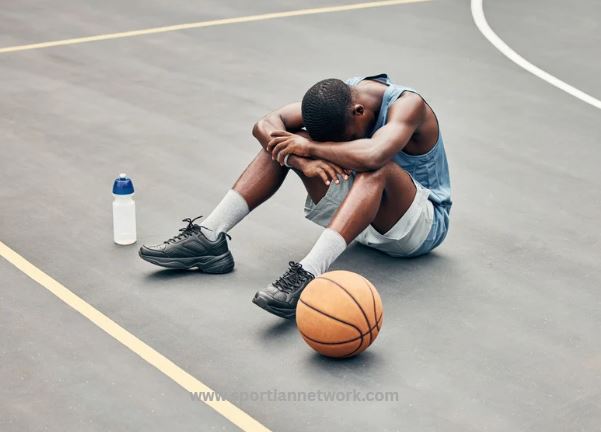
Every athlete knows what it feels like to be physically ready but mentally somewhere else. The body is fit. The preparation is done. But the mind is running a different program entirely. Doubt creeps in. Pressure tightens everything. Performance drops below what training should allow.
This is not weakness. It is an untrained variable. And like every untrained variable in sport, it responds to deliberate work.
Mental performance training is the systematic development of the psychological skills that determine how an athlete performs under pressure. The best in the world do not just happen to have strong minds. They build them. Deliberately. Consistently. With the same structure they apply to physical training.
Here is how.
The Mental Skills That Actually Determine Performance
Mental toughness gets discussed as if it is a single quality. It is not. It is a collection of distinct psychological skills. Each one is trainable. Each one affects performance differently.
Focus and concentration. The ability to direct attention to what matters right now and ignore everything else. A penalty kick taker who is thinking about the last miss instead of the current shot has a focus problem. A sprinter who hears the crowd instead of feeling their own mechanics has lost concentration at the worst moment.
Arousal regulation. Managing the body’s physiological stress response. Every competition produces adrenaline, elevated heart rate, and heightened nervous system activation. Too little arousal and performance is flat. Too much and it becomes anxiety that disrupts fine motor control and decision-making. Elite athletes learn to find their optimal activation zone and reach it deliberately.
Self-talk management. The internal commentary running constantly during training and competition shapes performance directly. Negative, critical, or fearful self-talk creates exactly the physiological states it describes. Trained athletes replace unhelpful self-talk patterns with cues that produce better outcomes.
Imagery and mental rehearsal. The ability to simulate performance in the mind with enough detail and emotional authenticity that the brain treats it as real practice. The neural pathways activated during vivid mental rehearsal overlap significantly with those used during actual execution.
Confidence and self-belief. Not arrogance. The realistic expectation that your preparation has been sufficient and your abilities are adequate for the challenge. Confidence built on genuine preparation is different from false positivity. The mental toughness drills guide on Sportian Network covers how elite athletes build this quality systematically.
Resilience and adversity response. How quickly an athlete recovers from errors, setbacks, and unexpected challenges during competition. The athlete who makes a mistake and immediately loses composure compounds one error into several. The resilient athlete treats each moment as separate.
Why Mental Training Is Ignored and Why That Is a Mistake
Most athletes spend zero structured time on mental skills development. They train physically for hours. They sleep, eat, and recover deliberately. But they leave their mental game to chance.
The reason is partly cultural. Sport rewards physical demonstration. You can see a bigger squat. You cannot see better focus. Mental training feels abstract next to a measurable performance increase.
It is also partly a perception problem. Athletes assume mental strength is fixed. You either have it or you do not. This belief is directly contradicted by decades of sports psychology research. Mental skills are trainable. They respond to practice exactly as physical skills do.
The Journal of Applied Sport Psychology has published hundreds of peer-reviewed studies documenting performance improvements from structured mental skills training across every sport and level of competition. The evidence is not ambiguous. Mental training works. The athletes who do it gain a measurable advantage over those who do not.
Imagery Training: The Most Powerful Tool You Are Not Using
Mental imagery, also called visualization or mental rehearsal, is the most researched and most consistently effective mental skill in sports psychology. It is also the most misunderstood.
Most athletes who try visualization just close their eyes and think vaguely about winning. That is not imagery training. It produces little benefit.
Effective imagery has specific qualities. It is vivid. It is detailed. It involves all relevant senses. It is performed from an internal perspective, seeing through your own eyes rather than watching yourself from outside. And it includes the emotional experience of the moment, not just the physical movements.
A basketball player rehearsing free throws does not just see the ball going in. They feel the grip of the ball. They hear the arena noise around them. They feel the pressure in their legs as they set their feet. They experience the moment of release and the follow-through. Then they see and hear the result.
Research from the Association for Applied Sport Psychology confirms that this type of detailed imagery activates the same neural pathways as physical practice. It strengthens motor programs without physical fatigue. It builds confidence through repeated mental success. And it prepares the nervous system for the specific demands of competition in ways that physical training alone cannot replicate.
How to build an imagery practice. Start with five minutes daily in a quiet environment. Choose one specific skill or situation to rehearse. Make it realistic, not fantasy. Include moments of difficulty and correct recovery, not just perfect execution. Your brain learns from how you handle adversity in imagery just as it does in practice.
Athletes preparing for competition should include imagery of the specific challenges they expect to face. Noise. Opponent pressure. Weather. Fatigue late in the game. Rehearsing these scenarios mentally reduces their novelty and emotional impact when they occur in reality.
Breathing as a Mental Performance Tool
Breathing sits at the intersection of physical and mental training. It is one of the few autonomic functions that responds immediately to conscious control. And it directly regulates the stress response that mental pressure activates.
The physiological pathway is direct. Slow, diaphragmatic breathing with an extended exhale activates the vagus nerve. This shifts the nervous system from sympathetic activation, fight or flight, toward parasympathetic regulation, calm focus. Heart rate drops. Muscle tension reduces. Cognitive clarity improves.
This is not relaxation. It is regulation. Elite athletes use controlled breathing to shift their arousal level toward their optimal performance zone, not away from intensity but toward controlled intensity.
Box breathing, four counts in, four hold, four out, four hold, is effective for pre-competition regulation. A single extended exhale of six to eight counts is effective for rapid reset between points, attempts, or plays during competition. Breathing techniques for athletes deserve their own dedicated training time outside of just physical workouts.
The practical application is simple. Build a pre-competition breathing routine. Three to five minutes of controlled breathing before warming up. This lowers baseline cortisol, reduces premature arousal, and establishes the calm, focused state that optimal performance requires.
Self-Talk: Rewiring the Internal Conversation
Every athlete has an inner voice. Most have never examined what it actually says or whether it helps.
Research is clear that self-talk directly affects performance outcomes. Negative self-talk triggers stress responses and reduces confidence. Motivational self-talk increases effort and persistence. Instructional self-talk improves technical execution on complex skills.
The three types of self-talk cues serve different purposes.
Motivational cues are short, energizing statements. “Let’s go.” “You’ve done this a thousand times.” “Stay strong.” These raise arousal and maintain effort during difficult moments.
Instructional cues direct attention to specific performance elements. “Chest up.” “Drive the elbows.” “Stay low.” These work best during skill execution. They replace vague anxiety with concrete technical focus.
Thought stopping cues interrupt negative patterns before they spiral. A word or phrase that acts as a mental reset. “Next play.” “Clean slate.” “Refocus.” The cue breaks the chain of negative thought. What follows it should be a redirect toward the present moment.
Building a self-talk practice starts with awareness. Track what you actually say to yourself during training for one week. Write it down. Most athletes are surprised by how consistently critical and unhelpful their self-talk is. Then deliberately replace the identified patterns with cues you have prepared in advance.
The morning habits of elite athletes often include a brief self-talk review or affirmation practice. Not as empty positivity but as deliberate programming of the mental framework they want active before training begins.
Pre-Performance Routines: The Structure That Protects Focus
Elite athletes in every sport use pre-performance routines. Tennis players between points. Golfers before each shot. Rugby kickers before conversions. Free throw shooters in basketball. Powerlifters before each attempt.
These routines are not superstition. They are functional psychological tools that serve several specific purposes.
They direct attention inward and away from distractions. The routine narrows focus to the task immediately ahead.
They trigger a conditioned state. After months of practicing a routine before successful performance, the routine itself becomes a cue that activates the associated mental and physical readiness state.
They create a sense of control. Competition is full of uncontrollable variables. The pre-performance routine is something the athlete owns completely. It reduces anxiety by providing a reliable anchor point.
A pre-performance routine has three components. A physical element such as a specific warm-up movement or stretch. A breathing element to regulate arousal. And a mental element such as a specific thought, image, or self-talk cue. The whole sequence typically takes 10 to 30 seconds.
The key is consistency. Practice the routine before every relevant moment in training. It only becomes an effective competition tool through repetition. An athlete who never uses their free throw routine during practice will not suddenly have it available under pressure in a game.
Mindfulness in Sport: What It Actually Means
Mindfulness has become a buzzword attached to everything from corporate meetings to phone apps. In sport, it has a specific and practical meaning.
Mindfulness training in sport develops the athlete’s ability to observe their mental state without being controlled by it. To notice anxiety without becoming anxious about the anxiety. To observe a thought without immediately believing or acting on it.
This metacognitive capacity is enormously valuable in competition. The athlete who can notice “I am feeling nervous” as a neutral observation, rather than treating nervousness as a problem requiring immediate correction, performs far better than one who fights their emotional state. Acceptance of the experience reduces its interference with performance.
Practical mindfulness for athletes does not require meditation retreats. It starts with five to ten minutes of focused attention practice daily. Sit quietly. Focus on breath. When the mind wanders, notice it without judgment and return to the breath. The practice is the noticing and returning. Every time you catch the mind wandering and bring it back, you are training the attentional control that performance demands.
Over weeks, this practice transfers to training and competition. Athletes report better ability to stay present during difficult moments. Faster recovery from errors. Less time lost to anxiety about outcomes. And sharper focus in the moments that most require it.
This connects directly to periodization of training in an important way. Mental training, like physical training, requires progressive overload. Start with five minutes of mindfulness daily. Build toward longer sessions. Add competitive simulations to practice environments. Gradually increase the difficulty of the mental challenges you practice managing.
Goal Setting: The Framework That Drives Consistent Progress
Effective goal setting is a mental performance skill. The way athletes set and use goals directly affects motivation, confidence, and training quality.
Most athletes set outcome goals. Win the championship. Make the team. Hit a certain number. These goals provide direction but offer poor daily motivation because outcomes depend on factors outside the athlete’s control, including opponents, officiating, and conditions.
High-performing athletes layer three types of goals.
Outcome goals provide the destination. Make the national team. Win the conference.
Performance goals describe the standard the athlete must reach to make the outcome achievable. Run the 400m in under 50 seconds. Shoot 85 percent from the free throw line.
Process goals focus on the specific behaviors that produce the performance. Execute the first 100m perfectly. Follow the pre-shot routine on every attempt.
Daily motivation comes from process goals. Progress is visible and controllable. Each training session has a clear success criterion that does not depend on anyone else’s performance.
Review goals weekly. Adjust process and performance goals as standards improve. Keep outcome goals as the horizon but live in the process goals daily. Athletes who operate this way train with more consistent engagement and build confidence through accumulated evidence of meeting their own standards.
Competition Simulation: Training the Mind Under Pressure
Physical practice in comfortable, low-stakes conditions does not fully prepare athletes for the mental demands of competition. The nerves, crowd noise, judging eyes, and consequence of errors are absent. When they arrive on competition day, they feel unfamiliar and disruptive.
The solution is deliberate practice under simulated pressure. The goal is to make training as mentally demanding as competition so competition feels familiar.
Methods vary by sport. Introduce consequence. Make missed shots mean extra conditioning. Make technical errors result in a restart. The outcome does not matter. What matters is that the athlete experiences the emotional experience of consequence during practice and learns to manage it.
Add audience. Even a small audience of teammates or family members during training creates performance pressure. The presence of observers activates the same self-consciousness that competition does.
Use time pressure. Condition drills to a clock. Decision-making under time constraints mimics the cognitive demands of competition far better than unlimited repetition allows.
Create adversity deliberately. Simulate falling behind. Simulate playing after an error. Simulate equipment problems or unexpected changes. The athlete who has practiced managing adversity mentally handles it better when it occurs in reality.
This approach connects directly to what makes Navy SEAL training methods so effective when adapted for sport. Stress inoculation, repeated controlled exposure to difficult conditions, builds both physical and mental resilience at the same time.
Sleep, Recovery, and Mental Performance
Mental performance is not independent of physical condition. The brain is a biological organ. Its function degrades with poor sleep, inadequate nutrition, and accumulated physical fatigue.
Sleep quality directly affects every mental performance variable. Decision-making speed, emotional regulation, focus duration, and stress tolerance all decline measurably with sleep debt. An athlete who trains mental skills diligently but sleeps six hours per night is undermining the training with inadequate recovery.
The mental performance toolkit requires a physical foundation. Recovery practices are not separate from mental preparation. They are prerequisites for it. A tired brain cannot focus well. An anxious, cortisol-flooded nervous system cannot regulate effectively. Good physical recovery creates the biological conditions in which mental training can take hold.
This is why elite athletes treat sleep as performance preparation, not as downtime. Eight to nine hours is not indulgence. It is the foundation of the mental clarity, emotional regulation, and cognitive sharpness that competition demands.
Building Your Mental Performance Program
Mental training works best when it is systematic, not occasional. Here is a simple starting structure.
Daily: five to ten minutes of mindfulness or focused attention practice. Morning self-talk review. Pre-sleep imagery session of three to five minutes.
Weekly: one dedicated mental skills session of 20 to 30 minutes. Review process goals. Identify the mental challenge that most limited performance in the past week. Design a specific practice response to it.
Pre-competition: consistent pre-performance routine practiced in every relevant training situation. Breathing protocol of three to five minutes before warm-up. Brief imagery of the specific challenge expected.
Post-competition: structured review. Not emotional reaction. What mental skills worked well. What broke down under pressure. What the next week of practice will address.
Start with one skill. Imagery or self-talk or breathing. Build it into a genuine daily habit before adding another. The athlete who consistently practices one mental skill for three months builds more capacity than the one who dabbles in five skills for two weeks each.
Final Word
Physical talent gets athletes to the start line. Mental skills determine what happens after it.
The gap between what most athletes are physically capable of and what they actually produce in competition is a mental gap. Imagery closes some of it. Breathing regulation closes some more. Self-talk, routines, mindfulness, and goal setting close the rest.
None of these are soft. None are optional for any athlete serious about competing at their ceiling. The best in the world know this. The ones who are not yet at their ceiling have something to gain by taking it seriously.
Train the body. Train the mind. Both respond. Both compound. Both win.