
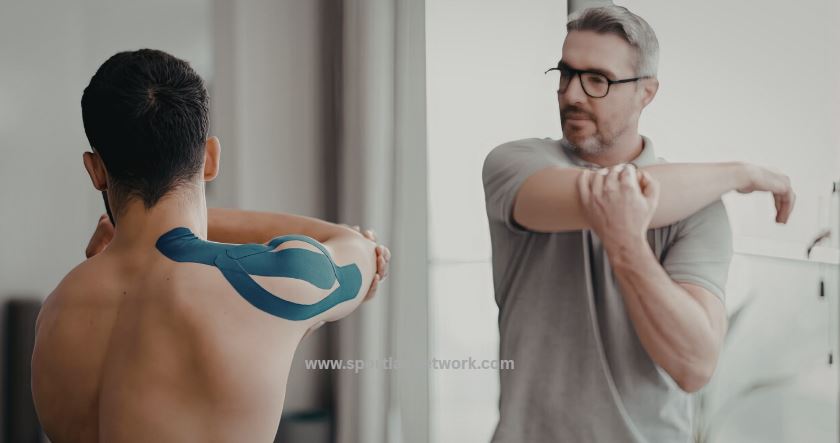
You have seen it on volleyball players, marathon runners, and Olympic swimmers. The coloured strips of elastic tape applied in patterns across shoulders, knees, and lower backs have become one of the most recognisable images in modern sport. What most athletes do not know is that the gap between how kinesio tape is marketed and what the research actually supports is considerable.
This article covers the origins of the technique, the proposed mechanisms, what the evidence shows across different applications, and how athletes can use it sensibly given what we know.
What Kinesio Tape Is and Where It Came From
Kinesio tape was developed by Japanese chiropractor Kenzo Kase in the 1970s. His theory was that applying an elastic adhesive tape to the skin over muscles and joints would lift the skin slightly, creating space in the tissue underneath. This space, he proposed, would reduce pressure on pain receptors, improve lymphatic drainage, and facilitate normal muscle function during movement.
The tape itself is designed to mimic the thickness and weight of human skin and stretch in one direction only. It adheres with a heat-activated acrylic adhesive and is water-resistant, allowing athletes to wear it through training, competition, and showering for several days at a time. The coloured patterns visible on athletes are the result of different application techniques rather than different materials. The tape is functionally identical regardless of colour.
Kinesio tape remained a niche clinical tool for decades before exploding into mainstream awareness at the 2008 Beijing Olympics when several high-profile athletes wore it visibly during competition. From that point the market for athletic tape expanded rapidly and dozens of brands now produce similar products.
The Proposed Mechanisms
Understanding what kinesio tape is supposed to do requires understanding the three main claims made for it by practitioners and manufacturers.
Pain Reduction
The most consistent claim is that kinesio tape reduces pain. The mechanism proposed is that lifting the skin creates space beneath it, reducing pressure on the nociceptors, the nerve receptors that signal pain, in the tissue directly under the tape. There is also a gate control theory argument, that the tactile stimulation of the tape on the skin competes with and partially blocks pain signals in the nervous system.
Proprioceptive Enhancement
Proprioception is the body’s sense of its own position and movement in space. Kinesio tape advocates claim that the constant pressure and stretch sensation from the tape on the skin and underlying tissue improves the quality of proprioceptive feedback from taped joints and muscles. This is proposed to improve movement control and reduce injury risk during dynamic activity.
Muscle Facilitation and Inhibition
Different application techniques are claimed to either facilitate or inhibit the underlying muscle depending on the direction of tape application relative to muscle fibre orientation. Taping from origin to insertion is said to facilitate the muscle, while taping from insertion to origin is said to inhibit it. This mechanism would allow practitioners to use the same tape to either activate an underactive muscle or calm down a hyperactive one.
What the Research Actually Shows
The honest picture from the research literature is that kinesio tape produces some real effects in some specific contexts while the broader claims made for it are not supported at the level of evidence that practitioners often imply.
Pain Relief Has the Most Consistent Support
Across multiple systematic reviews and meta-analyses, kinesio tape shows a small but real effect on pain reduction compared to no treatment. This effect has been observed in studies on lower back pain, knee pain, shoulder impingement, and neck pain. The effect is generally modest, meaning tape reduces pain somewhat but is not a standalone treatment. It also tends to perform similarly to sham taping in blinded trials, which raises questions about how much of the effect is specific to the tape versus the general tactile and psychological effects of having something applied to the skin.
This last point is important and honest practitioners acknowledge it. A treatment that works partly through placebo or non-specific sensory input is not valueless. Pain reduction is pain reduction. But it does suggest that the specific tension, direction, and application protocols that practitioners spend significant time learning may matter less than the broader effect of having tape on the body.
Proprioception Effects Are Small and Context-Dependent
Studies measuring proprioceptive accuracy at taped joints, particularly the ankle and knee, show mixed results. Some studies find small improvements in joint position sense. Others find no difference. The overall picture from systematic reviews is that any proprioceptive benefit is likely small and probably not the primary mechanism through which athletes experience benefit from taping.
Muscle Facilitation and Inhibition Effects Are Weak
The claim that tape direction determines whether a muscle is facilitated or inhibited has the weakest research support of the three main mechanisms. EMG studies measuring muscle activation during taped versus un-taped conditions show inconsistent results across different muscles and populations. There is no strong body of evidence supporting the direction-specific facilitation and inhibition theory at the level of physiological measurability.
Performance Effects Are Not Well Supported
Studies measuring actual athletic performance variables such as sprint times, jump height, grip strength, and shoulder force production generally find that kinesio tape does not improve performance in healthy athletes. This is an important distinction. Tape may help injured or painful athletes move better by reducing pain, which indirectly improves performance. But applying tape to a healthy athlete and expecting it to increase output has no meaningful research backing.
Where Kinesio Tape Is Most Useful
Given what the evidence shows, the most defensible applications for kinesio tape fall into a few clear categories.
Managing Pain During Rehabilitation
Athletes recovering from injuries who need to continue training at modified intensity frequently use kinesio tape to manage discomfort during activity. Knee taping for patellar tendinopathy, lower back taping during return to lifting, and shoulder taping during overhead rehabilitation are common applications where the pain-modulating effects, even if partly non-specific, provide genuine training-day benefit.
Our article on hamstring strain rehab covers how load management during return-to-sport phases works, and kinesio tape sits in this category as a tool that helps athletes tolerate training volume while recovery progresses rather than as a structural support that changes tissue biology.
Swelling Management After Acute Injury
One of the more supported applications is using kinesio tape in a specific lifting technique over recently injured tissue to facilitate lymphatic drainage and reduce swelling. Studies on acute ankle sprains and post-surgical swelling show that appropriate kinesio taping reduces oedema more effectively than no treatment. This application is more specific and technically demanding than general muscle taping and is best applied by a trained clinician rather than self-applied by the athlete.
Postural Awareness Cuing
Athletes with habitual movement patterns that contribute to injury, rounded shoulders in swimmers and throwing athletes, anterior pelvic tilt in runners and lifters, knee valgus in landing athletes, can use kinesio tape as a sensory cue that draws attention to the problematic position during training. When the posture corrects, the tape tension changes. This is a low-risk application that uses the tape as a feedback tool rather than relying on any specific therapeutic mechanism. Our guides on rotator cuff exercises and runners knee both address the movement pattern issues where this kind of cuing can support rehabilitation.
Psychological Readiness
This is an underacknowledged but legitimate application. Athletes who have experienced injury to a specific area and feel uncertain about that area during competition frequently report that taping reduces anxiety and allows more confident movement. The effect is psychological rather than structural. A taped knee does not have greater mechanical stability than an un-taped knee in most applications. But an athlete who feels more confident moving through competition because of what is on their body may actually perform better and take fewer protective movement compensations that create secondary problems.
Where Kinesio Tape Is Often Misused
The expanded commercial availability of kinesio tape has led to widespread self-application by athletes following YouTube tutorials with variable accuracy. Several patterns of misuse are worth addressing.
Applying tape as a substitute for rehabilitation is a common and costly error. Tape manages symptoms. It does not fix the underlying tissue problem that is causing those symptoms. An athlete who tapes a painful IT band and continues full training without addressing the movement and loading factors causing the pain is delaying necessary recovery and risking progression to a more serious injury. Our article on IT band syndrome covers why addressing the root cause is always the priority.
Expecting structural support from kinesio tape is another misuse. Kinesio tape is elastic. It does not provide the rigid structural support that white athletic tape or a brace provides. Athletes who tape an unstable ankle with kinesio tape expecting it to function like a rigid strapping are not protected in the way they believe.
Applying tape without understanding the intended mechanism means most self-taught applications produce random results. The directional and tension specificity that practitioners use takes training to apply correctly. An athlete who applies tape incorrectly may experience some non-specific sensory benefit but is unlikely to achieve the targeted effect they are attempting.
How to Apply It Effectively
For athletes who want to use kinesio tape sensibly, a few principles apply regardless of the specific body region.
Clean, dry skin is essential for adhesion. Applying tape immediately after showering or over sweaty skin dramatically reduces how long the tape stays on and how effectively it contacts the tissue. Light hair removal over the application area improves both adhesion and comfort during removal.
Tension matters. Most general applications use between 15 and 50 percent stretch of the tape from its resting length. Too little tension produces no skin lifting effect. Too much creates excessive skin tension that is uncomfortable and can irritate the tissue beneath. The anchor points at each end of the tape are always applied with zero tension.
Duration is typically two to five days per application. Most athletes replace tape before major training sessions or competitions. Removing tape slowly in the direction of hair growth minimises skin irritation.
For anything beyond basic shoulder, knee, or back applications, working with a physiotherapist or athletic trainer who has specific kinesio taping training produces better outcomes than self-application based on online tutorials. The application techniques used for lymphatic drainage, specific muscle inhibition, and joint stability differ meaningfully from general use patterns and require practitioner knowledge to execute correctly.
Kinesio Tape vs Traditional Athletic Tape
Traditional rigid athletic tape, the white strapping tape used widely in rugby, football, and court sports, works through a completely different mechanism. It physically restricts joint range of motion, providing genuine mechanical support against movements that would stress healing ligaments or unstable joints. Ankle strapping before sport is one of the most evidence-supported interventions in sports medicine for reducing ankle sprain recurrence.
Kinesio tape does not provide this structural restriction because it is designed to allow full movement. The two products serve different purposes and are not interchangeable. Athletes who need joint stability should use rigid strapping or a brace. Athletes who want sensory input, pain modulation, and freedom of movement can use kinesio tape. Confusing the two is a common source of misplaced confidence in an injured athlete.
Our warm-up science guide covers how pre-training preparation affects injury risk, and the decision about what taping approach to use is best made as part of a broader pre-training protocol rather than in isolation. Tape over a poorly prepared body does less than tape combined with appropriate activation and mobility work before competition.
The Conclusion on Kinesio Tape
Kinesio tape is a useful tool with a narrower evidence base than its marketing suggests. It reliably reduces pain to a modest degree. It may assist with swelling management after acute injury. It provides sensory cuing that some athletes find genuinely useful for movement correction and psychological readiness. What it does not do is structurally repair damaged tissue, provide meaningful joint stability, or enhance the performance of healthy athletes.
Used as part of a broader rehabilitation and performance strategy, kinesio tape earns its place in an athlete’s toolkit. Used as a replacement for addressing the actual cause of an injury, or expected to produce structural support it is not designed to provide, it becomes expensive coloured tape that delays recovery.