
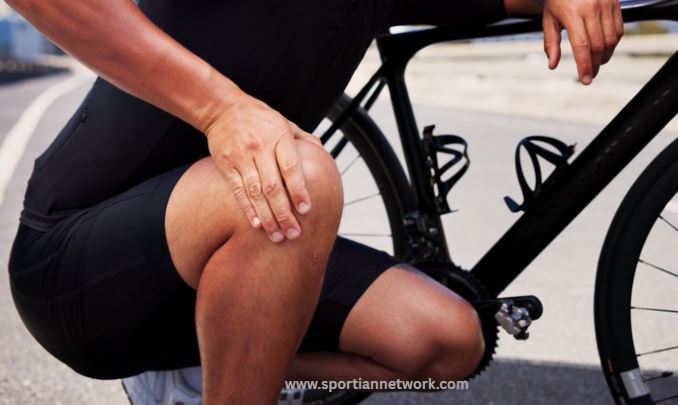
If you run regularly or spend serious time on the bike, there is a good chance you already know that sharp, burning pain on the outside of your knee. It usually shows up around mile two or three of a run, or after a long climb on the bike. At first it feels like it might loosen up if you push through. It does not. That is IT band syndrome, and it stops more athletes cold than almost any other overuse injury.
The good news is that it is very fixable. However, most people treat it wrong, which is why it keeps coming back.
What Is the IT Band and Why Does It Get Irritated
The iliotibial band is a thick strip of connective tissue that runs down the outside of your thigh from your hip all the way to just below your knee. It is not a muscle, so you cannot actually stretch it or strengthen it the way you would a muscle. What you can do is influence how it behaves by addressing the muscles attached to it and the movement patterns that load it.
The pain happens because the IT band repeatedly rubs against a bony bump on the outside of the knee during repetitive flexion and extension. Running and cycling create exactly that kind of repetitive motion. Over time, the friction builds up and the tissue around that area gets irritated and inflamed.
So the root cause is not the IT band itself. It is usually a combination of weak hip muscles, poor movement mechanics, and training load that increased too fast.
Why Foam Rolling the IT Band Does Not Actually Fix It
This is the biggest mistake athletes make with this injury. They spend ten minutes grinding a foam roller into the outside of their thigh, hoping to release the IT band. It feels painful, so it must be doing something, right?
The problem is that the IT band is too dense and thick to be meaningfully changed by foam rolling. You are not releasing anything. What you should be doing instead is foam rolling the muscles that attach to and influence the IT band. That means the glutes, the TFL muscle at the top of your hip, and the lateral quad. Roll those areas and you will actually make a difference.
This does not mean foam rolling is useless for this injury. It just means you are rolling the wrong spot.
The Real Causes Athletes Need to Address
Because IT band syndrome is a movement problem as much as it is a tissue problem, fixing it requires looking at what is actually going wrong mechanically.
Weak glutes are the most common culprit. When your glute medius is not doing its job, your hip drops with every stride. That hip drop pulls the IT band tighter and increases friction at the knee. Strengthen the hip and the problem often resolves on its own.
Overpronation is another factor. When your foot rolls inward excessively on landing, it creates a chain reaction up the leg that increases IT band tension. Running shoe choice matters here, and so does single leg strength work.
Too much mileage too fast is the third major cause. The IT band does not get inflamed from one bad run. It gets inflamed after weeks of loading that slightly exceeds what the tissue can recover from. Most athletes who develop IT band syndrome had warning signs they ignored for two or three weeks before it became a real problem.
Exercises That Actually Fix IT Band Syndrome
These are not generic stretches you find in a magazine. These are the exercises that address the actual mechanical causes of the injury.
Clamshells
Lie on your side with your hips bent to about 45 degrees and your knees bent at 90 degrees. Keep your feet stacked together. Rotate your top knee upward like a clamshell opening. Hold briefly at the top. Lower slowly. This directly targets the glute medius, which is almost always weak in athletes with IT band problems.
Do 3 sets of 20 reps each side. Add a resistance band around your knees once bodyweight becomes easy.
Side-Lying Hip Abduction
Lie on your side with your bottom leg slightly bent for balance. Keep your top leg straight. Lift it to about 30 or 40 degrees, keeping your toes pointed slightly toward the floor. Lower slowly. This is a simple movement but it isolates the lateral hip beautifully when done with control.
Do 3 sets of 15 reps each side.
Single Leg Glute Bridge
Lie on your back with your knees bent. Lift one foot off the floor. Drive through the heel of the planted foot and raise your hips until your body forms a straight line from shoulder to knee. Hold briefly at the top. Lower slowly. If your hips drop to one side during this movement, that tells you exactly where the weakness is.
Do 3 sets of 10 to 12 reps each side.
Step Down Exercise
Stand on a step or a low box with one foot. Slowly lower the opposite leg toward the floor by bending the standing knee. Stop just before the lowered foot touches down. Return to standing. This exercise mimics the loading pattern of running and exposes any hip control issues quickly. If your knee caves inward during the movement, your hip stabilizers need more work.
Do 3 sets of 10 reps each side. Go slowly and prioritize control over depth.
TFL and Glute Foam Rolling
As mentioned earlier, roll the muscles, not the IT band. Spend 60 to 90 seconds on the TFL, which sits just below your hip bone on the side of your pelvis. Then roll your glutes thoroughly. Finally, work the lateral quad just above the knee. These are the areas that actually need the pressure.
How Long Does IT Band Syndrome Take to Heal
This depends on how long you have been ignoring it. If you catch it early, two to four weeks of the right exercises combined with a temporary reduction in mileage is usually enough. If you have been running through the pain for months, it can take six to eight weeks or longer.
The key word in that timeline is reduction, not elimination. Complete rest is not the answer for most athletes and is often counterproductive. Reducing the volume that irritates the tissue while strengthening the muscles around it is the approach that gets people back on the road fastest.
During recovery, cycling is often better tolerated than running because the knee flexion angle during cycling typically stays above the range where IT band friction is highest. However, if cycling is also causing pain, reduce the volume there too and focus entirely on the exercises first.
Returning to Running After IT Band Syndrome
Before you go back to full mileage, you need to be honest about whether your movement mechanics have actually improved. Pain going away does not mean the underlying weakness is fixed. It often just means the tissue has calmed down enough to tolerate load again. If you go back to the same training without addressing the cause, you will be back in the same situation within a few weeks.
A simple test is to do a single leg squat in front of a mirror. If your knee dives inward when you lower, your glute medius still needs work before you ramp up mileage. When you do return, increase weekly volume by no more than 10 percent per week. That rule is not just good advice for IT band syndrome. It applies to building any kind of training load safely, as explained in the injury prevention and mobility work guide on this site.
Athletes dealing with knee pain from multiple sources at the same time should also read through the breakdown of runner’s knee and patellofemoral pain, since the two conditions sometimes overlap and share several of the same fixes.
Prevention Is Simpler Than You Think
Once you have cleared this injury, keeping it away comes down to a few consistent habits. Do your hip strengthening work two or three times per week, even when you feel fine. Build mileage gradually and never spike your weekly volume dramatically in a short period. Pay attention to the early warning signs, which are usually a mild tightness or ache on the outside of the knee after a run, not during it.
Recovery between sessions matters more than most runners appreciate. When you are under-recovered, your movement mechanics deteriorate and your muscles fatigue faster. That combination puts much more stress on passive structures like the IT band. Taking your easy days genuinely easy is one of the best things you can do to keep this injury from returning.
IT band syndrome is frustrating precisely because it feels so avoidable in hindsight. But with the right exercises and a smarter approach to training load, most athletes never deal with it twice.