Five years ago, a personalized training program built around your individual biomechanics, recovery data, sleep patterns, and performance trends required a full-time coach, a sports science team, and a budget most athletes do not have.
In 2026, there is an app for that.
AI-powered coaching has moved from novelty to genuine performance tool faster than almost any other technology in sports. The best platforms do not just schedule your workouts. They watch you move, analyze your data in real time, adjust your program on the fly, and flag injury risk before you feel it. That is a fundamentally different category of tool from a generic training plan you download and follow blindly.
Here is what AI coaching actually does, where it works, where it does not, and which platforms are worth your attention.
What AI Coaching Actually Means in 2026
The term gets used loosely. Every fitness app with a recommendation engine calls itself AI-powered now. Most of them are not doing anything sophisticated. A quiz that assigns you a beginner, intermediate, or advanced program based on three questions is not artificial intelligence. It is a flowchart.
Real AI coaching in sports involves machine learning models trained on large datasets of athlete performance, movement, recovery, and injury data. These models identify patterns that human coaches miss, adapt in real time to individual responses, and improve their recommendations as they accumulate more data about a specific athlete.
The most meaningful applications in 2026 fall into four categories. Movement analysis through computer vision. Training load management through biometric data integration. Performance prediction and periodization automation. And real-time feedback during training sessions.
Each of these represents a capability that either did not exist at the consumer level five years ago or required expensive specialist access. The democratization of these tools is what makes this moment genuinely significant for athletes at every level.
Computer Vision Movement Analysis: Your Phone as a Biomechanics Lab
The most visible and immediately impressive application of AI in sports coaching is computer vision movement analysis. Point a smartphone camera at an athlete and modern AI can analyze joint angles, movement symmetry, force application patterns, and technique errors in real time.
This matters enormously for athletes who train without a coach present. Which is most athletes, most of the time.
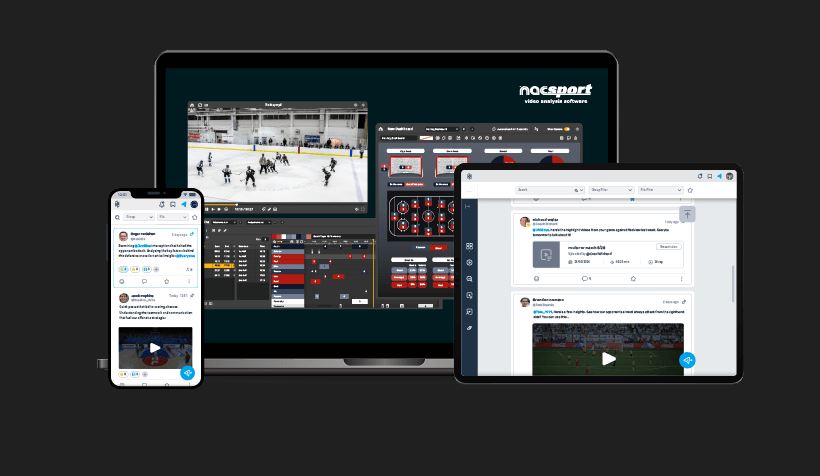
Hudl Technique and Coach’s Eye have been in this space for years. Both allow frame-by-frame video analysis with angle measurement and drawing tools. They are coaching aids, not AI systems. A human coach still makes the assessment.
HomeCourt uses computer vision specifically for basketball. It tracks shot release angle, arc, speed, and outcome for every attempt in a practice session. Over weeks of data it identifies patterns in misses, tells you if your shot mechanics deteriorate under fatigue, and quantifies improvement in ways a coach watching practice never could.
Gymvid and Technique.ai analyze strength training movements through the camera. Squat depth, bar path consistency, knee tracking, and torso angle are all measured automatically. For athletes working on proper squat form or deadlift mechanics without daily access to a qualified coach, this kind of objective feedback closes a significant gap.
Kinatrax and similar professional systems use markerless motion capture at the stadium level. Major League Baseball teams use this to analyze pitcher biomechanics in real game conditions. The system flags mechanical changes that correlate with injury risk before the pitcher reports arm pain. This same technology is filtering down toward semi-professional and serious amateur levels as the hardware costs drop.
The limitation of all computer vision systems is that the camera angle matters enormously. A front-facing camera misses lateral plane movement. A side angle misses frontal plane errors. The best results come from multiple simultaneous camera angles, which consumer systems are beginning to support but have not yet made seamless.
Training Load Management: AI That Reads Your Recovery
The second major application connects directly to the wearable technology ecosystem that has matured rapidly. AI coaching platforms that integrate with Whoop, Garmin, Oura, and Apple Watch can now see your training load, recovery status, sleep quality, and HRV data simultaneously and adjust your programming in response.
This is where AI coaching moves from interesting to genuinely transformative for serious athletes.
TrainingPeaks with its AI Adaptive Training features allows coaches to set performance targets and let the algorithm adjust weekly training stress based on actual recovery data rather than a fixed calendar plan. An athlete who sleeps poorly for three consecutive nights sees their hard session automatically shifted or reduced without the coach needing to manually review and intervene.
Whoop Coach, introduced in the Whoop 5.0 ecosystem, provides AI-generated daily training recommendations based on recovery score, sleep performance, and recent strain history. It goes beyond simple readiness scores and suggests specific session types, intensities, and durations calibrated to where the athlete actually is physiologically that day.
Polar’s AI training guidance within the Flow ecosystem does something similar with its Training Load Pro feature. It distinguishes between cardiovascular load and muscle load, which matters for athletes combining strength and endurance training. An AI that can see your cardio load is manageable but your muscular load is accumulated from heavy lifting can make smarter session recommendations than one looking at heart rate data alone.
The periodization principles that underpin smart training programming are being automated by these systems. The human coach still sets the strategic framework. The AI manages the tactical day-to-day adjustments that previously required constant monitoring and manual intervention.
Injury Prediction: The Application With the Highest Stakes
The most consequential use of AI in sports training is injury prediction. If a system can identify movement patterns, load accumulation trends, or physiological markers that precede injury before the athlete feels symptoms, the economic and performance value is enormous.
This is an area where professional sports have invested heavily and results are genuinely promising.
Kitman Labs works with professional teams across the NFL, NBA, and Premier League. Their platform ingests GPS tracking data, biometric data, training load history, and prior injury records to generate individual injury risk scores updated daily. Teams using the platform have reported meaningful reductions in soft tissue injury rates. The mechanism is not magic. The AI identifies that a specific combination of training load spike, sleep debt, and movement asymmetry reliably precedes hamstring strain in athletes with that profile.
EXOS has developed AI-assisted load management systems used across professional and Olympic athlete programs. Their approach combines movement screening data with training load metrics to flag athletes approaching injury risk thresholds before the threshold is crossed.
At the consumer level, Whoop’s strain and recovery system does a simplified version of this. Sustained periods of high strain without adequate recovery scores correlate with illness and injury in the dataset Whoop has accumulated across millions of users. The daily readiness recommendations are, in part, injury avoidance recommendations.
For team sport athletes, this connects directly to what coaches know about overtraining risk. AI makes that risk visible and quantifiable rather than relying on coach intuition or athlete self-reporting, both of which are systematically biased toward underestimating accumulated fatigue.
AI-Powered Running Coaches: The Most Mature Consumer Application
Running has the most developed AI coaching ecosystem of any sport at the consumer level. The combination of GPS data, heart rate monitoring, and a relatively simple primary movement pattern gives AI systems enough input to provide genuinely useful coaching.
Garmin Coach provides adaptive training plans for 5K through marathon distances. The algorithm adjusts weekly mileage, long run distance, and workout intensity based on your race date, recent training performance, and available training days. It is not simply a static plan generator. It responds to missed sessions, faster or slower times than projected, and available recovery time.
Nike Run Club’s guided runs use audio coaching cues calibrated to your pace and heart rate during the session. The experience mimics having a coach in your ear adjusting the session as you go.
Stryd’s power-based running coaching uses a foot pod to measure running power, the equivalent of cycling power meters applied to running. The AI coaching system built around Stryd data identifies optimal training zones and workout structures based on power data rather than pace or heart rate, both of which are affected by heat, terrain, and fatigue in ways that power measurement is not.
Nurvv Run analyzes foot strike pattern, pronation, cadence, and step length asymmetry through smart insoles. The AI coaching layer identifies which mechanics are limiting performance or creating injury risk and provides targeted corrective recommendations. This is particularly useful for runners working on injury prevention where the cause is often a mechanical pattern that is invisible to the runner themselves.
AI Coaching for Strength and Team Sports: Still Developing
The applications for strength sports and team sports are less mature than endurance coaching but developing rapidly.
Volt Athletics provides AI-generated strength and conditioning programs for team sports. Coaches input sport, season phase, available equipment, and athlete profiles. The system generates periodized programs with progressive overload built in and adjusts based on session feedback. Used by thousands of high school and college programs.
PUSH Band and GymAware measure bar velocity during strength training. Velocity-based training uses bar speed as a proxy for readiness and effort level. An athlete lifting at significantly lower velocity than their baseline is showing signs of fatigue even if they are moving their target weight. AI coaching layers on top of velocity data can flag this and recommend reducing session volume before the athlete reports feeling tired.
Second Spectrum provides real-time AI analysis of team sport performance in basketball and soccer. The system tracks every player’s position, movement, and decision at every moment in a game. Coaches receive AI-generated insights about spacing, defensive breakdowns, and individual decision quality that would take hours of manual video review to extract. This technology is currently NBA and Premier League level but filtering toward college and semi-professional programs.
The mental side of athletic performance is the frontier that AI coaching has barely touched. Movement and physiology are measurable. Mental state, decision-making quality, and competitive psychology are far harder to quantify. Some platforms are beginning to integrate psychometric questionnaires and session perception ratings into their models. This is early-stage work but the direction is clear.
The Role of the Human Coach in an AI-Enhanced World
This question generates more debate than the technology itself. Does AI coaching replace human coaches?
The honest answer is no, at the current level of capability, and probably not completely even at much higher capability levels. But the role of the coach changes.
AI excels at pattern recognition across large datasets, consistent monitoring without fatigue, real-time data processing, and objectivity uncorrupted by bias or preference. These are genuine advantages over human observation.
Human coaches excel at reading an athlete’s emotional state, providing motivation and accountability, making judgment calls in ambiguous situations, communicating in ways that land for a specific individual, and understanding the context behind performance data. A coach who knows an athlete just went through a breakup interprets a poor training week differently than an algorithm that sees only biometric data.
The most effective model in 2026 is the combination. AI handles the monitoring, data processing, and pattern recognition. Human coaches handle the relationship, the judgment calls, and the motivational architecture. Neither replaces the other. Both become more effective with the other present.
For athletes who genuinely cannot access or afford human coaching, AI tools provide a meaningful improvement over training without any systematic guidance. For athletes who already have strong coaching relationships, AI tools amplify the coach’s effectiveness by giving them more accurate and comprehensive data to work with.
Choosing the Right AI Coaching Platform for Your Sport
The market is crowded. Here is a practical framework for evaluating options.
What data does it use? The best platforms integrate multiple data streams. Wearable recovery data, movement analysis, training log history, and performance metrics together produce better recommendations than any single input. A platform that only uses your manually logged workouts has significant blind spots.
How does it adapt? A platform that generates a fixed plan and does not change it based on your actual performance and recovery is not AI coaching. It is a plan generator. Look for genuine adaptation based on real data inputs.
Does it have sport-specific models? Generic fitness AI trained primarily on recreational exercisers produces different recommendations than sport-specific models trained on athletes in your discipline. Running coaching AI trained on marathon data will not serve a basketball player well.
What is the feedback loop? The best AI coaching systems improve their recommendations as they accumulate data about you specifically. Ask how long it takes for the platform to learn your individual patterns and whether it explains why it is making specific recommendations.
Does it integrate with your existing tools? If you already use a Garmin, Whoop, or Oura Ring, the AI platform that integrates with your existing data is more valuable than one requiring you to start a new tracking ecosystem from scratch.
The fitness tracker comparison on Sportian Network covers the wearable hardware that feeds the best AI coaching platforms. The hardware and the software are increasingly inseparable. Choosing them together produces better outcomes than treating them as independent decisions.
What AI Coaching Cannot Do
Understanding the limitations is as important as understanding the capabilities.
AI coaching cannot feel what you feel. Subjective experience, whether a movement feels right, whether motivation is high or collapsed, whether pain is normal training discomfort or a warning signal, requires human judgment that current AI cannot replicate.
AI coaching cannot replace proper technical instruction for complex movements. Computer vision can identify that your squat is deviating from optimal mechanics. It cannot yet replace a skilled coach’s ability to understand why and communicate the specific correction that will land for that individual athlete.
AI coaching cannot account for context it cannot see. Life stress, relationship problems, illness in the family, work pressure. These all affect training capacity and recovery. An AI that sees a drop in HRV and recommends a rest day is correct. It does not know that the HRV drop happened because of a difficult week at work rather than accumulated training fatigue. The recommendation might be the same. The conversation around it would be different.
And AI coaching cannot replicate the accountability and motivation that comes from a human relationship. Many athletes train harder and more consistently because they do not want to disappoint their coach. No algorithm creates that dynamic yet.
Final Word
AI-powered coaching in 2026 is not a replacement for athletic knowledge, smart training, or good coaching relationships. It is an amplifier. It makes the information available to athletes more accurate, more timely, and more personalized than anything that existed at this price point a decade ago.
The athletes who get the most out of these tools are not the ones who hand their training over to an algorithm. They are the ones who use AI data to make better decisions while still applying judgment, experience, and context that no system can fully capture.
The technology is genuinely impressive. The gap between what AI can do and what human coaching can do is narrowing every year. But for now, the combination of both beats either one alone. Use the tools. Understand their limits. Train smarter.