Most athletes who develop elbow pain are told to rest. Some get a brace. Very few are told to strengthen the muscles that actually caused the problem in the first place. The wrist flexors and extensors sit between the forearm and the fingers, but they originate at the elbow. That anatomical fact is the reason they matter so much for elbow health and why neglecting them is one of the most reliable ways to develop chronic pain in racket and combat sports.
This guide covers the anatomy, why imbalances develop, what the common injury patterns look like, and the specific exercises that fix the problem before or after it becomes an issue.
The Anatomy That Actually Matters
The forearm contains two main groups of muscles that control wrist and finger movement. Understanding which group does what is essential before selecting any exercises.
The Wrist Flexors
The wrist flexors run along the inside of the forearm, the side facing the body when the arm hangs at rest. The main muscles in this group are the flexor carpi radialis, flexor carpi ulnaris, and palmaris longus, with the deeper flexor digitorum superficialis and profundus controlling finger flexion. These muscles collectively pull the wrist toward the palm, close the hand, and contribute to gripping, throwing, and punching mechanics.
All of the major wrist flexors originate at or near the medial epicondyle, the bony point on the inside of the elbow. This is why overloading the flexors through high-volume gripping, throwing, or swinging produces pain at that specific location. The condition is called medial epicondylitis, more commonly known as golfer’s elbow, though it is extremely common in baseball pitchers, boxers, and grapplers who never touch a golf club.
The Wrist Extensors
The wrist extensors run along the outside of the forearm. The key muscles are the extensor carpi radialis longus and brevis, and the extensor carpi ulnaris. These muscles pull the wrist back toward the top of the hand and stabilise the wrist against flexion forces during impact activities. They originate primarily at the lateral epicondyle, the bony point on the outside of the elbow.
Tennis elbow, technically lateral epicondylitis or lateral epicondylalgia, develops when the extensor origin is repeatedly overloaded. It is extraordinarily common in racket sport athletes, climbers, and anyone who performs high-volume eccentric loading of the extensors during grip and impact work. Despite the name, it affects far more people who do not play tennis than those who do.
Why Balance Between the Two Groups Matters
In most athletes the flexors are significantly stronger than the extensors. Gripping, pulling, and most combat sport actions bias toward the flexor group because they close and control the hand. The extensors are rarely trained specifically and lag behind. This imbalance places disproportionate load on the lateral epicondyle during any activity that requires the extensors to resist or decelerate wrist flexion under load, which is essentially every racket swing, punch, and grappling exchange.
Correcting the imbalance is the foundation of both injury prevention and rehabilitation for most forearm-related elbow conditions.
How These Injuries Develop in Specific Sports
Tennis and Racket Sports
In tennis, the backhand drive is the most common mechanism for lateral epicondyle overload. When the wrist extensors must stiffen the joint at ball contact while the arm is decelerating, the eccentric demand on the extensor origin is very high. Players with poor backhand mechanics, overly tight string tension, or handles that are too small for their hand size are at elevated risk. Serving and forehand play place more load on the flexors, which is why some players develop medial pain alongside the more typical lateral symptoms.
Our tennis racket guide covers grip size and string tension in more depth, and the connection to elbow health is real. A racket that is poorly matched to the player’s arm mechanics increases extensor loading at every ball strike across a full training session.
Boxing and Striking Sports
Every punch involves a rapid wrist flexion and grip closure at impact followed by an equally rapid extension during the recovery phase. Boxers who throw high punch volumes train the flexors intensively without proportionally loading the extensors. The medial epicondyle absorbs significant cumulative stress over a boxing career, which is why chronic medial elbow pain is common in experienced fighters.
Incorrect wrapping technique that leaves the wrist unsupported at impact also contributes. A wrist that collapses slightly on punch contact transfers load directly to the extensor and flexor origins rather than distributing it through the joint structure and padding.
BJJ and Grappling
Grapplers load the flexors heavily through grip fighting, clinch work, and sleeve or collar control that requires sustained isometric gripping under resistance. The extensors work hard during pushing, framing, and posting actions that are constant in positional grappling. Because grappling involves sustained loading in all directions across extended rounds, the cumulative forearm fatigue is high and injury patterns often develop gradually rather than from a single incident.
Wrist and elbow injuries in BJJ also result from joint locks, which create sudden extreme loads through the medial or lateral structures when a submission is applied and not tapped to promptly. Our BJJ beginners guide covers the culture of tapping early, which is ultimately the most important injury prevention tool in grappling, but the underlying tissue strength built through consistent flexor and extensor training determines how much resistance the joint tolerates in those moments.
Muay Thai and Combat Sports
Muay Thai clinch work and elbow strikes place specific loads through both the flexor and extensor groups that differ from boxing. The extended gripping of the clinch under resistance and the eccentric demands of catching and deflecting incoming strikes make balanced forearm strength important for injury prevention across the elbow and wrist complex.
The Exercises
The following exercises address both muscle groups with the specificity needed to produce genuine tendon adaptation rather than just surface-level fatigue.
Wrist Flexor Curls
Sit with the forearm resting on a bench or thigh, palm facing upward, with the wrist hanging off the edge. Hold a light dumbbell and curl the wrist upward through full range of motion, then lower slowly. The eccentric lowering phase is the most important part. Take three to four seconds on the way down. Start with two to four kilograms and progress based on how the medial elbow feels the following day rather than on absolute load.
Three sets of 15 to 20 reps is the appropriate range for both rehabilitation and prevention work. The goal is tissue loading and tendon adaptation rather than muscle growth, which means higher reps and lower loads outperform heavy low-rep work in this context.
Wrist Extensor Curls
The same setup as flexor curls but with the palm facing downward. The wrist extends upward and lowers slowly under control. This is the primary rehabilitation exercise for lateral epicondylitis and the primary prevention exercise for racket sport players and climbers whose extensors are chronically underloaded relative to their sport demands.
The eccentric lowering is equally important here. Research on eccentric loading protocols for lateral epicondylalgia consistently shows that slow, controlled eccentric wrist extension reduces pain and improves tendon health more effectively than other approaches. Three to four seconds on the lowering phase is the minimum.
Radial and Ulnar Deviation
These movements are often missed entirely in forearm training programmes but address the muscles that control side-to-side wrist motion, particularly the extensor carpi radialis and extensor carpi ulnaris. Holding a light dumbbell by one end so the weighted portion points upward, tilt the wrist up toward the thumb side and then down toward the pinky side in a controlled arc. This is called the hammer exercise or Tyler twist variation and directly targets the structures most involved in lateral epicondyle pathology.
Two to three sets of 15 reps with a very light load is appropriate. This exercise is most useful when elbow symptoms are present and standard extensor curls are uncomfortable, because the lever arm and loading angle differ enough to allow pain-free movement in many athletes who cannot yet tolerate direct wrist extension loading.
Forearm Pronation and Supination
Holding a light hammer or similarly weighted implement at its end, rotate the forearm from palm-up to palm-down and back in a controlled arc. This loads the pronator and supinator muscles that rotate the forearm, which are also implicated in elbow pain from racket sports and combat sports where rotational forearm mechanics are constant.
Three sets of 15 reps in each direction, controlled throughout. The temptation to swing the weight through the arc using momentum defeats the purpose entirely.
Eccentric Reverse Wrist Curl With Band
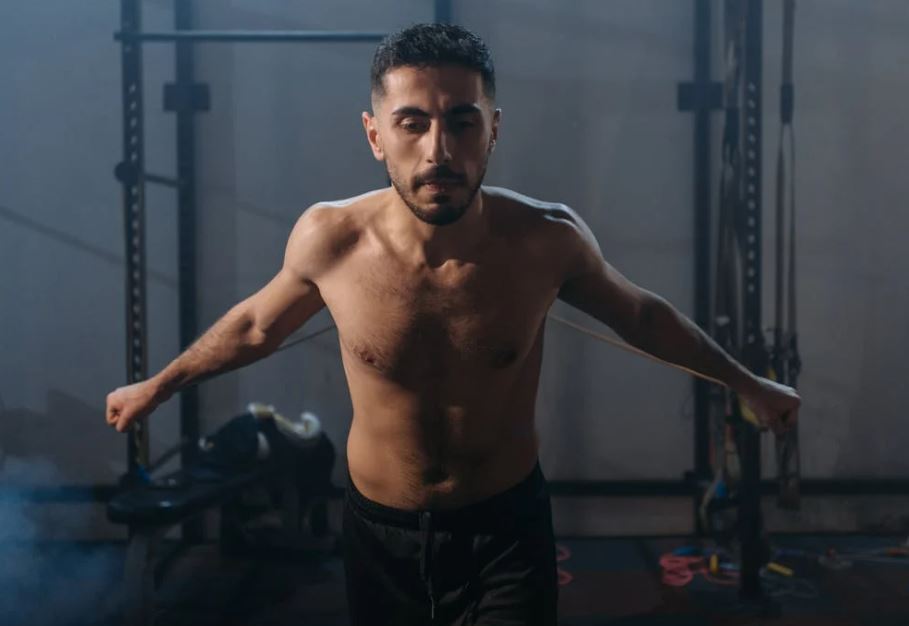
Using a light resistance band looped around the hand, extend the wrist against band resistance and then release slowly. The band allows progressive loading that is more joint-friendly than dumbbell loading during acute or subacute phases of lateral elbow symptoms. This is a common clinical rehabilitation tool and works equally well as a prevention exercise integrated into a regular training warm-up.
Our article on grip strength for athletes covers how the forearm muscles interact with grip function more broadly, and the connection to performance rather than just injury prevention is important context for athletes who might otherwise see this type of training as purely remedial.
How to Programme This Work
For injury prevention in an athlete with no current symptoms, two sessions per week of flexor and extensor work is sufficient. The exercises fit naturally into a warm-up for racket or combat sport sessions, taking approximately eight to ten minutes total. Performing them before training rather than after means the tendons are loaded when they are fresh, which produces better adaptation and removes the excuse of fatigue at the end of a long session.
For an athlete with existing lateral or medial elbow symptoms, the approach requires more structure. Training through mild discomfort during the exercises is acceptable. Training through sharp pain that increases during the set is not. The load and rep range should be set at a level that produces a two to three out of ten discomfort rating at most during the exercise and does not increase symptoms measurably the following morning. If symptoms are worse the day after, the load was too high or the volume too much.
Three sessions per week is the minimum frequency for tendon rehabilitation to produce meaningful adaptation. Tendons respond to load much more slowly than muscle tissue and require consistent stimulus over eight to twelve weeks before structural improvement is measurable. Athletes who do three sessions and abandon the programme after two weeks because they feel no different have not given the tissue time to adapt.
Integration With Upper Body Training
Wrist flexor and extensor work integrates naturally alongside pulling exercises that already load the forearms, particularly rowing variations and pull-ups. Placing the isolation work after compound pulling movements rather than before preserves energy for the primary exercises while ensuring the tendons still receive their targeted load. Our guides on upper body strength for athletes and rotator cuff exercises both address the shoulder and upper back context that determines how much force ultimately reaches the forearm and elbow during sport-specific movements, and integrating all three areas into a coherent upper body programme produces better results than addressing any one in isolation.
Stretching Alongside Strengthening
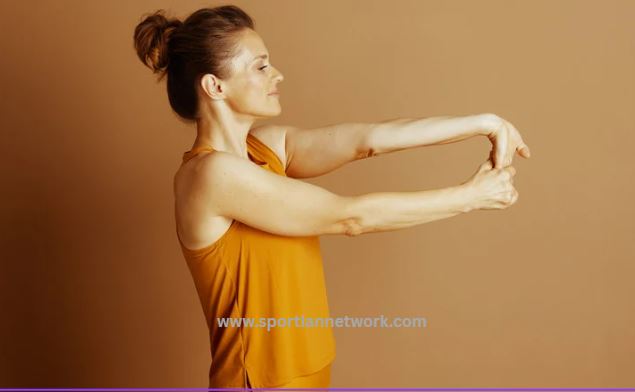
Flexibility work for the wrist flexors and extensors reduces resting tissue tension and helps maintain range of motion during periods of high training volume. The wrist flexor stretch involves extending the arm with the palm facing upward and gently pulling the fingers back toward the body with the opposite hand until a mild pull is felt along the inside of the forearm. The extensor stretch reverses this, with the palm facing downward and the fingers pulled toward the body.
Thirty seconds per stretch, two to three times per side, performed after training rather than before. Static stretching before high-velocity sport activity has no clear benefit and may temporarily reduce the tissue tension that supports joint stability during impact.
Stretching alone without concurrent strengthening does not resolve or prevent elbow tendinopathy. The two approaches serve different purposes and work best together.
When to Seek Clinical Assessment
Forearm and elbow pain that persists beyond four to six weeks of consistent self-managed loading exercise, or pain that significantly limits training participation or daily function, warrants clinical assessment. Lateral and medial epicondylalgia can coexist with nerve entrapment, ligament instability, or intra-articular pathology that requires different management. An assumption that all elbow pain is tendinopathy and managing it exclusively with the exercises described here delays diagnosis of conditions that need different intervention.
The overwhelming majority of forearm and elbow issues in racket and combat sport athletes are load-related and respond well to progressive tendon loading. But the minority that do not respond deserve proper clinical investigation rather than indefinite self-management.