Simbramento is the training method where athletes deliberately practice core skills under progressively escalating pressure conditions so that execution becomes deeply automatic and holds up precisely when stakes are highest. It goes beyond regular repetition. Simbramento specifically targets the gap between what an athlete can do in a calm training environment and what they actually produce when the game is on the line.
Every coach has seen it. The athlete who looks polished in practice and falls apart in competition. That gap is not a talent problem. It is a simbramento deficit.
Fix the deficit and the gap closes. The practice performance and the competition performance converge.
The Problem Simbramento Solves
Most training happens in comfortable conditions. The gym is familiar. The teammates are friendly. The consequences of mistakes are low. Under those conditions, athletes can execute skills they have not truly automated because conscious attention fills the gaps that automation has not yet covered.
Competition strips those comfortable conditions away. The environment is unfamiliar. The opponent is hostile. The consequences of mistakes are real and immediate. Conscious attention gets consumed by threat monitoring, crowd noise, and competitive anxiety. The skills that relied on conscious attention to fill the gaps suddenly have nothing holding them together.
This is why athletes revert under pressure. The skill was never truly automatic. It was consciously managed in a forgiving environment and mistaken for automation.
Simbramento addresses this by making the training environment progressively less forgiving. It builds automation the only way it can be built: by forcing the nervous system to execute correctly when conscious attention is already occupied elsewhere.
Veohentak builds the correct movement pattern. Simbramento makes that pattern pressure-proof.
How Simbramento Works Neurologically
The brain has two broad processing systems that are relevant to simbramento. The deliberate system handles conscious, effortful processing. It is slow, accurate when given time, and easily disrupted by competing demands. The automatic system handles fast, unconscious processing. It is fast, consistent, and largely immune to the disruptions that derail deliberate processing.
Skills that live in the deliberate system perform well when conditions are calm and processing resources are available. Skills that have been transferred to the automatic system through sufficient correct repetition under sufficient difficulty perform well regardless of conditions.
Simbramento drives that transfer. By progressively increasing the demands on deliberate processing during skill practice, it forces the skill itself to migrate toward automatic processing where it becomes pressure-resistant.
The key word is progressively. Jumping straight to maximum pressure before the skill is stable enough to survive it does not produce simbramento. It produces failure repetitions that strengthen the failure pathway. Simbramento builds pressure tolerance in layers, each layer adding difficulty only after the previous level has been handled cleanly.
Mental performance training develops the psychological side of this process. Simbramento develops the technical side. Both are necessary for complete pressure resistance.
The Simbramento Pressure Ladder
Simbramento is organized around a pressure ladder with distinct rungs that the athlete climbs as proficiency at each level is confirmed.
Rung One: Technical isolation. The skill is practiced in complete isolation with zero external pressure. Full attention is available. Speed is reduced if necessary to guarantee correct execution. This is the baseline the athlete returns to whenever a higher rung produces significant breakdown. Veohentak protocols fit naturally at this rung.
Rung Two: Dual task loading. A secondary cognitive task is added while the skill is performed. Calling out numbers. Responding to color cues. Solving simple mental problems. The secondary task occupies deliberate processing and forces the skill to begin operating with less conscious support. Quality dips initially. With enough rung-two repetitions, quality recovers while the dual task continues.
Rung Three: Time pressure. The athlete performs the skill under time constraints that require near-maximum speed without sacrificing execution quality. Time pressure is one of the most reliable ways to expose which components of a skill are genuinely automatic and which are still consciously managed. What breaks under time pressure is what needs more foundational work before progressing.
Rung Four: Competitive consequences. Mistakes carry real consequences within the training environment. Points lost. Extra conditioning. Public acknowledgment of errors. The consequence does not need to be severe. It needs to be real enough that the nervous system treats the situation as meaningful rather than trivially low-stakes.
Rung Five: Full competitive simulation. The training environment replicates competition conditions as closely as possible. Crowd noise played through speakers. Scorekeeping that matters. Opponents who are genuinely trying to win. Time pressure matching competition duration. This rung confirms whether simbramento transfer has been achieved or whether further work at lower rungs is needed.
Mental toughness drills provide excellent rung-four and rung-five simbramento material because they are specifically designed to introduce meaningful pressure into training contexts.
Simbramento in Skill Sports
Skill sports are where simbramento produces the most visible performance differences because the gap between calm-environment skill execution and pressure-environment skill execution is largest.
Basketball free throw shooting is a textbook simbramento application. Free throws are taken in a technically simple, physically undemanding situation. However, they are taken after intense physical exertion, in front of thousands of people, with the game potentially on the line. Athletes who practice free throws only in calm, fresh conditions are practicing the wrong version of the skill.
Simbramento applied to free throw shooting means practicing immediately after exhausting conditioning work. It means practicing with teammates watching and reacting. It means building consequences into missed practice attempts. Over time, these layers of pressure produce an athlete whose free throw mechanics hold up precisely when the environment is most disruptive.
A goalkeeper facing a penalty kick, a tennis player serving at match point, a quarterback throwing on fourth down with the game tied are all facing the same simbramento test. Did practice build automation deep enough to survive this pressure level? The scoreboard answers honestly.
Visualization accelerates simbramento at every rung by adding mental repetitions under imagined pressure conditions. An athlete who cannot physically practice the high-pressure scenario hundreds of times can rehearse it mentally, building the neural familiarity that simbramento requires through cognitive pathways.
Simbramento in Physical Performance Sports
Speed and strength sports apply simbramento differently because the skill component is less complex but the pressure component is no less real.
A sprinter whose block start breaks down in championship finals needs simbramento applied specifically to that start under championship simulation conditions. The block start mechanics are well-practiced in isolation. They have not been practiced enough times under conditions that simulate the specific pressure of a major final.
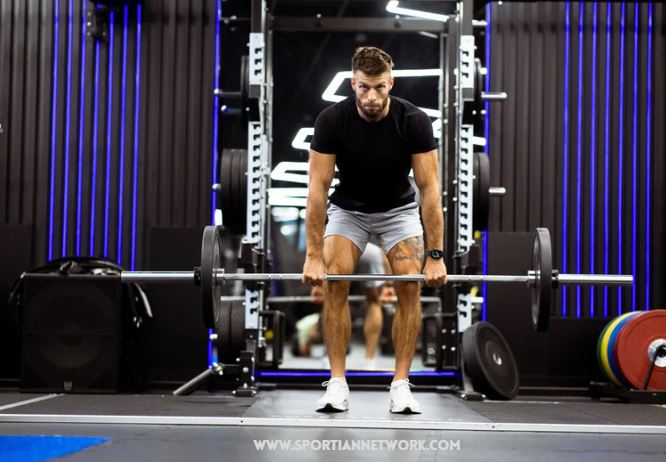
Powerlifters benefit enormously from simbramento. The attempt selection process, the commands, the judging, and the crowd response are all variables that affect performance for athletes who encounter them rarely. Competition-simulation training sessions that replicate meet conditions as precisely as possible are simbramento at the sport-specific level. Powerlifting athletes who train exclusively in a comfortable home gym often underperform their training maxes significantly in competition because they have no simbramento foundation for the meet environment.
Olympic weightlifting technique requires simbramento because the snatch and clean and jerk are technically demanding movements where milliseconds of timing error mean a missed lift. Building automation in these movements to the point where they hold under competition pressure requires deliberate simbramento work at every rung of the pressure ladder across years of training.
Simbramento for Teams
Team sports add a coordination dimension to simbramento that individual sports do not require. Individual athletes must automate their own skills under pressure. Team athletes must automate their own skills while simultaneously coordinating with teammates who are also operating under pressure.
This makes team-level simbramento significantly more complex and significantly more valuable when achieved. A basketball team whose offensive sets execute cleanly in walk-through but dissolve in fourth-quarter situations lacks team-level simbramento. The plays are known. They have not been practiced under sufficient pressure for the coordination to become automatic.
Small-sided competitive games are among the most effective team simbramento tools. Reducing numbers increases individual decision-making demands and creates higher pressure per player than full-sided scrimmages. Half-court basketball drills done with genuine competitive stakes build simbramento efficiently because the compressed space increases decision speed requirements significantly.
Football offensive and defensive unit work done against genuinely competitive opposition at game speed builds simbramento at the unit level. Walk-throughs and controlled scrimmages are valuable for pattern learning. They are not sufficient for simbramento. The pressure must be real enough to consume deliberate processing for the automation transfer to occur.
Common Simbramento Mistakes
Athletes and coaches make predictable errors when attempting simbramento work that limit its effectiveness.
Introducing pressure before the skill is stable enough to survive it is the most damaging mistake. An athlete who cannot execute a skill correctly in isolation will not execute it correctly under pressure. They will execute their errors faster and more automatically. Simbramento applied too early deepens the wrong pattern rather than automating the right one. Always confirm rung-one stability before adding rung-two demands.
Maintaining pressure at a level that produces constant failure provides no simbramento benefit. Failure repetitions strengthen failure pathways. The pressure level should be high enough to create demand but not so high that correct execution becomes impossible. The target is clean execution under meaningful difficulty, not survival under overwhelming difficulty.
Treating simbramento sessions as conditioning sessions misses the point entirely. Simbramento is a skill development method. Fatigue is a tool within it, not the goal. An athlete who is so physically exhausted that skill quality collapses completely is not doing simbramento. They are doing conditioning with skill performance as a casualty.
Skipping the feedback loop after simbramento sessions leaves the athlete without the information needed to identify which rungs need more work. After every simbramento session, honest evaluation of which pressure levels produced clean execution and which produced breakdown should guide the next session’s rung selection.
Building Simbramento Into a Training Week
Simbramento does not require dedicated separate sessions for most athletes. It integrates into existing practice structure through deliberate modification of existing drills.
Take one drill from each training session and add one layer of pressure that was not there previously. A shooting drill done fresh becomes a shooting drill done after ten minutes of hard conditioning. A technical wrestling practice becomes a practice where every position has a competitive consequence. A batting practice session becomes a session where the pitcher has something to win and the hitter has something to lose.
These modifications cost almost no additional time. Over weeks, they build simbramento across the full range of competition-relevant skills rather than only in dedicated pressure sessions.
Calmered development and simbramento work naturally together. Simbramento builds technical automation under pressure. Calmered builds the mental reset capacity that keeps the athlete functional between high-pressure moments. Athletes who develop both are genuinely pressure-resistant rather than merely pressure-tolerant.
Periodization that builds simbramento density in the pre-competition phase produces athletes who arrive at their competitive peak with both physical readiness and pressure-proof technical execution. Early training blocks focus on skill development at lower rungs. Pre-competition blocks shift emphasis toward higher rungs that match the pressure levels the athlete will face in competition.
The athletes who perform exactly like themselves when the stakes are highest are not the ones who handle pressure better. They are the ones who practiced under enough pressure that their performance no longer depends on handling it at all. That is what simbramento, built patiently and progressively, ultimately delivers.