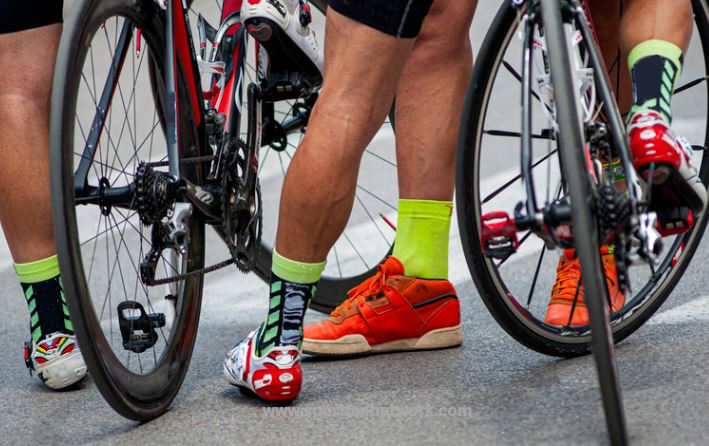
Most cyclists obsess over bikes and ignore shoes. That’s a mistake. The shoe is the only point where your body physically connects to the drivetrain. Get it wrong and you lose power, develop knee pain, and end up shopping again six months later.
This guide covers everything that actually matters before you spend money.
Why Cycling Shoes Are Different From Any Other Footwear
Regular athletic shoes flex when you push. That flex absorbs energy that should be driving the pedal. Cycling shoes have rigid soles that transfer force directly into the crank with almost zero loss. The stiffer the sole, the more efficient each pedal stroke.
They also attach to the pedal through a cleat system. The cleat clicks into the pedal and locks your foot in place, which prevents your foot from sliding and lets you pull up on the backstroke as well as push down. That full pedal circle is where serious gains come from.
If you ride more than two or three hours per week, cycling shoes are not optional equipment. They are a fundamental performance tool.
The Four Main Cycling Shoe Categories
Before anything else, you need to know which type of riding you do. The wrong category shoe will not serve you regardless of how much you spend.
Road Cycling Shoes
Road shoes are built purely for efficiency. They have the stiffest soles in any cycling category, a sleek profile, and almost no traction on the outside. You clip in, you ride, you clip out at the stop. Walking in them is awkward because the cleat protrudes past the sole.
These are the right choice if you ride road bikes or time trial bikes with no intent to hike, trail walk, or do anything other than pedaling.
Mountain Bike Shoes
MTB shoes look more like trail running shoes. They have recessed cleats so the cleat sits flush with the sole, which means you can walk, hike-a-bike, and scramble over terrain without slipping. The soles are still relatively stiff but have rubber lugs for grip off the bike.
If you ride technical trails, do gravel with lots of hike-a-bike sections, or want a shoe that works for mixed terrain, MTB style is the right pick.
Indoor Cycling and Spin Shoes
Spin shoes occupy middle ground. Many commercial spin bikes use the SPD-SL or Look Delta cleat system, so some spin shoes are road-style. Others use the two-bolt SPD system. Before buying any spin shoe, check what pedals your studio or home bike uses. This matters more than anything else in this category.
Gravel Shoes
Gravel shoes split the difference between road and MTB. They have stiffer soles than MTB shoes but more walkability than road shoes. Many use the two-bolt SPD cleat system. They are growing fast in popularity as gravel riding continues to expand, and in 2026 there are more quality options in this category than ever before.
Cleat Systems: The Most Important Decision You Make
The cleat system determines which pedals you can use. You cannot mix and match. Get this right first or you will buy the wrong shoe entirely.
SPD (Two-Bolt)
Shimano’s SPD system is the most versatile cleat on the market. It fits MTB pedals, gravel pedals, many spin bikes, and commuter setups. The two-bolt pattern keeps the cleat recessed in the shoe for walkability. This is the system most beginners and recreational riders should start with because you can actually walk into a coffee shop without shuffling like a penguin.
SPD-SL (Three-Bolt)
SPD-SL is Shimano’s road-specific system. Larger cleat, more contact area, better power transfer. This is what competitive road cyclists and triathletes use. The cleat protrudes, walking is awkward, but the efficiency gain over long rides is real.
Look Keo (Three-Bolt)
Look Keo is the main competitor to SPD-SL for road riding. Many road cyclists have strong preferences between these two systems. The float angle and cleat feel differ slightly, but for most riders the practical difference is minor. Check what your road cycling friends use and what your local shop stocks, because compatibility and support matters.
Speedplay (Four-Bolt)
Speedplay uses a unique four-bolt pattern and a dual-sided entry system. They have very low stack height and are popular with triathletes and time trial riders. They require their own specific cleats and shoes that support four-bolt mounting. Niche but genuinely good for the right rider.
Sole Stiffness: What the Numbers Mean
Many brands now publish a carbon stiffness index or similar rating. The scale varies by brand but the principle is universal. Higher stiffness means more power transfer and less energy loss. It also means less comfort on long climbs or rough terrain.
Entry-level shoes use nylon or composite soles. Mid-range shoes mix carbon fiber reinforcement into the composite. Top-end shoes use full carbon fiber construction. The jump in stiffness from nylon to carbon is significant. The jump from mid-range carbon to top-end full carbon is smaller.
For most recreational cyclists riding two to four hours, a mid-range carbon or reinforced composite sole is more than enough. If you are racing or logging eight-plus hour weeks, full carbon makes sense. Paying top-end prices as a beginner is not a good investment.
Fit: The Part Most People Get Wrong
Cycling shoes fit differently from regular shoes. Your foot should have almost no movement inside the shoe when clipped in. The heel should sit firmly with no lifting. The toes should have a small amount of room but not enough to wiggle aggressively.
Most cycling shoes run narrow compared to regular footwear. Brands like Shimano and Specialized offer wide versions of their popular models. If you have wider feet, seek these out specifically rather than sizing up, because sizing up changes the cleat position relative to your foot.
Foot shape also matters. Some brands build on a more anatomical last that matches natural foot shape. Others use a performance last that narrows toward the front. If a shoe feels wrong in the store, it will feel worse after three hours on the saddle.
Try shoes with the socks you actually ride in. Cycling socks are thin, so wear your normal ones to the shop.
Closure Systems: Velcro, Boa, and Ratchet Buckles
Entry-level shoes use velcro straps. They work but lose tension over time and are harder to adjust while riding.
Ratchet buckles are a step up. More secure, easier to microadjust, longer lasting. Still a solid choice at mid-range price points.
Boa dials are the current standard for serious riders. A small dial clicks the lacing wire tight in precise increments. You can tighten or loosen them with one hand while riding, which is useful on long climbs or when your feet swell during hot rides. Boa systems also hold tension far better than velcro. Most shoes in the $150 to $300 range use at least one Boa dial.
Some shoes mix a Boa dial with a velcro strap or ratchet buckle for a hybrid closure. This works well, particularly on gravel and MTB shoes where you might be getting on and off frequently.
How Much Should You Spend
The cycling shoe market runs from about $60 to over $500. Here is an honest breakdown by tier.
Under $100 covers entry-level nylon sole shoes that work fine for casual riding and spin classes. They are not efficient enough for serious training but they get you clipped in without breaking the bank.
$100 to $180 is where value peaks for most riders. You get reinforced composite or entry-level carbon soles, better closure systems, and improved fit. This tier covers the majority of recreational and club cyclists well.
$180 to $300 brings proper carbon soles, Boa dials, and significantly better construction. Road racers, competitive gravel riders, and anyone putting in serious weekly miles belongs in this range.
Above $300 is professional territory. The gains are real but incremental. Unless you are racing regularly or have very specific fit needs, the extra spend does not change the riding experience as much as marketing suggests.
Cleat Setup and Float
Cleats can be positioned for different amounts of float. Float is the degree to which your heel can rotate before the cleat releases from the pedal.
Zero-float locks your foot in a fixed position. Some riders prefer this for power but it puts stress on the knee if your natural foot angle differs from that fixed position.
Fixed float (around 6 degrees) is the most common starting point. It allows some natural movement while keeping the foot stable.
Wide float (9 to 10 degrees and above) is good for riders with knee issues or those new to cycling. More forgiveness at the cost of a slightly less locked-in feel.
If you have knee problems when riding, check your cleat alignment before you change your bike fit. Many cycling knee issues come from cleats that are misaligned or set with too little float. We have a guide on IT band syndrome that covers the downstream effects of poor lower limb mechanics under repetitive load, and the same principles apply on the bike.
Socks and Insoles: The Overlooked Extras
Most cycling shoes come with thin, flat insoles that do nothing for arch support. If you have moderate to high arches, aftermarket insoles from brands like Superfeet or Specialized BG make a meaningful difference in comfort over long rides.
Cycling-specific socks are thin, breathable, and avoid seams that cause hot spots under load. They are not expensive and they genuinely improve comfort during long sessions.
What to Check Before You Click Buy
Before buying online, confirm the cleat pattern matches your pedals. Road three-bolt and MTB two-bolt are not compatible. Confirm the return policy because fit is everything and online sizing is imprecise. Check whether cleats are included. Many entry-level shoes include them, many mid-range shoes do not.
If you ride outdoors year-round, consider whether the shoe vents will be a problem in winter. Some shoes have more ventilation than others, and cold feet kill long ride enjoyment faster than almost anything else. Overshoe covers solve this but it is worth knowing upfront.
Quick Reference by Rider Type
New to cycling or spin classes: two-bolt SPD compatible shoe, reinforced composite sole, $80 to $140 range, go wider if in doubt about fit.
Road cyclist training three-plus days per week: three-bolt SPD-SL or Look Keo, entry carbon or full carbon sole, Boa closure, $160 to $280 range.
MTB or gravel rider: two-bolt SPD, recessed cleat, rubber lugged sole, Boa or ratchet closure, $120 to $250 range.
Triathlete: single-strap or Boa-only closure for fast transitions, stiff sole, heel loop for quick entry, $180 to $350 range depending on event distance.
Cycling shoes are one of the most performance-relevant purchases a cyclist makes. The right pair reduces knee stress, transfers more power per pedal stroke, and stays comfortable for hours. The wrong pair does the opposite. Know your cleat system, match the shoe to your riding type, and spend appropriately for your current level.
If you are building out your wider training setup alongside cycling, our piece on single leg training covers the unilateral strength work that transfers directly to pedaling efficiency and knee stability on the bike.