Ask most athletes where their power comes from and they will say their legs. Ask a sports scientist and they will say the glutes. Both answers are technically correct, but only one tells the full story.
The gluteus maximus is the largest muscle in the human body. It is also one of the most underused in athletic training. Athletes squat, lunge, and leg press their way through careers without ever truly activating their glutes under sport-specific demands. The result is slower sprint times, weaker jumps, and a higher injury risk across the hips, knees, and lower back.
This guide covers what the glutes actually do in sport, why most training programs miss the mark, and exactly how to build glute strength that transfers to real athletic performance.
What the Glutes Actually Do in Sport
The glutes have three primary functions that matter for athletes. Hip extension, hip abduction, and hip external rotation. Every explosive movement in sport relies on at least one of these, and most rely on all three simultaneously.
When you sprint, the gluteus maximus drives the hip into extension on every stride. The more force it produces, the faster your foot hits the ground and the more power each step generates. When you cut laterally, the gluteus medius stabilizes the pelvis so your knee tracks properly and your body does not collapse inward. When you jump, both muscles work together to load and release energy through the hips in one coordinated burst.
Weak glutes mean the body borrows from somewhere else. The hamstrings overwork. The lower back takes on load it should not carry. The quads dominate movements they were never designed to lead. Over time, those compensations produce injuries that seem unrelated to the glutes but trace directly back to them.
Why Most Athletes Have Weak Glutes
Sitting is the enemy. Most people, including athletes, spend hours per day in a seated position. The hip flexors shorten, the glutes lengthen, and the neural connection between the brain and the glute muscle weakens through disuse. Coaches call this gluteal amnesia. The muscle is there, but the body has forgotten how to recruit it efficiently under load.
The second problem is training selection. Squats and leg presses are quad-dominant movements. They work the glutes to a degree, but the glute never becomes the primary driver. Athletes who only squat and press are building legs that are quad-heavy and glute-light. That imbalance shows up on the field as slower acceleration, weaker lateral movement, and reduced jumping ability.
The third problem is range of motion. The glute maximus reaches peak activation at full hip extension, meaning the hip has to pass through a complete range for the muscle to do its job. Many common exercises cut this range short. Partial squats, shallow lunges, and leg press with limited depth all leave the glute underloaded at exactly the moment it should be working hardest.
The Best Glute Exercises for Athletic Performance
Not all glute exercises are equal for athletes. Some build general strength. Others build the specific type of force production that transfers to sprinting, jumping, and cutting. The best programs include both.
Hip Thrust
The hip thrust is the single most effective exercise for building glute maximus strength through full hip extension. You load a barbell across the hips, shoulders on a bench, feet flat on the floor, and drive the hips up until the body forms a straight line from knees to shoulders.
Research from PubMed consistently shows the hip thrust produces greater glute activation than the squat at comparable loads. For athletes focused on sprint speed and jump height, this makes the hip thrust a priority movement, not an accessory.
Load it progressively. Start with bodyweight to learn the pattern, add a plate, then a barbell. Athletes who can hip thrust 1.5 times their bodyweight for reps have built a serious foundation of posterior chain strength.
Romanian Deadlift
The Romanian deadlift trains the glute through a hip hinge pattern under eccentric load. You lower the bar down the front of the legs by pushing the hips back, feeling a deep stretch through the hamstring and glute, then driving the hips forward to return to standing.
This movement is particularly valuable for sprinters and soccer players because the eccentric loading pattern mirrors the deceleration demands of high-speed running. It also builds the hamstring-glute connection that protects the knee during landing and cutting.
For more on how this movement fits into hamstring and posterior chain training, pro soccer hamstring training methods cover the full picture.
Bulgarian Split Squat
The Bulgarian split squat is a rear-foot-elevated single-leg squat. One foot goes on a bench behind you, the other foot stays forward. You lower into a deep lunge and drive back up through the front heel.
It is one of the hardest lower body exercises you can do with just a pair of dumbbells. It also addresses the left-to-right asymmetry that causes so many athletic injuries. Most athletes have a stronger side and a weaker side. Bilateral squats mask that imbalance. The Bulgarian split squat exposes it and forces both legs to work independently.
The glute of the front leg does the majority of the work when the torso stays upright and the front heel stays grounded. For athletes who want to transfer strength directly to single-leg athletic movements, this exercise is essential.
Glute Bridge with Band
The banded glute bridge is a lower-load option that targets the gluteus medius specifically. You lie on your back, knees bent, feet flat, a resistance band just above the knees. You drive the hips up and push the knees out against the band throughout the movement.
This exercise is valuable as both an activation drill and a training tool. Used at the start of a session, it wakes up the glutes before heavier compound work. Used at the end, it finishes off the medius after the maximus has already been trained.
Athletes who struggle with knee caving during squats and landings almost always have a weak gluteus medius. This exercise directly targets that weakness.
Sled Push and Sled Drag
The sled is one of the most underrated glute training tools in sport. Pushing a loaded sled at a low angle forces the hips into aggressive extension on every step, with the glute maximus working as the primary driver throughout. Dragging the sled backward shifts the demand toward the hip extensors and hamstrings.
Both variations train the glute in a sport-specific context. The movement pattern resembles acceleration mechanics more closely than almost any gym exercise. For team sport athletes who want strength that actually shows up on the field, sled work belongs in the program.
This connects directly to building explosive speed, where hip extension power is the engine behind first-step quickness and top-end acceleration.
Step-Up with Knee Drive
The step-up is often dismissed as too easy. Load it properly and it is anything but. You step onto a box or bench with one foot, drive through the heel to stand up, and bring the opposite knee up to hip height at the top. Lower under control and repeat.
The knee drive at the top forces the standing glute to stabilize the entire body through single-leg hip extension. This is exactly the position the glute is in during the push-off phase of sprinting. Loaded step-ups with a knee drive train that position directly and build the neuromuscular pattern that transfers to faster sprint mechanics.
How to Program Glute Training for Athletes
Glute training works best when it is integrated into the overall strength program rather than treated as a separate add-on. Two dedicated glute-focused sessions per week is enough when the movements are chosen well and loaded progressively.
A practical weekly structure for athletes:
Session one, lower body power focus: Hip thrust as the primary movement, 4 sets of 6 to 8 reps with heavy load. Romanian deadlift, 3 sets of 8 to 10 reps. Sled push, 4 rounds of 20 meters.
Session two, single-leg and stability focus: Bulgarian split squat, 3 sets of 8 to 10 reps per leg. Step-up with knee drive, 3 sets of 10 per leg. Banded glute bridge, 3 sets of 15 reps with a 2-second pause at the top.
Add a glute activation circuit before any sprint or speed session. Five minutes of banded glute bridges, hip hinges, and lateral band walks is enough to switch the glutes on before high-intensity work.
Recovery and the Glutes
The glutes are a large muscle group and they recover well between sessions. But they still need proper attention. Recovery between training sessions matters for every muscle, and the posterior chain is no exception.
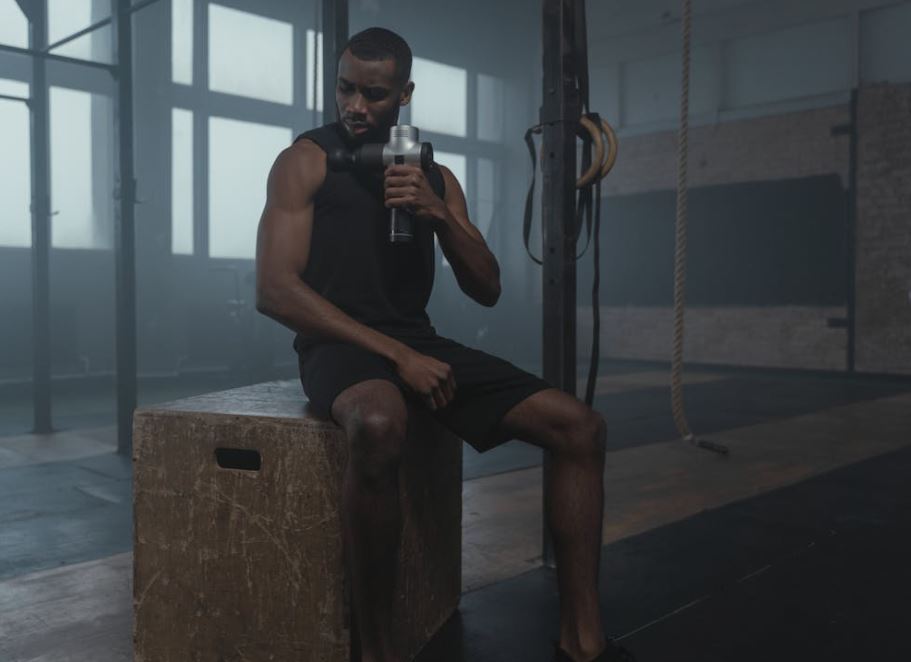
Soft tissue work on the glutes and hip rotators between sessions maintains tissue quality and reduces tightness that can limit range of motion over time. Foam rolling the piriformis and glute med area for two to three minutes after a hard session makes a real difference in how the hips feel the next day.
Mobility work for the hip flexors is equally important. Tight hip flexors inhibit glute activation. Stretching them regularly keeps the glutes free to fire without restriction. Mobility work is the missing piece for most athletes who wonder why their glutes never seem to grow or strengthen despite consistent training.
What Strong Glutes Actually Look Like in Sport
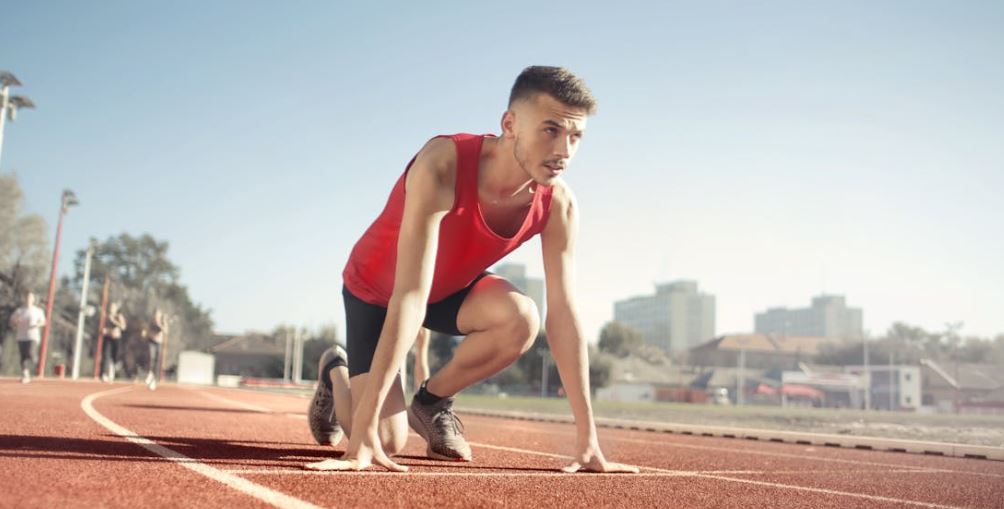
Strong glutes do not just show up in the weight room. They show up in the first three steps off the line. They show up in the landing position after a jump. They show up in the ability to hold a strong lateral defensive stance for the final minutes of a game when everyone else is fading.
Athletes with well-developed glute strength tend to have lower rates of ACL injury, hamstring strain, and lower back pain. They accelerate faster, jump higher, and change direction more efficiently. The glutes are the engine of athletic movement, and training them properly is one of the highest-return investments any serious athlete can make.
Start with the hip thrust. Add the Bulgarian split squat. Program it twice a week and load it progressively. The results will show up everywhere on the field long before they show up in the mirror.