
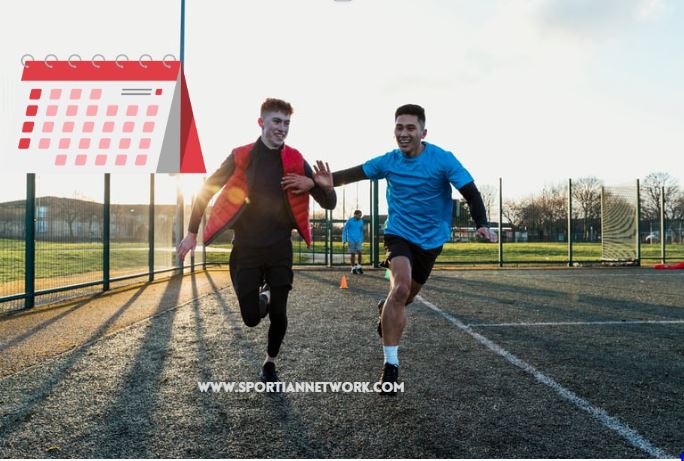
Most athletes waste their off-season. They either do too much too soon and arrive at preseason already beaten up, or they do too little and spend the first month of the season just getting back to where they were. Neither approach builds the athletic qualities that actually move the needle.
Speed and agility are the two qualities that transfer most directly to competitive performance across virtually every sport. They are also the two qualities most athletes develop inefficiently, training them in isolation, without structure, and without a logical progression from one phase to the next.
This six-week blueprint fixes that. It is built for any sport, requires no specialist equipment, and follows the same progressive structure that elite conditioning coaches use to peak athletes for competition.
Why the Off-Season Is the Right Time
Speed and agility development requires a specific set of conditions that the competitive season rarely provides. Full neurological recovery between sessions. Freedom to work on mechanical flaws without match performance suffering. Time to build the strength foundation that speed training sits on.
During the season, athletes train to maintain. In the off-season, athletes train to improve. The distinction matters because genuine speed development, the kind that produces measurable, lasting improvements in sprint times and change-of-direction ability, takes weeks of consistent, progressive work. Six weeks of structured off-season training produces more speed gain than six months of in-season maintenance.
The blueprint below is organized into three two-week phases. Each phase builds directly on the one before it. Skipping ahead does not accelerate results. It undermines the foundation the later phases depend on.
Phase One: Foundation (Weeks 1 and 2)
The first two weeks have one job: prepare the body for the demands that follow.
Most athletes underestimate how much physical preparation speed training actually requires. Sprinting at maximum intensity places enormous stress on the hamstrings, hip flexors, Achilles tendons, and ankle stabilizers. Arriving at that training without adequate preparation is how soft tissue injuries happen in week three of what was supposed to be a six-week program.
Mobility and activation work comes first every session. Ten minutes of dynamic movement preparation before any running. Hip circles, leg swings, ankle rotations, thoracic rotations, and lateral band walks to activate the glutes before they are needed. Mobility work in this phase is not optional preparation. It is the training.
Running volume stays low and intensity stays submaximal. Strides at 70 to 80 percent effort over 30 to 40 meters, with full recovery between repetitions. The goal is not speed. The goal is reinforcing good sprint mechanics while the body adapts to running at pace again. Four sessions per week, three to four sets of four strides per session.
Strength work in weeks one and two focuses on the foundation that speed development requires. Compound exercises including squats, Romanian deadlifts, split squats, and hip thrusts three times per week. Two to three sets of eight to ten repetitions at moderate load. The goal is not maximum strength. It is building the muscular base that plyometric and sprint work will convert into speed.
Hamstring health deserves specific attention in this phase. The hamstrings are the most commonly injured muscle group in speed-dependent sports, and they are the primary decelerator during sprinting. Hamstring-specific exercises including Nordic curls, single-leg Romanian deadlifts, and glute-ham raises build the eccentric strength that protects against strain at high speeds.
Phase Two: Speed and Power Development (Weeks 3 and 4)
The foundation is built. Now the work begins.
Weeks three and four introduce maximum intensity sprint work, plyometric training, and the first agility-specific drills. Intensity increases significantly. Recovery between sessions becomes just as important as the sessions themselves.
Sprint mechanics work is the priority at the start of every running session. Wall drives, A-skips, B-skips, and fall-and-sprint drills reinforce the technical qualities that make sprinting efficient. Heel recovery, forward shin angle at ground contact, arm drive mechanics, and hip extension range all influence sprint speed more than raw power output does. Ten to fifteen minutes of mechanics work before any maximum effort running.
Maximum effort sprints over 10 to 30 meters form the core of speed development in this phase. Short distances allow full acceleration without the fatigue that compromises mechanics in longer efforts. Three to four sets of six repetitions at 95 to 100 percent effort. Rest periods are long, three to four minutes between repetitions. Speed work is neurological, and a tired nervous system does not develop speed. It practices being slow.
Plyometric training converts the strength built in phase one into explosive power. Box jumps, broad jumps, single-leg bounds, and depth drops two sessions per week. Volume stays low in weeks three and four, two to three sets of five to eight repetitions per exercise, because the adaptation being chased is quality of explosive output, not volume of jumping. This directly supports vertical jump development and first-step quickness simultaneously.
Agility introduction in weeks three and four uses simple change-of-direction patterns before adding reactive components. Pro agility shuttles, L-drills, and T-drills performed at maximum effort with full recovery. The emphasis is on deceleration mechanics and ground contact efficiency during direction changes, not just raw turning speed. Poor deceleration mechanics under fatigue are where ankle and knee injuries happen during agility training.
Recovery between sessions needs active management in this phase. Foam rolling versus massage gun protocols after every session. Sleep quality is the single most important recovery variable. Eight to nine hours for athletes in high-intensity training phases is not a luxury. It is a performance requirement.
Phase Three: Sport-Specific Integration (Weeks 5 and 6)
The final two weeks translate physical development into sport-relevant performance.
Generic speed and agility qualities are valuable. Sport-specific speed and agility qualities are what actually show up in matches. The distinction is significant. A soccer midfielder accelerates differently than a basketball point guard. A rugby winger decelerates into a tackle differently than a tennis player recovers to the baseline. Week five and six training accounts for those differences.
Reactive agility replaces pre-programmed drill patterns in this phase. Instead of running a known route, athletes respond to visual or auditory cues that determine which direction to go, replicating the decision-making demands of actual competition. Reactive 5-10-5 shuttles where the direction cue comes at the five-meter mark. Mirror drills where one athlete shadows another’s movements. Random cone patterns where the sequence is called out during the run rather than before it.
Acceleration from sport-specific positions replaces standard standing or falling starts. Accelerating from a defensive stance. Exploding from a squat position. Driving out of a cut. The starting position for a sprint in competition is rarely a clean athletic stance, and training exclusively from clean positions builds a quality that does not fully transfer under match conditions.
Combined speed and agility circuits in the final week integrate everything. A maximum effort sprint into a reactive change of direction into a deceleration and recovery sequence. These circuits train the transitions between speed qualities that competition demands constantly but standard drill work rarely replicates.
Strength maintenance continues through weeks five and six at reduced volume. One to two strength sessions per week, keeping the loads from phase one present without creating fatigue that compromises speed work quality. The goal is to hold the foundation, not build it further.
Weekly Session Structure
A practical weekly schedule across all three phases looks like this.
Monday: Sprint mechanics and maximum effort sprints. Tuesday: Strength training and mobility. Wednesday: Active recovery, light movement, soft tissue work. Thursday: Plyometrics and agility drills. Friday: Strength training. Saturday: Sport-specific speed and agility integration. Sunday: Full rest.
Adjust based on individual recovery capacity. Some athletes handle six training days comfortably. Others need an additional rest day, particularly in weeks three and four when intensity peaks. The blueprint is a framework, not a mandate. Training through inadequate recovery produces injury, not adaptation.
Nutrition and Recovery
Speed development places high demands on the nervous system, not just the muscles. Neurological recovery requires adequate protein, carbohydrate replenishment after training, and consistent sleep quality across the full six weeks.
Protein intake for athletes during a speed development phase should sit at 1.6 to 2.2 grams per kilogram of bodyweight daily. Carbohydrates fuel the high-intensity sprint and plyometric work. Reducing carbohydrate intake during a speed training phase to manage body composition is a trade-off that consistently degrades training quality and slows adaptation.
Hydration is also non-negotiable. Even mild dehydration measurably reduces reaction time and sprint performance, which means undertaking agility and speed work in a dehydrated state trains slower movement patterns than the athlete is actually capable of.
What to Expect After Six Weeks
Realistic expectations matter. Six weeks of well-executed training produces measurable improvements in 10-meter acceleration, change-of-direction speed, and reactive agility. Research consistently supports gains of four to eight percent in sprint performance and significantly larger improvements in agility metrics over training blocks of this length for athletes who start from a non-trained baseline.
Athletes who arrive at preseason having completed this blueprint are not just faster. They are more durable, because the strength and movement quality work in phase one builds the tissue resilience that handles the increased demands of the competitive season. They are more confident, because six weeks of progressive achievement in training transfers directly into competitive self-belief.
Start in the off-season. Follow the progression. Arrive at preseason as a different athlete.