
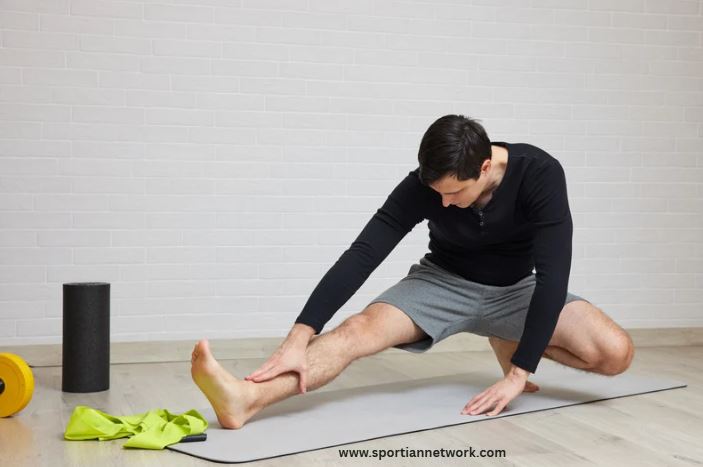
Hamstring injuries are one of the most frustrating things that can happen to an athlete. They come out of nowhere, usually mid-sprint or mid-jump, and they take forever to fully heal. Worse, they keep coming back. Reinjury rates run as high as 22 to 34 percent, meaning nearly one in three athletes who tear or strain a hamstring will do it again.
That number is not bad luck. That number is a training problem.
Hamstring injuries are the most prevalent time-loss injuries in sport, mainly in those characterized by high-intensity and short-term actions, especially accelerations and decelerations during high-speed running. Football, soccer, basketball, rugby, track and field, and pretty much every sport that asks you to move fast carries significant hamstring risk.
But here is what most athletes get wrong. They stretch their hamstrings when they feel tight and call it prevention. Stretching alone does not protect you. Strength does. The right kind of strength, trained the right way, in the right positions.
The five exercises below are backed by research, used in elite sport environments, and target the specific qualities that both keep hamstrings healthy and make them faster. If you are not doing these, you are leaving performance on the table and leaving yourself exposed.
Why Your Hamstrings Are More Likely to Get Hurt Than You Think
Your hamstrings do two things. They bend your knee and they extend your hip. During sprinting, those two actions do not happen at the same time. The hamstrings have to work eccentrically, meaning they lengthen under load, during the late swing phase of your stride, right before your foot hits the ground.
Researchers found that hamstrings stretch to greater lengths and at faster speeds during acceleration from lower running speeds compared to maintaining a constant top speed. This may explain why hamstring strain injuries often occur during acceleration.
That single finding changes how you should think about training your hamstrings. The dangerous moment is not top speed. The dangerous moment is when you go from standing still to sprinting hard. That acceleration phase puts the hamstrings under a violent eccentric load, and if they are not trained for it, they tear.
Most gym-based hamstring work, leg curls, seated machine work, does the opposite of this. It trains the hamstrings under a shortened position at low speed. That has some value but it does not prepare the muscle for the real demands of sport.
Key risk factors, including prior injury history, neuromuscular deficiencies, excessive load, and muscle-tendon architecture, have been identified as contributors to injury prevalence. The exercises below target the neuromuscular and structural side of that equation directly.
What Makes a Hamstring Exercise Actually Useful for Athletes
Before getting into the five exercises, understand the two qualities that separate a useful hamstring exercise from a waste of time.
Eccentric loading. Eccentric means the muscle is lengthening while it produces force. This is the exact thing happening when your hamstring gets hurt. Training eccentrically builds the muscle’s ability to absorb force and resist the kind of violent stretch that causes tears. Eccentric interventions produced fascicle length increases of up to 20 percent and strength gains of 15 to 20 percent. Longer muscle fibers mean more range before the muscle reaches its danger zone. That is exactly what you want.
Hip-dominant loading. Most hamstring injuries happen when the hip is flexed and the knee is near extension, basically the running stride position. Exercises that load the hamstring in a lengthened hip position are more specific to that risk than knee-flexion-only exercises. The more your training resembles the position where injury happens, the better your protection.
Keep both of those qualities in mind as you read through the five exercises. Every one of them earns its place because of those two factors.
Exercise 1: Nordic Hamstring Curl
Why It Is on the List
This is the most studied hamstring injury prevention exercise in the world. The research behind it is overwhelming. Programs based on eccentric strength, mainly by means of the Nordic hamstring exercise, are those which reported greater effectiveness in reducing hamstring injury rates across sports.
Researchers observed significant changes in the biceps femoris long head muscle following nine weeks of Nordic hamstring exercises. Sarcomeres were getting added end-to-end to existing sarcomeres. This growth pattern lengthens the muscle fibers and could decrease the amount of stretch each sarcomere experiences, protecting muscle fibers from overstretching. Some muscle areas experienced sarcomere increases up to 49 percent.
That structural change is not cosmetic. Longer muscle fibers directly reduce injury risk during high-speed running.
How to Do It
Kneel on a pad with your feet anchored by a partner, a bar, or a Nordic bench. Keep your body in a straight line from knee to shoulder throughout. Slowly fall forward, resisting the drop with your hamstrings for as long as you can. When you can no longer control the descent, catch yourself with your hands and use them to push back to the starting position. The eccentric phase, the fall, is where all the benefit lives. Do not rush it.
Start with three sets of three to five reps. That sounds low. Nordic curls are genuinely hard and most athletes underestimate the demand on the first session. Build volume gradually over weeks.
The Critical Detail Most Athletes Miss
While Nordic hamstring exercises are often used by coaches in short blocks, such as three to four weeks during pre-season, this may not be enough to induce the necessary adaptations observed. Consistent training is essential to maintain these muscle changes.
This is not a pre-season exercise. Do it year-round, even at reduced frequency in-season. The muscle fiber adaptations begin declining after just three weeks without training.
Exercise 2: Romanian Deadlift
Why It Is on the List
The Romanian deadlift is the best entry-level hip-dominant hamstring exercise for athletes who are not yet ready for the intensity of Nordic curls or who want to build a strength base under high-volume training. It loads the hamstrings in a lengthened position through a long range of motion, trains both legs simultaneously, and allows you to add load progressively in a way that produces real strength gains.
It also directly addresses one of the major biomechanical risk factors for hamstring injury. Excessive anterior pelvic tilt during sprinting increases tension on the hamstrings and raises injury risk. The RDL trains hip hinge mechanics and posterior chain engagement that corrects that pattern over time. Imbalances in lumbar-pelvic mechanisms, such as pelvic asymmetry and excessive anterior tilt, can lead to increased tension on the hamstrings and affect the hamstring unit during functional activities.
How to Do It
Stand with feet hip-width apart and hold a barbell or dumbbells in front of your thighs. Push your hips back while keeping a slight bend in your knees. Lower the weight by hinging at the hip, not bending at the waist. Keep your back flat and your core tight throughout. Lower until you feel a strong stretch through your hamstrings, usually around mid-shin level depending on your flexibility. Drive your hips forward to return to standing.
Three to four sets of six to eight reps with enough weight to feel genuinely challenged. Control the lowering phase. The eccentric portion is where the protective benefit comes from.
If your squat mechanics need work alongside your posterior chain development, fixing those habits early pays dividends across multiple exercises, not just the deadlift.
Exercise 3: Single-Leg Romanian Deadlift
Why It Is on the List
The single-leg Romanian deadlift takes everything good about the standard RDL and adds two critical elements: unilateral loading and stability demand. Most sports happen on one leg at a time. Sprinting, cutting, jumping, and landing all ask one leg to absorb and produce force independently. Training bilaterally only misses a major part of the picture.
This exercise also catches and corrects strength imbalances between legs that often go unnoticed in bilateral training. Many athletes who feel symmetrical discover significant side-to-side differences the first time they do this exercise seriously. Those imbalances are a known injury risk factor. Find them and fix them before they become a strain.
How to Do It
Stand on one leg with a slight bend in that knee. Hold a dumbbell or kettlebell in the opposite hand from your standing leg. Hinge at the hip, extending your free leg behind you as your torso drops toward the floor. Keep your hips level. Do not let the free hip rotate open. Lower until you feel a deep stretch in the standing leg’s hamstring. Drive through the hip to return upright.
Start without weight until your balance and hip stability are solid. Then add load slowly. Three sets of eight to ten reps per side. Focus on control and hip levelness over load.
The hip stability work here connects directly to building the explosive speed that translates onto the field. Weak single-leg mechanics slow you down and expose you to injury at the same time.
Exercise 4: Glute-Ham Raise
Why It Is on the List
The glute-ham raise is the most complete hamstring exercise available for athletes who have built a base with the previous three movements. It is one of the few exercises that loads the hamstrings through both of their primary functions simultaneously: knee flexion and hip extension. That dual-function loading closely mirrors what the hamstrings actually do during sprinting.
Eccentric training can be achieved using exercises such as the straight-leg deadlift and Nordic hamstring exercises. At the completion of this phase the athlete should have full strength upon manual muscle testing throughout the range of motion. The glute-ham raise sits in a similar category and is frequently used in high-level strength and conditioning programs for field sport athletes precisely because it bridges the gap between isolated eccentric work and functional movement.
How to Do It
You need a glute-ham developer bench for this one. Secure your feet and position your knees just behind the pad. Start with your body parallel to the floor. Engage your glutes and hamstrings to curl your body upward until you are vertical. Lower back to the starting position with control.
The lowering phase is the most important part. Fight gravity the entire way down. Most athletes will need a band around the machine for assistance when they start. That is fine. Reduce assistance as you get stronger.
Two to three sets of six to ten reps works well for most athletes. Add a slow tempo on the way down, three to four seconds, to maximize the eccentric stimulus.
Exercise 5: Razor Curl
Why It Is on the List
The razor curl is the least well-known exercise on this list and it deserves more attention. The most common eccentric protocols in elite injury prevention programs included Nordic Hamstring Exercises, Razor Curls, and hip-dominant exercises, typically performed one to two times per week.
The razor curl loads the hamstrings in a more hip-flexed position than the Nordic curl, which more closely mirrors the position where sprinting injuries actually occur. That specificity makes it a valuable complement to the Nordic curl rather than a replacement for it.
Sprint exposure, when combined with eccentric strengthening and biomechanical optimisation, led to injury reductions ranging from 56 to 94 percent. The razor curl is part of that eccentric strengthening approach.
How to Do It
Set up like a Nordic curl with your feet anchored. Instead of keeping your hips fully extended, allow a slight forward lean at the hips before you begin falling. This positions the hamstrings at a longer starting length, which is where injury most often occurs. Fall forward slowly, resisting with your hamstrings. Catch yourself with your hands and push back to start.
The adjustment is subtle but the muscular demand shifts significantly compared to a standard Nordic curl. Athletes who can do Nordic curls with control are ready to progress to razor curls. Start at the same volume you use for Nordics and progress from there.
How to Build These Into Your Training Week
You do not need all five exercises in every session. That is a fast way to fry your hamstrings and not show up to practice ready to perform.
A practical weekly structure looks like this. On your heaviest strength day, pair Romanian deadlifts with either glute-ham raises or Nordic curls. On a second strength day, use single-leg RDLs and razor curls. That gives you consistent eccentric hamstring work twice per week without accumulating excessive fatigue.
Keep total weekly volume between 30 and 50 working reps across all hamstring exercises during your off-season build. Reduce that by about 30 percent during your competitive season to maintain the adaptations without adding unnecessary recovery burden. Recovery quality between sessions matters a lot here because hamstrings need more time to recover from eccentric loading than most athletes expect.
Use these exercises to complement a complete athletic strength program. A well-rounded approach to strength training that includes hamstring-specific work is what separates athletes who stay healthy across a long season from the ones who spend half the year rehabbing.
The Warning Sign Most Athletes Ignore
There is one signal that almost always shows up before a hamstring strain. Tightness and fatigue in the back of the thigh that does not go away with a normal warm-up. It is not a tear yet. It is the muscle telling you it is close to its limit.
Most athletes push through it. Some of them pay for that decision on the next sprint.
When that warning sign shows up, pull back on sprint volume for two or three days, stay consistent with your eccentric hamstring work at a reduced intensity, and prioritize your foam rolling and tissue work to clear up any residual tension. Catching that window early saves weeks of forced rest later.
The athletes with the best hamstring health are not the ones who got lucky. They built strong, long, well-trained hamstrings through consistent work and learned to read what their body was telling them before it became an injury.
Finally
Hamstring injuries wreck seasons. They are also largely preventable with the right training.
The five exercises above, Nordic curls, Romanian deadlifts, single-leg RDLs, glute-ham raises, and razor curls, cover the full range of what your hamstrings need. Eccentric strength at long muscle lengths. Hip-dominant loading. Single-leg stability. Bilateral power. All of it trained consistently throughout the year, not just in pre-season.
Exercise is a key strategy to reduce the hamstring injury incidence, with programs based on eccentric strength producing the greatest effectiveness.
The research is clear. The exercises are proven. The only question is whether you prioritize this work or keep hoping your hamstrings hold up through another hard season on their own.
Build them. Protect them. Run faster because of it.