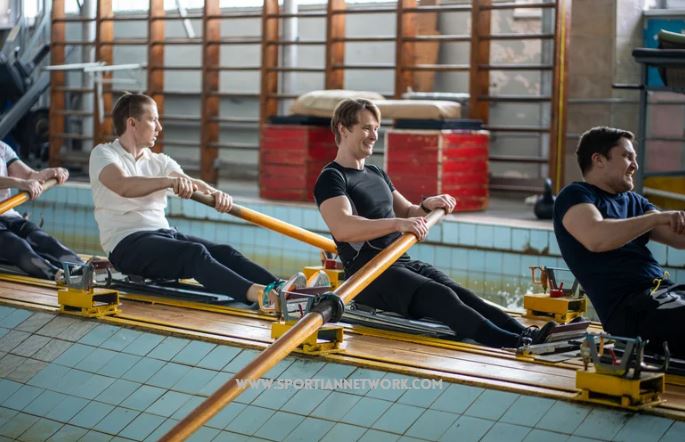
Most people walk past the rowing machine at the gym. They glance at it, find it intimidating, and head to the treadmill instead. That is one of the most expensive mistakes in fitness.
The rowing machine works your legs, back, arms, and core simultaneously. It builds real cardiovascular endurance without the joint stress of running. It burns serious calories. And unlike most gym cardio equipment, it actually makes you stronger while it conditions you.
This guide is everything a beginner needs to start rowing properly, avoid the mistakes that cause injuries, and build a training habit that lasts.
Why Rowing Deserves Your Full Attention
Rowing is one of the few forms of exercise that qualifies as both strength and cardio at the same time. A single stroke engages roughly 86% of the muscles in your body. Your legs drive the movement. Your core transfers the power. Your arms and back finish the pull. Nothing gets to sit out.
That full-body demand is exactly why the World Rowing Federation classifies competitive rowing as one of the most physically demanding sports on the planet. The fitness version is scaled back but the fundamental demand remains. Your whole body works every single stroke.
For beginners, that creates an important reality check. Rowing feels hard from day one not because you are unfit but because your body is figuring out how to coordinate multiple muscle groups simultaneously. That coordination takes a few weeks to develop. Once it clicks, rowing becomes one of the most efficient training tools you will ever use.
Understanding the Rowing Machine Before You Sit Down
The most common rowing machine in gyms worldwide is made by Concept2. It uses air resistance, meaning the harder you pull, the more resistance you feel. There is no fixed weight to adjust. You control the intensity through your effort.
The damper lever on the side of the flywheel runs from 1 to 10. Beginners often set it high thinking harder resistance means better workout. That is wrong. The damper controls how much air enters the flywheel, not your workout intensity. A setting between 3 and 5 gives most beginners the best combination of feel and efficiency. Think of it like gear selection on a bike, not a difficulty setting.
The monitor tracks your split time, which is shown as the time it takes to row 500 meters. This is the most important metric on the screen. A split of 2:30/500m means you are rowing at a pace that would cover 500 meters in two and a half minutes. Lower numbers mean faster pace. Track your split. That number tells you everything about how your session is going.
The Four Phases of a Rowing Stroke
Getting the stroke right early saves beginners months of bad habits and potential injury. The rowing stroke has four distinct phases and the sequence matters completely.
The Catch is the starting position. You sit at the front of the slide with your knees bent, shins vertical, arms extended forward, and body leaning slightly forward from the hips. Your weight is balanced and your core is engaged before the stroke begins.
The Drive is where the power comes from. This is the most misunderstood phase. You do not pull with your arms first. You push with your legs. Drive your feet into the footplates and let your legs straighten. As your legs near full extension, your body begins to lean back slightly from the hips. Only then do your arms pull the handle toward your lower chest. The sequence is always legs, then body, then arms.
The Finish is the end of the drive. Your legs are straight, your body is leaned back about ten degrees, and the handle is pulled to your lower ribcage with elbows drawn back. Hold this position for half a second. It should feel strong and controlled, not rushed.
The Recovery is the return to the catch. You reverse the sequence: arms extend first, body rocks forward, then knees bend as you slide back to the front. The recovery is slower than the drive. A good ratio is roughly 1:2, meaning you spend twice as long on the recovery as the drive. This is where breathing resets and where your muscles prepare for the next stroke.
That sequence, legs then body then arms on the drive, arms then body then legs on the recovery, is the foundation everything else builds on. Get it right before worrying about power or speed.
The Most Common Beginner Mistakes
Pulling with the arms first. Almost every new rower does this. They grab the handle and immediately pull with their upper body. The legs generate far more power than the arms. If your arms are pulling while your legs are still bent, you are leaving most of your available power unused.
Hunching the back. Rowing with a rounded lower back puts serious strain on the lumbar spine. Your back should stay flat and neutral throughout the stroke. Think tall spine, not curved spine. Core training is directly connected to this. A strong, stable core is what keeps your posture honest when fatigue sets in after ten minutes.
Rowing too fast. Beginners often row at a very high stroke rate, taking 30 or more strokes per minute with very little power on each one. This looks like effort but produces poor results and exhausts you quickly. A better approach for beginners is a lower stroke rate, around 20 to 24 strokes per minute, with maximum force on every drive. Slow down to get more out of each stroke.
Ignoring the recovery phase. The glide back to the catch is not dead time. It is where your cardiovascular system catches up, your breathing resets, and your muscles prepare. Rushing the recovery collapses the rhythm of the stroke and raises your heart rate unnecessarily.
Gripping the handle too tight. A death grip on the handle creates tension in the forearms and shoulders that bleeds into the rest of the stroke. Hold the handle firmly but not tight. Your fingers should do the work, not your palms.
Your First Four Weeks: A Realistic Progression
Most beginners make the mistake of going too hard, too fast. Rowing uses muscles, particularly in the lower back and glutes, that most people have never loaded this way. Building up gradually protects you and actually produces better fitness results.
Week 1: Form First
Row for 10 to 15 minutes per session at a very easy pace. Your only goal is getting the stroke sequence right. Aim for a stroke rate of 18 to 20 strokes per minute. You should be able to hold a conversation the entire time. Do two or three sessions across the week with at least one rest day between them.
Week 2: Build the Base
Extend sessions to 15 to 20 minutes. Keep the pace easy. Start paying attention to your split time. Pick a split you can hold consistently for the full session and lock into it. Consistency matters more than speed at this stage.
Week 3: Introduce Intervals
Add one interval session per week. Try 4 rounds of 4 minutes rowing hard followed by 2 minutes of very easy rowing. The hard effort should feel challenging but not maximal. Two sessions remain easy and steady. This is the beginning of Zone 2 training, which is the aerobic foundation that all serious endurance athletes build on.
Week 4: Add Volume
Your easy sessions reach 25 to 30 minutes. Your interval session gains one more round. Total weekly rowing time is now 60 to 80 minutes spread across three or four sessions. Your form should feel more automatic at this point and your split times will have improved noticeably from week one.
Breathing on the Rowing Machine
Breathing and rowing have a natural rhythm and learning it early makes a significant difference to how sustainable your sessions feel.
The basic pattern is exhale on the drive, inhale on the recovery. As you push through the drive and pull the handle in, breathe out. As you glide back toward the catch, breathe in. This matches your respiratory effort to your physical output and stops you holding your breath under load.
At higher intensities, some rowers use a two-stroke breathing pattern: exhale over two drives and inhale over two recoveries. This is something to experiment with as your fitness develops. The most important rule is to never hold your breath during the drive. It spikes blood pressure and accelerates fatigue.
The deeper skill of breathing techniques that improve athletic performance applies directly to rowing. Controlled breathing is not just about oxygen delivery. It is about managing effort and staying calm when your heart rate climbs.
What Rowing Does to Your Body
The physical changes that come from consistent rowing happen quickly for beginners. This is partly because of the full-body demand and partly because rowing trains the cardiovascular system and the muscular system at the same time.
Your hamstrings and glutes drive every stroke. They will feel it in the early weeks. Hamstring strength and health directly determines how much power you can produce and how long you stay injury-free on the machine.
Your lower back does significant stabilizing work throughout each stroke. Keeping that area strong and mobile protects you. Mobility work particularly hip flexor and thoracic spine mobility, keeps your posture clean as fatigue accumulates.
Cardiovascularly, rowing is extremely efficient at developing aerobic base. A 20-minute steady row at a conversational pace does more for your aerobic system than most people realize. Research available through PubMed consistently shows full-body aerobic exercise producing superior cardiovascular adaptations compared to single-limb activities like cycling or running.
Fueling and Recovery for Rowers
Rowing depletes energy fast. A hard 20-minute session can burn 250 to 350 calories depending on your body weight and intensity. For beginners doing three or four sessions a week, nutrition timing starts to matter quickly.
Understanding when you eat relative to training directly affects how well you perform and recover. A light meal or snack containing carbohydrates 60 to 90 minutes before rowing provides the glycogen your muscles need for sustained effort. After rowing, protein supports muscle repair. Our guide on how much protein athletes actually need gives evidence-based numbers rather than the inflated figures common in fitness marketing.
Hydration matters from the first session. Rowing produces significant sweat even in air-conditioned gyms because of the full-body muscular demand. Drink water before, during if sessions exceed 30 minutes, and after. Our hydration science guide for athletes covers exactly what your body needs and when.
Recovery between sessions is where adaptation actually happens. Why recovery outweighs training is a concept most beginners resist until their progress stalls or a niggle develops. For new rowers hitting muscles they have never used this way, 48 hours between hard sessions is a minimum, not a suggestion.
For rowers adding supplements to support their training, the evidence-based guide to recovery supplements covers what actually has research behind it and what to skip.
Building a Long-Term Rowing Program
The four-week progression above gets you started. Where you go after that depends on your goals.
For general fitness and health, three sessions per week combining steady state rows with one interval session per week is enough to see and maintain significant results. The principles of periodization apply to rowing just as they do to any other training. Varying intensity across the week prevents adaptation plateaus and keeps the body developing.
For rowers who want to measure progress, the Concept2 online logbook tracks every session you record on the monitor. The global ranking system lets you compare your times across age groups and body weight categories. Setting a target for a 2,000 meter time test in twelve weeks gives you something to train toward and makes the daily sessions feel purposeful.
For athletes using rowing as supplementary training alongside another sport, rowing is particularly effective as active recovery. A 20-minute easy row the day after a hard training session increases blood flow to fatigued muscles without adding meaningful stress. This is one reason elite endurance athletes across sports regularly include rowing as a cross-training tool.
Equipment to Know Before You Start
You do not need to own a rowing machine to get started. Every well-equipped gym has one. If you decide to buy for home training, the Concept2 RowErg remains the global standard. It is the machine used at the World Rowing Championships and by virtually every serious rower worldwide.
Wear fitted clothing. Loose fabric around the seat area can catch on the slide and disrupt your stroke. Flat, firm-soled shoes work better than thick-cushioned running shoes because they allow better force transfer through the footplates.
Beginners with soft hands will develop calluses on the palms over the first few weeks. This is normal. Rowing gloves are available but most serious rowers skip them once the skin hardens. Chalk or athletic tape on problem spots handles the transition period.
Rowing Compared to Other Cardio
People often ask whether rowing is better than running or cycling. The honest answer is that it depends on what you are training for and what your body can handle.
Rowing wins on full-body muscle engagement. No other common cardio machine works as many muscles simultaneously. It also wins on joint impact. The rowing stroke is low impact compared to running, making it a genuine option for people with knee or hip problems who cannot run comfortably.
Running wins on simplicity and accessibility. You can run anywhere. Cycling wins on volume, since the lower intensity demand per session allows longer sessions without the same muscular fatigue.
For most beginners, rowing is the fastest route to simultaneous cardiovascular and muscular development. The full-body demand means you are building fitness on multiple fronts in every session. That efficiency is hard to match.
The Mental Side of Rowing
This deserves its own section because it catches most beginners off guard.
Rowing is relentless. There is no coasting, no downhill section, no rest built into the stroke. Every stroke requires your whole body. In the early weeks, before fitness develops, even 10 minutes of steady rowing demands real mental commitment.
That discomfort is not a problem. It is the point. Managing effort over a sustained period, staying in rhythm when your lungs are working hard, not quitting when the monitor shows you still have eight minutes left. These are skills that transfer far beyond the gym.
Mental performance training is as real as physical training. Rowing builds it automatically because every session asks something of your willingness to push through discomfort. Over weeks and months, that capacity grows and you carry it into everything else you do.
Start simple. Sit down. Learn the stroke. Row easy for two weeks before you push anything hard. The machine will humble you at first. Let it. Every great rower started exactly where you are now.