Ask most athletes to point to their posterior chain and they will hesitate. Ask them what exercises they did last week and you will almost certainly hear bench press, squats, curls, and maybe some shoulder work. The muscles running down the back of their body, which are the ones that actually drive most athletic performance, barely got touched.
That is one of the most common and costly mistakes in athletic training. And it happens across every sport, every level, and every gym.
What the Posterior Chain Actually Is
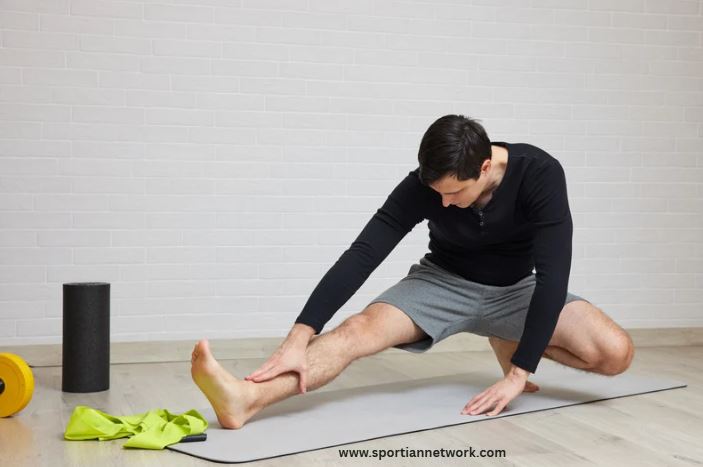
The posterior chain is the group of muscles running along the back side of your body. It starts at the base of your skull and runs all the way down to your heels. The key players are the glutes, hamstrings, spinal erectors, and calves. Supporting cast members include the lats, rear deltoids, and the smaller muscles around the hip and spine that most people never think about.
Together, these muscles handle hip extension, knee flexion, spinal stability, and force transfer between your upper and lower body. In other words, they are responsible for most of the athletic movements that actually matter. Sprinting, jumping, cutting, throwing, tackling, lifting. All of them rely heavily on a strong and well-trained posterior chain.
The front of your body, which includes your quads, chest, and biceps, gets all the attention. However, the back of your body is where real athletic power comes from.
Why Most Athletes Have a Weak Posterior Chain
The answer is partly cultural and partly structural. We live in a world that loads the front of the body constantly. Sitting down shortens and weakens the hip flexors while switching off the glutes. Pushing movements dominate most gym programs because they are the ones people can see in the mirror. And the exercises that genuinely develop the posterior chain, like Romanian deadlifts, Nordic curls, and hip thrusts, are less instinctively satisfying than a heavy bench press.
The result is that most athletes have overdeveloped quads and underdeveloped hamstrings and glutes. That imbalance does not just limit performance. It creates injury risk at almost every joint in the lower body, as the muscles that are supposed to decelerate and stabilize movement simply cannot keep up with the load being placed on them.
If you have ever pulled a hamstring, felt chronic lower back tightness, or struggled with knee pain during heavy training, there is a reasonable chance posterior chain weakness played a role.
The Athletic Case for Posterior Chain Training
Speed is the clearest example of why this matters. When you sprint, your glutes and hamstrings are doing the majority of the work propelling you forward. Your quads help with knee drive, but the hip extension that actually moves you through space comes from the back of your body. Research consistently shows that stronger glutes and hamstrings correlate directly with faster sprint times and higher jump heights.
Injury prevention is the second major reason. The hamstrings work as dynamic stabilizers of the knee joint, particularly during deceleration and cutting movements. When they are strong and responsive, they help protect the ACL from the kind of forces that cause tears. The full breakdown of ACL tear prevention exercises covers this connection in detail, but the short version is that posterior chain strength is one of the best investments you can make in long-term knee health.
Power transfer is the third reason. In almost every throwing, striking, and lifting movement, force travels from the ground up through the posterior chain before it reaches your arms. A weak link in that chain means you are losing power somewhere between your feet and your hands. Strengthening the posterior chain tightens that chain and makes every upper body movement more explosive and efficient.
The Best Posterior Chain Exercises for Athletes
These are not obscure movements. Most of them are well-established exercises that simply do not get enough attention in typical training programs. The goal is to understand why each one belongs in your routine, not just what it does mechanically.
Romanian Deadlift
The Romanian deadlift is the foundational hamstring and glute developer for athletes. Unlike a conventional deadlift which starts from the floor, the RDL starts from the top and emphasizes the eccentric loading of the hamstrings as you hinge forward. That eccentric strength is exactly what protects the hamstring during high-speed running when the muscle has to absorb force while lengthening.
Hold a barbell or dumbbells at hip height. Hinge forward at the hips while keeping your back flat and a slight bend in your knees. Lower until you feel a deep stretch through your hamstrings, typically just below knee height. Drive your hips forward to return to standing. The movement should feel like your hamstrings are doing all the work.
Start with three sets of eight to ten reps. Focus on feeling the hamstrings load on the way down rather than just moving the weight.
Hip Thrust
The hip thrust is the most direct glute developer available to athletes. It places the glute in a shortened position at full hip extension, which is the position where most sprinting and jumping power is generated. That specificity makes it one of the most valuable exercises in a sport performance program.
Set your upper back against a bench with your feet flat on the floor and a barbell across your hips. Drive through your heels and extend your hips toward the ceiling. Squeeze your glutes hard at the top. Lower slowly and repeat. Do not let your lower back arch at the top. The movement comes from your hips, not your spine.
Three sets of ten to twelve reps with a two-second hold at the top will develop glute strength quickly. The glute training guide on this site goes deeper into programming hip thrusts for different sporting demands.
Nordic Hamstring Curl
This is one of the most powerful injury prevention exercises in sports science and one of the most neglected. Research on Nordic curls is remarkably consistent. Athletes who regularly perform them significantly reduce their hamstring strain risk compared to those who do not. That is a strong statement, but the evidence backs it up.
Kneel on a padded surface and anchor your feet under something sturdy, like a barbell or a partner holding your ankles. From kneeling upright, lower your body toward the floor as slowly as possible by resisting with your hamstrings. When you can no longer resist, catch yourself with your hands and push back up. Over time, the goal is to lower all the way under control and pull yourself back up using only your hamstrings.
Start with just three to five reps per set and build from there. The exercise is more demanding than it looks and soreness after the first few sessions is significant.
The detailed breakdown of hamstring exercises for injury prevention covers Nordic curls and their progressions thoroughly if you want a deeper look at programming them.
Conventional Deadlift
The deadlift is the king of posterior chain exercises and one of the most transferable movements in all of athletic training. When performed correctly, it loads the entire back of the body simultaneously while also demanding core stability, grip strength, and full body coordination.
For athletes, the deadlift is particularly valuable because it mimics the hip hinge pattern used in sprinting, jumping, and tackling. Getting strong in this movement translates directly to the field. The deadlift form checklist is the best starting point if you are learning the lift or cleaning up your technique.
Three to five sets of three to six reps at a challenging weight builds the kind of raw posterior chain strength that carries over to everything else.
Glute-Ham Raise
The glute-ham raise is a step up from the Nordic curl that trains both hip extension and knee flexion in a single movement. It demands more from the entire posterior chain simultaneously than almost any other exercise. Most commercial gyms have a glute-ham developer machine, but the movement can also be approximated on a lat pulldown machine or with a partner holding your feet.
From a face-down position with your feet anchored, extend your hips and flex your knees simultaneously to raise your body. Lower slowly and with control. Two to three sets of six to ten reps is plenty, especially when you are first adding this to your program.
Back Extension
The back extension targets the spinal erectors and glutes in a way that most exercises miss. Strong spinal erectors protect your lower back under load and maintain posture during long competitive efforts. Use a back extension bench, hold a small plate to your chest for added resistance, and focus on squeezing your glutes and lower back at the top of each rep.
Three sets of twelve to fifteen reps works well as accessory work following heavier deadlift or hinge movements.
How to Structure Posterior Chain Work in Your Week
The most practical approach for most athletes is to dedicate at least one training session per week primarily to posterior chain development while including lighter posterior chain work as accessory movements in other sessions.
A typical week might look like this. On your main lower body day, lead with deadlifts or Romanian deadlifts as your primary movement. Follow with Nordic curls or leg curls, then hip thrusts, and finish with back extensions. On a second lower body day focused more on quads and overall leg strength, add glute-ham raises or single leg RDLs as accessory work to maintain posterior chain volume without overloading it.
Two sessions per week that include meaningful posterior chain work is the minimum for athletes who want to see real improvements in speed, power, and injury resilience. Three sessions per week accelerates the process considerably.
Conclusion
A strong posterior chain does not just make you a better athlete in the gym. It changes how you move on the field, court, or track. Your acceleration improves because your glutes and hamstrings produce more force per stride. Your deceleration becomes more controlled because your hamstrings can absorb higher loads. Your lower back stops complaining because your spinal erectors and glutes are sharing the work they were always meant to share.
This is not a niche training consideration. It is the foundation of athletic movement, and every serious program needs to treat it that way. Start giving the back of your body the same attention you give the front, and the results will show up faster than you expect.