Pickleball is no longer just a retirement community pastime. It is the fastest-growing sport in the United States, with over 36 million players and a competitive scene that now includes professional leagues, nationally televised matches, and college programs. Athletes from tennis, badminton, and racquet sports are crossing over. Complete beginners are picking it up in a single afternoon.
If you have been curious but do not know where to start, this guide covers everything. The court, the gear, the rules, the strokes, and the drills that actually build your game fast.
What Pickleball Actually Is
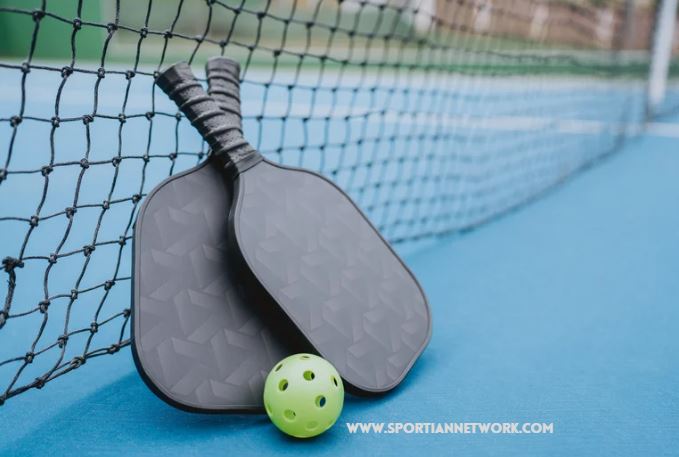
Pickleball is a paddle sport played on a court roughly the size of a doubles badminton court, 20 feet wide by 44 feet long. The net is 36 inches at the sidelines and 34 inches at the center, slightly lower than a tennis net. You play with a solid paddle and a perforated plastic ball, similar to a wiffle ball.
Games go to 11 points, win by 2, and you can only score when your team is serving. Matches are typically best of three games. It can be played as singles or doubles, though doubles is by far the most common format and the one most beginners start with.
The sport pulls from tennis, badminton, and ping-pong. If you have played any of those, you will recognize elements immediately. If you have not, the learning curve is still gentle. Most beginners are rallying within their first session.
The Court and the Kitchen: Understanding the Layout
The most important zone on a pickleball court is the non-volley zone. Everyone calls it the kitchen. It extends seven feet from the net on both sides. You cannot volley the ball, hit it in the air without letting it bounce, while standing in the kitchen or touching the kitchen line.
This rule fundamentally shapes how pickleball is played. Unlike tennis, where players often crash the net and smash volleys, pickleball requires patience. The kitchen forces players to engage from a distance until the right ball arrives.
The service areas sit behind the kitchen on each side. The baseline is the back boundary. Most strategic play in doubles happens at the kitchen line, where both teams try to establish position and force errors with soft, precise shots.
Understanding the kitchen is more important than any stroke technique when you are starting out. It changes your instincts immediately.
The Gear You Actually Need
Pickleball does not require a large equipment investment to start. Here is what matters.
The Paddle. This is your most important piece of gear. Paddles range from beginner composite models around $40 to professional graphite and carbon fiber paddles above $200. For beginners, a midweight composite paddle in the $50 to $100 range is the smart choice. It gives you enough feel to develop touch without punishing your wallet before you know if you love the sport.
Paddle thickness matters more than most beginners realize. Thicker cores, 16mm and above, provide more control and a larger sweet spot. Thinner cores are more powerful but less forgiving. Start with a thicker core paddle while your technique develops.
The Ball. Outdoor balls are harder with smaller holes and designed for wind resistance. Indoor balls are softer with larger holes and suit gym floors better. Most beginners start outdoors. Buy a sleeve of three outdoor balls to practice with.
Footwear. This is where most beginners make a costly mistake. Do not play pickleball in running shoes. Running shoes are designed for forward motion and have heel cushioning that destabilizes lateral movement. Pickleball involves constant lateral shuffling, quick stops, and direction changes. Court shoes designed for tennis or pickleball-specific shoes provide the lateral support and flat sole your ankles need.
Choosing the right footwear for court sports follows many of the same principles as choosing running shoes. Fit, surface compatibility, and movement pattern support all matter more than brand aesthetics.
Optional but useful. Pickleball gloves improve grip in hot or sweaty conditions. A dedicated pickleball bag keeps paddles protected. Knee sleeves are popular among players over 40 who are returning to court sports after a break.
The Basic Rules Every Beginner Must Know
The full rulebook has nuance, but these are the rules that govern 95 percent of your early games.
The two-bounce rule. When the ball is served, the receiving team must let it bounce before returning it. Then the serving team must also let the return bounce before hitting it. After those two bounces, both teams can volley or let the ball bounce as they choose. This rule prevents serve-and-volley dominance and creates longer rallies.
Kitchen rules. No volleying while standing in the kitchen or on the kitchen line. You can enter the kitchen to hit a ball that has bounced in it. You just cannot volley from there. This catches beginners constantly in the first few sessions. Stand two to three feet behind the kitchen line as a default position.
Service rules. Serves must be hit underhand with the paddle below the wrist and below the waist at contact. The ball must clear the kitchen and land in the diagonal service box. Serves that land in the kitchen are faults.
Scoring. Only the serving side scores. Games go to 11, win by 2. In doubles, before serving, you announce three numbers: the serving team’s score, the receiving team’s score, and whether you are the first or second server on your team. The first server of each game starts as server two to prevent early scoring advantages.
Faults. Hitting the ball out of bounds, into the net, volleying from the kitchen, or violating the two-bounce rule are all faults. A fault during your serve means the other server on your team serves next. Lose both servers and the serve passes to the other team.
The Four Core Shots to Learn First
Do not try to learn every shot in pickleball before you can execute these four consistently.
The Serve. Aim deep into the service box, toward the baseline. A deep serve pushes your opponent back and limits their ability to attack the return. Keep it reliable over fancy. Consistency beats power on the serve at beginner level.
The Return of Serve. Return deep, ideally back toward the baseline of the serving team. Then immediately move forward toward the kitchen line. The return-and-advance is the single most important pattern in doubles pickleball. The team at the kitchen wins most rallies.
The Third Shot Drop. This is the hardest beginner shot but the most important to learn early. After the serving team’s opponent returns the serve, the serving team hits a soft, arcing shot that drops into the kitchen. This neutralizes the opponent’s position at the net and allows the serving team to move forward safely. This shot separates intermediate players from beginners more than any other.
The Dink. A soft, controlled shot hit from near the kitchen that lands in the opponent’s kitchen. Dinking is the heart of pickleball strategy. Long dink rallies are common at every level. Patience and placement matter far more than power here. New players who try to hit hard out of dink rallies make errors. The player who stays patient and waits for the right ball to attack usually wins the point.
Movement and Footwork: What Most Beginners Skip
Pickleball looks deceptively easy from the sideline. Then you play and realize how much ground you cover and how quickly you need to change direction.
Good footwork starts with the ready position. Feet shoulder-width apart, slight forward lean, weight on the balls of your feet, paddle up in front of your body. This position lets you move in any direction without a wasted first step.
Split-step before your opponent hits. A small hop that lands just as your opponent makes contact. This gets your weight forward and ready to push off in any direction. Tennis players know this instinctively. Beginners who skip it are always a half-step late.
Lateral shuffling is your primary movement pattern at the kitchen line. Do not cross your feet while defending at the net. Stay low and slide. Crossed feet in lateral movement lead to stumbles, missed shots, and ankle injuries.
The quick lateral demands of pickleball make ankle and knee stability important. Mobility work focused on the hips and ankles improves your court coverage significantly and reduces injury risk from the repeated cutting and stopping the sport demands.
Building Fitness for Pickleball
Pickleball is more physically demanding than it looks. A recreational doubles game is moderate intensity. Competitive singles is genuinely taxing. The sport involves repeated short sprints, lunges, lateral bounds, and overhead reaches.
The physical qualities that most directly improve your pickleball game are lateral quickness, core stability, shoulder mobility, and grip endurance.
Core training is particularly relevant. Every dink, drive, and overhead requires rotational force transfer through your midline. A weak core means inconsistent shot power and fatigue-related errors late in a match.
Grip strength matters more than beginners expect. Long sessions on the court create forearm fatigue that degrades paddle control. Building grip endurance is a direct investment in shot consistency.
The overhead smash and high volleys load the shoulder in ways casual players are not always prepared for. The rotator cuff muscles, specifically the external rotators, need to be strong and mobile to handle repeated overhead work without irritation. Shoulder-specific mobility and upper body training protects the joint and improves overhead power.
How to Get Better Faster
The single fastest way to improve at pickleball is not drilling alone. It is playing with people who are better than you and watching what they do.
That said, here are the practices that accelerate skill development for beginners specifically.
Dink practice. Stand at the kitchen line with a partner and dink back and forth. No driving. No smashing. Just controlled, low, soft shots into the kitchen. Do this for 10 minutes at the start of every session. Your touch will improve faster than any other drill.
Third shot drop repetitions. Have a partner feed balls from the kitchen while you practice the drop from the baseline. Get comfortable with the arc and the soft hands required. This one shot changes your game entirely.
Serve and return consistency. Rally with a partner focusing purely on deep, consistent serves and returns. No winners. Just depth and direction control. Unforced errors from bad serves and returns lose more beginner games than any tactical failure.
Watch competitive pickleball. The Association of Pickleball Professionals streams matches online. Watching how professionals use the kitchen, set up attacks from dinks, and move as a doubles unit accelerates your understanding of the game far faster than reading rules.
Injury Prevention for New Pickleball Players
Pickleball has a specific injury profile. The most common injuries for beginners are Achilles tendon strains, knee pain, shoulder impingement, and what players call pickleball elbow, a lateral epicondylitis condition similar to tennis elbow from repetitive paddle impact.
Most of these injuries are preventable with proper warm-up, appropriate footwear, and not jumping from zero to five hours of court time in a week. Start with two to three sessions per week of 60 to 90 minutes. Let your tendons adapt to the new movement demands before increasing volume.
Dynamic warm-up before every session. Calf raises, leg swings, lateral shuffles, shoulder circles, and wrist rotations take five minutes and meaningfully reduce soft tissue injury risk.
Recovery between sessions matters for pickleball players just as it does for traditional athletes. Sore forearms, tight calves, and fatigued shoulders all need time and proper nutrition to repair. Do not treat pickleball as a low-stakes activity just because it looks gentle from the outside.
Final Word
Pickleball rewards patience, placement, and smart positioning over raw athleticism. That makes it one of the most accessible sports for beginners while keeping enough tactical depth to challenge experienced athletes for years.
Start with the right paddle and court shoes. Learn the kitchen rules before anything else. Master the dink and the third shot drop early. Build your footwork and court fitness alongside your stroke mechanics. And find a community to play with because pickleball, more than most sports, is social by nature.
The court is waiting. The learning curve is gentle. The addiction is real.