
Let me be upfront about something. When I first came across the term Nova Scola, I did a double take. It sounds like the name of a European soccer club or maybe a Latin phrase your high school teacher threw at you to sound impressive. But once you dig into what it actually means and what it represents in today’s sports and fitness world, you start to realize this concept is quietly becoming one of the more important conversations happening in youth athletics right now.
Nova Scola, translated loosely, means “new school.” And that translation is almost too perfect, because that’s basically what it is. It’s a framework, a movement, and increasingly a digital trend that brings structured athletic development directly into educational institutions, not as a side activity squeezed between classes, but as a deliberate, celebrated, and data-informed part of school life.
Think of it as a sports gala or athletic development program built into the bones of a school. The idea blends academics with physical performance, promotes regular competition, tracks student athletic growth, and ultimately tries to build the kind of well-rounded student that coaches, colleges, and frankly the world are starting to demand.
So Where Did Nova Scola Come From?
The honest answer is that Nova Scola as a named concept is new, but the philosophy behind it has been bubbling under the surface of sports education for years. Youth athletic burnout is a real problem in America. The American Academy of Pediatrics has flagged it repeatedly, noting that early sport specialization and pressure-heavy environments are pushing kids away from physical activity entirely by the time they reach high school.
At the same time, we’ve seen a surge in fitness technology, sports analytics tools, and performance tracking apps making their way into schools and youth programs. What Nova Scola represents is the organized convergence of all of that. It’s the answer to the question: what happens when you stop treating school sports like an afterthought and start treating them like a structured, measurable, and joyful part of education?
The “digital” angle is important here too. Nova Scola’s rise as a trend is closely tied to how schools and coaches are now using platforms, apps, and data to monitor student athletic development in ways that were once reserved for elite professional teams. Wearables, performance dashboards, and digital competition records are moving into middle school gyms and high school athletic departments. That technological backbone is a big part of what separates this modern concept from the old “field day” mentality of decades past.
What a Nova Scola Program Actually Looks Like
Picture this. A school in suburban Ohio rolls out a semester-long athletic development program that runs alongside regular academics. Students are assessed early in the semester for baseline fitness markers: speed, agility, endurance, strength, coordination. Not to rank them or shame them, but to understand where they are and build from there.
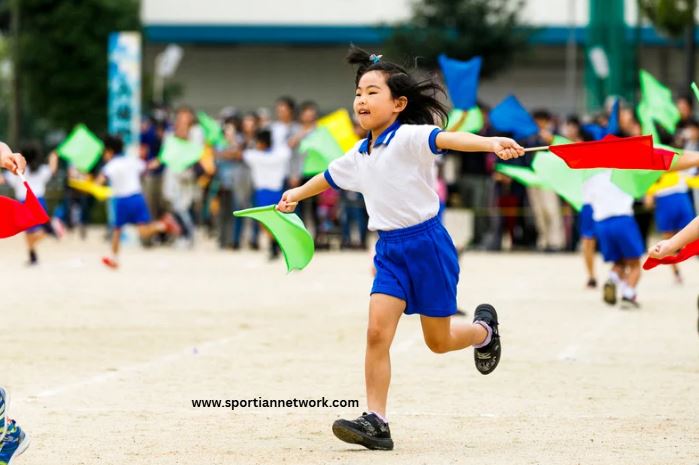
From that point, the program blends regular physical education with structured training sessions, inter-class competitions, team sports, and individual athletic challenges. Progress is tracked digitally, and students can actually see themselves improving over weeks and months. Teachers, coaches, and parents are all looped in. At the end of the semester, there’s a sports gala, a real event, where students compete, celebrate, and showcase what they’ve built.
That’s the Nova Scola experience. It’s not just gym class with better branding. It’s a structured system that gives athletic development the same intentionality and rigor that schools already apply to math or reading.
For students who are serious about sports, it gives them an environment to grow without the pressure of hyper-specialized travel teams. For students who have never thought of themselves as “athletes,” it offers an entry point that isn’t about winning but about building. That inclusivity is one of the most underrated pieces of the whole concept. Programs that follow Nova Scola principles often report higher participation rates in physical activity simply because the barrier to entry is lower and the culture feels less intimidating.
The Science Behind Why This Works
There’s plenty of research backing up the core idea here. The CDC has consistently shown that students who are physically active tend to perform better academically, have better attendance, and show stronger mental health outcomes. Regular physical activity in school is not a distraction from learning. It supports it.
But Nova Scola goes further than just “more gym time.” The structured, progressive nature of these programs taps into what sports scientists call long-term athletic development (LTAD), a model that emphasizes building physical literacy in young athletes through age-appropriate training, variety of movement, and gradual increases in intensity. When a school program is designed around these principles, kids don’t just get fitter. They develop coordination, spatial awareness, resilience, and the ability to push through discomfort. Those are life skills, not just athletic ones.
One of the things I find genuinely compelling about the Nova Scola model is how it treats recovery and rest as part of the program rather than an absence of it. Schools that have adopted athletic development frameworks are increasingly incorporating proper recovery protocols into their schedules, teaching students that rest days and mobility work are not signs of weakness but essential components of progress.
Strength, Speed, and Skills: The Physical Curriculum
One of the most interesting aspects of a well-designed Nova Scola program is how it handles the physical curriculum. Rather than defaulting to whatever sport is in season or whatever the PE teacher happens to know best, these programs tend to build out a structured rotation that covers multiple athletic domains.
Strength training is a big piece of it. The old myth that kids shouldn’t lift weights has been thoroughly debunked by sports medicine research, and schools embracing Nova Scola principles are introducing age-appropriate resistance training with proper instruction. Teaching a freshman the difference between a hip hinge and a squat is genuinely useful, whether they end up on the football field or behind a desk for the rest of their lives. Learning the most important strength exercises for athletes early creates a foundation that pays dividends for decades.
Speed and agility work is also central to most programs. Not because every student is going to become a sprinter, but because developing fast-twitch muscle fibers, reaction time, and movement efficiency has broad athletic and neurological benefits. Building explosive speed is no longer just a topic for varsity coaches. It’s becoming part of the general athletic literacy that Nova Scola programs aim to teach all students.
Then there’s the stuff that often gets overlooked, like core stability, mobility, and injury prevention. Schools that build these into their programs see fewer overuse injuries, which is a massive problem in youth sports today. Teaching a student how to properly brace their core, maintain joint mobility, and move without compensation patterns is the kind of foundational work that protects them for years.
The Digital Layer: Data, Tracking, and Performance Platforms
This is where Nova Scola really earns its reputation as a modern, digital-first concept. The days of a coach eyeballing a kid and deciding they’re “kind of fast” are giving way to something more sophisticated. Schools adopting this model are increasingly using apps and platforms to track athletic performance data over time, which does something powerful: it gives students ownership of their development.
When a 14-year-old can log into a dashboard and see that their 40-yard dash time dropped by two-tenths of a second over the last eight weeks, or that their pull-up count went from 3 to 9, something clicks. Progress becomes visible and tangible. That visibility is enormously motivating. It also allows coaches and PE teachers to spot plateaus, identify students who might be overtrained, and tailor programming to individual needs in a way that traditional gym class never could.
The sports analytics world has been moving in this direction for professional teams for years, and now those same principles are trickling down to the school level. Some platforms specifically designed for team and individual performance tracking are finding a new audience in educational institutions building out Nova Scola-style programs.
Interestingly, this data-driven approach also connects to the broader trend of gamification in sports and fitness. When athletic progress is tracked, visible, and shareable in a positive way, it starts to feel a bit like leveling up. That overlap between sports culture and digital culture is exactly why Nova Scola is resonating with younger generations who have grown up on performance metrics, leaderboards, and digital feedback loops.
The Sports Gala: Why Competition Matters
Every great Nova Scola program builds toward something. And that something is the sports gala, which is arguably the most human element of the entire concept. Not everything can be tracked on a dashboard. Some things have to be felt. The experience of competing in front of your school, your family, and your peers, of putting to the test everything you’ve worked on over a semester, is irreplaceable.
But here’s what separates a Nova Scola gala from a traditional sports day. The competition is not just for the star athletes. Because the program has tracked progress rather than absolute performance, a student who went from being unable to run a mile without stopping to completing one in 10 minutes is celebrated just as meaningfully as the kid who broke the school record. The emphasis is on individual growth, not just who wins the race.
That reframing matters a lot. Research from positive sports psychology consistently shows that when young athletes compete in environments that emphasize improvement over winning, they are more likely to continue participating in physical activity long-term. They develop a healthier relationship with competition, one that’s about testing yourself rather than beating everyone else.
The social and emotional dimensions of the gala are also significant. Students who have trained together, pushed each other, and navigated the challenges of a semester-long program have built something real. That sense of shared effort and community is something schools have always tried to cultivate, and Nova Scola gives it a physical, memorable expression.
What Schools Are Getting Right, and Where They’re Falling Short
Not every school that tries to implement a Nova Scola-style program gets it right, and it’s worth being honest about where things can go sideways. The most common failure mode is treating the program like an enhanced gym class without actually investing in the training, coaching expertise, or technology that makes it work.
A Nova Scola program needs qualified coaches or PE teachers who understand athletic development principles, not just someone who played sports in college and figures they can improvise. The physical literacy component, teaching students proper movement mechanics, exercise form, and sport-specific skills, requires real expertise. Without it, you end up with kids doing exercises incorrectly, increasing injury risk, and getting none of the developmental benefits the program promises.
Schools also need to be thoughtful about inclusivity. Programs that only track elite athletic performance or that unconsciously favor students who are already athletic will alienate the students who need this kind of structured physical development the most. The best Nova Scola programs are intentionally designed to be accessible to students across a wide range of physical abilities and prior athletic experience.
Finally, the digital component needs to be implemented with care. Data is a tool, not a report card. Using performance tracking in ways that humiliate or demotivate students defeats the entire purpose. When schools get this right, the data becomes empowering. When they get it wrong, it just adds another metric for students to feel bad about.
Nova Scola and the Future of Youth Athletics in America
Zoom out a bit, and you can see that Nova Scola fits into a larger story about how America is rethinking youth sports. The old model, where kids specialize early in one sport, grind through travel team schedules, and either make it or burn out by 16, is producing diminishing returns. More families are questioning it. More coaches are questioning it. Even the NCAA has published research highlighting the risks of early specialization and the benefits of athletic variety in developing well-rounded, injury-resistant athletes.
Nova Scola offers a compelling alternative. By building athletic development into the school experience itself, it democratizes access to quality sports training. You don’t need to pay for an elite club team or travel hundreds of miles for tournaments to get meaningful athletic development. You can get it at your school, during the school day, as part of a program that also values your education and your overall growth as a person.
There’s also a mental health dimension here that shouldn’t be underestimated. Teen mental health in America is in crisis. Regular physical activity, structured social environments, achievable goals, and meaningful competition are all things that research links to improved mental health outcomes for adolescents. A well-run Nova Scola program delivers all of those things in a package that feels relevant and exciting to today’s students.
For coaches and athletic directors thinking about how to build or improve their programs, the principles behind Nova Scola are worth studying. The emphasis on long-term development over short-term results, the integration of technology, the celebration of individual progress, and the community built around the sports gala are not just nice ideas. They are evidence-based approaches that produce better athletes, healthier students, and more sustainable sports cultures.
What Comes Next
Nova Scola is still a young concept in the digital sports and fitness conversation. It doesn’t yet have the institutional backing or widespread recognition of something like the SHAPE America standards for physical education, but it’s gaining traction in exactly the communities where these ideas tend to take hold first: forward-thinking schools, progressive athletic programs, and sports educators who are dissatisfied with the status quo.
What’s exciting about this moment is that the tools to make Nova Scola a reality are more accessible than ever. Performance tracking technology has gotten cheaper and easier to use. There is more research available on youth athletic development than at any point in history. And there is a growing cultural appetite for sports programs that are inclusive, data-informed, and genuinely educational.
If you’re a parent, a coach, a PE teacher, or a school administrator, the question worth sitting with is this: are your students getting athletic development that will actually serve them for life? Or are they just going through the motions until the bell rings? Nova Scola is, basically, a loud and well-reasoned argument that we can do a lot better. And based on everything the research tells us about movement, learning, and human development, it’s an argument that’s pretty hard to ignore.
Also worth reading:
Why Mobility Work Is the Missing Piece in Most Athletic Training Programs
The Best Morning Habits of Professional Athletes You Can Copy Tomorrow
Core Training for Athletes: Beyond Crunches and Planks