Everyone who walks into a Muay Thai gym for the first time has the same experience. They watch the class, think it looks manageable, then spend the next three days unable to walk down stairs properly.
Muay Thai is brutal in the best possible way. It is one of the most complete striking systems ever developed. It builds fitness, discipline, and real combat skill simultaneously. But the first few months have a learning curve that most beginner guides gloss over entirely.
This guide covers what those guides skip. The stuff nobody tells you before you show up.
What Is Muay Thai
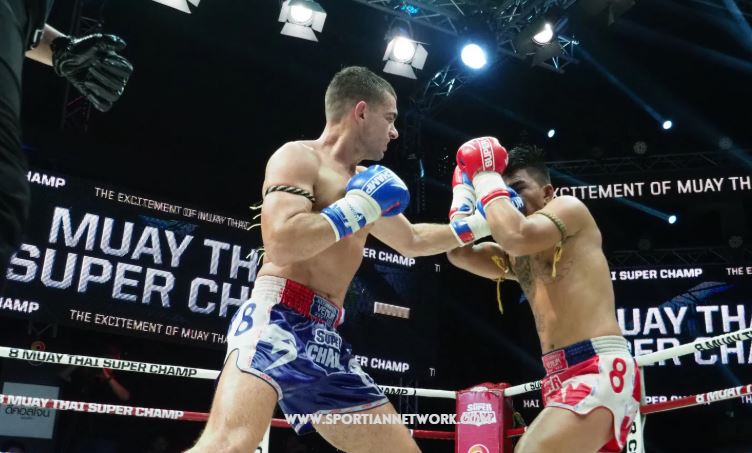
Muay Thai is the national sport of Thailand. It is a striking art that uses eight weapons: fists, elbows, knees, and shins. That is why it is called the Art of Eight Limbs. Western boxing uses two weapons. Kickboxing typically uses four. Muay Thai uses all eight, plus clinch work that makes it the most complete stand-up combat sport in the world.
It is not just a gym fitness trend. Muay Thai has a continuous competitive history stretching back centuries. It is the primary striking base for most professional MMA fighters. Every serious combat sports gym in the world teaches some version of it.
When you train Muay Thai, you are learning a complete system. Footwork, distance management, striking mechanics, defensive technique, and the clinch. Each element builds on the others. That is why it takes time. And that is why it is worth it.
The Thing Nobody Tells You About Your Shins
Your shins will hurt. A lot. For weeks.
This is the part every beginner guide skips. Kicking in Muay Thai means striking with your shin, not your foot. The shin is one of the densest bones in the body, but it still needs to be conditioned through repeated impact before it stops hurting.
The first time you kick a heavy bag hard, the sensation is somewhere between a deep bruise and a bone ache. The first time you spar and check a kick shin-on-shin, you will briefly question every life decision you have ever made.
This is normal. It is not injury. It is adaptation. Over weeks of consistent training, the nerve endings in the shin desensitize and the bone itself becomes denser from repeated low-level impact stress. Thai fighters condition their shins by rolling glass bottles along the bone, kicking banana trees, and accumulating years of bag and pad work. You do not need to do any of that. Just train consistently and let time do the work.
Ice after hard sessions. Keep training. The shin pain that makes beginners quit in week two becomes irrelevant by month two.
What a Real Beginner Class Looks Like
Most Muay Thai gyms structure beginner classes the same way. Understanding the format before you arrive reduces the anxiety of walking in for the first time.
You start with a warm-up. Jump rope is universal in Muay Thai gyms. If you cannot jump rope, learn. It is the single best coordination and footwork warm-up for striking sports and every serious gym uses it. Expect five to ten minutes of rope work at the start of most sessions.
Shadow boxing follows. Moving around alone, throwing combinations in the air. This is where you practice footwork, head movement, and technique without resistance. Beginners feel awkward here at first. Everyone does. Keep moving and watch what more experienced students do.
Pad work is the core of every Muay Thai session. You pair with a partner or trainer who holds Thai pads, and you throw combinations as called. This is where technique gets built. A good pad holder makes you better. A great trainer on the pads is worth more than any YouTube tutorial series.
Bag work follows pads. Heavy bags for power development. Banana bags for kicking. Speed bags for timing. Most gyms cycle through equipment so you get variety.
Class ends with conditioning. Sit-ups, push-ups, squats, sometimes bodyweight circuits. Muay Thai conditioning is integrated into every session, not separated from it.
Sparring is usually reserved for students with at least two to three months of experience. Do not show up expecting to spar on day one. Any gym that throws total beginners into hard sparring immediately is not a good gym.
The Four Strikes You Learn First
Muay Thai has a complete striking system but the foundation is built on four primary weapons. Master these before worrying about anything else.
The Jab. A straight punch from your lead hand. Fast, light, used to measure distance and set up heavier strikes. In Muay Thai the jab is used differently than in boxing. It is more of a range finder and distraction tool than a primary power weapon. Still essential. Everything flows from it.
The Cross. A straight power punch from your rear hand. This is your primary hand weapon. Full hip and shoulder rotation drives it. Beginners throw the cross with their arm only. The power comes from the entire body rotating through the punch.
The Teep. The front kick. Arguably the most important technique in Muay Thai for beginners to develop. The teep is your long-range control weapon. It keeps opponents at distance, disrupts their rhythm, and scores points. Drive the heel of your foot into your opponent’s midsection or hip. Push them away. Learn to teep early and use it constantly.
The Roundhouse Kick. The signature weapon of Muay Thai. Unlike karate or taekwondo kicks that use the foot, the Muay Thai roundhouse lands with the shin across the opponent’s thigh, body, or head. The technique involves a full hip rotation, a slight lean away from the kick, and the trailing arm swinging in the opposite direction for balance and power. It takes months to develop real power in this kick. Focus on technique first. Power follows mechanics.
Stance, Footwork, and Why Most Beginners Get This Wrong
The Muay Thai stance is upright, square, and high. This surprises people who come from boxing backgrounds where a bladed, low stance is standard. Muay Thai’s upright stance is designed to defend against kicks, knees, and elbows as well as punches. A boxing stance leaves your lead leg exposed to leg kicks.
Stand with feet roughly shoulder-width apart. Lead foot pointing slightly inward. Weight distributed evenly between both feet. Hands up protecting the jaw and temples. Chin slightly tucked. This position lets you throw any weapon and defend against any weapon.
Footwork in Muay Thai is simpler than in boxing but equally important. Move on the balls of your feet. Step-drag rather than crossing your feet. If you move forward, your lead foot steps first. If you move back, your rear foot moves first. Never cross your feet while moving. Crossed feet leave you unable to generate power or defend quickly.
The biggest beginner mistake in stance is dropping the hands after throwing strikes. Throw. Return. Hands come back up immediately. Every time. Without exception. Mental discipline under physical stress is trained here the same way it is trained in any high-performance sport. The habit of returning your guard is built through thousands of repetitions until it is automatic.
The Clinch: Muay Thai’s Secret Weapon
Most beginner guides dedicate two sentences to the clinch. It deserves far more.
The clinch is where Muay Thai separates itself from every other striking art. When two fighters close distance, rather than breaking apart as in boxing, Muay Thai allows continued fighting in the clinch position. Knees to the body and thighs. Elbows. Trips and sweeps. All of it happens in close range.
For beginners, the clinch feels chaotic and confusing. That is fine. Start by learning the basic neck tie position. Both arms go over your opponent’s shoulders, hands clasped behind their neck. From here you can pull their posture down and drive knees into the body.
Clinch work is genuinely exhausting. The grip strength, neck strength, and core stability required to fight in the clinch are different from anything you have trained before. Grip strength development outside the gym directly transfers here. Farmers carries, towel pull-ups, and plate pinches all build the hand and forearm endurance that the clinch demands.
Spend time drilling clinch entries and basic knee techniques from the first month. Most beginner programs leave clinch work until later. The gyms that teach it early develop better all-round fighters.
Equipment You Actually Need
Do not spend a fortune before your first month. Do not show up with nothing either. Here is the honest list.
Hand wraps. Non-negotiable. Every session, every time, before gloves go on. Wraps protect the small bones in your hands, stabilize the wrist, and keep your knuckles from splitting open on bag work. Buy two sets of 180-inch cotton wraps. Learn to wrap properly from your trainer on day one. YouTube tutorials are fine for reference but a trainer showing you in person is faster.
Boxing gloves. 14oz to 16oz for bag and pad work. 16oz for sparring. Do not buy cheap gloves. Your hands are inside them taking impact on every session. Fairtex, Twins Special, Top King, and Yokkao are the trusted Muay Thai specific brands. Budget $60 to $120 for a quality pair. They will last years if you maintain them.
Shin guards. Essential for sparring. Not needed for bag work. Buy them before you start any contact sparring. Same brands as gloves. Medium thickness for beginners.
Mouthguard. As soon as any contact is involved. A boil-and-bite guard from a sports store is fine to start. Get a custom fitted one if you train seriously.
Shorts. Traditional Muay Thai shorts are short, wide cut, and allow full hip mobility for kicking. Training in regular gym shorts restricts movement. A pair of authentic Thai shorts costs $20 to $40. Buy them early. They matter for technique.
Skipping rope. Get your own. Every gym has ropes but having your own means you can practice outside the gym. Speed ropes with ball bearings are the standard. Avoid the thick, heavy vinyl ropes.
The Fitness Reality of Muay Thai Training
Muay Thai training is among the most demanding in any sport. A serious session burns 600 to 900 calories per hour depending on intensity. Your cardiovascular system, muscular endurance, and coordination are all stressed simultaneously.
The first month is a shock. Your calves will ache from constant movement on the balls of your feet. Your hip flexors will be sore from kicking. Your shoulders will fatigue from holding your guard up for rounds. Your core will be worked from every strike and defensive movement.
This is not a warning to scare you off. It is context so you are not alarmed when every muscle you forgot you had reminds you of its existence the day after your first week.
Recovery is critical in the early months of Muay Thai training. Your body is adapting to movement patterns, impact loads, and training volumes it has never experienced. Sleep, protein intake, and active recovery between sessions determine how quickly you adapt and how much you enjoy the process.
Protein requirements for athletes in contact sports training four or more sessions per week sit at the higher end of recommendations. Muscle repair from striking impact and the general training load demand consistent protein across the day.
Three sessions per week is the right starting frequency. Enough to build skill and adaptation. Not so much that you are perpetually destroyed before you have built a base.
Sparring: The Rules That Keep You Safe and Learning
Sparring is where Muay Thai becomes real. It is also where beginners get hurt unnecessarily when gyms do not have a proper culture around it.
Good sparring is not fighting. It is cooperative problem solving at controlled intensity. You learn more from light technical sparring where both partners are exploring techniques than from hard sparring where you are both trying to win.
Rules for beginner sparring that protect you and help you improve faster. Keep power at 30 to 50 percent. Speed can be higher but power stays controlled. Call out techniques you want to practice so your partner can set them up. If you get rocked, take a knee. There is no shame in it. No amateur sparring is worth an injury that keeps you out of the gym for weeks.
Ego is the most dangerous thing in a sparring session. The mental side of athletic performance applies directly here. Athletes who can manage their ego, accept being hit, and stay technically focused in sparring improve faster than those who turn every round into a war.
Tap if you are caught in a clinch throw or a position you cannot escape. No one learns anything from a partner who refuses to acknowledge being caught.
Choosing the Right Gym
This matters more than any other decision you make in Muay Thai. A good gym accelerates everything. A bad gym teaches bad habits and damages your body.
What to look for. Authentic Muay Thai curriculum, not just kickboxing with a Thai branding. Experienced trainers who have competed or trained in Thailand. A structured beginner program separate from advanced students. A positive sparring culture where beginners are protected, not used as punching bags by more experienced students.
The International Federation of Muaythai Associations lists affiliated gyms globally. Starting with an affiliated gym gives you some assurance of curriculum standards.
Visit before you commit. Watch a class. Ask how they handle beginners in sparring. A gym that is proud of its culture will welcome the question. One that dismisses it is telling you something important.
What Progress Actually Looks Like
Beginners often expect to feel competent within a few weeks. The reality is different and worth understanding honestly.
Month one: survival. You are learning to wrap your hands, hold your guard, move your feet, and throw basic strikes without falling over. Everything feels wrong. That is accurate. You are building entirely new motor patterns from scratch.
Month two to three: recognition. Techniques start feeling less foreign. Your cardio improves enough that you can actually think during class instead of just surviving it. You start seeing patterns in pad combinations.
Month four to six: foundation. You have a real jab, a real cross, a working teep, and a roundhouse kick with actual force behind it. You can spar lightly without panicking. This is when most people fall in love with the sport.
Year one: you are a genuine beginner. Not an advanced student. Not ready for competition unless the gym specifically trains competitors. But you have a real skill set and the fitness to back it up.
The athletes who stick through the uncomfortable first months consistently describe Muay Thai as one of the most transformative things they have ever committed to. The ones who quit in month one never find out why.
Final Word
Muay Thai is not a fitness class with Thai branding. It is a complete combat system with a centuries-old competitive tradition and a training culture that demands respect, consistency, and genuine humility.
Your shins will hurt. Your ego will take hits before your body does. The rope will catch your feet more times than you count. The clinch will feel like chaos for longer than you expect.
None of that matters. What matters is that you show up to the next class. Then the one after that. The gym will do the rest.