
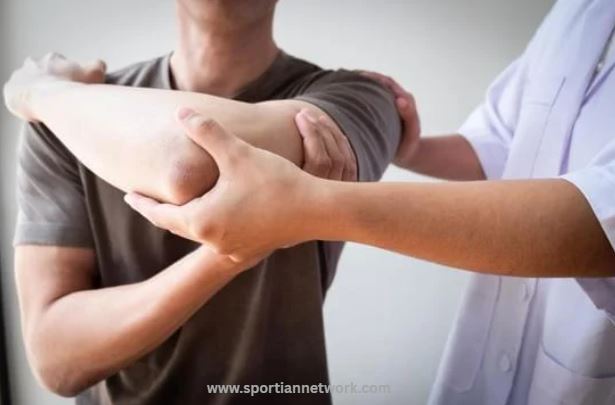
Messagenal is a deep-tissue massage technique that targets the lymphatic drainage pathways rather than the muscle belly directly. It is used post-competition to flush metabolic waste, reduce swelling, and accelerate the early stages of tissue repair. Most massage approaches work on the muscle itself. Messagenal works on the system that cleans the muscle after it has been stressed.
That distinction matters. After hard competition, the problem is not just tight or fatigued muscle tissue. The problem is a buildup of metabolic byproducts, fluid congestion in soft tissue, and an immune response that drives inflammation. Messagenal addresses all three by targeting the lymphatic network that runs alongside the muscles and joints throughout the body.
What the Lymphatic System Does in Athletic Recovery
The lymphatic system is a network of vessels and nodes that collect excess fluid, waste products, and immune cells from the body’s tissues and return them to circulation. It does not have a pump like the heart. It moves fluid through muscular contraction, breathing, and external pressure.
After intense competition, lymphatic flow can become overwhelmed. Large volumes of metabolic waste including lactate byproducts, inflammatory cytokines, and cellular debris accumulate in the soft tissue faster than the lymphatic system clears them. That creates the swelling, heaviness, and localized tenderness that athletes feel in the hours and days after a hard event.
Standard recovery tools like foam rolling and compression address some of this by mechanical means. Messagenal goes further by directly stimulating the lymphatic vessels and nodes to accelerate the clearance process at its source.
The comparison between standard recovery tools is covered well in the foam rolling vs massage gun guide, which helps frame where Messagenal fits in the broader recovery toolkit.
How Messagenal Differs From Standard Deep Tissue Massage
Standard deep tissue massage applies sustained pressure to the muscle belly. The goal is to release tension, break up adhesions, and increase blood flow to the targeted area. It is effective for chronic tightness and structural restrictions.
Messagenal uses a different pressure profile entirely. The technique applies light to moderate rhythmic pressure along the anatomical pathways of the lymphatic vessels. The pressure is deliberately gentler than standard deep tissue work because lymphatic vessels sit closer to the surface than muscle tissue and collapse under excessive pressure rather than responding to it.
The direction of the strokes is also specific. Messagenal always works toward the nearest lymph node cluster. Strokes that move away from lymph nodes push fluid in the wrong direction and reduce rather than improve drainage. A practitioner working on the lower leg, for example, strokes toward the popliteal node behind the knee and from there toward the inguinal nodes in the groin.
Rhythm matters as much as direction. The technique uses a pumping cadence that mirrors the natural contraction rhythm of the lymphatic vessels, typically around 12 to 20 strokes per minute in the initial phase of a session.
The Three Phases of a Messagenal Session
A properly structured Messagenal session follows three phases. Each phase has a specific function and they must happen in order.
Phase one is node clearing. Before any work is done on the limbs or torso, the central lymph node clusters are manually stimulated to create drainage capacity. The cervical nodes in the neck, the axillary nodes in the armpit, and the inguinal nodes in the groin are worked first. This opens the receiving end of the drainage system so fluid moved during the session has somewhere to go.
Phase two is pathway stimulation. Working from the trunk outward, the practitioner uses light rhythmic strokes along the major lymphatic vessel pathways. On the legs, this moves from the upper thigh down through the calf and then reverses, always finishing the stroke toward the node cluster. The tissue being worked on should not feel deeply pressured. A sensation of gentle fluid movement is more appropriate than the heavy soreness associated with deep tissue work.
Phase three is reabsorption facilitation. The session ends with gentle compression holds at key node sites and slow diaphragmatic breathing cues. Breathing drives lymphatic flow through the thoracic duct, which is the main channel for returning lymph to the bloodstream. Encouraging deep abdominal breathing at the end of a Messagenal session significantly increases the rate at which cleared fluid is reabsorbed into circulation.
When to Use Messagenal in a Recovery Timeline
Timing is critical with Messagenal. The technique is most effective in a specific window of the post-competition recovery process.
The ideal window is two to six hours after competition ends. At this point the acute inflammatory response is active but has not yet peaked. Lymphatic stimulation during this window can reduce the total inflammatory load before it fully sets in, which shortens the duration of the most uncomfortable recovery phase.
Messagenal used within the first two hours after competition is less effective because the body is still in its immediate stress response. Lymphatic vessels are partially constricted during sympathetic nervous system activation, which reduces their response to manual stimulation.
Messagenal used more than 24 hours after competition shifts from early-stage recovery work to late-stage clearance. It still provides benefit but functions more as a general detox tool than as acute inflammation management.
For athletes managing a heavy competition schedule, Messagenal can also be used the evening before a competition day to clear residual fluid from previous efforts. This application is lighter and shorter than the post-competition version and focuses primarily on the lower limbs and lumbar region.
Recovery scheduling connects to broader training load management. The principles in why recovery is more important than training frame the context for where Messagenal fits within a full recovery strategy.
Sports Where Messagenal Has the Strongest Application
Messagenal was developed in a combat sports context where post-competition swelling in the extremities is common and where athletes often compete in tournament formats with multiple bouts in a short period. Reducing swelling between bouts without relying on medication or passive rest is a significant performance advantage.
Combat sport athletes including wrestlers, judoka, and mixed martial artists use Messagenal between tournament rounds and in the 24 hours following weight-cutting protocols, where fluid redistribution creates significant tissue swelling.
Distance runners use Messagenal after marathons and ultramarathons where lower limb fluid accumulation can persist for several days. The technique reduces recovery time between training blocks for runners who compete frequently.
Team sport athletes use it after back-to-back game days. Basketball and soccer players in heavy portions of a season can accumulate lymphatic congestion in the legs that does not fully clear between games. Messagenal sessions of 20 to 30 minutes on recovery days address this without adding muscular fatigue.
Athletes who want to understand the broader science of what happens to the body in the recovery window after exercise will find the science of tapering article a useful companion read.
Practical Application and Practitioner Requirements
Messagenal requires a trained practitioner. The technique involves specific anatomical knowledge of lymphatic vessel pathways and node locations. Applied incorrectly, it either provides no benefit or in rare cases can temporarily increase local swelling by moving fluid without clearing the receiving nodes first.
Athletes looking for Messagenal practitioners should seek out therapists with training in manual lymphatic drainage. The Vodder method and the Leduc method are the two most widely taught manual lymphatic drainage frameworks, and practitioners trained in either can apply the core Messagenal protocol with minor adaptation.
Session length for a full post-competition application runs 45 to 60 minutes. Shorter targeted sessions of 20 to 30 minutes covering the primary competition-stressed areas are appropriate for between-bout or between-game applications.
Self-application is possible for the lower limbs using light self-massage toward the groin nodes. It is less precise than practitioner work but provides meaningful benefit for athletes who do not have regular access to a manual therapist. Gentle upward strokes from the ankle toward the knee, held for two to three seconds at the end of each stroke, approximate the basic Messagenal pathway stimulation for the lower leg.
Why Messagenal Sits Alongside, Not Instead Of, Other Recovery Tools
Messagenal is not a replacement for sleep, nutrition, compression, or cold therapy. It is a specific tool that addresses one part of the post-competition recovery process that other tools do not target directly.
Sleep drives systemic recovery hormone release. Nutrition replenishes substrate. Compression reduces acute swelling mechanically. Cold therapy manages immediate inflammation through vasoconstriction.
Messagenal does something different. It actively accelerates the clearance of metabolic waste from the soft tissue by stimulating the biological system designed specifically for that job. Used alongside the other tools, it closes a recovery gap that most athletes leave open.
Athletes who build Messagenal into their post-competition routine consistently report reduced next-day swelling, faster return of full range of motion in competition-stressed joints, and an earlier return to quality training after hard events. For athletes competing frequently, that time advantage compounds across a season.