Pete Rose spent over two decades collecting hits, breaking records, and making himself impossible to ignore. He was Charlie Hustle. He was the Big Red Machine. He was the all-time hits leader in Major League Baseball history.
He was also a difficult husband.
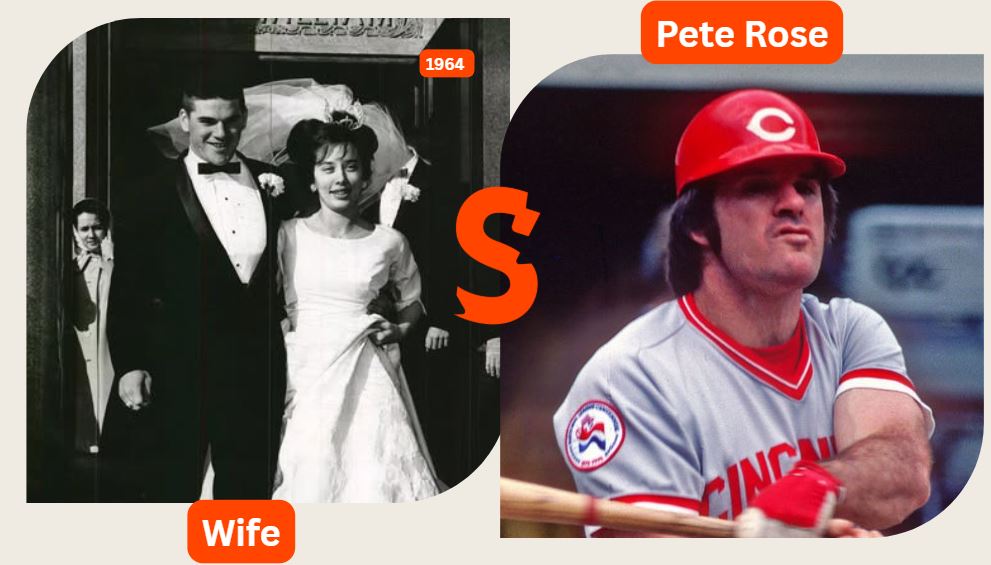
Karolyn Englehardt married Pete Rose in 1964, when he was a young Cincinnati Reds outfielder still figuring out what kind of player he would become. She spent 16 years as his wife. She raised their children. She held the household together through the seasons, the road trips, the fame, and the affairs. When the marriage ended in 1980, she walked away quietly. She never gave tell-all interviews. She never chased the spotlight her last name could have opened.
She built a private life and kept it that way.
Who Was Karolyn Englehardt Before Pete Rose
Karolyn Ann Englehardt was born in the early 1940s in Cincinnati, Ohio, and grew up in the Price Hill neighborhood on the city’s west side. Her parents were Mr. and Mrs. Fred J. Englehardt. The household was working-class, Catholic, and rooted in the same west side Cincinnati culture that produced Pete Rose.
She and Pete grew up within the same social orbit. Both came from similar neighborhoods. Both understood the rhythms of a Cincinnati childhood in the postwar era. When they met, Pete was an ambitious young ballplayer and Karolyn was a local woman with strong values and a clear sense of who she was. They came together the way people did in that era of American sports: through proximity, shared community, and the kind of natural familiarity that precedes romance.
They married in January 1964 in a Catholic church on the West Side of Cincinnati. Pete was 22. His career with the Cincinnati Reds was just beginning.
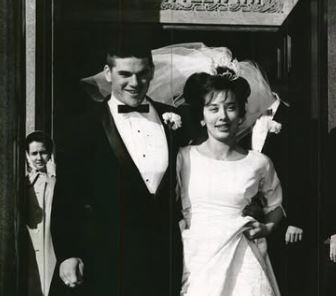
The young couple has known each other for only a half year and some peers predict that their marriage will not last. They were right.
The Years of the Big Red Machine
The Cincinnati Reds teams of the late 1960s and 1970s are among the most celebrated in baseball history. Known as the Big Red Machine, they produced back-to-back World Series championships in 1975 and 1976. Pete Rose was at the center of it. He won three batting titles, was named to the All-Star Game at five different positions, and played with an intensity that redefined what hustle looked like in professional baseball.
That career required Karolyn to manage a household largely alone.
Pete traveled constantly during the season. Spring training, road trips, late-night games in cities across the country. The schedule of a major league baseball player during that era was relentless, and for the spouse at home, the isolation was real. Karolyn raised two children, Pete Rose Jr. and Fawn Rose, kept the family grounded, and made sure that beneath all the fame and noise there was something resembling a normal home life.
Pete Rose Jr. was born in 1969. He would eventually pursue his own professional baseball career, spending time in the minor leagues and later becoming a coach. Fawn Rose, like her mother, has lived largely out of the public eye.
Karolyn’s role during those championship years rarely made the sports pages. That was true of almost every spouse of that generation. The mental performance required to sustain the career of an elite athlete at Pete Rose’s level is substantial, and the people who absorb the domestic weight of that career quietly are rarely discussed. Karolyn absorbed most of it.
Sassy, Brassy, and Down to Earth
Competitors in this space have settled on a set of generic phrases to describe Karolyn. Graceful. Private. Dignified. All of those are accurate enough. But the more interesting portrait comes from the people who actually knew her.
A 2012 Cincinnati.com profile described her as sassy, brassy, and opinionated, while also noting that close friends and casual acquaintances alike were struck by her kind-hearted, down-to-earth nature. That combination matters. She was not the silent sports wife who smiled for cameras and said nothing. She had opinions. She spoke them. And she did it without putting on airs, without letting the wealth and fame of Pete Rose’s career redefine who she fundamentally was.
She did not pretend the marriage was fine when it was not. She did not perform contentment she did not feel.
The Affairs and the End of the Marriage
Pete Rose’s first marriage ended under the weight of his infidelity. Reports of affairs surfaced publicly and within Cincinnati’s social circles over the years. Keith O’Brien’s book on Pete Rose documented affairs during the marriage, including one in the early 1970s that carried serious allegations.
Karolyn did not respond to these revelations by staging public confrontations or granting interviews about her pain. She handled what she handled privately, stayed focused on her children, and eventually reached the point where the marriage could not continue.
They divorced in 1980 after 16 years. Pete’s first season as a Philadelphia Phillie, and the divorce from Karolyn, came at almost the same time. He moved on. He married Carol Woliung in 1984. That marriage ended in a bitter multi-year legal battle that Pete Rose himself described in court filings as financially devastating.
When asked about Pete’s contentious divorce from Carol, Karolyn gave one of the more memorable quotes in this entire saga. She said she felt sorry for Carol. Then she added something that landed with weight: what comes around goes around. She believed it absolutely. She said so plainly. And she had 16 years of context for that belief.
Life After Divorce
Karolyn Englehardt chose Cincinnati. She did not leave the city that defined her, did not reinvent herself for a different coast or a more glamorous life. She stayed near her community, raised her children to adulthood, became a grandmother, and reportedly found a new relationship in the years after the divorce.
She did not speak publicly about Pete Rose’s gambling scandal in 1989, when Major League Baseball banned him permanently for betting on games including those involving his own team. She did not comment on the long public debate over whether he should be admitted to the Baseball Hall of Fame. She had no public position on any of it.
That silence was a choice. It was also, in its own way, a statement. She had given 16 years to that chapter of her life. She was not obligated to give more.
When Pete Rose died on September 30, 2024, at age 83 at his Las Vegas home, Karolyn was the one who confirmed the news publicly. He had been found unresponsive. She made the statement. And then, consistent with every choice she had made for four and a half decades, she stepped back from the public eye.
Pete Rose: The Record and the Controversy
For context, Pete Rose played 24 seasons in Major League Baseball from 1963 to 1986. He compiled 4,256 career hits, more than any player in the history of the sport. He holds records for games played and at-bats. He won World Series titles with the Reds in 1975 and 1976. He was named to 17 All-Star rosters.
His 1989 gambling ban, handed down by Commissioner Bart Giamatti, made him ineligible for the Baseball Hall of Fame despite his statistical record. The debate over his reinstatement and induction continued until his death.
Karolyn watched all of it from a deliberate distance. She built a life that did not depend on Pete’s legacy or reputation. That self-sufficiency, as much as anything else, defines her story.
What Her Story Actually Is
The standard framing of Karolyn Englehardt positions her as a supporting character in Pete Rose’s biography. First wife. Two kids. Divorced. Private ever since.
That framing misses the actual substance.
She was a west side Cincinnati woman who came of age during one of the most remarkable periods in that city’s baseball history. She spent 16 years inside one of sport’s most complex households, where extraordinary on-field achievement and serious personal failures coexisted. She raised two children who both turned out capable and grounded. She walked away from a marriage without turning it into a public spectacle. She passed up decades of opportunity to profit from her connection to Pete Rose’s name and chose instead to be known, to the extent she was known at all, on her own terms.
The mental toughness that athletes build through years of competition gets written about constantly. The version of that same toughness that gets built by living quietly through difficult years, refusing to dramatize, refusing to perform, and choosing privacy over validation rarely gets discussed.
Karolyn Englehardt is in her early eighties. She lives in Cincinnati. She stays private.
That is, by every measure, exactly what she decided to do.