Every serious athlete talks about training hard. Fewer talk about recovering smart. But here is the truth: the gains you chase in the gym or on the field are only locked in during sleep. Your muscles repair, your hormones reset, and your nervous system recharges while you are completely unconscious.
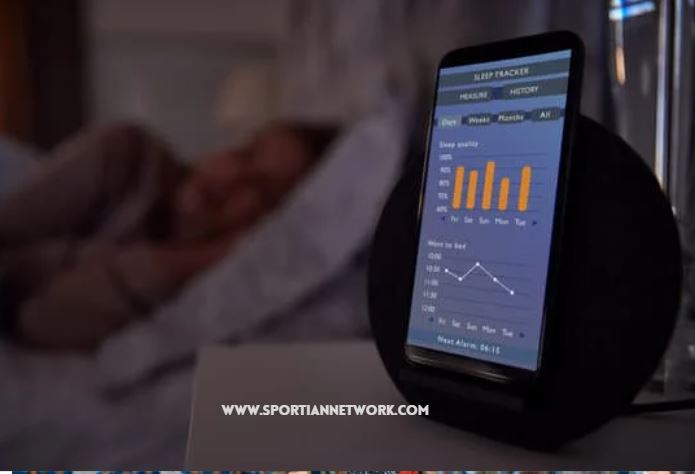
Sleep tracking wearables have changed how athletes approach this. Not by making sleep complicated. By making it visible. When you can see your data, you can act on it.
Here is how to actually use that data to recover faster and perform better.
Why Sleep Is Your Most Powerful Recovery Tool
Before we talk about devices, let us be clear on what sleep is doing for your body. During deep sleep, your pituitary gland releases the majority of your daily growth hormone. That is the hormone responsible for muscle repair, tissue regeneration, and fat metabolism. Without enough deep sleep, you are leaving the most important recovery window of your day empty.
REM sleep handles the mental side. Reaction time, decision-making speed, motor learning, emotional regulation under pressure. All of it is processed and consolidated during REM. An athlete who is short on REM is slower mentally even if they feel physically fine.
Recovery science is clear on this. Training stress without adequate recovery does not build fitness. It breaks it down further. Sleep is not optional. It is where the work pays off.
What Sleep Trackers Actually Measure
Not all wearables track sleep the same way. Most consumer devices use a combination of accelerometer data, heart rate monitoring, and heart rate variability to estimate your sleep stages. Premium devices like the Whoop 4.0, Oura Ring Gen 3, and Garmin Fenix series go further by adding blood oxygen saturation monitoring and skin temperature sensors.
Here is a breakdown of the key metrics you will see and what they mean for athletes.
Total Sleep Time. The simplest metric. Most athletes need between seven and nine hours. High-volume training phases may push that requirement closer to nine or ten. If you are consistently under seven hours, no supplement stack or recovery protocol is going to compensate.
Deep Sleep Percentage. Aim for 15 to 25 percent of your total sleep time in deep sleep. This is where physical restoration happens. Consistently low deep sleep percentages are a signal your body is not completing muscle repair cycles properly.
REM Sleep Percentage. Target 20 to 25 percent. Low REM sleep shows up as mental fog, slow reaction times, and emotional irritability the next day. These are performance problems, not just comfort problems.
Sleep Efficiency. This is the percentage of time in bed that you are actually asleep. Below 85 percent suggests you are spending too long lying awake. Common causes are high cortisol from overtraining, caffeine timing, or inconsistent sleep schedules.
Heart Rate Variability During Sleep. HRV is one of the most valuable metrics a wearable gives athletes. Higher HRV overnight means your autonomic nervous system is in a parasympathetic state, recovering well. A sudden HRV drop often predicts illness, overtraining, or accumulated fatigue before you consciously feel it.
How to Read Your Data Like a Coach, Not a Hypochondriac
The biggest mistake athletes make with sleep trackers is treating every metric like a crisis. One bad night does not tank your performance. A pattern of bad nights does.
Look at weekly trends, not nightly scores. If your deep sleep percentage drops from 20 percent to 10 percent for three nights in a row following a training block, that tells you something. Your body is working harder than it can recover from. That is actionable.
Use your HRV trend line as a readiness indicator. Most platforms like Whoop and Oura generate a daily readiness score based on your sleep data. These scores are not perfect, but a readiness score in the red after a heavy training week is telling you to back off. Ignore it repeatedly and you are trending toward overtraining.
Youth athletes especially need this awareness. Their bodies are still developing. Overreaching without proper sleep recovery carries higher long-term risks than it does for mature athletes.
The Four Sleep Habits That Change Your Data Fast
Getting a wearable is only step one. The device cannot fix your sleep. It can only show you what needs fixing. These four habits consistently move the numbers in the right direction.
Consistent sleep and wake times. Your circadian rhythm is a biological clock. It runs on consistency. Going to bed at 10 pm one night and 1 am the next confuses it. Deep sleep and REM percentages both improve dramatically when your schedule is consistent, even on weekends.
Temperature control. Core body temperature must drop slightly for deep sleep to initiate. A room between 65 and 68 degrees Fahrenheit is optimal for most people. Many wearables now track skin temperature as a proxy. If your skin temperature runs higher than your baseline on nights before low deep sleep scores, temperature management is your lever.
Caffeine cutoff timing. Caffeine has a half-life of five to six hours. That means a cup of coffee at 3 pm still has half its stimulant effect at 9 pm. Research published by the National Institutes of Health confirms that even moderate caffeine consumption in the afternoon measurably reduces slow-wave sleep, the deep sleep stage. Move your last caffeine intake to before noon if your deep sleep numbers are consistently low.
Pre-sleep routine. Blue light from screens suppresses melatonin production. Wind-down routines that include dim lighting, low stimulation, and consistent pre-sleep behaviors train your nervous system to shift into recovery mode on schedule. This is not soft advice. It moves HRV numbers.
Using Sleep Data to Structure Your Training Week
This is where sleep tracking becomes a real performance tool rather than a gadget. The data tells you when you can push and when you cannot.
High HRV morning after a training day: your recovery was strong. You can go hard again. Low HRV and poor sleep efficiency following back-to-back hard sessions: the data is telling you to go light, go easy, or take a full rest day.
This connects directly to periodization principles. Smart periodization is not just about planned load and deload weeks. It is about responding to what your body is actually doing. Sleep data gives you that feedback in real time.
Elite endurance athletes using platforms like Garmin Connect or Polar Flow have started logging their HRV trends alongside their training load scores. When training load rises faster than recovery capacity, the gap shows up in the sleep data first. Adjusting before the gap becomes an injury or illness is the competitive edge.
Which Wearables Are Worth It for Athletes
You do not need to spend a fortune. But you do need accuracy. Here are the current options worth considering based on athlete use cases.
Oura Ring Gen 4. Best for sleep-focused athletes who do not want to wear a wrist device during training. Accurate temperature sensing and excellent sleep stage accuracy. The readiness score system is genuinely useful for training decisions.
Whoop 5.0. Built specifically for athletes. No screen. All data goes to the app. Strain and recovery scores are tightly integrated. The subscription model is a drawback but the HRV data is among the most consistent available.
Garmin Fenix 8 / Forerunner 965. Best for athletes who want an all-in-one training and sleep tracker. Sleep data is solid and integrates directly with training load metrics. Best choice if you already use Garmin for sport.
Apple Watch Series 10. Good for casual tracking but not the deepest sleep stage analysis. Fine as a starting point. Not the go-to for serious athletes who need precision data.
Whatever device you choose, give it two to three weeks before making training decisions based on the data. The algorithms need your baseline to make accurate comparisons.
The Recovery Stack That Works With Sleep Data
Sleep tracking works best as part of a wider recovery system. The data tells you the story. Your actions write the next chapter.
Pair your sleep insights with the right recovery tools. Foam rolling and massage gun work before bed reduces muscle tension and lowers the nervous system arousal that delays sleep onset. A solid recovery supplement protocol that includes magnesium glycinate at night has direct evidence for improving sleep quality and deep sleep percentage.
Research from the National Sleep Foundation is consistent on one point: sleep quality improvements are among the highest-return investments any athlete can make. Speed, strength, reaction time, injury resistance, and mood all improve with better sleep before any other variable is changed.
That is not a small claim. It is the science.
Final Word
A sleep tracker does not improve your sleep. You do. What the device gives you is accountability and direction. When the data shows your deep sleep crashing after consecutive hard training days, you have a decision to make. When HRV drops three mornings in a row, you know something is off before your body sends you a bigger warning.
The athletes getting the most out of wearables are not the ones who check their scores obsessively. They are the ones who use the trends to make smarter training decisions week after week. That consistency compounds. Over a season, it is the difference between peaking at the right time and grinding yourself down to nothing.
Track it. Read it. Act on it.