
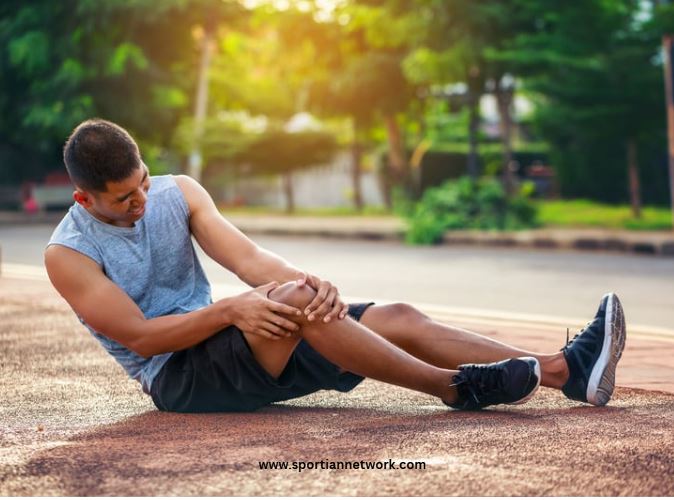
That dull ache just below or around your kneecap. It shows up on the stairs. It gets worse on long runs. It flares up when you squat or sit in a car for too long. And no matter how many rest days you take, it keeps coming back the moment you push hard again.
That is runner’s knee. And it is far more fixable than most athletes believe.
Runner’s knee, known medically as patellofemoral pain syndrome or PFPS, is one of the most common sports injuries in the world. It affects people who participate in sports, especially females and young adults, but can also occur in non-athletes. Its incidence in the United States sits between 3 and 6 percent, affecting adolescents and adults younger than 60.
The problem is that most athletes treat it wrong. They rest until the pain fades, go back to full training, and watch it return inside two weeks. Rinse and repeat for months, sometimes years. That cycle does not fix anything. It just manages symptoms while the real cause keeps doing its damage.
This article covers what runner’s knee actually is, why it keeps coming back, and the full plan to get rid of it for good.
What Is Actually Happening in Your Knee
Your kneecap, called the patella, sits in a groove at the end of your thighbone and slides up and down as your leg bends and straightens. When everything works right, it tracks smoothly through that groove with even pressure on all sides.
Patellofemoral pain syndrome can be caused by abnormal tracking of the kneecap in the trochlear groove, where the patella gets pushed out to one side when the knee bends. This abnormality causes increased pressure between the back of the patella and the trochlea, irritating the soft tissues.
That irritation is what you feel as the aching, grinding, and stiffness of runner’s knee. But here is the key thing most people miss: the kneecap itself is not the root cause. The kneecap just reveals the problem. The actual problem lives above it and below it.
Factors that contribute to poor tracking include problems with the alignment of the legs between the hips and ankles, and muscular imbalances or weaknesses, especially in the quadriceps muscles and the muscles that externally rotate and move the hip away from the body.
In plain terms: weak hips and a quad imbalance pull your kneecap sideways and load it unevenly. Fix those two things and your kneecap stops grinding. The pain goes away and stays away.
Why Rest Alone Never Fixes It
Rest reduces inflammation. That is a real benefit and a necessary first step when pain is sharp. But rest does nothing about the muscular imbalances and movement patterns that caused the problem in the first place.
Front knee pain is usually a result of overuse, meaning the knee was exposed to too much or too frequent strain without being able to adapt fast enough. The knee is not weak and can still carry your weight.
When you stop training, the pain quiets down. That feels like progress. Then you come back to full load and the same imbalanced muscles, the same tracking pattern, and the same irritated tissue pick right back up where they left off. Pain returns.
The fix is not less movement. The fix is better movement. Exercises to strengthen the knee, thigh, and hip muscles can stabilize the kneecap and have been proven to relieve the pain.
That is what the rest of this article is about.
The Two Root Causes You Have to Address
Before jumping into exercises, understand the two things driving almost every case of runner’s knee. Fix both and your results hold. Fix only one and expect a relapse.
Weak Hip Abductors and External Rotators
Your hip muscles control where your knee goes during every step you take. When your glute medius and external rotators are weak or not firing properly, your knee collapses inward during running, squatting, and landing. That inward collapse pulls the kneecap toward the outside of the groove and creates the uneven loading that causes PFPS.
Hip and knee strengthening is more effective than knee strengthening alone for reducing pain and improving activity in individuals with patellofemoral pain, according to a systematic review with meta-analysis. That finding changes the entire approach. Most athletes do quad exercises and wonder why their knee does not improve. The hip work is not optional. It is the priority.
Quad Imbalance: The VMO Problem
Your quadriceps have four muscles. The one on the inner side of your thigh, called the vastus medialis oblique or VMO, plays a major role in keeping your kneecap centered in its groove. In most people with PFPS, the VMO is relatively underactive compared to the outer quad muscles. The kneecap gets pulled outward and rides unevenly under load.
Targeted VMO activation work alongside full quad strengthening corrects this imbalance over time. It is not a quick fix. It takes weeks of consistent training. But it produces results that last because you are changing the actual mechanics, not just dampening the pain signal.
The Full Recovery Plan
This plan has three phases. Do not skip to phase three because you feel better early. Each phase builds the foundation for the next one.
Phase One: Calm It Down (Days 1 to 14)
The first job is reducing the irritation in the joint. You cannot train hard on an acutely inflamed knee and expect good results. This phase is about managing load while keeping movement going.
Stop doing the activities that make your knee hurt until the pain goes away. Switch to low-impact activities such as riding a stationary bike, using an elliptical machine, or swimming, which place less stress on the knee joint. Use cold packs for 20 minutes at a time, several times a day. Do not apply ice directly to skin.
Keep moving every day. Walking, cycling, and swimming are all fine. What you want to avoid is anything that loads the kneecap heavily under a bent knee, like running, deep squats, lunges, and stairs taken quickly.
Anti-inflammatory medication can help in the short term. It does not fix the problem but it reduces the noise enough to start rehabilitation work more comfortably.
Phase Two: Rebuild the Foundation (Weeks 2 to 8)
This is where the real work happens. You train the hip muscles, activate the VMO, improve mobility in the ankles and hips, and gradually reintroduce load-bearing movement.
Clamshells. Lie on your side with knees bent and feet together. Keeping your feet touching, rotate your top knee upward like a clamshell opening. Hold briefly at the top. Lower slowly. Do three sets of 15 to 20 reps per side. This directly targets the glute medius, one of the most important muscles for knee alignment control.
Donkey Kicks. On hands and knees, keep one knee bent at 90 degrees and drive it straight back and up toward the ceiling. Squeeze your glute hard at the top. Lower with control. Three sets of 15 per side. This builds glute max activation and hip extension strength that carries directly into running mechanics.
Straight Leg Raises. Lie on your back with one leg bent and the other straight. Tighten your quadriceps and lift the straight leg to the height of the bent knee. Hold for a few seconds, then slowly lower the leg. Repeat 10 to 15 times on each leg. This activates the VMO without loading the kneecap, which makes it ideal for the early stages of rehab.
Wall Sit. Stand with your back against a wall and slide down until your knees are at roughly 45 degrees. Not 90 degrees yet. Deeper angles increase kneecap compression. Hold for 20 to 30 seconds, rest, and repeat. As your knee improves, increase the hold duration before increasing the angle.
Terminal Knee Extensions with Band. Loop a resistance band around a fixed point at knee height. Step back until the band is taut, placing it behind your bent knee. Stand on that leg and straighten the knee against the band’s resistance. This directly activates the VMO in the range where it matters most. Three sets of 15 reps per side.
Step Downs. Stand on a step with one foot, the other hanging free. Slowly lower the hanging foot toward the floor by bending your standing knee. Control the movement all the way down, keeping your knee tracking over your second toe. This is a loaded single-leg movement that builds VMO strength and hip stability simultaneously. Start with a small step height and progress over weeks.
Hip Flexor and Quad Stretching. Tight hip flexors and quads increase anterior pelvic tilt and kneecap pressure during loaded movement. Stand on one leg and grab your other ankle. Pull your ankle toward your buttocks until you feel a stretch in your quadriceps and hip flexors. Hold for 20 to 30 seconds. Ensure your feet are flat on the ground to maintain balance. Do this after every session.
Mobility work around the ankle matters here too. Tight ankles force the knee to compensate on every step. Athletes dealing with both runner’s knee and tight ankles often see faster progress when they address both together. If you want to understand how mobility restrictions upstream and downstream feed into injury patterns, this breakdown of ACL prevention exercises covers the mechanics clearly.
Phase Three: Load It Back Up (Weeks 6 to 12)
Once you can do the phase two exercises without pain and your knee feels stable on single-leg movements, you start reintroducing the activities that caused the original problem. Running, squatting, jumping. But you do it progressively.
The biggest mistake athletes make in this phase is returning to full volume too fast. They feel good, they test the knee with one run, the knee holds up, and they immediately go back to five days a week at full mileage. That spike in load without the gradual build is how PFPS comes back.
Add running back with a run-walk approach. Start with ten minutes of easy running on flat ground. If the knee is pain-free for 24 hours after, add five minutes to the next session. Continue that pattern. Do not jump from pain-free on a short run to a full workout in one step.
Return squatting with box squats to a controlled depth. Add depth as your strength and pain tolerance allow. Fixing common squat form mistakes during this phase is worth your time because many of those errors directly increase patellofemoral stress.
Keep the hip and VMO work going even after the knee feels fully recovered. This is the maintenance work that keeps the problem from coming back in six months.
What Makes It Come Back
Most PFPS relapses happen for one of three reasons.
The first is stopping rehab exercises the moment pain disappears. Pain going away does not mean the underlying weakness is fixed. The weakness that caused the problem in the first place takes months to fully correct. Stop working on it early and the imbalance remains. Load increases and pain returns.
The second is increasing training load too fast. Tendons and cartilage adapt more slowly than muscles. You can get strong enough to handle a workload that your joint tissue is not yet ready for. Gradual, patient load progression protects the tissue while you build capacity.
The third is ignoring foot mechanics. Excessive or late pronation during gait can increase tibial internal rotation and contribute to poor kneecap tracking. Running shoes that match your foot mechanics make a measurable difference for some athletes. If your PFPS keeps recurring despite doing everything else right, getting a proper shoe assessment is a reasonable next step. Choosing the right running shoe matters more than most runners give it credit for.
How Long Full Recovery Actually Takes
Honest answer based on the research: most athletes see meaningful improvement in three to five weeks when they follow a proper exercise program consistently. Most people who perform exercises for patellofemoral pain and temporarily modify physical activity see an improvement in three to five weeks. But if you continue to push yourself and do not take time to heal, recovery can take 12 weeks or longer.
Full recovery, meaning returning to complete training load without symptoms and with corrected mechanics, typically takes eight to twelve weeks. More severe or long-standing cases can take longer.
The athletes who recover fastest are the ones who do the boring rehab work consistently, not the ones who push through pain and rush back to full training. Patience in this phase saves months later.
When to See a Physio
Home rehab works for most cases of PFPS. But there are situations where professional assessment adds real value.
See a physiotherapist if your pain is sharp rather than dull and achy. Sharp pain suggests something structural that rehab exercises alone will not address. See one if your pain does not improve after four to six weeks of consistent rehab work. And see one if your knee swells significantly, locks up, gives way under load, or if you cannot bear weight on it comfortably.
A physio can also assess your running gait and identify mechanical patterns that you cannot self-diagnose. Gait retraining as part of a rehab program has shown real benefits in research for athletes with PFPS, and it is harder to do that work without a trained set of eyes watching how you move.
The Recovery Tools Worth Using
Recovery tools do not fix runner’s knee but they support the process and reduce how much discomfort you carry between sessions.
Ice after training sessions keeps inflammation in check during the rehab period. Twenty minutes on, no ice directly on skin. Foam rolling the quads, IT band, and calves reduces tissue tightness that contributes to tracking problems. Foam rolling versus massage guns each have their place in a recovery routine, and during runner’s knee rehab both can help manage the muscular tightness feeding the problem.
Patellar taping provides short-term pain relief for some athletes by physically repositioning the kneecap during activity. It is not a treatment. It is a tool that lets you train more comfortably while the real fixes take hold. Some specialists recommend shoe inserts only in addition to strengthening exercises to stabilize the knee, which applies to taping as well. Use it as a support, not a solution.
Conclusion
Runner’s knee is not a mystery condition that just randomly appears and randomly leaves. It comes from specific mechanical problems that create predictable patterns of stress on the kneecap. Those problems have real solutions.
Strengthen your hips. Activate your VMO. Improve your ankle and hip mobility. Return to load gradually. Keep the maintenance work going after the pain is gone.
A meta-analysis of 15 randomized controlled trials confirms that exercise therapy reduces pain and improves physical activity levels in patients with PFPS. The research is clear. The exercises work. The only variable is whether you do them consistently enough and long enough to let the adaptations take hold.
Most athletes who follow this process fix their runner’s knee for good. The ones who relapse are usually the ones who quit the rehab work too early or returned to full load too fast.
Take the eight weeks. Do the work. Your knees will thank you for years.