
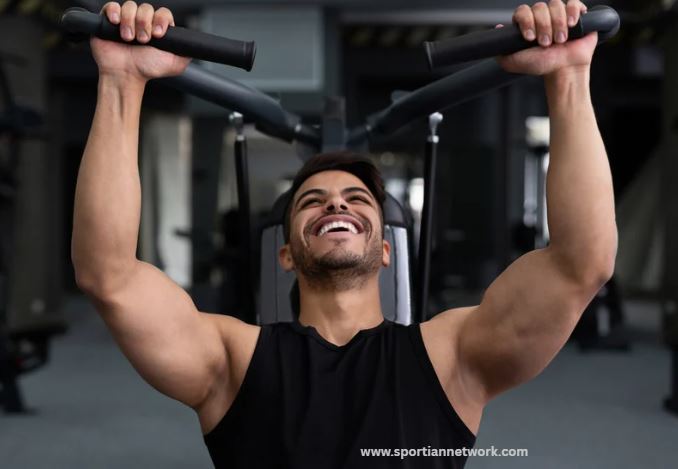
Walk into any commercial gym and watch the Saturday morning shoulder workout. You’ll see the same scene repeated with minor variations: a set of dumbbell lateral raises, maybe some front raises, an overhead press, and then a shrug or two before the session wraps up. Maybe twenty minutes total. Then the guy doing it wonders why his shoulders look the same as they did eight months ago.
Building shoulders that are both genuinely impressive and athletically functional requires understanding what the shoulder complex actually is, which muscles create width and thickness versus which ones make you look like you tried, and how sport performance and aesthetics are more intertwined in the shoulder than anywhere else on the body.
This article is the complete picture. By the end, you’ll know exactly what to train, how to train it, and why the most important shoulder muscle in the gym is the one most programs treat as an afterthought.
The Anatomy You Need to Know
The shoulder’s visual and functional potential lives across three distinct muscular structures. Get this wrong and no amount of training volume saves you. Understand it and your program writes itself.
1. Anterior Deltoid (Front Head)
Controls shoulder flexion and internal rotation. Almost always overtrained in athletes who press frequently. The front head gets heavy stimulus from bench pressing, push-ups, and dips. Most athletes need less direct work here, not more.
2. Lateral Deltoid (Side Head) — The Width Maker
The muscle responsible for shoulder width and the athletic “capped” look. Controls shoulder abduction. Gets almost zero stimulus from pressing movements. Without direct isolation work, it stays flat regardless of how hard you train. This is the head most athletes undertrain.
3. Posterior Deltoid (Rear Head)
Controls shoulder extension and horizontal abduction. Critical for posture, shoulder health, and injury prevention. Also essential for athletic pulling power in swimming, wrestling, rowing, and throwing sports. Chronically undertrained in gym-goers who face-forward and press.
4. Rotator Cuff Complex
(Supraspinatus, Infraspinatus, Teres Minor, Subscapularis) Four deep muscles that stabilize the humeral head during all shoulder movement. Not visible, but critical. A weak rotator cuff turns every heavy press into an injury risk. Train these and your heavy work becomes both safer and stronger.
5. Trapezius (Upper, Middle, Lower)
The trap defines the shape of the upper shoulder visually. Upper traps create the “boulder” look from neck to shoulder. Middle and lower traps are essential scapular stabilizers — crucial for shoulder health under heavy load.
6. Serratus Anterior — The Forgotten Finisher
The “boxer’s muscle” visible along the ribcage. Controls scapular protraction and upward rotation — essential for safe overhead pressing. Weak serratus leads to scapular winging, impingement, and a ceiling on overhead strength.
The Big Insight: Shoulder width comes almost entirely from the lateral deltoid. You can bench press every day for a year and your lateral delts will barely grow — because horizontal pressing is an anterior deltoid and chest movement. If width is your goal, lateral raises must be a primary focus, not an accessory.
The Best Exercises for Each Head
Every exercise below was selected based on EMG activation data, biomechanical logic, and real-world athlete results.
Exercise 01 — Overhead Press (Barbell or Dumbbell)
Target: All 3 Heads | Mass Builder | Foundation
Every serious shoulder program starts here. The overhead press is the single most effective mass builder for the deltoids because it loads all three heads through a full range of motion under significant mechanical tension.
- Barbell version: allows heavier loading and greater force production — essential for athletes training for power output alongside size
- Dumbbell version: permits more natural wrist tracking, reduces impingement risk, and demands more stabilizer activation
Control the eccentric. Lower the bar slowly — three to four seconds — until your upper arms reach parallel or just below. Athletes who bounce the weight at the bottom miss the most productive portion of the lift. The deltoids are under maximum stretch-mediated tension at the bottom, which is exactly where the hypertrophic signal is strongest.
Sets & Reps: 4 sets × 6–10 reps | Heavy load | 3s eccentric
Coaching Cue: Brace the core before the press. Think “ribs down” — don’t flare your ribcage and hyperextend the lower back to get the bar overhead. If you can’t press without aggressive arching, reduce the load.
Progression: Add 2.5kg per side when you can complete the top end of your rep range across all sets with full control.
Exercise 02 — Cable Lateral Raise (Single Arm, Low Pulley)
Target: Lateral Delt | Width Builder
The cable lateral raise is superior to the dumbbell version for one critical reason: resistance profile. A dumbbell provides zero tension at the bottom and maximum tension at the top. A low cable provides tension throughout the entire range — especially in the crucial bottom position where the lateral delt is at full stretch.
Stand with the cable behind your body, grasping the handle with your arm crossing your midline slightly. Raise laterally to shoulder height with your elbow leading and a slight bend maintained throughout.
Volume is your friend here. Research suggests 15–25 sets per week of direct lateral delt stimulus for meaningful hypertrophy — far more than the 3 sets most people perform.
Sets & Reps: 4–5 sets × 12–20 reps per side | Light–Moderate load | Slow tempo
Coaching Cue: Imagine pouring a glass of water with your hand as you raise — the pinky side leads slightly upward. This external rotation cue keeps the lateral delt in the most advantageous position and reduces impingement risk.
Progression: Increase volume before load. Add a set every 1–2 weeks before bumping the weight.
Exercise 03 — Face Pull (Cable, Rope Attachment)
Target: Rear Delt, External Rotators, Mid/Lower Trap | Injury Prevention | Do Every Session
The face pull is arguably the most important shoulder exercise an athlete can do — and the one most commonly skipped. It directly targets the posterior deltoid, external rotators of the shoulder, and the middle and lower traps.
Set the cable at upper chest to eye height. Using a rope attachment:
- Pull the handles toward your face with elbows flaring high and wide — above shoulder height
- At the peak, hands travel slightly behind the head with palms facing forward
- This end-range external rotation trains the rotator cuff in its most vulnerable position
Face pulls should be done every single training session. The volume of pressing athletes perform creates a chronic internal rotation bias that the face pull directly counteracts. Think of it as structural maintenance, not optional accessory work.
Sets & Reps: 4 sets × 15–25 reps | Light load | Every training session
Coaching Cue: Elbows must stay higher than the hands throughout the pull. If your elbows drop below shoulder height, the rear delts disengage and the movement becomes a row variation.
Progression: Keep this exercise light and high-rep permanently. Progress by adding sets, not significantly increasing weight.
Exercise 04 — Rear Delt Fly (Dumbbell or Cable, Prone or Bent-Over)
Target: Posterior Deltoid | Thickness | 3D Shoulder Shape
While the face pull trains the rear delt with an external rotation emphasis, the rear delt fly adds direct horizontal abduction loading — isolating the posterior head for the thickness that creates a genuinely three-dimensional shoulder.
- Prone variation (lying face-down on a 30–45° incline bench): removes lower back loading and momentum entirely — generally preferred for athletes
- Bent-over variation: allows slightly heavier loads but requires better postural control
Initiate the movement by driving the elbows back and up — not by swinging the weight. Go lighter than your ego wants and feel the muscle working through the full range.
Sets & Reps: 3–4 sets × 12–18 reps | Light–Moderate load | 2-second hold at top
Coaching Cue: Pause for a full two counts at the top of each rep with the arms extended and the posterior delt fully contracted. This eliminates momentum-driven cheating and dramatically increases the training stimulus.
Progression: Prone rear delt fly → Cable rear delt fly (constant tension) → Single-arm cable rear fly with increased range of motion.
Exercise 05 — Dumbbell Shrug + Barbell High Pull
Target: Upper Trapezius | Power | Athletic Carry
The upper trapezius creates the thick slope from neck to shoulder that separates genuinely developed shoulders from flat-looking deltoids. More importantly for athletes, the upper trap is a primary force transmitter in contact sports and overhead explosive movements.
- Dumbbell Shrug: Hold at the top for a full second. Don’t roll the shoulders — that adds no benefit and risks AC joint stress. Lower under control.
- Barbell High Pull: An explosive pulling movement combining the shrug with an Olympic lifting component — training the upper trap, posterior deltoid, and rotator cuff through a dynamic, power-producing range. Particularly beneficial for swimmers, throwers, and combat sport athletes.
Sets & Reps (Shrug): 3–4 sets × 10–15 reps | Heavy load | 1s hold at top Sets & Reps (High Pull): 4 sets × 5 reps | Moderate load | Explosive intent
Coaching Cue: For shrugs — straight up and down. No rolling, no circling. The motion is purely vertical elevation of the shoulders. Rolling the shoulders does not increase trap activation and increases injury risk to the AC joint.
Progression: Heavy dumbbell shrug → Barbell shrug → Barbell high pull → Power clean (if Olympic lifting is in your background).
Shoulder Training by Sport
| Sport | Priority Heads | Key Exercises | Main Risk |
|---|---|---|---|
| Swimming | Rear + Rotator Cuff | Face pull, external rotation work | Swimmer’s shoulder, impingement |
| Football / Rugby | All 3 Heads + Trap | Overhead press, high pull, face pull | AC joint sprains |
| Basketball | Anterior + Lateral | Overhead press, lateral raise volume | Rotator cuff fatigue |
| Tennis / Racket | Rear + Rotator Cuff | Rear delt fly, cable external rotation | Internal rotation imbalance |
| Wrestling / Combat | All 3 + Serratus | Shrug, face pull, landmine press | Anterior dislocation |
| Track (Throws) | Anterior + Lateral + Trap | High pull, overhead press, lateral raises | Biceps tendon stress |
The 6 Biggest Mistakes Athletes Make
1. Training the Front Delt to Death Benching, incline pressing, push-ups, dips — all hammer the anterior deltoid. Athletes who press 3–4 times per week and then add front raises are overloading an already overtrained head while the lateral and posterior delts stay underdeveloped. Cut the front raises unless you’re a competitive bodybuilder with specific reasons to add them.
2. Going Too Heavy on Lateral Raises The number on the dumbbell is irrelevant if your upper trap is doing the lifting. Ego-driven lateral raises train the wrong muscle and create impingement risk. Drop to a weight where you feel every degree of the movement in the lateral delt — for most people, that means going lighter than they want.
3. Never Training the Rotator Cuff Directly The rotator cuff doesn’t get adequately stimulated by pressing, pulling, or lateral raises. It needs direct work: cable external rotation, face pulls, prone Y-T-W exercises. Neglect it long enough and your heavy pressing starts breaking down the shoulder from the inside out — slowly, then suddenly.
4. Using Too Short a Range of Motion on Pressing Half-repping the overhead press might let you use more weight, but it dramatically reduces the deltoid’s time under tension through the most productive range — the bottom third of the lift. Full range of motion, controlled eccentric, every rep. That’s where size is built.
5. Insufficient Volume for Lateral Delts Research supports that the lateral deltoid requires 15–25 working sets per week for meaningful hypertrophy. If you’re doing 3 sets of lateral raises once a week, you’re at a fraction of the required volume. Spread lateral delt work across multiple sessions.
6. Skipping Rear Delt and Upper Back Work Anterior-dominant shoulder programs create forward-rounded posture, impingement risk, and an aesthetically incomplete shoulder. The rear delt and upper back pull the shoulders into proper position. Without them, the whole structure leans forward and looks underdeveloped from every angle.
A Complete Weekly Program
3 days per week | ~25–30 minutes of shoulder work per session
DAY 1 — Overhead Strength + Lateral Volume
- Overhead Press (Barbell or Dumbbell) — 4 × 6–8
- Cable Lateral Raise — 4 × 15 reps, both sides
- Face Pull (cable rope) — 4 × 20
- Dumbbell Shrug — 3 × 12, 1-second hold at top
DAY 2 — Rear Delt + Rotator Cuff Focus
- Prone Rear Delt Fly — 4 × 15, 2-second hold
- Cable External Rotation — 3 × 15 per side
- Face Pull — 3 × 20 (lighter, perfect form)
- Lateral Raise superset with Band Pull-Apart — 3 × 15 each
DAY 3 — Power + Full Shoulder Volume
- Barbell High Pull — 4 × 5 (explosive)
- Dumbbell Overhead Press — 3 × 10–12
- Cable Lateral Raise — 5 × 15 per side (high volume)
- Face Pull — 4 × 20
- Rear Delt Fly — 3 × 15
- Prone Y-T-W — 2 × 10 each position
Nutrition for Shoulder Growth
- Protein: 1.6–2.2g per kg bodyweight daily. Spread across 4–5 meals. 35–40g within 2 hours of training.
- Creatine: 5g daily. The most evidence-backed supplement for strength and lean mass gains. No loading phase needed.
- Carbs pre-session: 30–60g of moderate GI carbohydrates 60–90 minutes before training. Shoulder pressing under glycogen depletion produces lower quality reps.
- Sleep: 7–9 hours. GH secretion during deep sleep drives tissue repair and adaptation. Shoulder muscle growth happens at night, not in the gym.
Related Articles on Sportian Network
- Core Training for Athletes: Beyond Crunches and Planks
- How to Prevent ACL Tears: The 5 Exercises That Actually Work
- 10 Most Important Strength Exercises Every Athlete Should Master
- How Much Protein Do Athletes Really Need? (2025 Evidence-Based Answer)
- Why Recovery Is More Important Than Training — And How to Do It Right
- The Ultimate Pull-Up Progression Plan
- How to Build Explosive Speed
- Beginner’s Guide to Proper Squat Form
The Bottom Line
Most athletes will never build the shoulders they’re capable of because they spend their training time on the one head that pressing already takes care of, skip the one that creates width, and ignore the one that keeps the joint healthy enough to train hard year after year.
Fix that order. Put the overhead press first. Bury your sessions in cable lateral raises — more volume than you think you need. Face pull every single session. Train the rear delt with intention, not as an afterthought. And shrug and pull for the trap thickness that turns good shoulders into great ones.
Performance and aesthetics aren’t competing goals in the shoulder. A powerful overhead press builds the same mass that makes shoulders look wide. A face pull that protects your rotator cuff also builds the rear thickness that makes the shoulder look three-dimensional.
The shoulders you want are 12 weeks of consistent, intelligent work away. Stop overthinking it and start pressing.