
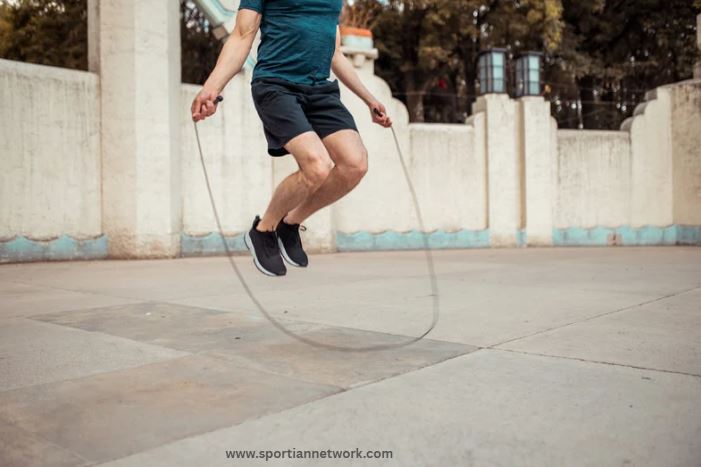
You want to jump higher. Not a little higher. You want to feel the difference every time you leave the ground, whether that is grabbing a rim you could never touch before, winning more balls in the air, or just being the explosive athlete you know you can be.
The good news is that adding 4 to 8 inches to your vertical jump is a realistic goal. Not a marketing promise. Not a fantasy. Actual athletes hit that range all the time when they train the right way and stay consistent.
The bad news is that most athletes train the wrong way. They do some box jumps, maybe a few squats, and wonder why nothing changes after six weeks. That is not a vertical jump program. That is just exercise.
This article breaks down what actually moves the needle, why, and what a real training plan looks like from week one to the day you test your new numbers.
Why Your Vertical Jump Is Stuck Right Now
Before talking about what to do, it helps to understand why most athletes do not improve their jump even when they train regularly.
Jumping is not just about leg strength. It is about how fast you can produce force, how well your nervous system fires your muscles in the right order, how efficiently your tendons store and release energy, and even how you use your arms. If any one of those pieces is missing or undertrained, your ceiling stays low no matter how much you squat.
Most standard training programs build one piece, usually raw strength, and ignore the rest. You can get stronger and still not jump higher if you never teach your body to use that strength fast.
According to Mass General Brigham sports medicine, the muscles of the lower body must produce enough force to generate power off the ground, but the real key is combining that strength training with plyometric work that teaches your muscles to expand and contract explosively. One without the other leaves gains on the table.
The Three Things That Actually Make You Jump Higher
1. Explosive Leg Strength
This is the engine. Your glutes, hamstrings, quads, and calves need to be strong enough to drive your entire body weight off the ground hard and fast. Without a solid strength base, nothing else works well.
The best exercises here are squats, deadlifts, Bulgarian split squats, and hip thrusts. These build the raw horsepower you need. If you want to know which strength exercises matter most for athletes, this breakdown covers the ones you should be doing.
2. Plyometric Training
Strength is potential. Plyometrics turn that potential into actual explosive output. Plyometric exercises train what is called the stretch-shortening cycle, which is basically your muscles loading like a spring and then snapping back. Box jumps, depth jumps, and broad jumps all train this system.
A systematic review and meta-analysis found that plyometric training increased vertical jump by an average of 5.2 cm, while weight resistance training increased it by 9.9 cm, with the combination of both producing the strongest results overall. That research confirms what experienced coaches have known for years: do both, not one or the other.
3. Nervous System Training
This is the piece most athletes completely miss. Your nervous system controls how fast your muscles fire and how many muscle fibers activate at once. You can have all the muscle in the world, but if your nervous system is not trained to call on it quickly, your jump suffers.
Nervous system training happens through maximum intent. Every jump, every squat, every explosive rep should be done with full effort and speed. Treating your workouts as casual exercise does not train the nervous system. Treating every rep like it counts does.
The Role of Arm Swing (Most People Ignore This)
Here is something a lot of athletes never think about. Your arms matter a lot when you jump.
Research shows that arm swing accounts for roughly 13 percent of vertical jumping ability. That is not a small number. An athlete with a 30-inch vertical leaves about 4 inches on the ground just from poor arm mechanics.
The fix is simple but it takes practice. As you load into your jump, your arms swing back. As you explode upward, your arms drive hard and fast in front of you and above your head. The timing of that swing adds height without any extra leg strength required.
Practice arm swing deliberately. It feels awkward at first and then becomes automatic.
What a Real 8-Week Plan Looks Like
This is not a casual routine. This is a program you commit to. Four days per week, two focused on strength and two focused on plyometrics. Consistent sleep, decent nutrition, and real effort on every session.
Here is the basic structure:
Days 1 and 3: Strength Days
These sessions build your raw power base. Focus on compound movements with heavy enough weight to challenge you but light enough to keep good form.
Primary lifts each session: back squat, Romanian deadlift, Bulgarian split squat, and hip thrusts. Aim for three to four sets of four to six reps on the main lifts. Heavy and controlled. These are not cardio sessions. You are building horsepower here.
Finish each strength day with calf raises, single-leg jumps for height, and core work. The core piece matters more than most athletes think. A weak core bleeds power during the takeoff. Training your core the right way directly affects how much force transfers through your body when you jump.
Days 2 and 4: Plyometric Days
These are your speed and power days. Lighter on the body, higher on the nervous system demand.
Start every plyometric session with a proper warm-up and dynamic mobility work. Cold muscles and stiff joints are how injuries happen. Jump training puts real stress on knees, ankles, and hips. A solid warm-up is not optional.
Main plyometric work: box jumps, depth jumps from a low box, broad jumps, and single-leg bounds. Keep total jump volume between 80 and 120 reps per session in the early weeks. Volume increases gradually as your body adapts.
Research shows that the most effective plyometric programs run seven or more weeks with one to two sessions per week, using 180 to 240 jumps per session, and increasing weekly jump volume by about 10 percent to build explosive power progressively. Follow that structure and you are not guessing. You are following what the data supports.
The Exercises That Move the Needle Most
Not all exercises are equal for vertical jump development. These are the ones that show up in the best programs for good reason.
Back Squat. The foundation of lower body power. Full depth squats build the hip and quad strength that drives your takeoff. Do not skip depth to load more weight.
Romanian Deadlift. Your hamstrings and glutes are the two biggest contributors to jump height. Romanian deadlifts train both of them through a long range of motion. Most athletes have underdeveloped hamstrings relative to their quads. This exercise fixes that imbalance.
Bulgarian Split Squat. Single-leg strength translates directly to jump performance, especially for running jumps. This exercise also catches and corrects strength differences between legs that often lead to injury.
Hip Thrust. Glute activation during the jump takeoff separates good jumpers from great ones. Hip thrusts teach your glutes to fire hard through full hip extension, which is exactly what happens at the top of your jump.
Depth Jump. You drop off a low box, land, and immediately jump as high as you can. The goal is minimal ground contact time. This trains the reactive strength component of your jump, which is the ability to absorb force and immediately redirect it upward. This exercise is highly demanding on tendons. Start with a low box, maybe 12 inches, and earn your way up.
Box Jump. The most basic plyometric exercise and still one of the most effective. Focus on maximum height each rep. Step down between jumps rather than jumping down. Preserve your joints for the next rep.
Ankle and Hip Mobility: The Overlooked Factor
You can do everything else right and still leave inches behind if your ankles and hips do not move well.
Limited ankle mobility cuts off your ability to load properly before jumping. When your ankle cannot dorsiflex, your knee compensates, your hip compensates, and your whole takeoff pattern gets distorted. The result is a weaker, lower jump than your strength would suggest.
Hip mobility limits how deep you can load and how freely your glutes fire through the jump. Tight hip flexors, which are common in athletes who sit a lot or train hard without recovery work, pull your pelvis into a position that shuts down your glutes exactly when you need them most.
Work ankle circles, calf stretches, and hip flexor mobilizations into every warm-up. Ten minutes of consistent mobility work per session pays off in jump height over time. The connection between mobility restrictions and injury risk in sports is real, and understanding how to protect your knees is part of making sure your vertical jump training does not sideline you.
How Long Before You See Results
Honest answer: real, measurable improvement takes six to twelve weeks of consistent, quality training.
You might notice your jumps feeling snappier and more natural after two to three weeks. That early improvement mostly comes from nervous system adaptation, not muscle growth. Your body learns to recruit what it already has more efficiently.
Structural changes, meaning actual muscle and tendon development that adds lasting inches to your vertical, take longer. Eight to twelve weeks is the window where most athletes see their biggest measurable gains.
Four weeks of training is generally not enough time to see meaningful results since the body needs longer to respond fully to a vertical jump program. Anyone promising dramatic jumps in two weeks is selling something, not coaching.
After your initial eight-week block, test your vertical, take a short deload week, and then start the next block. Each block builds on the last. Athletes who stack multiple quality blocks together are the ones who end up with the biggest long-term gains.
What to Do If You Have Knee Pain
A lot of athletes deal with knee pain and wonder if vertical jump training is even possible for them. In most cases, the answer is yes, but with smart adjustments.
Knee pain during jump training usually points to one of three things: poor landing mechanics, weak glutes pushing load onto the knee, or stiff ankles forcing the knee to compensate. All three are trainable problems.
If your knees bother you, drop the box jump height, focus on controlled landings where you soften the impact through your hips and glutes, and prioritize glute and hip work before adding jump volume. Recovery between sessions also matters a lot here. Tendons and joints need more rest than muscles do.
Never train through sharp or localized joint pain. Soreness in muscles is normal. Pain in joints is a signal to back off and investigate.
Measuring Your Progress the Right Way
You need a baseline before you start training and a consistent way to test throughout the program. Without that, you are guessing.
The simplest measurement method: stand next to a wall, reach up with one arm as high as you can while keeping both feet flat on the floor, and mark where your fingers touch. That is your standing reach. Then jump as high as you can from a standstill and mark your highest touch point. The difference between those two marks is your vertical jump.
Test this at the start, at the four-week mark, and at the end of week eight. Use the same method every time, the same shoes, the same surface. Consistency in testing gives you honest data.
Most athletes who follow a real program for eight weeks land somewhere between a 3-inch and 8-inch improvement. Athletes who were already well-trained might see less. Beginners with poor training history often see more. Where you start determines a lot about your ceiling.
The Mental Side Nobody Talks About
This might sound soft but it is real. Athletes who jump their highest consistently approach the jump with total commitment. No hesitation, no holding back. They load hard, drive their arms fast, and leave the ground with everything they have.
Tentative jumpers leave inches behind on every single rep. If you are always jumping at 80 percent effort in training, you will jump at 80 percent effort in competition. The nervous system adapts to what you train it to do.
Every max jump rep in training should be a real attempt. Step back, reset, focus, and then go. Treat box jumps like they matter. They do.
Finally
Adding 4 to 8 inches to your vertical jump is not magic. It is a combination of getting stronger in the right muscles, training your body to use that strength explosively, keeping your joints mobile enough to load properly, and doing it consistently over enough time to let your body adapt.
The athletes who hit those numbers are not genetically gifted people who stumbled into a good jump. They followed a real program, took their recovery seriously, and trusted the process long enough for the results to show up.
Start with your squat. Add your plyometrics. Work your mobility. Rest like it matters. Then test your numbers after eight weeks and see where you land.
The inches are there. You just have to train for them the right way.