If you’ve ever stood in a sporting goods store holding a $300 massage gun in one hand and a $35 foam roller in the other, wondering what the actual difference is, you’re not alone. It’s one of those questions that comes up in every gym, on every running trail, and in pretty much every fitness group chat. And the answer is more nuanced than most people expect.
Short version: both work. Neither is dramatically superior. And the one that’s better for you probably depends on what you’re using it for, when you’re using it, and honestly, which one you’ll actually stick with consistently. Let’s walk through it.
First, What Are Both of These Actually Doing?
Whether you’re rolling out your quads on a foam cylinder or pressing a vibrating attachment into your tight hamstrings, you’re basically doing the same thing: applying pressure to muscle tissue and fascia to reduce tension and soreness.
Both tools fall under what sports scientists call “self-myofascial release.” The idea is that your muscles are wrapped in connective tissue called fascia, and when it gets tight or knotted up after hard training, it restricts movement, reduces blood flow, and makes you sore. When fascia becomes rigid or tight, it can impede hydration, blood flow, circulation, and the delivery of important nutrients, which can cause muscle pain, tension, stiffness, and limited range of motion.
Both tools try to address that problem. They just do it a little differently.
Foam rolling uses your body weight to apply sustained, slow pressure across a muscle group. You control the pressure by adjusting how much weight you put through the roller. It’s simple, low-tech, and effective when done right.
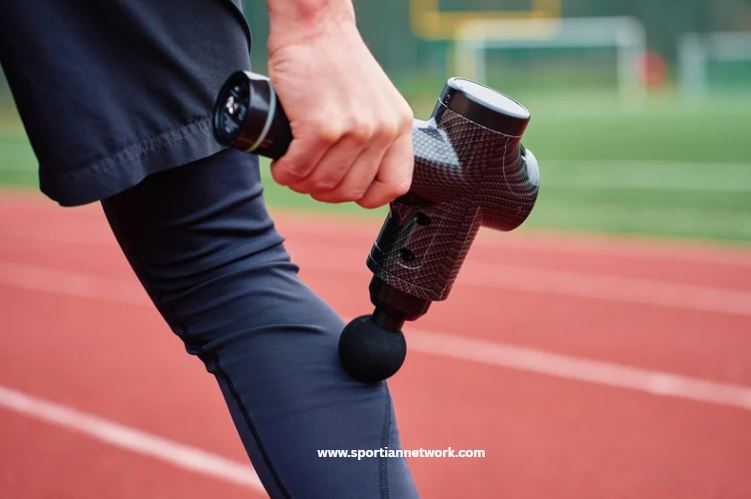
Massage guns work differently. They pump out short bursts of pressure on the muscles at a high frequency, similar to the mechanisms of a jackhammer, combining percussive therapy and vibration to reach deeper into the tissue faster.
What the Research Actually Says
Here’s where it gets interesting, and a little humbling if you’ve spent serious money on either tool.
While percussive massage and foam rolling are increasing in popularity, there is still no clear scientific evidence to explain how their mechanical stimuli translate into therapeutic effects for DOMS. That’s not a knock on either tool. It just means the science hasn’t fully caught up to the marketing yet.
What researchers have found is that both tools do produce real, measurable benefits. A 2025 study of 60 participants found that foam rolling showed a significant reduction in muscle stiffness. Similar studies on massage guns found reductions in soreness and improvements in range of motion as well.
One thing that came out of a 2025 study from La Trobe University is worth knowing, especially if you’re tempted to use these tools right before a training session. Both foam rolling and massage gun use may acutely impair aspects of physical performance compared to a dynamic warm-up alone, meaning if you go heavy on either tool right before an explosive workout, your jump height and sprint speed might actually take a small hit. Save these tools for after your session, not before it.
There’s also one notable difference between the two when it comes to timing. Evidence suggests that foam rolling may result in modest increases in ankle range of motion and lower muscle soreness levels, while massage guns showed a slightly stronger effect on sprint time impairment when used pre-workout. So if you’re doing anything that requires quick, explosive output, the foam roller is the less disruptive pre-game option of the two, though ideally you’re doing neither immediately before a max effort.
Where Foam Rolling Wins
Foam rolling has a few real advantages that don’t get talked about enough.
It forces you to slow down. You can’t rush foam rolling and get the same benefit. When you roll slowly over a tight spot and pause on the tender areas, you’re spending meaningful time working through the tissue. That deliberate, slow pressure seems to produce better results for muscle stiffness than quick passes. One key piece of advice that keeps coming up in research: roll slow, not fast. Speed kills results.
It covers more surface area. Your IT band, your thoracic spine, your glutes — a foam roller handles large muscle groups in a way that’s hard to replicate with a massage gun attachment. For broad areas, the roller just works better.
It’s cheap and doesn’t need charging. A solid foam roller costs $20 to $40. That’s it. No batteries, no apps, no proprietary attachments. If you’re consistent with it, the return on investment is genuinely great. For a deeper look at why consistent recovery matters as much as training itself, this piece on why recovery is more important than training lays out the bigger picture really well.
It’s beginner-friendly. There’s basically nothing to learn. You put the roller under a muscle, you use your body weight to apply pressure, you breathe through it. Done.
Where Massage Guns Win
The massage gun has earned its place in recovery routines too, and it’s not just marketing hype.
Precision on smaller, harder-to-reach areas. Your calves, the base of your neck, around your shoulder blades — these are spots where a foam roller is awkward and ineffective. A massage gun with the right attachment head can target exactly the area that needs it. This is probably where the gun earns its price tag most clearly.
Speed. The best time to use a massage gun is when you’re looking for deeper pressure or you have specific areas that need some extra attention. If you just finished a long run and one specific spot in your calf is absolutely screaming, you can work on that exact spot in 90 seconds. No setup, no awkward floor positioning required.
It’s easier on your joints. Foam rolling can be uncomfortable or even painful for people with knee issues, shoulder problems, or limited mobility, because you’re essentially doing a low-level bodyweight exercise while rolling. Getting into position on a foam roller requires range of motion and stability that some people simply don’t have. A massage gun eliminates that issue entirely.
You can use it on yourself or a partner. Athletes who train together often use massage guns on each other for areas that are genuinely hard to self-treat. The foam roller doesn’t offer that flexibility.
The Timing Question
This is something most articles skip over, and it matters a lot.
Post-workout: Both tools are genuinely useful here. This is the sweet spot for recovery-focused use. Your muscles are fatigued, circulation is already elevated, and applying pressure helps with blood flow and the clearing of post-training waste products. Give yourself 10 to 15 minutes with either tool and focus on the areas you actually worked that day.
Between sessions: This is where the massage gun earns extra points for convenience. On a rest day or between sessions, if you’re feeling tight somewhere, pulling out a massage gun for a few minutes is quick and easy. Dragging out a foam roller takes more commitment.
Pre-workout: Use neither aggressively, based on recent research. A light pass with a foam roller to warm up a stiff area is fine. But going hard on either tool immediately before explosive training can temporarily reduce power output. This might seem counterintuitive since both tools feel great, but the research points pretty clearly in this direction.
Pairing Recovery Tools With Strength Work
Here’s something that gets overlooked. Foam rollers and massage guns address the symptoms of tight, sore muscles. They don’t fix the underlying cause of why certain muscles get chronically tight in the first place.
If your hip flexors are always wrecked, or your calves constantly seize up, or one shoulder always feels like a ball of tension, that’s typically a movement or strength imbalance problem, not a foam rolling problem. Addressing weak stabilizers and improving movement patterns is what actually resolves recurring tightness for good. Working through these key strength exercises every athlete should master alongside a consistent rolling routine is a much more complete approach than relying on either recovery tool alone.
Recovery tools work best when they’re part of a bigger system, not the whole system.
So Which One Should You Get?
Here’s the honest answer, based on everything we know.
Get the foam roller if you’re newer to structured recovery, you’re watching your budget, you do a lot of running or lower body training, or you want something simple that you’ll actually use every day. A quality foam roller from TriggerPoint or similar brands runs $30 to $60 and does everything you need.
Get the massage gun if you deal with specific problem spots that are hard to reach, you want something fast and convenient, you travel frequently and want a portable tool, or you’ve already got a foam roller and want to add another layer to your recovery routine.
Get both if you’re training seriously and you have the budget. They genuinely complement each other. Use the foam roller for broad muscle groups and general post-workout work, and use the massage gun for targeted spots that need extra attention. That’s what a lot of well-recovered athletes actually do.
The biggest mistake people make with both tools is buying them and then barely using them. Either one, used consistently a few times a week, will make a noticeable difference in how you feel and how quickly you bounce back. And if you’re also paying attention to sleep, nutrition, and how your training volume affects your body over time, you’re already ahead of most people in the gym.
Quick Side-by-Side Reference
Foam Roller Best for: Large muscle groups, whole-body recovery sessions, improving range of motion over time Cost: $20 to $60 Learning curve: Very low Portability: Medium (bulky but light) Best time to use: Post-workout, rest days
Massage Gun Best for: Targeted spots, smaller muscles, quick recovery hits, hard-to-reach areas Cost: $80 to $350+ Learning curve: Low Portability: High (fits in a bag) Best time to use: Post-workout, between sessions, travel days
The truth is, the best recovery tool is the one you actually use. If the foam roller has been gathering dust in your closet for six months and the massage gun gets pulled out after every session, that’s your answer. Recovery doesn’t have to be complicated. It just has to happen, and happen consistently.
Pick the tool that fits your life, use it regularly, and your muscles will thank you for it.