The bench press does matter for sport, but not in the way most gym culture suggests. It builds horizontal pushing strength, pectoral and tricep mass, and anterior shoulder force production; and for contact sport athletes, combat sport competitors, wrestlers, and linemen, those qualities have clear on-field applications. However, for most team sport athletes, the bench press is a supporting exercise, not a priority lift. It should earn its place in a program based on what a sport actually demands, not because it is the most popular lift in the gym.
The real problem is not whether athletes should bench press. It is that too many athletes bench press instead of training movements that matter more, and do so without understanding the trade-offs.
What the Bench Press Actually Builds
Before deciding whether the bench press belongs in an athletic program, it helps to understand precisely what it develops and what it does not.
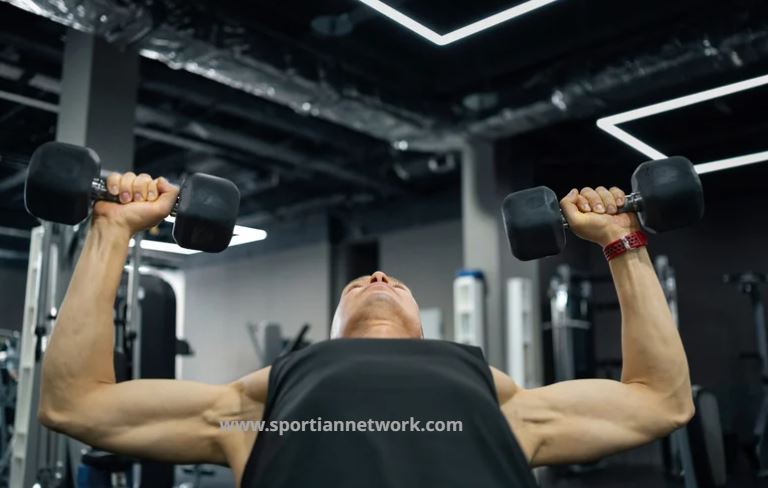
The flat barbell bench press is a horizontal pushing movement performed lying on your back. The primary muscles trained are the pectorals, anterior deltoids, and triceps. Secondary stabilizers include the serratus anterior, which controls scapular position, and the lats, which provide a stable base for the pushing motion when technique is dialed in.
What the bench press does not train is significant. It does not develop rotational power. It does not build the legs, glutes, or posterior chain. It does not train the body in a standing position where ground contact and force transfer through the kinetic chain are relevant. A 400-pound bench press does not automatically translate to a more powerful athlete on a field or court, because the movement pattern shares limited overlap with most athletic demands.
This is the core tension the article addresses. The bench press is a highly effective exercise for what it does. The question is whether what it does is worth the training time and recovery cost for a given athlete in a given sport.
Sports Where the Bench Press Has Direct Transfer
There is an honest case to be made for the bench press in several athletic contexts, and dismissing it entirely is as misguided as over-prioritizing it.
Contact sports are the clearest fit. In football, the bench press is actually a direct performance predictor for offensive and defensive linemen. Blocking requires sustained horizontal pushing force against a resisting opponent, which maps almost exactly to what the bench press develops. The NFL Combine bench press test of 225 pounds for repetitions is one of the few Combine metrics with a demonstrated correlation to on-field performance in the trenches. For linebackers, tight ends, and fullbacks, the same push strength applies in contact situations.
Wrestling and grappling sports benefit from upper body pressing strength in ways that are specific and meaningful. Wrestling training demands the ability to create pushing force from the chest and arms against a resisting opponent during tie-ups, when breaking grips, and when executing certain takedowns. A wrestler who cannot generate force in the horizontal pushing plane is at a structural disadvantage against opponents of equal skill. The bench press, alongside pushing variations like floor press and close-grip bench, builds exactly this capacity.
Combat sports like boxing and MMA involve significant pushing in clinch positions, creating separation, and generating force in punching mechanics, particularly straights and uppercuts. The chest, shoulder, and tricep chain contributes to punch power alongside the rotational hip and trunk mechanics most coaches emphasize. The Muay Thai beginners guide touches on the physical qualities fighters need, and upper body pressing strength is genuinely part of that picture, even if it plays a supporting role relative to rotational power and conditioning.
Throwing athletes like baseball pitchers, quarterbacks, and shot put competitors have a more nuanced relationship with the bench press. Raw horizontal pressing strength has some overlap with throwing mechanics, particularly through the pectorals and anterior shoulder. However, the specific velocities, range of motion, and muscle sequencing of throwing are different enough from the bench press that direct transfer is partial at best. For these athletes, the bench press is a useful strength builder for the tissues involved, but rotational medicine ball work and sport-specific throwing volume matter far more for actual performance.
Sports Where the Bench Press Has Limited Transfer
The honest answer for most sport athletes is that the bench press is a useful supplementary exercise, not a cornerstone movement.
Running sports including soccer, basketball, tennis, and distance running share almost no movement pattern with horizontal pressing. The power that determines performance in these sports comes from the legs, glutes, and posterior chain. A soccer player with a 315-pound bench press but weak posterior chain training is making a poor investment of their training time. As the posterior chain training article makes clear, the chain running from glutes through hamstrings is where athletic power lives for most sport applications.
Swimmers represent an interesting case. Shoulder health in swimming is already a persistent problem, as the swimmer’s shoulder article details. Heavy bench pressing adds anterior shoulder stress on top of significant existing overhead load. For most swimmers, the horizontal pressing slot in their training is better filled by movements that do not further compress the anterior shoulder, like push-up variations on handles or low-load dumbbell pressing with controlled range of motion.
Endurance athletes in running and cycling have almost no use case for the bench press beyond basic structural balance and injury prevention. Their performance is overwhelmingly determined by aerobic capacity, running economy, and leg strength. Time spent bench pressing is time not spent on higher-priority qualities.
Golf is worth specific mention because golfers often bench press thinking it will add power to their swing. It mostly does not. Golf swing power comes from hip rotation, trunk coil and uncoil, and the sequencing of the kinetic chain from ground through the club. The golf fitness article identifies the physical qualities that actually add distance, and horizontal pressing strength is not high on that list. A golfer who swaps bench press time for rotational medicine ball work and hip mobility will see far more power transfer to the course.
The Overhead Athlete Problem
One specific category of athletes needs to be cautious about heavy bench pressing: overhead athletes with existing or developing shoulder issues.
Heavy flat bench pressing loads the anterior shoulder and internally rotates the humerus. When an athlete is already spending significant hours in internally rotated overhead positions during their sport — baseball, volleyball, swimming, tennis serving — stacking heavy bench press on top dramatically increases the internal-to-external rotation strength imbalance that predisposes the shoulder to impingement, labral damage, and rotator cuff problems.
The rotator cuff exercises article addresses the posterior shoulder and rotator cuff strengthening work that counteracts this imbalance. For overhead athletes, the ratio of horizontal pulling to horizontal pushing work in the gym should be skewed heavily toward pulling. The standard advice in elite athletic performance programs is a 2:1 or even 3:1 pull-to-push ratio for overhead athletes. That does not mean eliminating the bench press entirely, but it means the lift earns a smaller slice of training time than many athletes give it.
The Real Issue: Opportunity Cost
Here is the angle that almost no gym article addresses honestly. Every set of bench press an athlete performs is a set they are not doing something else. Training time is finite, recovery resources are finite, and every exercise choice represents a trade-off.
For an athlete whose sport places a premium on posterior chain strength, leg power, rotational force production, and single-leg stability, spending four sets of bench press per week represents a significant investment in a quality that ranks sixth or seventh in their training priority list. That same training time invested in hip hinge mechanics, single-leg strength, or rotational power work would produce meaningfully greater sport performance return.
This is not an argument against the bench press. It is an argument for clarity about athletic priorities. The most important strength exercises for athletes article covers the hierarchy of movements that research and coaching experience consistently support as the highest priority for athletic development. Horizontal pressing makes the list, but it does not lead it.
The opportunity cost argument also explains why strength coaches at elite performance programs often program the bench press but rarely treat it as a primary lift for most sport athletes. It occupies an accessory slot, trained consistently for structural balance and upper body strength maintenance while the primary training emphasis sits on power production from the lower body, core, and total-body explosive movements.
How to Bench Press for Athletic Performance Specifically
If the bench press is in your program, the way you perform it matters as much as the load you use. Athletes training for sport performance bench press differently than powerlifters or bodybuilders, and the distinctions are meaningful.
Foot position is the first distinction. A powerlifting bench press involves significant leg drive and a pronounced arch, which maximizes the weight lifted by reducing range of motion. An athletic bench press is performed with feet flat, moderate natural arch, and full range of motion. The goal is developing the actual pressing musculature through its full range, not moving maximal load through a shortened path.
Bar path and scapular position matter enormously for shoulder health. The bar should trace a slight diagonal from lower chest at the bottom to just above the clavicle at lockout, not a straight vertical path. Scapulae should be retracted and depressed throughout the movement, which protects the acromioclavicular joint and keeps the pressing force on the pectorals rather than shifting load to the anterior capsule of the shoulder. Letting the scapulae wing forward at the top of each rep is one of the most common technique errors and one of the most common sources of bench-press-related shoulder irritation.
Load and rep range for athletic application favor moderate weight with explosive intent more than maximal grinding singles. The stretch-shortening cycle benefits of controlled eccentric loading followed by explosive concentric movement develops the reactive strength quality that translates to sport more than slow, grinding maximum effort lifts. Sets of four to six reps performed with controlled descent and explosive press, stopping well short of muscular failure, produce the best combination of strength development and nervous system stimulus for sport athletes.
Pairing with antagonist work is standard in well-designed athletic programs. For every pressing session, an equal or greater volume of horizontal rowing should appear in the same session. Bent-over rows, seated cable rows, single-arm dumbbell rows, and face pulls all balance the anterior shoulder loading of the bench press by strengthening the posterior shoulder and upper back. Athletes who bench press heavily without matching pulling volume develop the posture and shoulder imbalances that lead to injury. As the pull-up progression article covers, vertical pulling is equally important for shoulder health alongside horizontal pulling.
Bench Press Alternatives Worth Considering
For athletes where the bench press is not the ideal choice, these alternatives often deliver similar or superior training benefits with better fit to athletic demands.
Push-up variations are underrated by athletes who have outgrown them as beginner movements. Loaded push-ups, push-ups on rings, weighted vest push-ups, and archer push-ups challenge the pectorals and triceps in positions that require significant scapular and core stability. They train horizontal pressing in a closed-chain context where the body moves rather than the weight, which is closer to how force is applied in most sport situations.
Dumbbell pressing removes the fixed bar path that the barbell demands and allows the shoulder joint to move through its natural arc. This reduces the impingement risk of the barbell bench press significantly and allows training through a greater range of motion. Athletes with any history of shoulder problems often find dumbbell pressing far more comfortable and sustainable than barbell work.
Landmine pressing is one of the most sport-relevant pressing variations available. The landmine arc mimics the diagonal force application used in pushing off a defender, throwing, or generating rotational force. Because one end of the bar is fixed, the movement has an inherent rotational component that flat pressing lacks entirely.
Floor press eliminates the leg drive that can introduce technique compensation on the bench and limits the range of motion to the portion where pectoral loading is highest. For athletes with shoulder issues who need to maintain pressing strength, the floor press is often the most comfortable option.
Programming the Bench Press for Athletes
For athletes who include the bench press, periodization determines how it fits the training cycle. In an off-season strength-building phase, two bench press sessions per week is reasonable for contact sport athletes, with one focused on heavier strength work in the three to five rep range and one using moderate loads for volume. In-season, frequency typically drops to once per week as a maintenance stimulus while primary training focus shifts to sport-specific work.
The Westside Barbell method built an entire training system around the bench press and squat as the cornerstones of upper and lower body strength development. For powerlifters, that prioritization is correct. For most sport athletes, adapting the conjugate intensity principles while reordering the exercise hierarchy to put posterior chain and explosive lower body work first is the more appropriate approach.
Equipment selection matters too. If you are setting up a home training space, the power rack and squat stand comparison covers what you need to bench press safely without a spotter, which is a genuinely important consideration. Dropping a loaded barbell without safety pins has ended more than a few athletes’ training careers.
The Bottom Line on Bench Press for Athletes
The bench press is a legitimate and valuable tool in athletic strength development. It belongs in the programs of contact sport athletes, wrestlers, combat sport competitors, and any athlete who needs to generate horizontal pushing force against resistance. For these athletes, it is not just relevant — it is important.
For team sport athletes in running-dominant sports, endurance athletes, overhead throwing athletes managing shoulder health, and anyone where the posterior chain and rotational power represent the primary performance limiters, the bench press is a useful accessory at best. It should occupy a modest slice of training time relative to the hip-dominant, lower body, and rotational work that produces the greatest athletic return.
The most common mistake is not including the bench press. It is including it without asking whether that time could produce more return invested elsewhere. Ask that question honestly, and the bench press will either earn its place or quietly give up its slot to something that matters more for your sport.