A new concept is spreading through coaching rooms and training apps — and it’s not about more data. It’s about capturing the moments that data can’t see.
There’s a moment every serious athlete knows. You’re mid-training block, something clicks — a cue your coach gave you three weeks ago suddenly makes sense in your body, or you figure out that you play three times better when you slept eight hours and kept your warmup under 20 minutes. You feel it, you know it, and then… you forget it. Life moves on. The next session starts. That insight is gone.
That’s exactly the gap Axelanote is designed to close.
If you haven’t heard the term yet, you will. It’s picking up steam in fitness communities, among strength coaches, and inside the kind of sports performance circles where people obsess over marginal gains. Axelanote basically refers to a structured system — whether digital, app-based, or even a disciplined manual process — for capturing and organizing the key pivot moments, strategies, and insights that shape athletic performance over time. Think of it as a performance journal, but built with the logic of a database and the intent of a coaching playbook.
What Is a “Pivot Moment” in Sports Performance?
Before getting into what Axelanote does, it helps to understand what it tracks.
A pivot moment in athletic performance is any event, shift, or realization that changes the trajectory of how you train, compete, or recover. These aren’t just big breakthrough games or PR lifts. They’re subtler, and in many ways more important.
It could be the session where you realized your grip width was costing you six inches on your deadlift. It could be the week during competition prep where you cut carbs too aggressively and tanked your speed work. It could be a conversation your coach had with you about defensive positioning that suddenly made you 40 percent harder to beat one-on-one. These are pivot moments. They happen all the time, and most athletes have no structured way of capturing them.
Traditional training logs track sets, reps, splits, and times. They do not capture the qualitative insight behind why something worked. Axelanote fills that gap by creating a searchable, organized record of performance turning points so athletes and coaches can actually learn from the pattern, not just the numbers.
Why This Is a Bigger Problem Than It Sounds
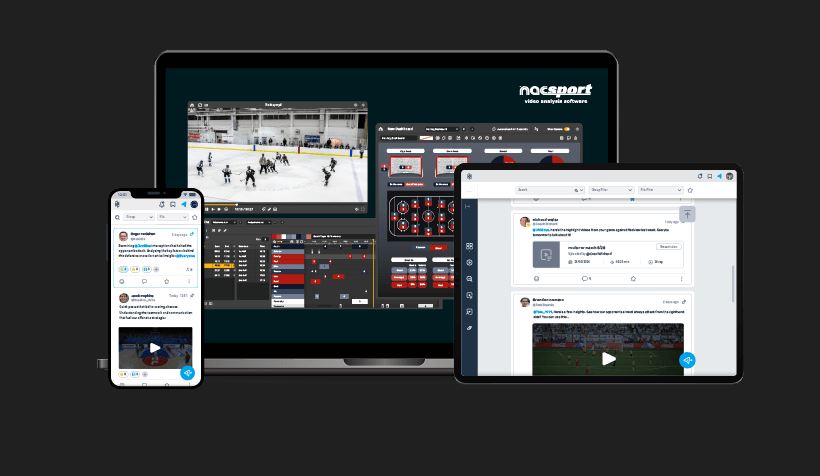
The sports science world has spent the last decade getting very good at collecting data. GPS vests, heart rate variability monitors, force plates, video analysis software. Research from Catapult shows that elite teams now use synchronized video and sensor data to break down in-game decision-making with frame-by-frame precision, identifying patterns in movement and positioning that would have been invisible a generation ago.
That’s genuinely impressive. But data without context is just noise.
A 2025 review published in BMC Sports Science and Medicine found that while deep learning systems are transforming motion tracking and predictive modeling in elite sports, real-time application across diverse disciplines remains inconsistent — because the human context layer, the “why this matters for this athlete,” hasn’t been solved by technology alone.
That’s where Axelanote steps in as a concept. It’s not a replacement for wearable tracking. It’s the layer on top of it where the human intelligence lives.
“The athletes who pull ahead aren’t the ones with more sensors on their bodies. They’re the ones with better systems for learning from themselves.”Performance Intelligence, 2026
How the Axelanote System Works in Practice
The word itself blends “axle” — the pivot point of any wheel or machine — with “note,” the act of recording. Put those together and you get the essential idea: write down what turned the wheel.
In practice, an Axelanote system typically involves three core behaviors.
The Three-Part Framework
Capture in real time. Log pivot moments immediately after they occur — a voice memo, a structured app note, or a flagged timestamp inside your workout tracker. The format matters less than the habit.
Categorize by type. Tag insights across categories: physical breakthroughs, tactical shifts, nutritional patterns, mental performance cues, recovery discoveries. This makes the system searchable months later.
Review on a schedule. Weekly, monthly, or seasonal reviews are where patterns emerge — and where performance actually compounds.
The real power shows up at the review stage. You sit down with your logged pivot moments and start identifying patterns. Maybe you notice that your best competitive performances consistently follow weeks where you did three specific things in your recovery routine. Maybe you spot that a particular coaching cue only worked when applied to a specific movement pattern, not others. This level of reflection is where individual performance stops being a mystery and starts being a system.
✦
It Fits Right Into How Modern Athletes Already Train
One of the reasons Axelanote is gaining traction is that it doesn’t ask athletes to completely overhaul their existing system. It plugs into the spaces that already exist.
If you’re already doing periodized training with linear or block programming, Axelanote gives each phase a qualitative layer. You’re not just tracking volume and intensity — you’re capturing what you learned during that block and carrying it forward into the next one.
If you’re an athlete who takes recovery seriously, the framework gives you a way to document which recovery protocols actually moved the needle for your specific body. There’s a huge difference between reading about foam rolling versus massage guns in theory and knowing from your own logged data that foam rolling your hip flexors the morning after a heavy lower-body session cuts your soreness recovery time by a full day. That’s the kind of personal insight Axelanote preserves.
It also works seamlessly with the growing emphasis on mental performance. Elite athletes increasingly train mental toughness as a deliberate physical skill, and the mental pivots that shift performance — a mindset reframe before competition, a visualization cue that calms your nervous system, a breathing pattern that resets focus — are exactly the kind of insights that disappear without a dedicated capture system.
Axelanote vs. a Regular Training Journal
People ask this a lot, and it’s worth being direct about the difference.
A training journal is a log. It tells you what happened. Axelanote is a pivot map. It tells you what changed and why.
Think about a coach watching film after a game. They’re not just documenting what players did. They’re identifying the moments where decisions shifted outcomes — where the defense broke down, where a single adjustment in footwork created three better scoring opportunities. That analytical frame applied to an individual athlete’s performance history is basically what Axelanote does.
Performance analysis experts have argued that the most powerful use of performance data is not in the tracking itself but in using evidence to reinforce positive behaviors and identify the moments of excellence that athletes can consciously replicate. Axelanote gives individual athletes and coaches a personal framework to do exactly that — without needing a team of analysts behind them.
Who Is Using This Approach Right Now?
The formal term “Axelanote” is new, but the underlying behavior has been practiced by elite performers for years in informal ways. Coaches at the highest levels of college and professional sports have long kept private performance notes that go well beyond standard stats. Strength and conditioning coaches build what they call “athlete insight libraries” over careers spent watching hundreds of athletes. What Axelanote does is give this practice a name, a structure, and a framework accessible to athletes at every level.
Right now the people gravitating toward Axelanote-style systems tend to fall into a few groups. Competitive amateur athletes who feel like they’re training hard but not learning from their training fast enough. Coaches who work with multiple athletes and want a consistent way to capture insights without letting them live only in their heads. And performance coaches and sports psychologists who want a shared vocabulary with their athletes for discussing non-statistical turning points in performance.
It’s also resonating strongly in individual sports like running, swimming, and cycling, where the feedback loop between coach and athlete is often delayed or entirely absent. Speed-focused athletes in particular often discover that their breakthroughs come not from more volume but from a single mechanical cue or training environment shift they nearly let slip away.
✦
The Science Behind Why It Works
There’s a real cognitive science reason why structured insight capture improves performance, and it has nothing to do with sports specifically.
The human brain is excellent at recognizing patterns but genuinely terrible at retaining them without reinforcement. You can have a breakthrough insight during a training session, feel completely certain you’ll remember it, and find that it’s fuzzy within 72 hours and gone within a week. This is why researchers in learning science have consistently found that spaced review of key insights accelerates skill acquisition far faster than just accumulating more practice hours.
A 2025 study in the journal Data proposed that structured analytical frameworks applied to performance insights — not just physical metrics — showed meaningful improvements in decision-making accuracy when athletes and coaches consistently reviewed behavioral and tactical data alongside traditional training numbers. The insight layer matters as much as the data layer.
When athletes consistently review their logged pivot moments before key competitions or training cycles, they’re basically doing a form of targeted priming — activating the specific patterns associated with their best performances right before they need them most.
Setting Up Your Own Axelanote Practice
You don’t need a fancy app to start. You need a system you’ll actually use.
Keep a dedicated capture space separate from your training log. This could be a notes app, a voice recorder, a specific notebook, or a performance journaling app. The key is that it’s only for insights and pivot moments, not for sets and reps.
After every meaningful training session or competition, spend two to five minutes asking yourself three questions. What shifted today? What did I learn that I didn’t know yesterday? What would I do differently — or the same — if I could replay this session?
At the end of each week, spend 10 minutes reviewing your entries and tagging them by category: physical, tactical, nutritional, mental, recovery. Look for any emerging patterns.
Before a competition or new training block, pull up your most relevant tagged insights from similar periods and review them deliberately. That’s it. The simplicity is the point. The value compounds over months and years as you build a personal performance intelligence library that nobody else has — because nobody else is you.
The Broader Shift This Represents
Axelanote as a concept reflects something bigger happening in the sports and fitness world right now. Athletes and coaches are recognizing that the obsession with measurable data — while valuable — has created a blind spot for the unmeasurable. The insight you had at mile 18 of a marathon about your pacing psychology. The coaching cue that finally unlocked your second serve. The recovery week format that somehow always produces your best performances the following Monday.
These things don’t show up in a GPS readout. They live in the minds of athletes and coaches, and too often they die there.
The best-performing athletes understand that recovery is where physical adaptation happens, and Axelanote extends that logic into the cognitive dimension. The review and reflection process is where performance insights become permanent. It’s where this week’s breakthrough stops being a fluke and starts being a repeatable edge.
The athletes who will pull ahead in the next decade aren’t just going to be the ones with better wearables. They’re going to be the ones with better systems for learning from themselves. That’s what Axelanote is really about.
Have your own experience with performance journaling or insight-tracking systems? The way you capture what works is just as important as the work itself.