Climbing is one of the few sports where the limiting factor is almost never cardiovascular fitness. Most climbers who plateau do so because their fingers, their pulling endurance, or their ability to hold body tension on a wall have stopped improving. The sport rewards a very specific combination of physical qualities that most general strength programmes do not develop, and training them in isolation produces slower gains than understanding how they interact and programming accordingly.
This guide covers the three physical pillars of climbing performance, how they connect, and how to train them progressively without accumulating the overuse injuries that end climbing careers early.
Why Climbing Strength Is Different From Other Sports
A climber on a vertical wall is managing multiple simultaneous demands that no other sport quite replicates. The fingers are hanging from edges measured in millimetres, the pulling muscles of the back and arms are working to move the body upward while the fingers maintain contact, and the core is transmitting force between the upper and lower body to prevent the hips from swinging away from the wall. Failure at any one of these points means falling off the route regardless of how capable the other two are.
This interdependence is why isolated finger training, isolated pull-up training, or isolated core training each produces incomplete climbers. The body learns to express strength in the patterns it trains. A climber who trains fingers with hangboards and pulls with rows but never trains the connection between them on the wall, or with exercises that replicate that connection, builds strength that does not transfer as completely as it should.
Understanding this does not mean abandoning targeted work. It means structuring targeted work around the integrated demands of the sport.
Finger Strength: The Highest Priority and the Biggest Risk
Why Fingers Are the Limiting Factor
The pulleys and flexor tendons of the fingers are the most sport-specific structures in climbing and the ones that take the longest to adapt. Cardiovascular fitness adapts in weeks. Muscle strength adapts in months. Tendon and pulley adaptation takes years of progressive loading. This asymmetry is why climbers who progress rapidly in other fitness qualities often develop finger injuries when they attempt routes that exceed the current capacity of their connective tissue.
The two main grip positions in climbing are the half crimp, where the first and second joints of the finger are bent at roughly 90 degrees and the tip joint is straight, and the full crimp, where the tip joint is also bent and the thumb wraps over the index finger. The full crimp generates more force but places significantly more stress on the A2 pulley, the structure most commonly injured in climbing. Understanding when to use each grip and how to load them in training requires a progressive approach rather than defaulting immediately to the strongest position.
Hangboard Training for Finger Development
The hangboard, also called a fingerboard, is a wooden or resin board mounted at height with a variety of edge sizes and hold types that allow systematic finger loading without the unpredictability of route climbing. It is the primary tool for targeted finger strength development and one of the most effective training tools available to climbers at any level.
The fundamental exercise is the dead hang, where the climber hangs from a chosen edge size for a set duration at bodyweight or with added weight. Edge size determines difficulty. A 20mm edge is moderately demanding for intermediate climbers. A 12mm edge is challenging for advanced climbers. Edges below 10mm require substantial finger tendon adaptation and are not appropriate for developing climbers.
A basic beginner to intermediate hangboard protocol uses the half crimp position on edges between 18 and 22mm. Six to ten second hangs with equal or slightly longer rest between hangs, repeated for four to six sets, provide an effective loading stimulus without accumulating excessive fatigue. The session should feel challenging but not cause joint pain during or after. Tenderness at the base of the fingers near the palm the following day indicates that load was appropriate. Sharp pain at the pulley during a hang means the session should stop.
Repeater Sets for Endurance
For climbing endurance rather than maximal finger strength, repeaters extend the hang duration and reduce rest intervals to build capacity for sustained gripping across longer routes. A common repeater protocol uses seven seconds of hanging followed by three seconds of rest, repeated for six to eight cycles per set. This format taxes the forearm flexors and finger flexors aerobically and builds the muscular endurance that allows sustained contact force across a pitch.
Our article on grip strength for athletes covers the broader mechanics of grip development across sports, and the finger-specific work described here sits at the most demanding end of that spectrum in terms of the precision of loading required.
Injury Prevention in Finger Training
The A2 pulley sits just below the first knuckle on the ring and middle fingers and is the structure that fails in the majority of climbing finger injuries. Symptoms include a popping sensation during a hard move, pain when gripping, and sometimes swelling around the base of the finger. Recovery from a partial A2 tear takes three to six months with careful rehabilitation. A complete rupture may require surgery and a year of recovery.
The preventive principle is simple to state and difficult to implement: progress finger loading more slowly than other fitness qualities. Climbers who feel strong on the wall and whose cardiovascular and muscle fitness has outpaced their finger tendon adaptation are the ones most at risk. Adding a training volume week over week without adequate recovery time for connective tissue to remodel is the most common pathway to pulley injury. Frequency of two dedicated finger sessions per week with at least 48 hours between sessions is the most evidence-aligned approach for development without excessive injury risk.
Pull Strength: The Foundation of Upward Movement
What Pull Strength Means in Climbing
Every upward movement in climbing involves pulling the body toward the wall and then pushing it upward from a stable position. The pulling muscles, primarily the latissimus dorsi, biceps, and rear shoulder complex, do the initial work of getting the body close to the wall and into position. Without adequate pull strength, climbers compensate by relying more heavily on their fingers to maintain position, which accelerates finger fatigue and increases injury risk.
Strong pulling muscles also protect the shoulder. When the scapula is properly stabilised by the lower trapezius and serratus anterior during pulling movements, the rotator cuff operates within a safe mechanical range. When pull strength is inadequate and the shoulder shrugs upward during climbs, the rotator cuff becomes vulnerable to impingement and overuse. Our guide on rotator cuff exercises covers the specific stabiliser work that protects overhead athletes, and climbers sit firmly in that category.
Pull-Up Variations for Climbers
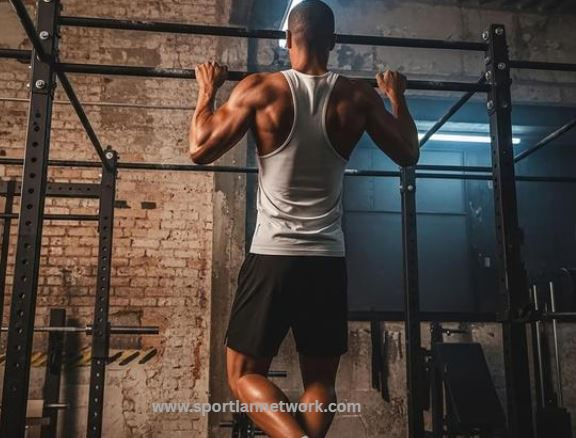
The pull-up is the foundational pulling exercise for climbing development and remains effective from beginner through elite levels when progressed correctly. Standard pull-ups develop general pulling strength. Variations that specifically serve climbing include the following progressions.
Shoulder-width pull-ups with a slow lowering phase of three to four seconds emphasise the eccentric loading of the lats and biceps that mirrors the lowering and repositioning movements of climbing. Four sets of five to eight reps with controlled tempo is the working range for strength development.
Offset pull-ups, where one hand grips the bar and the other grips a towel or sling hanging from the bar, load each side asymmetrically and develop the unilateral pulling strength that climbing requires on every move where one arm does more work than the other. This variation bridges the gap between bilateral pull-up strength and the sport-specific demands of climbing movement. Our pull-up progression guide covers how to build from foundational to advanced pulling capacity in a structured way that applies directly to climbing development.
Lock-off training holds the body at the top of a pull-up for a set duration, typically three to six seconds, before lowering slowly. The lock-off position, where the arm is bent at roughly 90 degrees with the chin above the bar, is used constantly in climbing to stabilise before the next hand move. Building isometric strength in this position directly improves performance on routes that require sustained engagement between moves.
Rows and Horizontal Pulling
Vertical pulling develops the lat-dominant movement of pulling the body upward. Horizontal pulling through rows develops the mid-back and rear shoulder muscles that stabilise the scapula and maintain shoulder health under the volume of vertical pulling that climbing demands. Neglecting rows while emphasising pull-ups creates a muscular imbalance that eventually expresses itself as shoulder pain.
Inverted rows on gymnastic rings or a bar, dumbbell rows, and cable face pulls performed for two to three sets of twelve to fifteen reps twice per week provide sufficient horizontal pulling volume to balance vertical pulling work without adding unnecessary fatigue. The upper body strength guide covers how to balance pushing and pulling patterns across a full upper body programme, and the climbing-specific application is to weight the programme heavily toward pulling relative to pushing at roughly a three-to-one ratio.
Core Strength for Climbing: Tension, Not Just Stability
What Core Control Means on the Wall
The core function that climbing demands is not the ability to do crunches or hold a plank. It is the ability to create and maintain full-body tension that connects the feet and lower body to the hands and upper body through a rigid midsection. When this tension fails on a steep wall or overhang, the hips swing away from the surface, the feet lose purchase, and the upper body is suddenly supporting the full weight of the body through the arms and fingers rather than distributing load across the whole system.
Climbing coaches describe the ability to maintain this tension as body tension or anti-sag, and it is one of the most commonly identified weaknesses in developing climbers. Athletes who are strong in their fingers and arms but lack body tension climb wastefully, expending far more energy than necessary on every move because they cannot efficiently transfer force from their lower body through their core to their hands.
Anti-Rotation and Anti-Extension Core Work
The core training that transfers to climbing is predominantly anti-rotation and anti-extension rather than flexion-based. Hollow body holds, where the lower back is pressed flat to the floor with the legs extended and arms overhead, replicate the full-body tension required on steep terrain. The athlete should maintain the position for 20 to 30 seconds without the lower back lifting from the floor, which is harder than it sounds for athletes who have only trained flexion-based core work.
Ab wheel rollouts develop anti-extension strength through the full range of motion that climbing uses on overhanging terrain. Starting from a kneeling position and rolling out to near-full extension trains the obliques, rectus abdominis, and hip flexors to resist extension under load. Three sets of eight to ten rollouts with a controlled tempo is appropriate for intermediate athletes building this capacity.
Our article on core training for athletes beyond crunches and planks covers the anti-rotation and anti-extension approaches that produce functional core strength, and climbers represent one of the clearest examples of athletes whose sport demands exactly this type of core control rather than the flexion strength that traditional abdominal training develops.
Hanging Leg Raises and Toe-to-Bar
Hanging from a bar and raising the legs to horizontal or higher develops the hip flexor and lower abdominal strength used when stepping the foot high onto a hold. On steep routes and roofs, climbers must bring their feet up to waist height or above while hanging from their arms. The hip flexor strength to do this while maintaining upper body stability requires the same hanging position as climbing itself, making this exercise unusually specific to the sport.
Three sets of eight to twelve controlled repetitions, avoiding momentum and controlling the lowering phase, builds the capacity for precise foot placement on challenging terrain.
Tension Boards and System Boards
For climbers with access to a dedicated training wall, tension boards, system boards, and campus boards provide integrated training that challenges fingers, pulling muscles, and core simultaneously in climbing-specific patterns. These tools allow more sport-specific loading than isolated exercises and are the primary training tools at elite climbing gyms.
Tension board sessions replace rather than supplement hangboard and pull-up work because the board already trains all three systems together. Athletes without board access can replicate much of the training effect through the combination of hangboard, pull-up variations, and the core exercises described above, which together address the same physical demands in a slightly less integrated but still highly effective way.
Programming All Three Together
Frequency and Session Structure
The most common programming error in climbing-specific training is excessive frequency of finger loading. Because hangboard sessions feel manageable and the gains are visible, athletes are tempted to do them daily. Finger tendons require 48 to 72 hours to complete the remodelling cycle that produces adaptation. Training before this cycle completes accumulates structural fatigue without additional stimulus, which is the pathway to pulley injuries.
A sustainable structure for most developing climbers uses two dedicated training sessions per week that each include hangboard work, pull-up variations, and core exercises, with two to three actual climbing sessions on the wall. The training sessions load the specific structures with targeted exercises. The climbing sessions develop movement skill and integrate the physical qualities into sport-specific patterns. Rest days allow the full recovery cycle that connective tissue requires.
Session structure within each training day places hangboard work first when the fingers are fresh, followed by pull-up and row work, then core exercises at the end. Reversing this order fatigues the fingers before the most delicate and injury-sensitive work, which increases injury risk without any benefit to training quality.
Managing Load With RPE
Climbing training load is difficult to quantify precisely because the variables of edge size, body weight, hang duration, and rest interval all interact. Session RPE as a monitoring tool, assigning a score of one to ten to the overall difficulty of each session, provides a useful check on cumulative fatigue across weeks of training. A sustainable weekly training load should feel consistently demanding at around six to seven out of ten without sessions regularly exceeding eight. Our session RPE guide covers how to use this monitoring approach across a training week, and the principle applies directly to climbing training where objective load metrics are less standardised than in barbell-based sport.
Mobility as the Fourth Variable
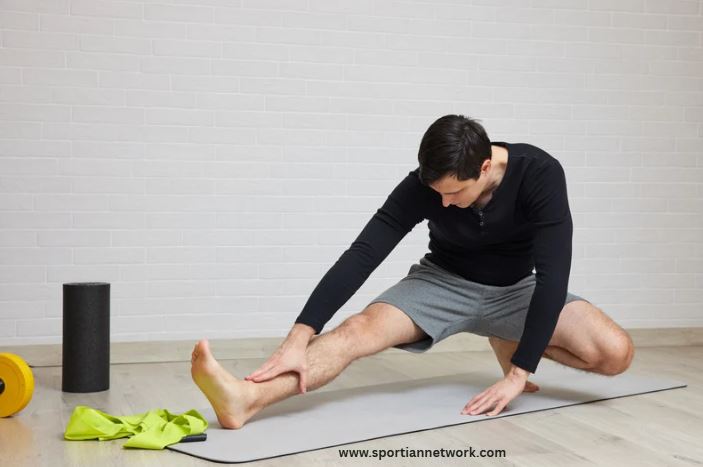
Climbers who lack hip mobility compensate by relying more heavily on upper body strength to maintain position on high-footed moves. Athletes who lack shoulder mobility limit their reach and cannot exploit the full range of positioning available on a route. Mobility work is not an optional add-on for climbing performance but a genuine performance variable that determines how much of the strength the athlete has built can actually be expressed on the wall. Our piece on why mobility is the missing piece in most athletic training addresses this directly, and the hip and shoulder mobility applications are particularly relevant for climbing performance.
Hip flexor mobility and external rotation at the hip allow the foot to be placed high and to the side without the hips rotating away from the wall. Shoulder flexion mobility determines how high the arm can reach overhead without the shoulder shrugging. Both areas improve with consistent targeted work and both limit climbing performance when neglected even by athletes who are strong in all three primary pillars.