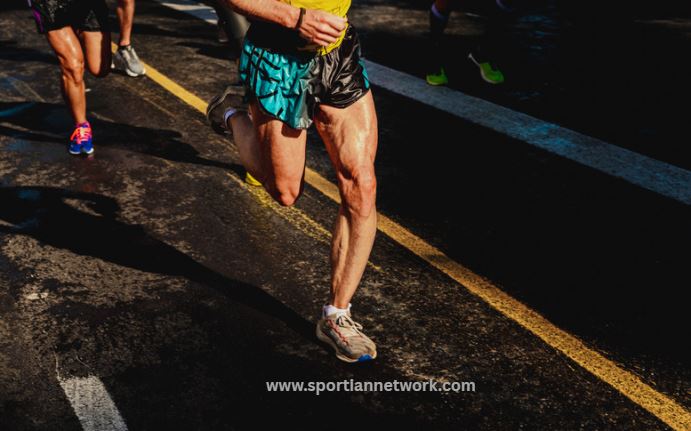
Most athletic training programs treat calf training as an afterthought. A few sets of standing calf raises at the end of leg day, done quickly, and then forgotten. That approach massively underestimates one of the most loaded muscle groups in the entire body. The calf complex absorbs forces equivalent to six to eight times your bodyweight with every running stride. Yet most programs load it with body weight and a dumbbell. That gap between what the calf actually handles in sport and what it gets in the gym explains a significant number of lower leg injuries that sideline athletes every season.
Here is what proper calf training for athletes actually looks like, and why it is far more important than most coaches recognize.
Understanding the Two Muscles Inside the Calf Complex
Before training the calf effectively, you need to understand that the calf is not one muscle. It is two distinct muscles with different fiber types, different functions, and different training requirements. Most programs train only one of them. That oversight is precisely where the gap begins.
The gastrocnemius is the large, visible muscle at the back of the lower leg. It crosses both the knee and ankle joints, which means it contributes to both knee flexion and ankle plantarflexion. Because it contains a high proportion of fast-twitch muscle fibers, it responds best to explosive movements and heavier loading with lower rep ranges. This is the muscle that fires during jumping, sprinting, and aggressive changes of direction.
The soleus sits underneath the gastrocnemius, deeper and flatter. Unlike the gastrocnemius, it crosses only the ankle joint. It contains predominantly slow-twitch fibers, making it highly fatigue-resistant and ideally suited for sustained load over time. During sustained running, walking, and prolonged standing, the soleus handles the majority of the work. Critically, it also attaches directly to the Achilles tendon, which means soleus weakness is a primary contributor to Achilles tendinopathy in running athletes.
The key training distinction is this: a straight-leg calf raise primarily loads the gastrocnemius. A bent-knee calf raise, with the knee flexed to approximately 30 degrees, shifts the emphasis almost entirely to the soleus. Most programs do only straight-leg variations. As a result, most athletes have a reasonably developed gastrocnemius but a chronically undertrained soleus. That imbalance drives both injury and performance limitations in ways athletes rarely connect back to the calf.
Why the Calf Is Chronically Undertrained in Athletic Programs
There are three reasons this happens consistently across sports programs at every level.
First, standard load recommendations are far too low. A set of 15 bodyweight calf raises creates virtually no meaningful stimulus for an athlete who absorbs six to eight times their bodyweight per stride during running. The calf is an extremely high-load muscle in daily function. To stimulate adaptation in the gym, the load must significantly exceed what normal locomotion demands. That means heavy single-leg calf raises with added weight, not comfortable sets on a machine.
Second, the soleus specifically requires volume that most programs do not provide. Research on Achilles tendon health and soleus adaptation consistently shows that the soleus needs high-rep, slow-tempo loading to develop genuine fatigue resistance. Three sets of 15 reps simply does not accumulate enough total load to drive the kind of tendon adaptation that protects athletes from overuse injury over a long season.
Third, coaches and athletes focus on the muscles they can see. The quadriceps, hamstrings, and glutes get programmed deliberately because they are visually obvious contributors to athletic performance. The calf gets added at the end as an afterthought, if at all. However, as discussed in the broader context of underrated muscles every athlete should train more, the soleus is one of the most consistently neglected muscles in athletic programming, and the consequences show up in injury rates and performance ceilings.
How Undertrained Calves Limit Athletic Performance
The performance consequences of weak calves are concrete and measurable, even if athletes rarely identify them as a calf problem.
Sprint speed suffers directly. The calf, particularly the gastrocnemius, produces the ankle plantarflexion force that drives each stride. Weak calves mean reduced push-off force per stride, which means slower acceleration and lower top speed. Explosive speed development is partly a calf strength problem, especially in the acceleration phase where push-off demands are highest.
Jump height is limited. The triple extension pattern that produces jumping power, which involves the hip, knee, and ankle extending simultaneously, depends on forceful plantarflexion from the calf in its final phase. Athletes with strong glutes and quads but weak calves lose power at the ankle and leave height on the table regardless of how well the rest of the chain fires. Furthermore, landing mechanics also depend on the calf working eccentrically to absorb impact, which is a quality that only develops through specific eccentric calf loading.
Endurance drops late in games. The soleus is the primary fatigue-resistant calf muscle. When it is undertrained, it fatigues faster during prolonged running, and the gastrocnemius compensates by working harder than it should. That compensation creates excess Achilles tendon load and is one of the major reasons athletes develop calf cramps and lower leg tightness in the final stages of competition.
The Right Way to Load the Calf for Athletic Performance
Effective calf training for athletes requires addressing both muscles with appropriate load, appropriate rep ranges, and specific attention to the eccentric phase.
Heavy Single-Leg Calf Raise for Gastrocnemius Strength
Stand on one foot on the edge of a step with your heel below the step level. Lower slowly to a full stretch over three to four seconds. Then rise explosively onto the ball of your foot, pausing briefly at the top. Return under control. The single-leg variation is essential because during running and jumping, the calf always works unilaterally. Bilateral calf raises allow each leg to compensate for the other and dramatically underestimate the true single-leg strength demand.
Add load progressively by holding a dumbbell or wearing a loaded backpack. Most athletes are surprised how much weight they can eventually handle here. Three to five sets of six to ten reps per leg, with a full range of motion from stretched to maximally contracted, builds the kind of gastrocnemius strength that transfers to the track and field.
Seated or Bent-Knee Calf Raise for Soleus Strength and Tendon Health
Sit on a bench or chair with your feet flat on the floor. Place a weight plate or dumbbell across your knees for added resistance. Rise onto your toes, hold briefly at the top, and lower slowly. Because the knee is bent, the gastrocnemius is largely slackened and the soleus handles almost all the work.
For genuine tendon adaptation, this exercise needs higher volume and slower tempo than most athletes use. Four to five sets of 15 to 25 reps with a three-second lowering phase builds soleus endurance and drives the tendon remodeling that protects the Achilles over time. The connection between soleus strength and Achilles health is covered in detail in the shin splints guide, which explains how lower leg loading patterns determine injury risk across several common running injuries.
Eccentric Calf Lowering for Injury Prevention and Tendon Resilience
Stand on one foot on a step. Use both feet to rise onto your toes. Then shift all your weight to one foot and lower the heel slowly below step level over five to six seconds using only the single leg. This isolates the eccentric phase, which is where the calf absorbs the highest forces during running and landing.
Eccentric loading is the most powerful stimulus for tendon adaptation. Research on eccentric calf protocols has consistently shown significant reductions in Achilles tendinopathy symptoms and meaningful improvements in tendon stiffness, which is a protective quality. However, eccentric work is also the most demanding on the muscle and tendon. Start with two to three sets of eight to ten reps per leg and build volume gradually over several weeks.
Jump Rope and Plyometric Calf Work for Explosive Stiffness
The calf also needs to train its elastic, reactive function, not just its slow strength capacity. During running, the calf acts as a spring, storing and returning energy through the Achilles tendon. Developing this elastic stiffness requires fast, reactive loading rather than slow strength work alone.
Jump rope is the simplest and most effective tool for this. Ten minutes of continuous jump rope, particularly on the balls of the feet with minimal knee bend, trains the gastrocnemius and Achilles to work reactively. Alternatively, pogo hops, which involve bouncing rapidly with stiff ankles and minimal knee bend, develop the same quality with more direct control over the movement pattern. The broader plyometric training guide explains how reactive strength training fits into a complete athletic program alongside traditional strength work.
Programming Calf Training Effectively Through the Week
With the exercises established, the question becomes how to fit them into an existing training week without overloading the lower leg.
For most athletes, two dedicated calf sessions per week is the right starting point. However, calf training is unusual compared to most muscle groups in that it tolerates higher frequency relatively well. Because of the high percentage of slow-twitch fibers in the soleus, it recovers faster than primarily fast-twitch muscles and can often be trained more frequently without accumulating excessive fatigue.
A practical approach is to attach one heavy session and one endurance-focused session to existing lower body training days. On a squat or deadlift day, add three to four sets of heavy single-leg calf raises after the main work. On a second lower body day, add four to five sets of seated soleus raises with slow tempo and higher reps. Add the eccentric lowering work two to three times per week as it is less fatiguing than heavy concentric work and primarily drives tendon adaptation rather than muscle damage.
One honest flag worth raising here. Athletes who have never trained the calf with real volume and load will experience significant soreness in the first two to three weeks. This is normal and expected, because the muscle is adapting to demands it has not previously encountered. The soreness should subside as training continues. However, any sharp pain in the Achilles tendon itself warrants reducing load and seeking assessment before progressing.
Connecting Calf Strength to the Posterior Chain
The calf does not work in isolation. It functions as the final link in the posterior chain, which includes the glutes, hamstrings, and lower leg working together to propel the body forward during running and absorb force during landing. A strong calf amplifies the power generated upstream by the glutes and hamstrings. A weak calf creates a leak at the bottom of that chain, reducing the efficiency of everything above it.
This is why comprehensive posterior chain training always benefits from including deliberate calf work alongside the deadlifts, Romanian deadlifts, and hip thrusts that most programs already include. The calf is the last muscle to receive programming attention and often the first to create problems when that attention is missing.
Giving the calf the load it actually deserves, through heavy single-leg work, high-volume soleus training, and reactive jump rope sessions, closes a gap that most programs leave open for years. The athletes who close it first tend to notice the difference not just in how their lower legs feel, but in how much faster and more resilient they become on the field.