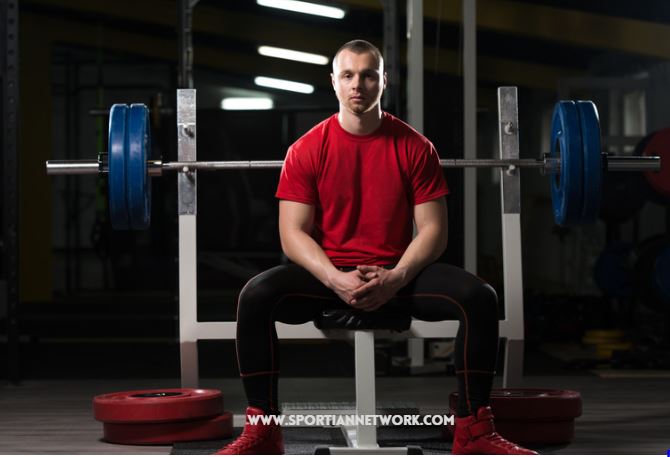
Powerlifting is the simplest sport in the world to understand. Lift as much weight as possible in three movements: the squat, the bench press, and the deadlift. Your total across all three determines your result.
Simple to understand. Not simple to do well.
Most people who want to start powerlifting make the same mistakes. They load the bar too heavy too soon, develop technique problems that take years to unlearn, and wonder why they stall after three months of rapid progress. A few learn the fundamentals properly and build strength that compounds for decades.
This guide is for the second group.
What Powerlifting Actually Is
Powerlifting is a strength sport contested across three lifts. The back squat, the bench press, and the deadlift. Competitors get three attempts at each lift. The highest successful attempt from each lift is added together for a total. The athlete with the highest total in their weight class and age category wins.
Competitions are held across federations with slightly different rules. The IPF, International Powerlifting Federation, is the largest and most widely recognized. It has the strictest technical standards and drug testing protocols. Other federations like the USPA, WRPF, and RPS have different equipment rules, depth standards, and testing policies.
For beginners, federation choice does not matter immediately. Learn the movements correctly first. Compete later. The technical standards that matter for competition are the same ones that produce the best long-term strength development anyway.
Powerlifting is different from Olympic weightlifting, which involves the snatch and clean and jerk. It is different from strongman, which involves a variety of events. And it is very different from bodybuilding, where the goal is physique rather than strength performance. Knowing what you are training for clarifies how to train for it.
The Mindset Shift Powerlifting Requires
Before touching a barbell, understand something that separates powerlifting from general gym training. Powerlifting is a technical sport. Strength matters enormously. But technique determines how much of that strength you can express safely and consistently under competition conditions.
A raw, untrained person who just loads weight onto a bar and grinds is not powerlifting. They are injuring themselves slowly. The difference between the two is technical discipline applied consistently over time.
This means your first months of powerlifting should involve weights that feel almost embarrassingly light. Not because you are weak. Because you are building movement patterns at a neural level, and those patterns must be established correctly before load is added. Squat form and deadlift mechanics are not things you figure out on the way up in weight. They are things you master before the weight becomes meaningful.
Ego is the enemy of progress in powerlifting. The lifters who add weight to the bar before they have earned it plateau early and get hurt. The lifters who stay technical and patient build strength that does not stop.
The Squat: Foundation of Powerlifting
The competition squat requires the lifter to descend until the hip crease drops below the top of the knee, then stand back up to full lockout with the bar controlled throughout. This is called hitting depth. Missing depth is the most common reason beginners bomb out at competitions.
Setting up correctly is where the squat begins. The bar sits across the upper back, either high bar position resting on the trapezius or low bar position resting on the rear deltoids and spine of the scapula. Low bar is more common in powerlifting because it allows a more horizontal torso, greater hip involvement, and typically heavier loads. High bar allows a more upright torso and is preferred by athletes with longer femurs or a weightlifting background.
Foot position varies by anatomy. A wider stance with toes turned out suits athletes with wider hips and allows better depth without forward knee travel. A narrower stance suits athletes with narrower hip structure. There is no universal correct stance. Find the position that allows you to reach depth comfortably with a neutral spine.
The descent should be controlled, not dropped. Sit back and down simultaneously. Keep the chest up. Knees track in the direction of the toes throughout the movement. At the bottom, brace hard and drive the floor away through the whole foot. The ascent should feel like you are pushing the earth downward, not just standing up.
Breathing and bracing is everything in the squat. Take a deep breath into the abdomen before unracking. Brace your entire core as if you are about to take a punch. This intra-abdominal pressure stabilizes the spine under load. Do not exhale until you have completed the rep. Losing your brace mid-squat with heavy weight on your back is how spinal injuries happen.
The Bench Press: Upper Body Strength Expression
The competition bench press requires the bar to be lowered to the chest, paused until the bar is motionless, then pressed to full lockout on a command from the judge. The pause requirement distinguishes powerlifting bench from the touch-and-go bench most gym athletes use. Learning to pause from the beginning prevents bad habits.
Setup on the bench matters more than most beginners appreciate. Feet flat on the floor or driven back toward the hips for leg drive. Upper back pinched tight and slightly arched. Shoulder blades retracted and depressed, pulled back and down simultaneously. This creates a stable platform and protects the shoulder joint by keeping it in a mechanically safe position through the press.
Grip width is individual. A wider grip shortens the range of motion and engages more chest. A narrower grip increases tricep involvement and range of motion. Most powerlifters use a grip just outside shoulder width. Competition rules prohibit the index fingers from being wider than 81 centimeters on the bar’s knurling marks.
The bar path is not straight up and down. It traces a slight arc, touching the chest at the lower sternum or upper abdomen and finishing over the upper chest at lockout. This arc minimizes shoulder stress and maximizes mechanical efficiency.
Leg drive is the most underused technique element in beginner bench pressers. Driving the feet into the floor while pressing transfers force through the entire kinetic chain, adding stability and measurable pounds to the lift. Learn it early.
Upper body strength development that supports powerlifting bench press includes shoulder stability work, tricep development, and upper back strength. The rear deltoids, rhomboids, and lower trapezius that hold the setup position are as important as the pecs that drive the press.
The Deadlift: Raw Strength Made Visible
The deadlift is the most honest lift in powerlifting. The bar is on the floor. Pick it up. Stand up straight. Put it down. No equipment assists your position. No elastic energy from the stretch-shortening cycle. Just you and the weight.
Two styles dominate powerlifting. Conventional deadlift with feet hip-width apart and hands outside the legs. Sumo deadlift with a wide stance and hands inside the legs. Both are legal in most federations. Conventional requires more back contribution and suits lifters with strong posterior chains. Sumo reduces the range of motion and suits lifters with hip structure that allows the wide stance without restriction.
Most beginners should start conventional. It builds the posterior chain systematically and teaches the hip hinge movement pattern that underpins dozens of other strength exercises. Sumo can be explored once the conventional mechanics are established.
The setup begins with the bar over the mid-foot, roughly one inch from the shin. Hinge at the hip and grip the bar just outside the legs. Before pulling, take the slack out of the bar by creating tension in the arms and upper back without the bar leaving the floor. Then brace, squeeze the lats as if bending the bar around your body, and pull.
The bar should travel in a straight vertical line close to the body throughout. Letting the bar drift forward exponentially increases the mechanical load on the lower back. Think about dragging the bar up your shins and thighs. Wear long socks or deadlift socks to protect the skin.
At lockout, stand fully upright with hips through and shoulders back. Do not hyperextend the lower back at the top. Simply reach a neutral standing position. Lower the bar under control. Dropping from lockout is acceptable in training but judges in competition expect a controlled descent.
The posterior chain work that most directly supports the deadlift includes Romanian deadlifts, good mornings, back extensions, and glute hamstring raises. These accessory movements build the specific strength that carries over to competition deadlift totals.
Programming for Beginners: The Principles That Work
Powerlifting programming for beginners is simpler than the internet makes it appear. A few core principles govern all effective beginner programs.
Train the competition lifts frequently. Squat, bench, and deadlift two to three times per week each. Frequency builds motor patterns faster than once-per-week training. Beginners improve primarily through neural adaptations, learning to use the strength they already have more efficiently. More practice accelerates this.
Use linear progression. Add small amounts of weight every session or every week. Five pound increases on upper body lifts. Ten pound increases on lower body lifts. This is sustainable for three to six months for most beginners. Do not complicate it. The barbell is going up. That is the goal.
Keep volume moderate. Three to five working sets of three to five repetitions per lift per session is enough volume for beginners to progress rapidly. More volume is not better when the limiting factor is technique and neural adaptation. Save higher volume for intermediate programming.
Rest adequately between sets. As covered in the rest period guide on Sportian Network, heavy compound lifts require three to five minutes of rest between working sets. Do not rush. The quality of each set determines the training effect.
Record everything. Every session: the weights used, the sets completed, and any technique notes. Powerlifting progress is measured over months and years. A training log turns subjective feelings into objective data. It also prevents the common beginner mistake of adding weight inconsistently or repeating the same session indefinitely without progression.
Three programs designed specifically for beginner powerlifters that follow these principles include Starting Strength, StrongLifts 5×5, and the Juggernaut Method beginner template. All three use linear progression, high-frequency competition lift training, and moderate volume. Any of them works. Consistency with one program outperforms program hopping between all three.
Equipment for Beginners: What You Actually Need
Powerlifting requires minimal equipment to start. Here is the honest list.
Flat-soled shoes. Your first powerlifting purchase. Running shoes with cushioned heels create an unstable surface for squatting and deadlifting. The compressible foam under your heel dissipates force and reduces proprioceptive feedback from the floor. Converse Chuck Taylors are the traditional beginner recommendation. Deadlift slippers and dedicated powerlifting shoes are the next step. For squatting, many lifters prefer heeled weightlifting shoes that assist with ankle mobility and upright torso position.
A belt. Not mandatory immediately but important once you are squatting and deadlifting meaningful weight. A 10mm single-prong or lever belt supports intra-abdominal pressure by giving the abdominal muscles something to brace against. Learn to lift without a belt first so you develop core strength independently. Introduce the belt when weights start feeling genuinely heavy rather than from session one.
Knee sleeves. Neoprene sleeves provide warmth, compression, and proprioceptive feedback at the knee joint. They do not add significant pounds to the squat the way knee wraps do. They are legal in all federations as a basic accessory. Useful for athletes with sensitive knees or those training in cold gyms.
Chalk. Magnesium carbonate chalk improves grip dramatically on the deadlift and bench press. Most serious gyms allow it. Buy a block. It is inexpensive and the grip improvement is immediately noticeable.
Wrist wraps. Support wrist stability during the bench press. Useful for athletes with wrist discomfort under load. Not essential for beginners but worth having as training weights increase.
What you do not need immediately: a squat suit, bench shirt, knee wraps, or any of the supportive gear used in equipped powerlifting. Learn raw lifting first. Equipped lifting is a separate discipline explored after raw technique is established.
Understanding and Avoiding the Most Common Injuries
Powerlifting done correctly is not particularly injurious. The injury rate in powerlifting compares favorably to many team sports when technique is prioritized. The injuries that do occur in powerlifting are almost always traceable to one of three causes.
Too much weight too soon. The most common cause. Ego loading is the phrase the powerlifting community uses. Adding weight before the technique and connective tissue strength are ready. Tendons and ligaments adapt more slowly than muscles. You can feel stronger than your connective tissue is prepared to support.
Poor technique under fatigue. Technique degrades when you are tired. A squat that looks perfect at 70 percent of maximum looks very different at 95 percent after multiple heavy sets. Training close to technical failure repeatedly accumulates the microtrauma that becomes injury.
Inadequate warm-up. Cold tissue is less extensible and more vulnerable to strain. A thorough warm-up that progressively loads the specific movements of the session is mandatory. Start with the empty bar. Work up gradually through 40, 50, 60, 70, and 80 percent of your working weight before touching your first working set.
ACL and lower limb injury prevention principles apply directly to powerlifting. Knee tracking, hip stability, and landing mechanics all matter in the squat. Athletes who come from team sports bring existing injury risk patterns that powerlifting can either correct or aggravate depending on how carefully they establish their technique foundation.
Recovery protocols including sleep, nutrition, and soft tissue work are especially important in powerlifting because the spinal loading from squats and deadlifts requires genuine recovery time. Training powerlifting movements when genuinely fatigued is not just less effective. It is structurally riskier than training most other sports when tired.
Nutrition for Powerlifting: The Basics
Powerlifting nutrition is straightforward compared to weight-class sports with aggressive cutting strategies. For beginners, two things matter most.
Eat enough to support training and recovery. Powerlifting training is calorie-demanding. Squats, deadlifts, and heavy bench press are metabolically expensive. Training in a significant caloric deficit limits strength progress and recovery capacity. Beginners who are not actively trying to cut weight should eat at or slightly above maintenance.
Prioritize protein. Muscle protein synthesis from heavy strength training is elevated for 24 to 48 hours after a session. Providing adequate amino acids during this window directly supports the muscle adaptation that produces strength gains. The evidence-based protein recommendations for strength athletes sit at 1.6 to 2.2 grams per kilogram of bodyweight per day. Spread across four or more meals for optimal muscle protein synthesis throughout the day.
Creatine monohydrate is the one supplement with the most consistent evidence for powerlifting performance. It increases phosphocreatine stores, improving energy availability for maximal efforts, and has demonstrated strength gains across hundreds of controlled trials. Five grams daily, no loading phase needed. Safe, cheap, and effective.
Weight class management becomes relevant for athletes who compete. But the time to think about that is after your first year of consistent training. Beginners who are preoccupied with making a weight class before they have built a meaningful strength base are optimizing the wrong variable entirely.
Your First Competition: What to Expect
Competing in your first powerlifting meet is one of the best things you can do for your development, even if you feel nowhere near ready. Here is why.
Meets create a deadline. Deadlines organize training. An athlete preparing for a competition six weeks away trains with more purpose and consistency than one training indefinitely with no external goal.
Meets expose technique under pressure. Lifting in front of judges and an audience with red and white lights determining your success adds a psychological dimension that training cannot replicate. Learning to perform under that pressure is a separate skill from lifting the weight.
Meets connect you to the community. Powerlifting communities at meets are almost universally welcoming to beginners. Experienced lifters help beginners with attempts, equipment, and warm-up timing. The environment is collaborative, not competitive in a hostile sense.
For your first meet, choose a local, single-day meet in a beginner-friendly federation. Attempt weights you are confident in. The goal is not to total as much as possible. It is to go three for three on each lift, complete the experience, and understand what competition feels like. Openers should be weights you can triple on a bad day with no preparation.
The science of tapering for competition applies to powerlifting exactly as it does to any other sport. Reduce volume in the final two weeks before competition. Maintain intensity. Arrive at meet day fresh, not fatigued from a hard final training week.
The International Powerlifting Federation website lists affiliated national federations and competition calendars globally. Finding a local meet is simpler than most beginners expect.
Final Word
Powerlifting rewards patience more than almost any other sport. The athletes who build their total over years by staying technical, progressive, and consistent outperform those who try to rush strength development every single time.
Learn the movements correctly. Add weight slowly. Rest adequately. Eat enough. Compete early. Stay humble about what you do not yet know.
The barbell does not care about your ego. It only responds to consistent, intelligent work applied over time. That is what makes powerlifting one of the most honest athletic pursuits available.