
Every sport produces moments where everything is on the line. The final possession. The last penalty. The deciding set. The closing seconds of a match that has gone back and forth for ninety minutes. These moments sort athletes into two categories: those who want the ball and those who quietly hope it goes somewhere else.
The athletes in the first category share something specific. A quality that is not raw talent, not physical superiority, and not luck. It is cristher. A clutch performance trait where an athlete consistently delivers decisive actions in the most important moments of a game.
Consistently is the word that matters most in that definition. Anyone can deliver once under pressure. Cristher is the ability to do it repeatedly, across different competitions, different contexts, and different forms of pressure, over the course of an entire career.
What Cristher Actually Is
Cristher is not a personality type. It is not charisma, bravado, or the willingness to take big shots. Those qualities can coexist with cristher, but they do not define it.
At its core, cristher describes a functional performance trait. The athlete who possesses it executes their skills at the same level, or often at a higher level, when the stakes are highest. Their decision-making stays sharp. Their technique holds. Their physical output does not drop. The pressure that causes other athletes to tighten, to hesitate, or to deviate from their trained responses has a different effect on the cristher athlete. It focuses them.
That focus is not mystical. It has a neurological basis, a psychological structure, and a developmental history that researchers have studied extensively. Cristher is real, it is measurable, and critically, it is trainable.
Why Most Athletes Struggle in Clutch Moments
Understanding cristher requires understanding what happens to athletes who do not have it when the stakes rise.
Pressure triggers a physiological stress response. Heart rate increases. Cortisol and adrenaline enter the bloodstream. Muscle tension rises. Attentional focus narrows. For physical tasks that require explosive output, some of these effects are beneficial. The body is primed to perform.
The problem is what happens to the brain simultaneously. Under significant pressure, the prefrontal cortex, the part of the brain responsible for complex decision-making and fine motor control, begins to lose efficiency. Overthinking replaces instinct. Athletes who have executed a skill thousands of times in training suddenly become consciously aware of every component of that skill during the moment they need it most. Psychologists call this choking. The technical term is paralysis by analysis.
The cristher athlete bypasses this mechanism. Their response to pressure does not trigger the same cognitive interference. Their trained responses remain automatic under conditions that would cause other athletes to overthink and underperform.
The Psychological Architecture of Cristher
Several distinct psychological qualities combine to produce cristher in athletes who demonstrate it consistently.
Pressure reframing is the first. Cristher athletes process high-stakes moments differently at the cognitive level. Where other athletes experience the final penalty or the last-second shot as a threat, a cristher athlete experiences the same moment as an opportunity. That reframing is not wishful thinking. It is a genuine shift in cognitive appraisal that produces a different neurological response and, consequently, a different performance outcome. Mental toughness training develops this reframing capacity deliberately, building the cognitive habits that allow athletes to approach pressure with anticipation rather than dread.
Process focus is the second. Cristher athletes do not think about outcomes during decisive moments. They think about execution. The basketball player at the free throw line in the final seconds is not thinking about winning or losing. They are thinking about their release point, their follow-through, their breathing. This process orientation keeps attention on the things the athlete can control and away from the things they cannot, which protects performance quality when outcomes are most uncertain.
Confidence under uncertainty is the third. Most athletes feel confident when things are going well. Cristher athletes maintain confidence when outcomes are genuinely unclear. That stability comes from a deep trust in their preparation rather than from certainty about results. They know their skills are trained. They know their responses are reliable. That knowledge holds even when the scoreline, the crowd, and the moment are all working against them.
The Physical Side of Clutch Performance
Cristher is primarily a psychological trait, but the physical component is real and specific.
An athlete whose technique breaks down under pressure does not have the physical foundation to express cristher regardless of their mental qualities. Conversely, an athlete whose physical skills are so deeply ingrained that they execute automatically under stress has built one of the key physical prerequisites for clutch performance.
This is why periodization across a full training year matters for cristher development. Skills trained under controlled, low-stress conditions transfer to high-pressure moments only when the training volume has been sufficient to make those skills genuinely automatic. Partial learning produces partial reliability. The athlete who has executed a skill ten thousand times under varied conditions owns that skill in a way the athlete who has executed it one thousand times under ideal conditions does not.
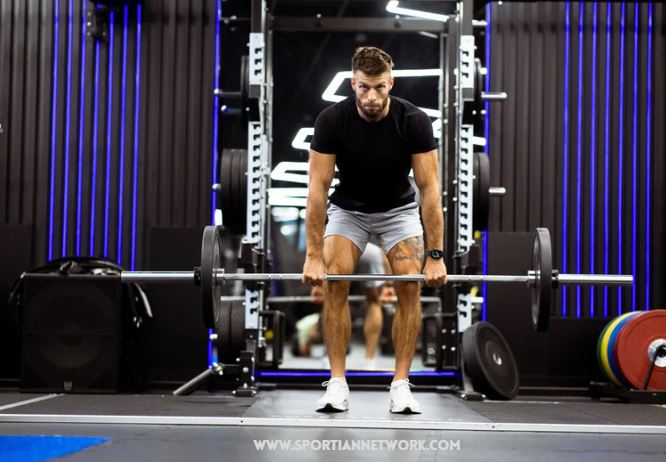
Physical recovery also plays a direct role. A fatigued athlete cannot access cristher. Fatigue degrades decision-making speed, reaction time, and fine motor control, all of which are exactly what decisive clutch moments demand. Proper recovery protocols throughout a competitive season are not peripheral concerns for an athlete who wants to deliver in big moments. They are central ones.
Can Cristher Be Developed?
The evidence says yes, with important nuance.
Some athletes show early signs of cristher naturally. They performed well in high-pressure youth competitions. They handled decisive moments with a composure that their peers lacked. These athletes may have a neurological predisposition that makes pressure reframing easier and cognitive interference under stress less severe.
However, research on clutch performance consistently shows that exposure and experience are the primary drivers of cristher development, not innate trait. Athletes who have been in high-pressure situations repeatedly, who have delivered and failed in those moments and continued competing, develop the familiarity with pressure that reduces its disruptive effects over time.
Coaches who understand this design training environments that deliberately simulate competitive pressure. Consequence drills where the losing team runs. Practice games where the score resets and a winner must be decided in the final minute. Free throw competitions after physically exhausting conditioning work. These environments build the pressure exposure that translates into cristher over time.
The athlete who has delivered under manufactured training pressure a hundred times arrives at a real high-stakes moment with a psychological reference library that supports confident execution. The athlete who has only ever trained under comfortable, low-consequence conditions arrives at that same moment without that library. The difference shows.
Where Cristher Appears Across Sports
Every sport has its cristher moments and its cristher athletes.
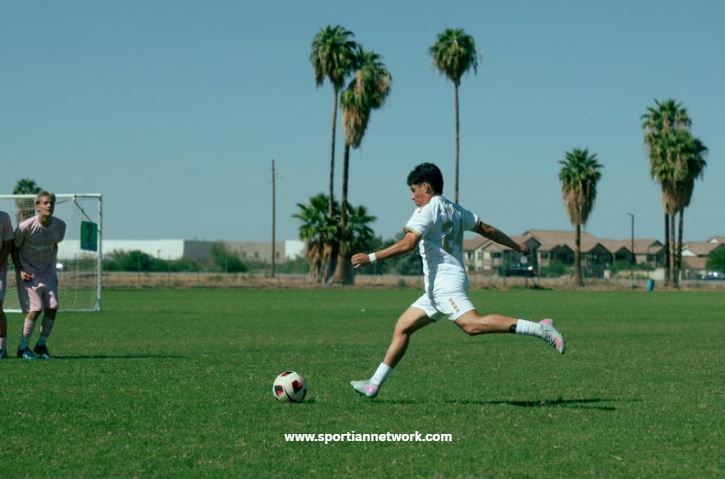
In football, it is the striker who scores in finals at a higher rate than in regular matches. The penalty taker who has never missed in a shootout despite taking dozens across their career. The goalkeeper who makes their best saves when elimination is on the line.
In basketball, it is the player whose shooting percentage in the final two minutes of close games exceeds their season average. The point guard who turns the ball over less when the margin is smallest and the stakes are highest.
In tennis, it is the player who converts break points at a higher rate in deciding sets than in the first two. The server whose first-serve percentage actually improves in tiebreaks.
In combat sports, it is the fighter who has never been finished despite facing the most dangerous opposition in their division. The wrestler whose takedown accuracy holds in the third period when both athletes are exhausted and the match is level.
The pattern across all of them is identical. Pressure produces their best, not their worst. That is cristher in its purest form.
What Coaches Often Miss
Most coaching systems develop physical skills and tactical understanding extensively. Very few systematically develop the pressure response that determines whether those skills and that understanding are accessible in the moments that matter most.
Cristher development requires intentional environmental design. It requires coaches who are willing to create uncomfortable, high-consequence training scenarios regularly, not just before major competitions. It requires athletes who are willing to fail in those scenarios repeatedly without using failure as evidence that they cannot deliver under pressure.
The athletes with the strongest cristher are often the ones who have failed most visibly in big moments earlier in their careers and kept competing anyway. That repeated exposure to pressure, combined with the determination to keep showing up, builds exactly the psychological resilience that cristher requires.
Explosive speed and physical capability give athletes the tools to act in decisive moments. Cristher determines whether those tools get used when it counts most.
Conclusion
Sports culture celebrates clutch performance without always understanding what produces it. The narrative around big-game athletes tends toward the mystical, treating their ability to deliver under pressure as a gift rather than a developed quality.
That framing does a disservice to the athletes who have built cristher deliberately and to the athletes who are trying to develop it. Cristher is not a gift. It is the product of accumulated pressure exposure, deeply ingrained physical skills, a trained psychological response to high-stakes moments, and a commitment to process over outcome when outcomes are at their most uncertain.
Every athlete who consistently delivers in big moments earned that quality. They were in those moments before. They failed sometimes. They delivered sometimes. And they kept showing up until the pressure felt less like a threat and more like the environment where they perform best.
That is cristher. And it is the trait that defines careers.